Anthropic Research Lead:
"99% of our engineers run swarms of 300+ self-improving agents"
"Close the loop, give the model a way to verify its own output"
In a 20-minute session, an Anthropic Team member breaks down how to build agents that improve themselves
The real setup is Claude running through loops, plan mode, and dynamic workflows
Better than most $300 agent courses
Bookmark and watch the talk
Then read the article below
Hermes Agent can now /learn from anything: feed it directories of any source material (code, API docs, manuals, PDFs, configs) and it distills a verifiable reusable skill
If your WFH desk setup doesn't cost more than a used Honda Civic, you aren't serious about your pipeline.
My ergonomic chair is built from the salvaged suspension of a 2019 Tesla Model S.
My primary monitor is a converted IMAX screen I bought from a bankrupt theater in Oakland.
When I drag a cell in Google Sheets, I physically have to rotate my entire torso. I burn 400 active calories a day just searching for the Slack icon.
Stop complaining about back pain and optimize your environment.
the most impressive thing about this isn't that some random japanese company created a mythos-level model - its *how* they did it:
-> their ai model isn't actually a model, it's an API that calls *other models* (e.g. chatgpt, claude, their own)
-> their orchestrator selects different models to do different parts of your prompt. if a cheaper model can be used they'll do that. thats how they cut costs.
-> if a task is challenging then they'll use a frontier model (e.g. claude) to design a solution, then use a cheaper model to build it.
point is - frontier ai capability is no longer solely dependent on how good the model weights are, its how MANY model instances you can get to debate and come up with an answer between themselves
more models going back and forth = better cheaper answer.
we're moving from mono-model to multi-model
Introducing Sakana Fugu: A full multi-agent orchestration system accessible via a single model API.
Our ‘Fugu Ultra’ model matches the performance of Fable and Mythos, delivering frontier capability without the risk of export controls.
Try it: https://t.co/hhO6qTawgb 🐡
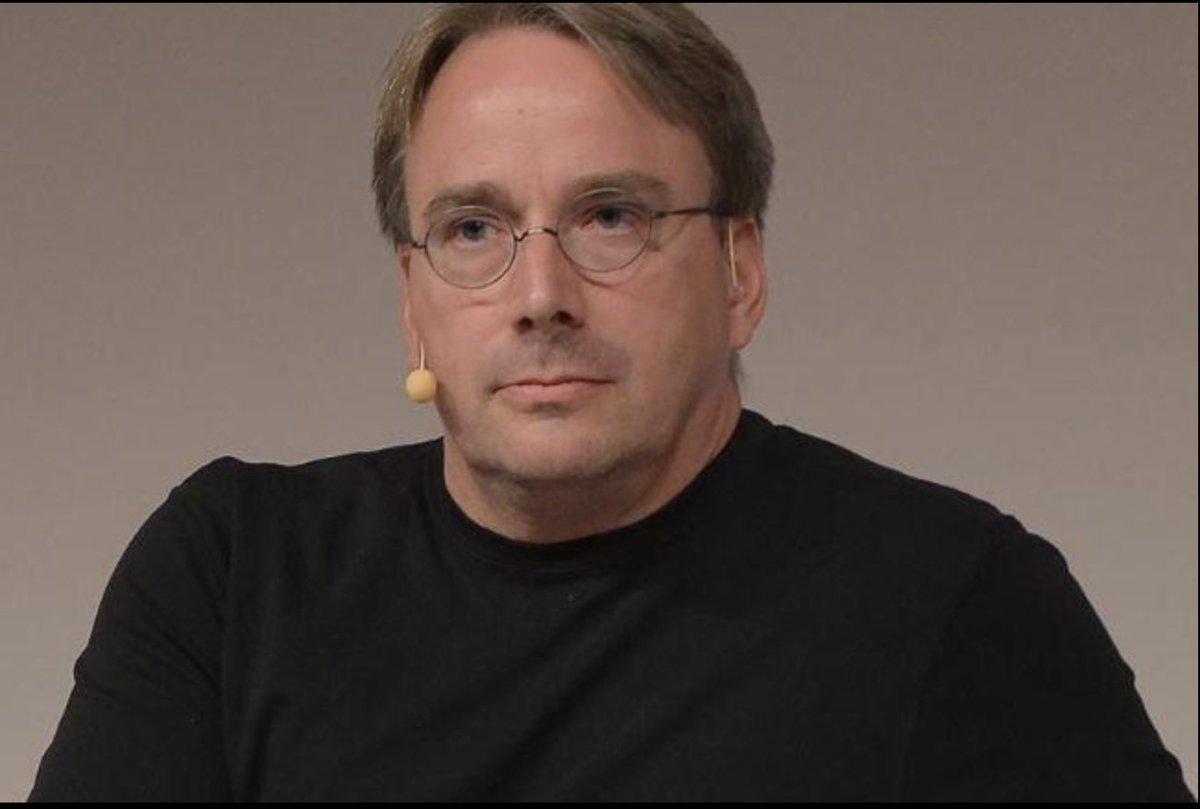
The creator of Linux just publicly called out the AI hype. Word for word.
Linus Torvalds took the stage at Open Source Summit 2026 and said this:
"When I see people saying 99% of our code is written by AI, I literally get angry. Because those same people — I can pretty much guarantee — 100% of their code is written by compilers. But they never say that."
He is not anti AI. The Linux kernel saw a 20% jump in submissions this release because of AI tools. He uses it. He gets it.
His point is something most people are too afraid to say.
AI is a productivity tool exactly like compilers were. Compilers boosted programming by 1000x. AI adds another 10x on top. Enormous. But nobody says "the compiler wrote my code." So why are we saying AI wrote it?
He also flagged something nobody is talking about.
AI is flooding small open source projects with drive-by bug reports. Someone runs a prompt, files a report and disappears when asked for a patch. Maintainers with one or two people are drowning trying to keep up.
"Sometimes AI reports a bug and when you ask for more information the person has done that drive-by and does not even answer your question. That is the real burnout issue."
And his final warning was the sharpest of all.
"People who do not understand the complexity of systems will prompt systems and write processes that will fail."
The AI hype crowd is very loud right now.
Linus has been building real systems for 35 years. When he talks, engineers listen.
Full interview here:
https://t.co/LmXJtvKc4O
Teach an agent a workflow once. Have it remember after every rebuild.
This tutorial shows how to deploy @nousresearch Hermes Agent with NVIDIA NemoClaw and OpenShell, connect it to Slack, Outlook, GitHub, and NVIDIA developer forums, then turn a chat correction into a reusable skill.
Private data stays behind runtime policies. Learned skills persist across deployments.
Δεν χρειαζόμαστε κανέναν να αποποιείται διπλές ή τριπλές συντάξεις, ούτε να τις παραχωρεί σε φιλανθρωπίες. Αυτό που περιμένουμε είναι να καταργηθούν. Μία σύνταξη χρειάζεστε — όχι δύο και τρεις.
#Κύπρος#Βουλή
Nvidia will now pay you to put a mini AI data center on your house
It looks like a normal AC unit in the yard.
But inside sits 16 Nvidia Blackwell GPUs and Dell servers.
A startup called Span builds them, backed by Nvidia.
They bolt onto your home and you get paid for the power and Wi-Fi.
Some estimates put that around $1,000 a month in your pocket.
That is rent money just for hosting a box outside.
Span says it deploys way faster and cheaper than a real data center.
The AI boom is literally moving into the suburbs.
Save this, the grid is getting rebuilt in real time.
Hard truth: yes, local hardware is expensive
DGX Spark, 3090, Mac Studio, all that. That's thousands of dollars, and few people limit themselves to just one thing
And a subscription is just $20/mo. $240 a year. Pocket change
And that's the problem
You're not paying $240. You're paying $240 forever
You will not stop using AI in a few years, it's forever with us
And the subscription price will only go up
Securing your own GPUs is a smart move
The man who killed the $10,000 GPU myth.
He did it alone, from Bulgaria, with one C file. 🤯
>Meet Georgi Gerganov.
>Bulgarian developer. Nobody had heard of him.
>In March 2023, Meta’s LLaMA model leaked online
>Within days he wrote a single C file
>Called it llama.cpp
>It ran a full AI model on a MacBook. No GPU. No cloud.
>The entire AI industry said you needed $10,000 GPUs to run LLMs 🔥
>He proved you didn’t. On a laptop. Alone.
>Also built whisper.cpp ~ same thing for voice AI
> His code is the foundation of Ollama, LM Studio, and GPT4All
>107,000+ GitHub stars. Fastest open-source AI project to hit 100K ever. 🚀
>In 2026 Hugging Face hired his entire team
>Still ships code. Still open source. Still free.
Every time you run AI locally, you’re running his work.
Absolute Legend 🐐