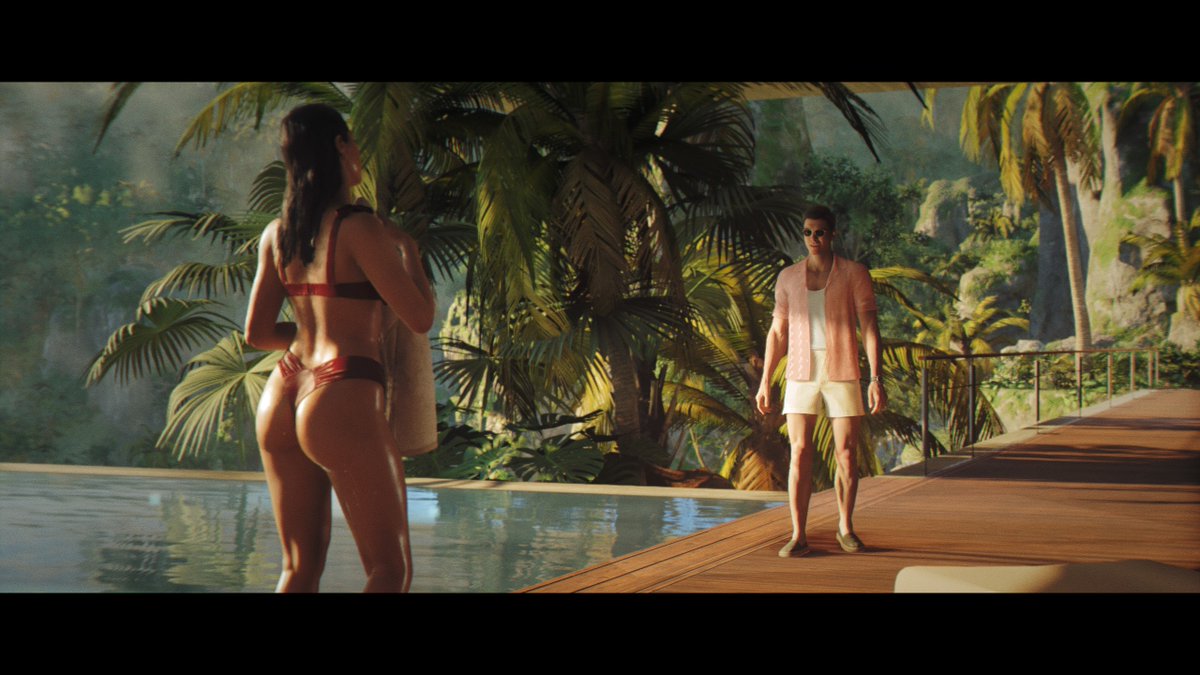
Checking out @tripoai new 8k textures, though can't seem to animate in their tool.
Will be interesting to see these improved textures on a lower-poly mesh, better performance on mobile while looking excellent?
Roblox’s new Terrain Early Access program may look like a simple technical update at first: bigger worlds, better performance, up to 64 custom terrain materials, better storage, better loading, less memory pressure. But I think it says something much bigger about where gaming is heading.
The interesting part is not just “Roblox terrain will look better”. The interesting part is that Roblox is preparing its platform to host larger, denser, more persistent worlds. And when you look at what Fortnite is doing with UEFN, the direction becomes even clearer. Epic is no longer treating Fortnite only as a battle royale. Fortnite is becoming a full creation layer: Unreal-style tools, Verse, publishing, analytics, monetization, branded experiences, cross-platform distribution, in-island economies. Roblox and Fortnite have very different cultures, but they are moving toward the same idea: the game is no longer just the product, the platform becomes the world factory.
That is why I think the “metaverse” conversation is coming back, but in a more realistic form. A few years ago, everyone tried to sell the metaverse as a VR headset fantasy. Put on the device, enter the future, live inside a 3D world. But maybe that was the wrong angle. The metaverse that is actually forming is not one perfect virtual universe. It is a network of playable spaces, social hubs, creator economies, persistent identities, digital goods, live events, and recommendation systems. It is Roblox experiences, Fortnite islands, UEFN projects, AI-generated prototypes, branded worlds, social games, concerts, stores, communities and creators all mixed together.
So are we getting closer to Ready Player One? In some ways, yes. But probably not through the version we imagined. It may not start with everyone wearing a headset inside one giant OASIS. It may start with kids moving from one Roblox world to another, creators shipping UEFN islands like they publish videos, brands entering games as playable spaces, and AI tools helping people build interactive experiences from simple ideas. The interface may not be VR first. It may be the feed, the launcher, the recommendation page, the island browser, the game hub. Less “enter the simulation”, more “jump into the next world”.
And AI is the piece that makes this shift accelerate. Vibe coding is often treated like a meme, but it points to something real: the distance between having an idea and testing a playable prototype is shrinking fast. With Claude, Fable 5, Mythos, GPT-5.6, Codex-like agents and all the tools that are coming next, creators are starting to work more like directors. You describe the world, the mechanic, the loop, the feeling, the interface, and the AI helps you generate, test, fix, rewrite and iterate. It does not magically make you a good game designer, but it gives many more people the ability to try.
That part is huge. For years, building a game world required teams, pipelines, budgets, production discipline and months or years of work. Now a small team, or even one very motivated creator with the right tools, can build a prototype in a weekend, improve it, publish it, and see if people care. Most of these creations will be bad. A lot will be clones, messy experiments or low-effort AI spam. But that always happens when creation becomes easier. The important thing is that the number of attempts explodes, and from that explosion you get weird ideas, new formats, unexpected successes and creators who would never have had access to traditional game development.
The uncomfortable part is that easier creation does not automatically mean a freer gaming future. If anyone can build, then discovery becomes the real power. Who gets shown on Roblox? Who appears in Fortnite Discover? Who gets monetized? Who gets buried by the algorithm? Who owns the audience? Who controls the payment rails? Who decides what is safe, visible, brand-friendly or profitable? The more content becomes abundant, the more platforms control the layer that decides what players actually see.
That is why I do not see this future as purely utopian. It is exciting because more people will be able to create worlds, games and experiences. It is also worrying because those worlds will live inside ecosystems owned by a few major platforms. Roblox has its rules. Epic has its rules. AI labs control the models. Brands control their IP. Algorithms control visibility. Creator economies can unlock new opportunities, but they can also become fragile if the platform changes one rule, one payout formula, or one recommendation system.
This is the real Ready Player One question for me. We may be moving toward a future where we spend more time inside playable worlds, but those worlds may look less like a free open OASIS and more like platform-owned districts. Creative, social, impressive, constantly updated, but still governed by terms of service, payout systems, moderation layers, licensing deals and engagement metrics.
That is why a Roblox terrain update is more important than it looks. One day it is 64 custom materials. Another day it is bigger worlds. Then better streaming, better monetization, better AI tools, better publishing, better creator analytics. Fortnite is doing the same from the UEFN side. AI companies are doing it from the creation side. Individually, these updates look normal. Together, they start to describe the next structure of gaming.
The future may not be one giant metaverse announcement. It may arrive update by update, tool by tool, creator by creator. Roblox improves terrain. Fortnite improves UEFN. GPT-5.6 and Claude-style agents make prototyping easier. Creators build faster. Players move between worlds more naturally. And at some point, we realize gaming has shifted from playing finished products to living inside evolving platforms.
That is the part I find fascinating. The future of gaming may not be about who makes the best single game anymore. It may be about who owns the tools, the worlds, the creators, the discovery layer, the economy, and the AI agents that turn imagination into playable spaces.
AI filmmaking is about to create an IP problem most creators are not ready for: new characters, new worlds, new visual languages created before the legal paperwork exists. If you are building an original universe with AI, start protecting it early.
omg shut the fuck up with your utility
most of our projects have been live for a few weeks / months, we're still figuring out shit
the utility is you get to invest at a ridiculously low valuation for a next level tech, thats literally how seed rounds works, you dont expect your investment to generate returns in two weeks.
i'm not asking you to lock up your token for 4 years & wait, but please at least be patient & understand that good things take time. you'll be rewarded.
Vibe Coding Metahuman With ThreeJS and Codex: Skinning the model
So I think gpt image 2 + a good upscaler can reliably produce different ethnicities and skin textures
Both skins were created in a single prompt in chatgpt, so i can probably plug @fal to the repo and integrate it into the UI, so everyone can create different skins with a prompt
I think this concludes the head part! Next up i'll try to slightly tap into hairs, though i'm worried they might be more complex than the whole head!
After that moving on to the body
oh and i've added draggable control points directly on the mesh so it's easier to sculpt the face instead of knowing where the hell the lower nose cartilage is on a slider
Demo:
https://t.co/NB4DJPQr3D
CGI IS ABOUT TO CHANGE FOREVER
I uploaded a few stills from the Star Wars franchise into Mint
Minutes later, it generated fully walkable, immersive 3D worlds
This isn’t replacing designers it’s supercharging what they can create.
Image to world + image to playable character to explore it! 🍻
Made this app using image-to-world through @theworldlabs, image-to-3D + auto-rigging through @MeshyAI on @fal, rendered with Spark.js + three.js
This is the future of photography.
Simulated inside a 3D environment, enhanced and generated by diffusion.
The new tools get more and more like the old tools minus the headache of 3D pipelines.