BREAKING: An Iranian fan at the World Cup held a sign asking: “Where is Rashid Mazaheri?”
Mazaheri, Iran’s former goalkeeper, was abducted by the IRGC in January after speaking out against the regime’s senseless killing of protesters.
🚨 The House is voting this week on the new National Security / State Dept funding bill (H.R. 8595), which includes for the first time in US history a blanket ban on any NGOs or contractors using any funds for social media censorship activity. Here’s what’s new 🧵🧵🧵:
"SIDS ‘DISAPPEARED’ In Japan After Raising The Age of Vaccination To 2yrs Old."
~Dr. Pierre Kory, MD
In 1981, Japan delayed the DTaP vaccine until children turned two years old.
Japan holds one of the lowest infant mortality rates, while the US ranks among the highest.
During the 1970s, following only two reported infant deaths linked to the whole-cell pertussis vaccine (DTwP), intense public concern prompted the Japanese government to halt routine DTwP vaccinations.
They later introduced the acellular pertussis version (DTaP) in 1981, but limited its use to children aged two and older.
In 1993, Japan’s Ministry of Health, Labor & Welfare discontinued the combined MMR vaccine after it triggered a significant increase in severe adverse reactions — particularly aseptic meningitis resulting in serious harm and fatalities.
Japan now provides separate measles and rubella vaccines and has never reintroduced the mumps component or the MMR combination shot.
In 1994, Japan revised its Immunization Act, changing all childhood vaccinations from mandatory to voluntary/recommended status.
This removed any penalties for declining vaccines and moved administration from mass public health clinics to individual choice via private doctors — prioritizing personal decision-making and informed consent.
The U.S. continues to have the highest infant mortality rate among 16 other developed nations.
As of 2022, the CDC reports the U.S. rate at 5.6 deaths per 1,000 live births. Japan’s rate remains among the world’s lowest at 1.7 per 1,000 — the U.S. rate is more than three times higher.
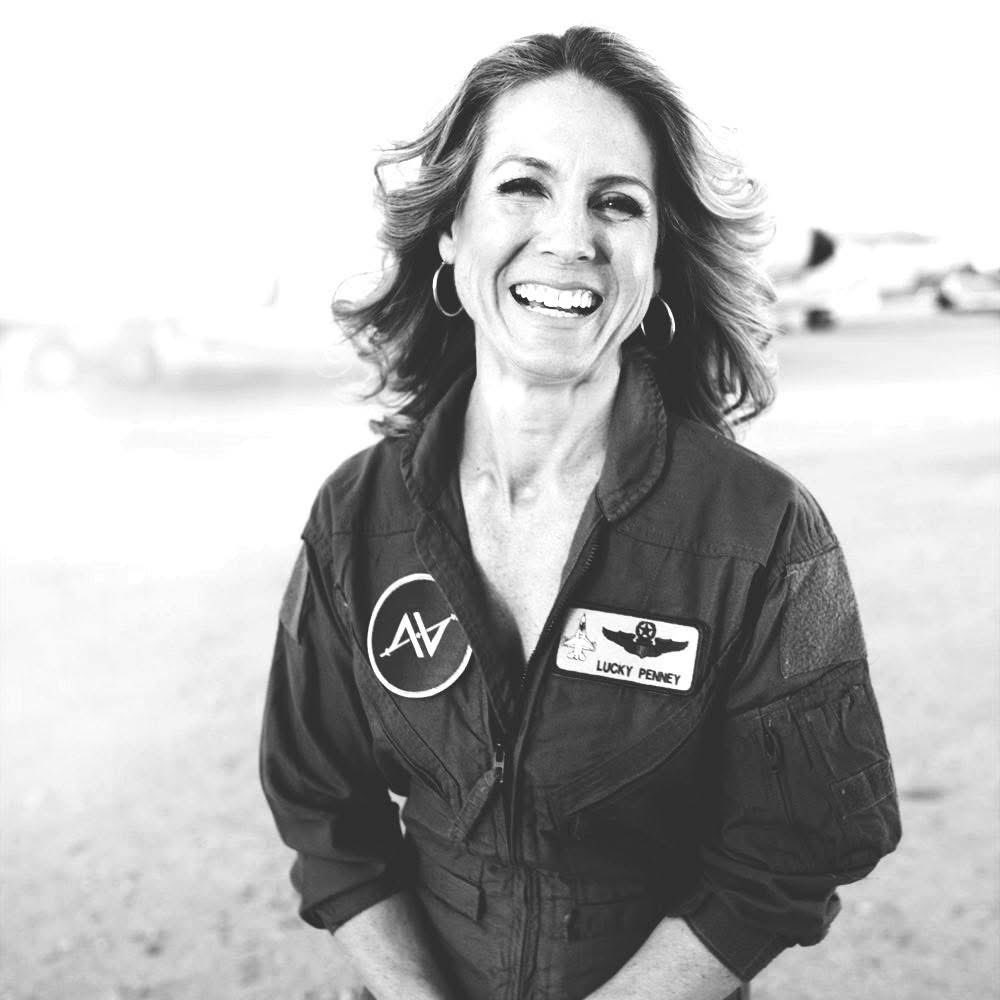
"She climbed into an unarmed fighter jet with orders to ram a hijacked Boeing 757—knowing she wouldn’t survive. She was 26 years old, and she had approximately eight minutes to accept her own death.
Andrews Air Force Base, Maryland. September 11, 2001. 10:00 AM.
First Lieutenant Heather “Lucky” Penney was in the air on a routine training flight when the order came through: return immediately. America is under attack.
When she landed, everything had changed. Both Twin Towers were burning. The Pentagon had been hit. And more hijacked planes were still in the sky.
Then came the worst part—there were no missiles loaded on her F-16. It was a training aircraft. No live weapons. Nothing capable of stopping a passenger jet.
Only one option remained.
“Penney, Sasseville—suit up. NOW.”
Within minutes, she and her commander were sprinting to their jets. Ground crews were still removing safety pins as intelligence came in: another hijacked plane, Flight 93, possibly headed for Washington.
The White House. The Capitol. No one knew which.
But someone had to stop it.
As she climbed into her cockpit, a crew chief looked at her and quietly said, “Good luck, ma’am.” Neither of them said what they both understood.
If they found the aircraft, they might have to ram it.
There would be no second chance. No ejection that could save her. Only impact.
On the radio came the order that defined everything:
“Stop that aircraft by any means necessary.”
She didn’t ask for clarification.
There wasn’t time.
Moments later, her F-16 roared down the runway and lifted into the sky. Within seconds, she was flying over Washington at supersonic speed—sonic booms shaking the city below like distant thunder.
Smoke still rose from the Pentagon.
She searched the sky for a Boeing 757 she might have to destroy with her own jet.
But 200 miles away, something else was happening.
Passengers on Flight 93 had already made their own impossible choice.
They stormed the cockpit.
At 10:03 AM, the plane crashed into a field in Pennsylvania.
All 44 people aboard died—but Washington was saved.
Heather never had to complete her mission.
She circled the capital for hours afterward, protecting a city that had already been spared by strangers who refused to be victims.
When she finally landed, the crew chief was waiting. He looked at her and said quietly, “I didn’t think I’d see you again.”
Neither had she. "
22 YEARS LATER AND NOBODY HAS ANSWERED FOR WHAT HAPPENED TO DR DAVID KELLY
His name was Dr David Kelly. Most people have forgotten him. They shouldn't.
He was a quiet, mild-mannered scientist who spent his career inspecting weapons facilities around the world.
He knew more about Iraq's arsenal than almost anyone alive.
In 2003, Tony Blair's @InstituteGC government published a dossier claiming Saddam Hussein could deploy chemical weapons within 45 minutes. That claim was used to justify a war.
Kelly knew the intelligence behind it was being exaggerated. He said so, privately, to a @BBCNews journalist.
That one conversation destroyed his life.
The government found out he was the source. Instead of protecting a man who had served his country for decades, they quietly let his name reach the press. He was publicly identified, dragged before two parliamentary committees, and grilled by his own employer.
His wife said he came home a broken man.
On the afternoon of 17 July 2003, he left his house for a walk in the Oxfordshire countryside. He was 59 years old. He never came back.
His body was found the next morning in woodland. A knife beside him. A blister pack of painkillers nearby.
Here is where it gets worse.
Tony Blair personally intervened to replace the normal coroner's inquest with a private inquiry run by Lord Hutton.
The original inquest was suspended before it even properly began. It was never resumed. To this day,
Dr David Kelly is the only person in England and Wales in living memory to have died in unexplained circumstances without receiving a full coroner's inquest.
Lord Hutton concluded suicide. Case closed.
Except eight senior doctors and a former coroner wrote to @thetimes saying the verdict was medically unsafe.
The wound found on Kelly's wrist, a severed ulnar artery, would not cause fatal blood loss in a healthy person.
There were no fingerprints on the knife. The painkillers found were not in a quantity that experts considered lethal.
The government's response, delivered by Attorney General Dominic Grieve in 2011, was essentially: the Hutton Inquiry was good enough, stop asking questions.
Think about that. A man quietly raised concerns about the biggest political deception in modern British history, a war that led to the deaths of hundreds of thousands of people. He was publicly exposed, professionally destroyed, and found dead days later and the government personally made sure there would never be a proper independent investigation into how he died.
Tony Blair went on to become a Middle East Peace Envoy. He has a knighthood.
Dr David Kelly got a private inquiry, a rushed verdict, and a sealed post-mortem report that was not released to the public for years.
Nobody was ever held accountable. Not for any of it.
This story should be on the front page every single year. Share it if you think it matters.
Sources: @BBCNews@guardian@thetimes@PrivateEyeNews
獣医の世界では半世紀前から常識だ。脊髄を損傷し、四肢が完全に麻痺した犬や馬にDMSOを点滴すると、彼らは再び立ち上がり歩き出す。ところが、同じ怪我を負った人間には「もう手の施しようがありません」と宣告される。この埋めがたい落差こそが、今回掘り起こす「忘れられた医療」の核心だ。
DMSOは、細胞の骨格とも言える「微小管」の再構築を劇的に促進する。神経細胞はこの骨格が壊れると再生できないが、DMSOはその組み立てに必要なタンパク質濃度を10分の1近くまで下げ、傷ついた神経回路の再接続を後押しする。さらに幹細胞を神経細胞へと分化させる作用も持ち、失われた組織そのものを補う可能性を秘めている。
1970年代、スタンリー・ジェイコブ博士らは、脊髄損傷から数時間以内にDMSOを点滴された患者が歩行を取り戻した事例を報告した。うち一人は受傷から9時間後という「手遅れ」のタイミングだったにもかかわらず、である。
慢性の腰痛や坐骨神経痛、椎間板ヘルニアに対しても、DMSOの効能は軽視できない。ロシアでの偽薬対照試験では、DMSOゲルを1日2回塗った患者群の痛みの指標が10点満点中7.46点から2.58点へと大幅に改善し、筋肉の緊張や脊椎の可動域でも偽薬群を明らかに上回った。
私のもとには、何十年も背部痛に苦しみ、複数の手術にも失敗した読者から「DMSOで人生が変わった」という声が数百件寄せられている。ある男性は、12.5mmも飛び出していた椎間板が数ヶ月の塗布で3〜4mmに縮小し、メスを入れずに済んだという。
話はここで終わらない。本当に問うべきは、獣医が当たり前に使う治療法を、なぜ人間の医療だけが無視し続けるのか、という構造的な問題だ。
答えの一端は、DMSOが安価で特許を取れない物質である点に潜む。莫大な利益を生む新薬の市場を侵食する可能性があるため、大規模な人間での臨床試験には莫大な資金が必要なのに、誰もその費用を出そうとしないのだ。FDA(米国食品医薬品局)による規制の壁も厚く、動物では「奇跡的」とされる回復のデータが積み上がっても、人間への応用は半世紀近く棚上げされたままだ。
飼い主にとって家族同然の犬が交通事故で麻痺した時、獣医は迷わずDMSOの点滴を選ぶ。その事実を知りながら、自分の親が転倒して脊髄を損傷した場合に同じ選択肢を与えられないとしたら、それは科学の問題ではなく、もはや医療制度の倫理的な不作為と言わざるを得ない。
—
A Midwestern Doctor(中西部の医師)
記事『The Forgotten Side of Medicine: How DMSO Heals the Spine and Reverses Paralysis』(忘れられた医療:DMSOはいかにして脊椎を癒し、麻痺を回復させるか)
Of the 56 men who signed the Declaration of Independence, Abraham Clark may have paid the highest personal price. Almost nobody knows his story. Buckle up.
He was a New Jersey farm kid considered too frail for farm work, so he taught himself math, then surveying, then law. He never got rich from it because he kept defending poor farmers who could not pay him. His neighbors called him "the Poor Man's Counselor."
In the early hours of July 4, 1776, while Congress debated independence in Philadelphia, Clark wrote a letter to a friend with one of the most chilling lines of the Revolution: "Perhaps our Congress will be exalted on a high gallows."
He signed anyway.
Then the British made it personal. Two of his sons were officers in the Continental Army, and both were captured. They were thrown onto the prison ship Jersey in New York Harbor, the deadliest place of the entire war. More Americans died on British prison ships than in every battle of the Revolution combined.
One son got it even worse. He was locked in the dungeon and given no food except what other starving prisoners could push through the keyhole of his cell.
The British reportedly offered Clark a deal: renounce the Declaration, switch sides, and your boys go free.
He refused.
Here is the part that breaks me. Clark sat in Congress through all of it and never once brought it up. No special pleading, no favors. Congress only found out through other channels and threatened retaliation against a British officer, which finally got his son out of the dungeon.
After the war, he kept choosing the little guy. He fought for debt relief for struggling farmers and refused to support the Constitution until he was assured a Bill of Rights would protect ordinary citizens.
In September 1794, at age 68, the self-taught surveyor who outlasted the British Empire died of sunstroke after a long day working on his own farm.
No statue on the National Mall. No musical. Just a small town in New Jersey called Clark, and most people who drive through it have no idea why.
Some men signed the Declaration with ink. Abraham Clark signed it with his sons.
A newspaper essay about the president’s uncle, MIT Prof. John G. Trump, tells the extraordinary history of his role in D-Day. But there is much more to the story. We’d like to share more about Prof. J.G. Trump as we knew him—a scientist, engineer, educator, entrepreneur, patriot, and MIT legend whose work still impacts us all today. ⚡️🧵1/10 https://t.co/sQG3cN9n1n
America's cultural ideal has been the self-made entrepreneur while Europe's was rooted in aristocracy, with status inherited rather than earned. Europe's inheritance laws show this divide.
Many European countries have "forced heirship" laws that require people to leave 50-75% of their estates to their children. Want to leave the majority of your wealth to charity? not allowed. Your kids are estranged from you, struggling with addiction, or irresponsible? still required to give them the money. Want your kids to avoid a life of entitlement? tough.
Incredibly, these laws look back at transfers made during your lifetime. If you have 3 children in France, you're required to bequeath them a minimum of 75% of your estate. Because French law calculates this based on your assets at death plus all lifetime gifts, giving away more than 25% of your wealth while alive means your heirs can legally sue to force charities or foundations to return the funds. This has limited the development of the nonprofit sector on the continent.
The cultural gap between an entrepreneurial society and one shaped by dynastic wealth is enormous. If you make it yourself, you tend to want your kids to do the same. If you inherit it, the primary goal is protecting the estate for the next gen.
Countries like Spain, France, and Italy legally entrench family dynasties, while America has historically sought to limit them through estate taxes. The result is not only a weaker culture of philanthropy and civil society in Europe, but also less economic dynamism.
In June 1775, the British military governor of Massachusetts offered a full pardon to every American rebel who would lay down arms.
He named two exceptions. Samuel Adams was one of them.
By that point Adams had spent over a decade engineering the destruction of British rule in America, and the Crown wanted him hanged for treason. He was 52 years old, broke, often dressed in clothes his friends had quietly bought him, and shook with a tremor so bad he could barely sign his name.
He was also the most dangerous man in the empire.
Sam Adams was born in Boston in 1722, thirteen years before his more famous cousin John. He entered Harvard at 14 and wrote his master's thesis on whether it was lawful to resist the supreme magistrate "if the commonwealth cannot otherwise be preserved." He argued yes. He was 20. He would spend the rest of his life proving it.
He was terrible at business. He inherited his father's malt house and ran it into the ground. He tried merchant trading and failed. The town of Boston eventually made him tax collector, possibly as charity, and he proceeded to not collect taxes from people who couldn't afford them. He ended up personally owing the town thousands of pounds, an enormous debt for the time. Boston never made him pay it back.
Voters loved him for it.
In 1764, when Parliament passed the Sugar Act, Adams wrote one of the first major American arguments that taxation without representation was unconstitutional. When the Stamp Act followed in 1765, he organized the Boston resistance, helped grow the Sons of Liberty, and pioneered something new in politics: he turned the Boston town meeting into a weapon, a place where ordinary tradesmen voted on questions of empire.
He wrote constantly. Under more than 25 different pseudonyms, Vindex, Candidus, Determinatus, Populus, and on and on, he flooded Boston newspapers with essays attacking British policy. Loyalists complained that fishermen and dockworkers were now debating constitutional theory in taverns. That was Sam Adams's doing.
After the Boston Massacre in 1770, he stood in front of the royal lieutenant governor and demanded every British soldier be removed from Boston. Not some. All. The governor caved. The troops left. His younger cousin John then defended those same soldiers in court, and Sam never held it against him. They were running the same revolution from opposite ends.
In 1772, Sam Adams invented the system that made the Revolution possible: the Committees of Correspondence. He organized a network of patriot writers in every Massachusetts town who exchanged letters, news, and grievances. Other colonies copied it. Within two years, an unofficial shadow government stretched from New Hampshire to Georgia, faster and better informed than the British administration trying to govern it. It was, in effect, the internet of the American Revolution, and one man designed it.
Then came the tea.
On December 16, 1773, after a final mass meeting at the Old South Meeting House, Sam Adams reportedly stood and said, "This meeting can do nothing more to save the country." It is widely believed to have been the signal. Within minutes, men disguised as Mohawks marched to Griffin's Wharf and threw 342 chests of British tea into Boston Harbor. Adams did not put on a costume or board the ships. He didn't need to. He had built the crowd that did.
Britain responded with the Coercive Acts, shutting down the port of Boston and rewriting the Massachusetts charter. Adams used the crisis to summon the First Continental Congress.
On the night of April 18, 1775, British troops marched out of Boston with two missions: seize the patriot weapons stockpiled at Concord, and capture Samuel Adams and John Hancock, who were hiding in a parsonage in Lexington. Paul Revere rode ahead to warn them. They slipped into the woods minutes before the redcoats arrived. As the first shots of the Revolutionary War cracked behind him on Lexington Green, Adams is said to have turned to Hancock and exclaimed, "What a glorious morning for America."
He signed the Declaration of Independence the next year. He helped write the Massachusetts Constitution of 1780, the oldest functioning written constitution in the world, still in force today.
After the war, the firebrand became an elder statesman. He opposed the new U.S. Constitution at first because it had no Bill of Rights, then supported ratification once one was promised. He served as Lieutenant Governor under John Hancock, then as Governor of Massachusetts from 1794 to 1797. He watched his younger cousin John serve as the second President of the United States while he ran the state where the whole story had started.
By the end, the tremor in his hands was so severe his wife Betsy had to write his letters for him. He spent his last years quietly in Boston, in the same plain coat, in the same plain house, talking about scripture and republics.
He died on October 2, 1803, in genteel poverty. His funeral procession was the largest Boston had ever seen.
The brewery wasn't his. The beer is just a name. The country is the monument.