And yet how often do publishers use ‘but think of the authors!’ as an excuse for the extortionate pricing, restrictive licensing and opposition to approaches like CDL that we see with academic texts. And then they do stuff like this. 🙄 #ebookSOS
Interesting opinion piece in The Guardian
"The commercial stranglehold on academic publishing is doing considerable damage to our intellectual and scientific culture"
https://t.co/UNKSIwxUe4…
in my exp, it's easy to assert you rights for TDM (we have it in UK Law) but it's another thing enforcing/prioritising that over publisher concerns (legitimate or commercially cynical) about misuse
[University of California] President Drake and Provost Newman affirm the university’s commitment to protect author, researcher and reader rights
https://t.co/Gv1dWvxuAu
Great to see a book edited by a Sheffield academic @renee_timmers, published OA by a publisher supported by @UniSheffieldLib's Open Scholarship Fund (designed to aid the transformation of academic publishing)
📢New Publication Alert!
🎶'#Psychological Perspectives on #Musical Experiences and Skills' ed. by Blanka Bogunović, Renee Timmers, & Sanela Nikolić is out now!
Dive into cutting-edge research on the psychology of music & its cultural contexts.
Access: https://t.co/9gLHnNKI7B
“What does OA have to do with research excellence? Not very much: an output that is OA is no more excellent than one that is not... the REF OA agenda has driven researchers to a compliance-centric view of OA"
If the current cost of OA, is the true cost of OA, then I might agree with this conclusion. I suspect it isn't and the 'chiefs' are tilting at the wrong windmill
Time to bin all REF open access rules, say Oxford research chiefs https://t.co/B5rloV04mu via @timeshighered
Well worth reading this...
The issue to me is whether non-commercial diamond can scale to take a much larger % of REF books (and whether policy allows investment at infrastructure not output level). Otherwise BPC, commercial led will have all the problems of journals
Hot off the press 🔥
Read our initial reflections on the @ref2029#OpenAccess policy for longform outputs 📚
https://t.co/MGYqVfhwVh
But now we need you 🫵Share your comments and feedback via the blog ahead of the consultation deadline on 17 June ⏰
#REF2029
@ScholTom@opening_future I think it's a valid approach. It depends how much you could be 'tick-box' diamond without being scholar-led/community-owned/non-commercial
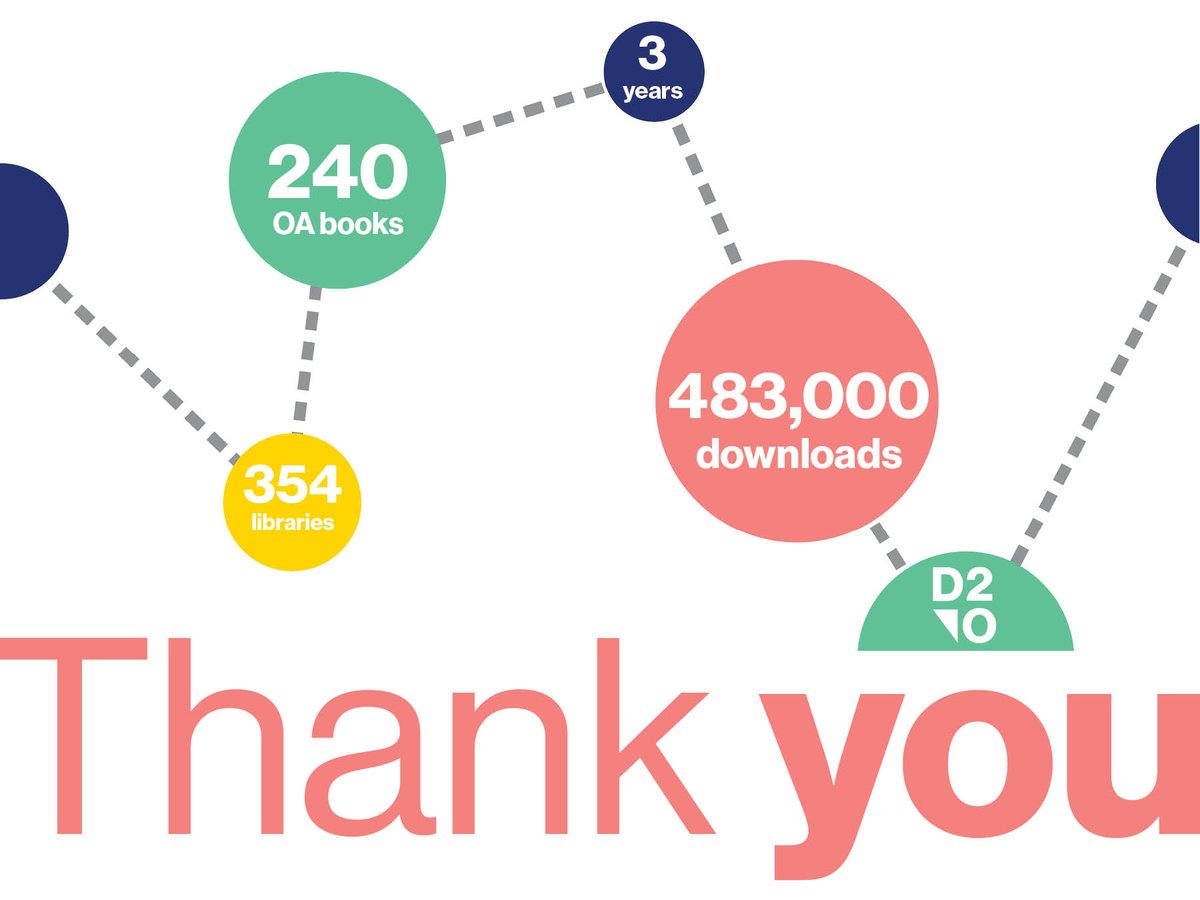
Direct to Open (D2O) is a collective action model built to support the #OpenAccess publication of scholarly books where neither authors nor readers have to pay. D20 has exceeded expectations in its first three years, and we’re thrilled to share the impact! https://t.co/l0cuNlTuDV
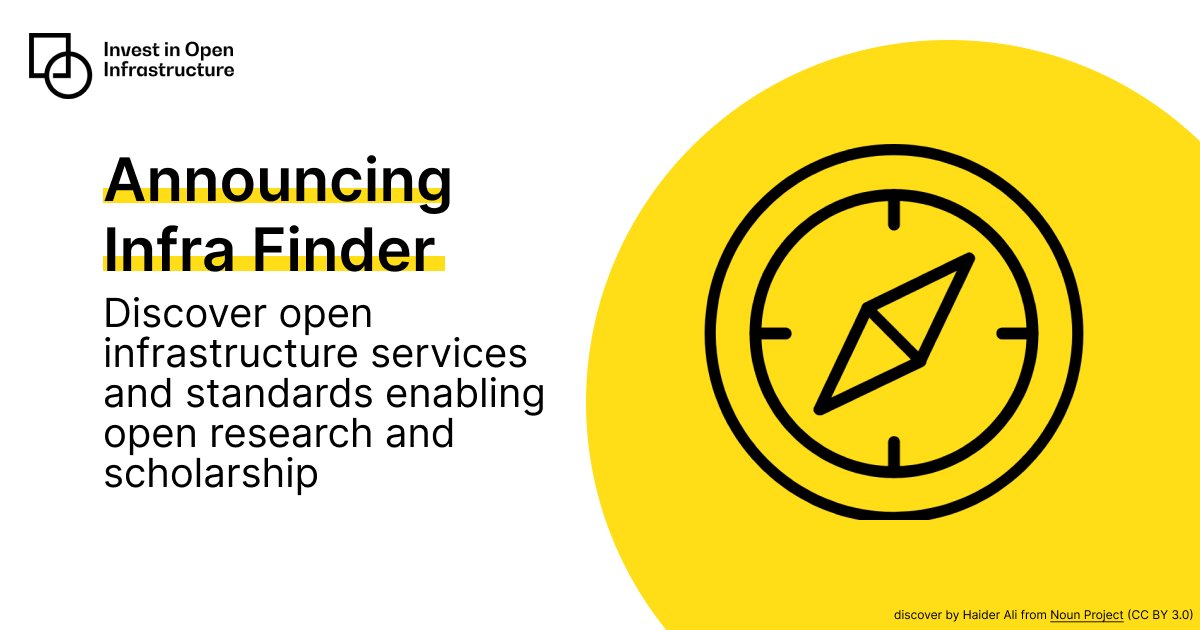
Today, we're excited to launch Infra Finder - a tool to help you navigate the landscape of #infrastructure services + standards enabling #OpenResearch & scholarship 🚀
Who is Infra Finder designed for, and what makes it special? Read on to find out!
https://t.co/SZCT5zjlvS
Barr: we want values over revenue; a move away from publishers taking our content and selling it back to us, and towards a value-adding service.
#Redux2024
Huge thanks to @SheffieldUni Library, who have renewed their membership to our Institutional Partner Programme.
Their investment helps make @ProgHist sustainable.
UK libraries can subscribe directly @Jisc: https://t.co/gRIk0MGHJv
#DiamondOpenAccess#DigitalHumanities
The recording of our #OAweek23 session on 'Supporting the transformation of academic publishing: The Library Open Scholarship Fund' is now available:
https://t.co/dsBYFrC0RS
Hello?
If anyone is still using twitter, can I point to the below event where we will be speaking about our support for 'free-range' OA via @UniSheffieldLib's Open Scholarship fund. Free event, open to all
https://t.co/fdrUMnMe98




![scholasticahq's tweet photo. 🚨 New Scholastica blog alert: How to Start An Open Access Journal [2024 Small Publishers Primer] https://t.co/sbSFVt1ad3 https://t.co/ODMgXp1WmD](https://pbs.twimg.com/media/GQsK_WMXcAElfOT.jpg)