😉 😉 😉 😉 😉
Tiyatro oyuncusu-yönetmen-yazar
Ali Poyrazoğlu, 2005 yılındaki oyununda,
23 ciltlik Anıtkabir özel defterinden seçtiği
bazı bölümleri seyircileriyle paylaşmıştı ve şunları söylemişti:
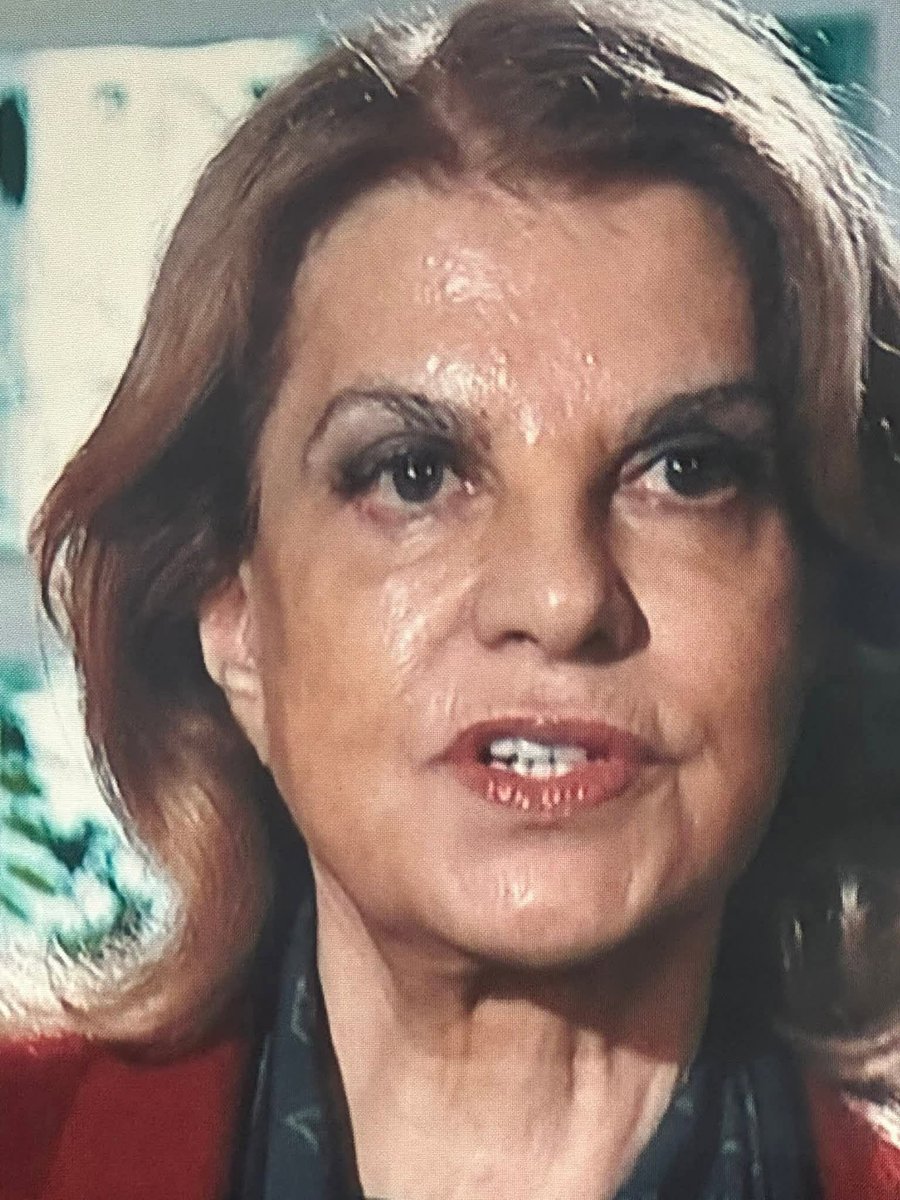
“Bu ülkede başbakanlık yapmış Tansu Çiller, 5 kez çıkmış Atatürk'ün huzuruna... 5 kez yazı yazmış deftere. 4'ü hiç okunmuyor, beşincisini de şimdi ben okuyacağım sizlere.”
Poyrazoğlu ardından Tansu Çiller'in okunur durumdaki tek Anıtkabir Özel Defterinde yazısını izleyicilerle paylaşmıştı, şöyle yazıyordu:
“Yüce önder. Ulu ve büyük Atam! Doğru Yol Partisi'nin 14'üncü yılını idrak ediyoruz. (Sonra 14'ün üzerini kalamış, 15 yapmış) Laik Türkiye Cumhuriyeti'nin ve demokrasinin bekçileri olarak 16'ncı yılımızda huzurundayız... Davamız yarım asırlık yani 65 yıllık bir davadır. Milliyetçilik ve çağdaşlık yolunda yarım asırdır yani tam 40 yıldır yürüyoruz. Bu ülkenin çimentosu olmanın sevinci içindeyiz. Biz bu ülkenin çimentosuyuz. Bizimle tuğlaları yapıştıracaklar, duvar örecekler, bina yapacaklar, içimize girecekler. İlkelerinin ışığı altında partimizin 17'nci yılını kutluyor, saygılar sunuyorum...
Görüşmek üzere...
@Sonsofmarse@Sekilsaclar O olay, yanlış hatırlamıyorsam, alakasız cinayetlerin ortak katili olarak yıllarca aranan kişinin DNAsının polis merkezinde steril çubukları dağıtan kadın olduğunun ortaya çıkmasıyla ilgiliydi. Daha sonra kitlerin steril olmasının önemi ortaya çıkıyordu.
Part 3. A wildebeest calf is on its feet within minutes of being born and running with the herd within hours. A foal is up within an hour. A chimp grips its mother's fur from minute one. A human newborn cannot hold up its own head for three months.
In 1941, the Swiss zoologist Adolf Portmann did the math on this gap. He calculated that if humans gestated as long as other primates do relative to neurological development, pregnancy would last about 21 months. We deliver at 9. Portmann called the first year of life "the extra-uterine year." Every human is born early by our own primate standards. The baby is supposed to still be inside.
The reason is mechanical. Around two million years ago, our ancestors started walking on two legs, which narrowed the female pelvis. At the same time, brain size kept growing. Eventually the math no longer worked. A fully developed brain could not fit through a fully developed birth canal. Evolution chose the only available compromise. Deliver early, finish outside.
In 2002, the pediatrician Harvey Karp gave this stage a name parents could use. He called it the "fourth trimester." A newborn in the first three months is still gestating outside the womb. The body it expects to be inside has been replaced by the bodies it expects to be against.
This is why babies stop crying when held against a chest. The position imitates the womb they just left. This is also why skin-to-skin contact (called "kangaroo care" in hospitals) is now the WHO-recommended standard for premature babies. The 2016 Cochrane review of 21 studies and 3,042 infants found that kangaroo care reduces mortality in low-birth-weight babies by 40%. Held babies regulate temperature better, get fewer infections, gain weight faster, and survive at higher rates than babies in incubators. This is the womb's job, transferred to a parent's chest. The chest finishes what 9 months of pregnancy did not have time to.
The systems still being built in the fourth trimester include body temperature regulation, breathing rhythm, gut microbiome, immune function, and the stress response. None of them are complete at birth. All of them require ongoing contact with another body to finish properly. The chest is the second uterus.
Now look at the drawing again. The kid is in bed, between two adult bodies. Warm bodies on both sides, breathing close, the smell of his parents in the sheets. He is doing in pencil what his nervous system spent 9 months learning to expect, and what his biology still expects for years afterwards. What Western parenting calls clingy is the body finishing what 9 months of pregnancy did not have time to.
Part 2. For 100 years, Western parents have been told that comforting a crying baby will 'spoil' it. One specific man invented that rule. He had just been fired from Johns Hopkins for an affair with his graduate student. He wrote a parenting book in 1928 with a chapter titled 'The Dangers of Too Much Mother Love.' His name was John B. Watson, and the book sold across America.
Watson was the founder of behaviorism. He believed emotions were not inborn but trained. He proved it (in his own mind) by conditioning a 9-month-old baby called Little Albert to fear a white rat. Every time the rat appeared, he clanged a steel bar with a hammer right behind the baby's head. The kid eventually flinched at anything furry. If emotion could be conditioned, Watson argued, then 'mother love' was just bad training. A properly raised child would be calmer and more independent if mothers kept their distance.
So he told American mothers to never kiss their children, never hold them in their laps, never rock them to sleep, and to treat them like small adults instead. His slogan was 'not more babies, but better brought up babies.' The book ran for decades.
Watson and his second wife Rosalie raised two sons on the system. William grew up to become a psychiatrist, openly rejecting everything his father had written, and killed himself at 33. James attempted suicide too. Watson's daughter from his first marriage attempted multiple times across her life. His granddaughter, the actress Mariette Hartley, helped found the American Foundation for Suicide Prevention in 1987 and wrote publicly about the family's emotional damage.
Late in life, Watson told an interviewer he 'did not know enough' about children to have written the book. He burned every paper he had not yet published. He died in 1958.
By then the book had done its work. The advice it set in motion (sleep alone, in your own room, with no one coming when you cried) became the Western default. Dr. Spock softened the tone in 1946 but kept solitary sleep as the goal. Ferber's sleep training method in 1985 ran on the same logic. Three generations of American parents were taught that responding to a child at night would 'spoil' them.
Look at the drawing again. The kid drew himself in bed between his parents and labeled it 'safe.' That picture would have looked completely normal to every culture on earth in 1927. It only became weird because one fired professor with a book deal told America it was.
A kid drew himself sleeping in bed between mom and dad and labeled it 'safe.'
In Japan, this exact sleeping arrangement has a name. They call it 'the river.' Mother is one bank. Father is the other. The child between them is the water. Roughly 70% of Japanese mothers sleep this way with their kids, sometimes through the teenage years. The Western model of putting a kid alone in their own bedroom is barely 200 years old. For most of human history, in most cultures still alive today, kids slept beside their parents.
James McKenna runs the Mother-Baby Behavioral Sleep Lab at Notre Dame. He spent decades watching what happens when parents and kids share a bed. The bodies sync up. Heart rates align with the parent's, breathing falls into the same rhythm, and by morning even sleep stages have started matching. The parent's body, in McKenna's words, acts as a kind of biological jumper cable for the child's.
In 2013, researchers in the Netherlands tracked 193 babies through the first year of life. They measured cortisol, the brain's main stress hormone. Babies who had spent more weeks co-sleeping in the first six months produced less cortisol under stress at 12 months. Sleeping near a parent had rewired the kid's stress system to be calmer under pressure.
Inside the kid's brain at night, the amygdala, the fear alarm, gets more sensitive as the body gets tired. Darkness makes it worse. A 2021 paper in PLoS One from Australian researchers showed that light directly suppresses amygdala activity. Lights off, alarm louder. The whole brain is wired to read 'alone in a dark room' as a threat.
Now add a parent's body to that bed. The kid's nervous system reads warm body, breathing nearby, familiar smell. The threat alarm dials down. Two parents on either side dial it down twice. The drawing is the kid's brain calculating maximum safety: I am surrounded by the people who keep me alive, and nothing can reach me without going through them first.
The arrangement in this drawing is what most of human history called 'sleeping.' Sleeping the kid alone in another room is a 200-year-old Western invention that we forgot was an invention. Every kid who has ever padded into your room at 3am and crawled into the middle of the bed is just trying to redraw the picture.
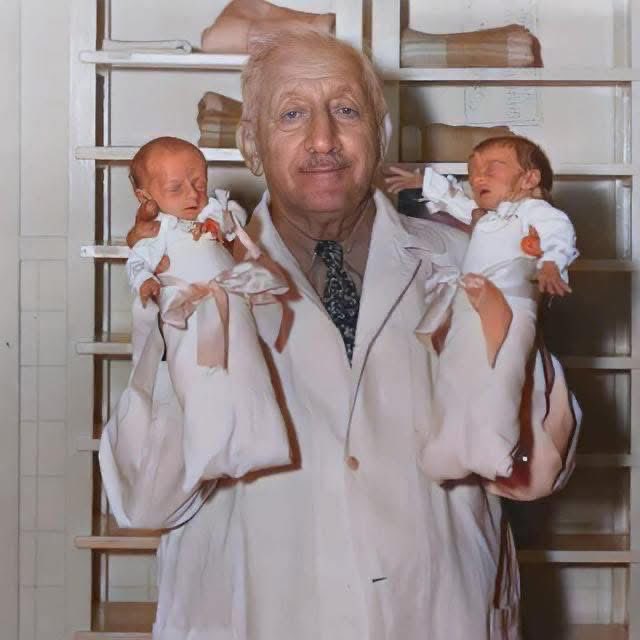
Este hombre se llama Mohamed Bzeek, vive en California y esa niña que tiene en brazos murió pocos días después de que le hicieran la foto, también en sus brazos. No era su hija. Era uno de los diez niños que han muerto bajo su cuidado. Porque Bzeek es padre de acogida y solo acoge a niños en estado terminal, para que no mueran solos.
Nació en Trípoli en 1954, antes de irse de Libia corría maratones. En 1978 entró en Estados Unidos con un visado de estudiante y allí se quedó. Vive en Azusa, una de esas localidades del extrarradio de Los Ángeles por donde circulan camiones y donde las casas tienen una pinta genérica, agrupadas sin llamar la atención.
En 1989 conoció a Dawn Rowe, que ya era madre de acogida desde principios de los ochenta, se casaron y empezaron a acoger juntos. En 1995 tomaron la decisión de dedicarse exclusivamente a niños con enfermedades terminales, los que nadie quería.
Me pregunto cómo fue ese momento exacto en que dos personas se sientan en una cocina y deciden que van a abrir su casa a los niños que se mueren, y en cómo esa decisión se toma, sin actas, sin nada que la registre, y sin embargo organiza el resto de una vida.
La primera niña que murió en su casa tenía un año, espina bífida, parte de la columna le crecía fuera de la piel. Murió el 4 de julio de 1991, mientras Mohamed se duchaba y Dawn preparaba la cena, él recuerda haber salido del baño y haber encontrado médicos en su salón. Lloró tres días.
Desde entonces ha acogido a unos ochenta niños, diez han muerto en sus brazos. El condado de Los Ángeles, cuatro millones de habitantes, lo llama cuando no hay nadie más. Lo llaman el padre de último recurso.
Muchos llegan sin nombre, nacen en hospitales y los abandonan, las familias no los nombran y en el papel pone "Baby boy", "Baby girl". Mohamed los nombra, les pone un nombre antes de que mueran.
Un nombre es gratis, cuatro sílabas, pero ese gesto, cuando se pone el nombre, decide si un niño que vivirá tres semanas existirá como persona o como registro administrativo.
Su hijo biológico, Adam, nació con osteogénesis imperfecta y enanismo, se ha roto casi todos los huesos del cuerpo. Dawn murió en 2015 de una enfermedad pulmonar y desde entonces Mohamed sigue solo, solo puede ocuparse de un niño a la vez. Cuando un periodista del Los Angeles Times entró en su casa en 2017 cuidaba de una niña de seis años con microcefalia, ciega, sorda, pies zambos, caderas dislocadas, no movía brazos ni piernas, tenía convulsiones. La había recibido con siete semanas de vida y le habían dicho que viviría unos meses. La sostenía durante las convulsiones y le hablaba aunque no oyera.
Sé que no puede oír, sé que no puede ver, pero le hablo, tiene sentimientos, es un ser humano.
En 2016, a Bzeek le diagnosticaron cáncer de colon, le pidió tiempo al médico, no puedo operarme todavía, tengo a un niño en casa que es terminal y tengo a mi hijo, que es discapacitado, no hay nadie más para ellos. En el hospital, ingresado, solo, dijo que por primera vez entendió lo que sentían los niños que cuidaba. Si yo a esta edad estoy asustado, cómo estarán ellos. Se operó y siguió.
Bzeek es musulmán practicante. Su historia se hizo internacional en febrero de 2017, justo cuando Trump firmó la orden ejecutiva que vetaba la entrada en Estados Unidos a ciudadanos de siete países de mayoría musulmana, Libia era uno de ellos. Ese mismo mes, en Azusa, el único padre de acogida de toda la ciudad de Los Ángeles dispuesto a llevarse a casa a los niños terminales era un libio musulmán.
Aunque mi corazón se rompa, dijo una vez, la muerte es parte de la vida, estoy con ellos hasta el final, los conforto, los quiero, quiero que sientan que tienen una familia, que tienen a alguien. Que no están solos.
Signs of ADHD in women
1. Easily overstimulated by noise (a barking dog, a crying baby, music in the background)
2. Motivation swings between extreme productivity and zero energy
3. A constant mental overload, like having countless tabs open at once
4. Social exhaustion even great nights out require days to recover
5. Replying to messages only when the energy hits… or not at all
6. Staying up late despite being exhausted (hello, revenge bedtime procrastination)
A Soviet psychologist walked into a café in 1927 and watched a waiter do something impossible.
He remembered every open order at every table. Perfectly. Without notes. Without effort.
Then a table paid their bill. She asked him to repeat the order.
He couldn't remember a single item.
She spent the next two years figuring out why. What she found is now the operating system underneath every platform fighting for your attention.
Her name was Bluma Zeigarnik, and she was a graduate student at the time, sitting with her professor Kurt Lewin, watching the waiters work the room. What caught her attention was something so ordinary that it had been happening in restaurants for centuries without anyone asking why.
The waiters could remember every open order with perfect accuracy. Table four wanted the schnitzel with no sauce. Table seven had changed their wine twice. Table twelve owed for three coffees and a dessert. Every detail, held without effort, without notes, without any visible system at all.
But the moment a table paid their bill, the information vanished. Completely. Lewin tested it on the spot. He called a waiter back minutes after a table had settled up and asked him to recite the order. The waiter could not do it. Not partially. Not approximately. The information was simply gone.
Zeigarnik went back to her lab and spent the next two years turning that observation into one of the most replicated findings in the history of psychology.
Here is what she proved, and why it changes how you think about attention, memory, and almost every piece of media you have ever consumed.
She gave participants a series of tasks. Some tasks they were allowed to finish. Others were interrupted before completion. Then she tested recall across both groups.
The unfinished tasks were remembered at nearly twice the rate of the completed ones.
Not slightly better. Nearly twice. The brain was holding the incomplete work in a state of active tension, returning to it, keeping it warm, refusing to file it away. The finished tasks were closed, archived, released. The unfinished ones were still running.
She called it the resumption goal. When the brain commits to a task and cannot complete it, it opens a file that stays open until resolution arrives. That open file consumes a portion of your cognitive bandwidth whether you are thinking about it consciously or not. It surfaces in idle moments. It pulls at the edge of your attention during other work. It is the thing you find yourself thinking about in the shower when you were not trying to think about anything at all.
This is not a flaw in human cognition. It is a feature. The brain evolved to finish things. An open loop is a signal that something important is unresolved. Keeping that signal active increases the probability that you will return to it and complete it. In an environment where most tasks had real survival stakes, this was an extraordinarily useful mechanism.
In the modern world, it is the most exploited vulnerability in human attention.
Netflix did not invent the cliffhanger. But it industrialized it in a way no medium before it ever had. When a show ends on an unresolved question, it does not just create curiosity. It opens a file in your brain that stays active until the next episode closes it. The autoplay countdown that begins at 15 seconds is not a convenience feature. It is a precise calculation about how long the average person can tolerate an open loop before the discomfort of not knowing overrides every other intention they had for the evening. One more episode is not a choice. It is your brain doing exactly what it was designed to do: return to what is unfinished.
The writers who built Lost, Breaking Bad, and Succession understood this intuitively without ever reading a psychology paper. Every episode ended on an open question. Every season finale answered three things and opened five more. The entire architecture of prestige television is a Zeigarnik machine running at industrial scale.
But television is not where this gets dangerous.
Every notification on your phone is an open loop. Every unread email is an open loop. Every task you wrote on a list and have not yet crossed off is an open loop. Each one is consuming a small but real portion of your available attention, pulling fractionally at your focus, degrading your capacity to be fully present in whatever you are actually doing right now. TikTok's algorithm does not just serve you content you like. It serves you content that ends one loop and immediately opens another, keeping the resumption system permanently activated so the cost of stopping always feels higher than the cost of continuing.
The research on this accumulation effect is striking. Psychologists studying cognitive load have found that unfinished tasks do not sit passively in memory. They actively interrupt. They surface at the wrong moments. They are the reason you are reading something and suddenly remember an email you forgot to send. The brain is not malfunctioning. It is running its resumption system exactly as designed. It is just running it across forty open loops simultaneously, in an environment that generates new ones faster than any human nervous system was built to process.
The most important practical implication Zeigarnik's research produced is one that most people use backwards.
David Allen built his entire Getting Things Done system on the insight that the only way to close a cognitive open loop is to either complete the task or make a trusted commitment to complete it later. Writing something down in a system you actually trust has the same effect on the brain as finishing it. The file closes. The bandwidth is released. This is why writing a task down feels like relief even before you have done anything about it. You have not solved the problem. You have simply told your brain that the loop is registered and will be returned to, which is enough for the resumption system to stand down.
The inverse is equally true and far more destructive. Every task that lives only in your head, unwritten and unscheduled, is an open loop burning cognitive resources around the clock. The mental cost is not proportional to the size of the task. A tiny nagging obligation consumes the same active tension as a major project. Your brain does not discriminate by importance. It discriminates by completion.
Zeigarnik published her findings in 1927. The paper sat in academic literature for decades before anyone outside psychology paid attention to it.
Then television got good. Then the smartphone arrived. Then the entire attention economy was engineered, largely by people who understood intuitively what she had proven scientifically: an open loop is the most powerful hook available to anyone who wants to hold human attention.
Netflix knew it. Instagram knew it. Every designer who ever made a notification badge red instead of grey knew it.
The café in Vienna is long gone.
The mechanism she discovered there is now the operating system underneath every platform fighting for your time.
Every "to be continued."
Every unread notification.
Every thread that ends with "part 2 tomorrow."
All of it is the same waiter, the same unpaid bill, the same brain refusing to let go of what it has not yet finished.
Zeigarnik noticed it over coffee in 1927.
A century later, it is the most valuable insight in the history of media.
And nobody taught it to you in school.
ALKOL ;
Sağlığa zararlıdır, haramdır.
Filmlerde dizilerde gizlenir.
SİGARA ;
Sağlığa zararlı, ölüm tehlikesi içeren hastalıklara sebebiyet verir.
O nedenle filmlerde, dizilerde gizlenir.
SİLÂH ;
Hiç bir tehlikesi yoktur(!) "tak" diye öldürür.
Filmlerde ve dizilerde görüntüsü ve kullanması serbesttir.
TV'de kanalları gezerken ATV'de ABİ adlı bir diziye denk geldim.
Yaylım ateşi ile 7-8 kişi birine saldırıyor, arada kadın yaralanıyor.
Mafya bozuntusu rolünde bir psikopat, kızdığı elemanına çat diye ateş edip, kolundan vuruyor.
Şaşkınlıkla izlerken araya reklam girdi.
O da ne?
Kuruluş Orhan adlı bir dizinin fragmanı.
Kılıçlarla insanları doğruyorlar, darağacında adam sallandırıyorlar.
Bu ülkede neden mafya cirit atıyor, neden şiddet attıyor, neden kadın cinayetleri rekor kırıyor?
Cevap istiyorsanız dizilere bakın!
Aman ha!
Bir kadeh içki ile sigarayı göstermeyin, buzlayın.
Hem zararlı, hemde haram..!
@lvntozrn Aynen. Tv ler çöplük oldu. Nereye baksan silah, mafya, ana karakterler yakışıklı ama kendince adaletli gariban doyuran çete başları, müthiş aşıklar. Sonra soruluyor, çoluk çocuk neden birilerini öldürüyor, kocalar eşlerini katlediyor. Kimi örnek alacaklar ki, iyi aile dizisi yok
#saklıtarih#tarih
"Türkiye'de neden hiç kimse;
Hun Torunuyuz, Göktürk torunuyuz, Uygur torunuyuz,
Avar, Hazar torunuyuz demiyor da,
Sadece Osmanlı torunuyuz diyor..!
Yani mesele Türklük ise ilk Türk devleti Hunlar..
Yok eğer mesele hükümdarlık ise Uygurlar hükümdarlığın kralını yaptı..
Herkes neden sadece Fatih'in, Selim'in torunu oluyor..?
Neden hiç kimse Teoman Han'ın torunuyum demiyor..
Osmanlı'dan başka devlet mi bilmiyorlar yoksa..?
Bu Osmanlı torunuyum diyenler arasında!
Kavimler göçü sonrası Avrupa'da kurulan ilk Türk devletini bilen var mı..?
Balamir Kağan'ı tanıyan var mı aranızda eyyy Türkçü geçinen Osmanlıcılar..
Yani mesele tarihe sahip çıkmaksa Göktürk devletinden büyük devlet var mı..?
Neden sadece Osmanlı..??
Saltanat ile yönetildiği için mi..?
Avarları, Hazarları tanıyan var mı aranızda.?
Hazar Türk devleti bugünkü Rusya'dan daha büyüktü..
Belki adını bile duymadınız.?
Niye ille de Osmanlı..?
Devlet yönetiminden;
Türkleri dışladığını,
Sadrazamların 3te 2sinin Devşirme ve dönmelerden olduğunu,
Türk Milleti için "ETRAK-I Bİ İDRAK " dediklerini,
yani akılsız Türk, pis Türk diye aşağıladıklarını biliyor musunuz?
Ses bayrağımız Türkçeyi ;
Farsça ve Arapçaya bulamaç yaparak devletin resmî yazışma dilini ağdalı bir ucubeye döndürülmesi ,
Harfleri arapçayı anımsatıyor diye mi..?
Sizin Türklükle, Tarihle ilginiz yok..
Sizin, yobazlıkla ilginiz var..
Geri kalmışlıkla, Sizi yönetenleri şatafatlı hayatlarıyla, Yalakalıkla ilginiz var...
Mesela tarihe sahip çıkmaksa Osmanlı'dan daha büyük devletlerde var tarihimizde...
Oğuzlar, Türğişler, Karluklar hiç duydunuz mu hiç..?
Neden hiç Karahanlı, Kıpçak, Gazne, Selçuklu torunuyuz diyen yok..
Memluk Türk devletini duyan var mı aranızda..?
Siz sadece takke, cübbe, sakal seviyorsunuz..
Bu yüzden Osmanlı torunuyuz diyorsunuz..
Tarihte övünülecek çok daha büyük devletler varken neden sadece Osmanlı..?
Siz Türk milletinin tarihini okumaktan korkuyorsunuz.
Bu yüzden sadece Osmanlı'yı biliyorsunuz..
Hunlardan haberiniz yok, .
Göktürklerden haberiniz yok..
Nereden haberiniz olsun ki..!
Niye haberiniz olsun..!
Cesareti METE HAN’dan,
İntikamı ATİLLA’dan,
Destanı BİLGE KAĞAN’dan,
Gücü ALP ER TUNGA’dan,
Umudu KÜR ŞAD’tan,
İnancı ALPARSLAN’dan,
Kararlılığı FATİH’den,
Mücadeleyi Azmi
asla yenilmemeyi
ATATÜRK’ten öğrenen yiğitlere selam olsun...!