We made it to @Nature 🎉🎉
FHIBE establishes new ethical standards in data collection and raises the bar for fairness benchmarking of human-centric computer vision models.
A massive congrats to the whole team! Very proud of this achievement done during my tenure @SonyAI_global
A high-quality image data set shows that tech companies can obtain informed consent and avoid data bias without breaking the bank
https://t.co/CDpH0LRNgz
Personal update: I have recently joined @Apple! Very excited to see what we'll achieve together!
I am beyond thankful for my enriching 3 years at @SonyAI_global, where I had the opportunity to lead a team of researchers and improve practices in responsible AI.
Our paper raises ethical considerations in visual data collection, and offers perspectives on how to think about them from the start.
Work led by Jerone Andrews! With @dorazhao9 , myself, @amodas_ ,@SciOrestis ,@alicexiang
Paper: https://t.co/KLSCCprvx1
#NeurIPS2023
The Sony AI paper, “Ethical Considerations for Responsible Data Curation,” offers proactive, domain-specific recommendations covering purpose, privacy, and consent, as well as diversity, for curating human-centric computer vision (HCCV) evaluation datasets. #NeurIPS2023
Go read @peard33 's great article in @WIRED ! It gathers the perspective of several scholars on skin color bias in computer vision.
Thank you for the valuable coverage of our #ICCV2023 paper.
By expressing skin tone using only a sliding scale from lightest to darkest or white to black, today’s common measures of AI effectiveness ignore the contribution of yellow and red hues to the range of human skin.
📷 Courtesy of Sony // 🔗 https://t.co/NVHEf4ha2i
Interviewing with @Melissahei was a real pleasure! Thank you for the coverage of our #ICCV2023 paper in @techreview .
Hope this will foster further awareness and discussion about skin color bias in computer vision!
Computer vision systems are everywhere. But they are riddled with biases, and they’re less accurate when the images show Black or brown people and women.
Two new papers propose ways to measure biases to more fully capture the rich diversity of humanity. https://t.co/VHzhFN4s7N
Introducing “Beyond Skin Tone: A Multidimensional Measure of Apparent Skin Color,” a new solution for bias identification and assessment by Sony AI that takes a significant step towards a more comprehensive understanding of skin color in #computervision. https://t.co/peB635SLMd
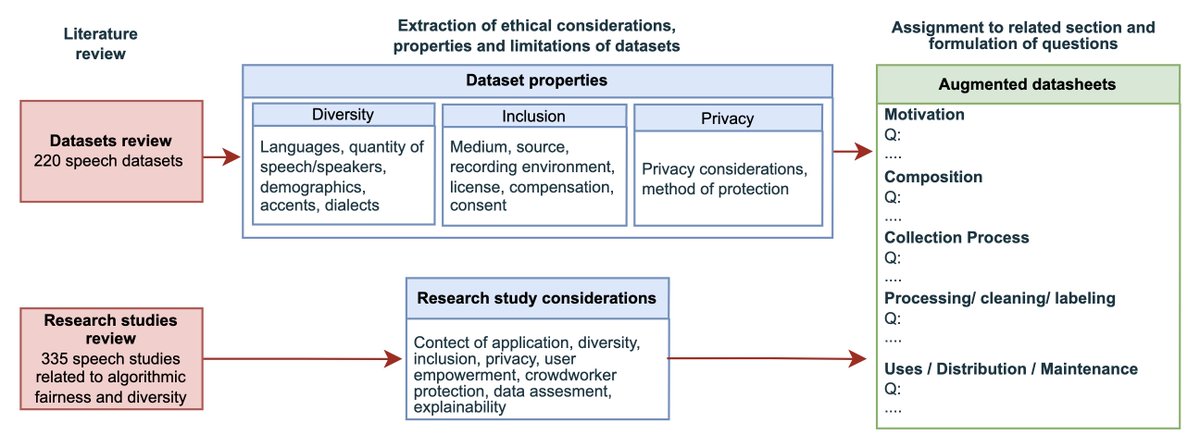
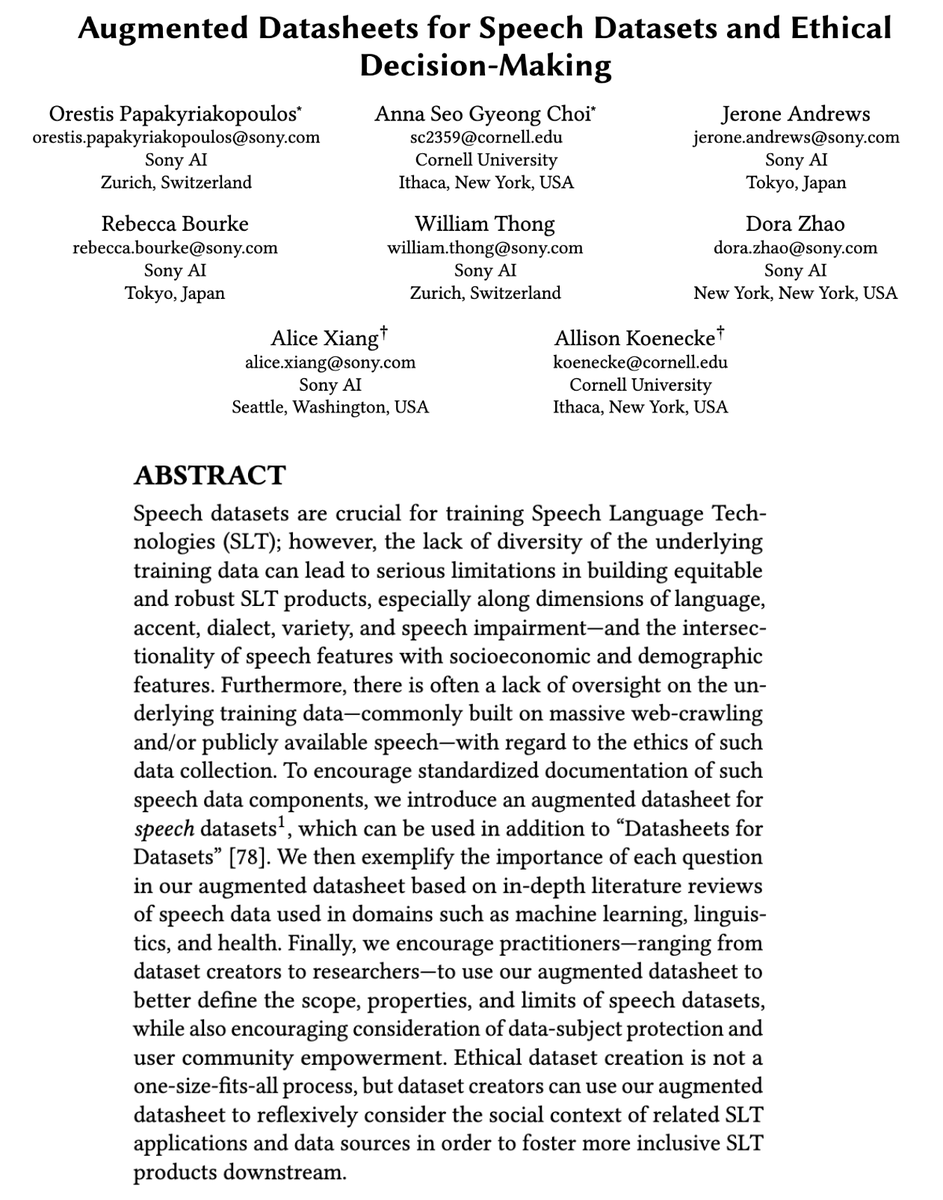
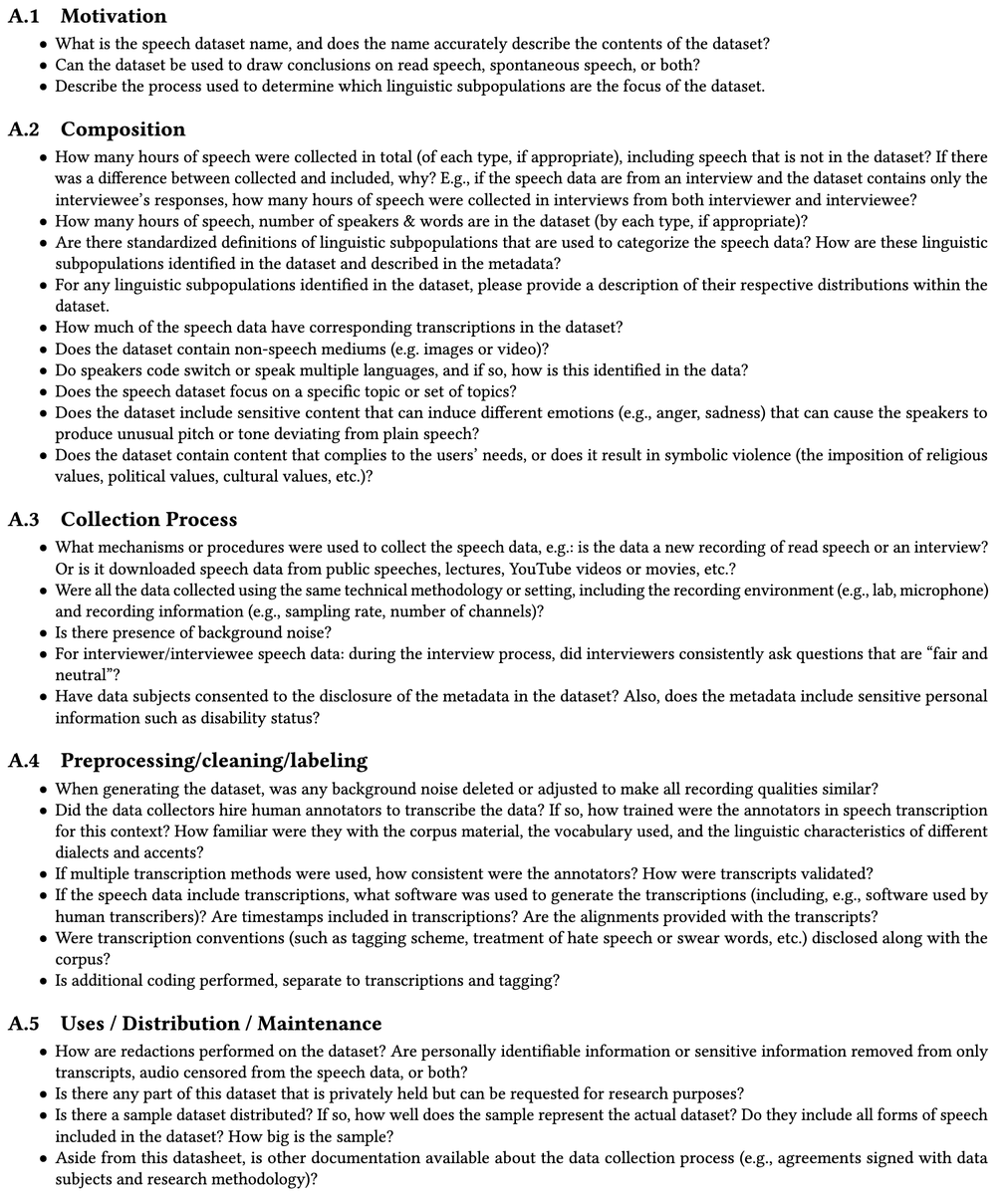
Excited to announce our new @FAccTConference paper, “Augmented Datasheets for Speech Datasets and Ethical Decision-Making“, led by @SciOrestis and @anna_sg_choi (who are presenting today) & @alicexiang! Link: https://t.co/h7p2F6n7rK; 🧵👇(1/9)
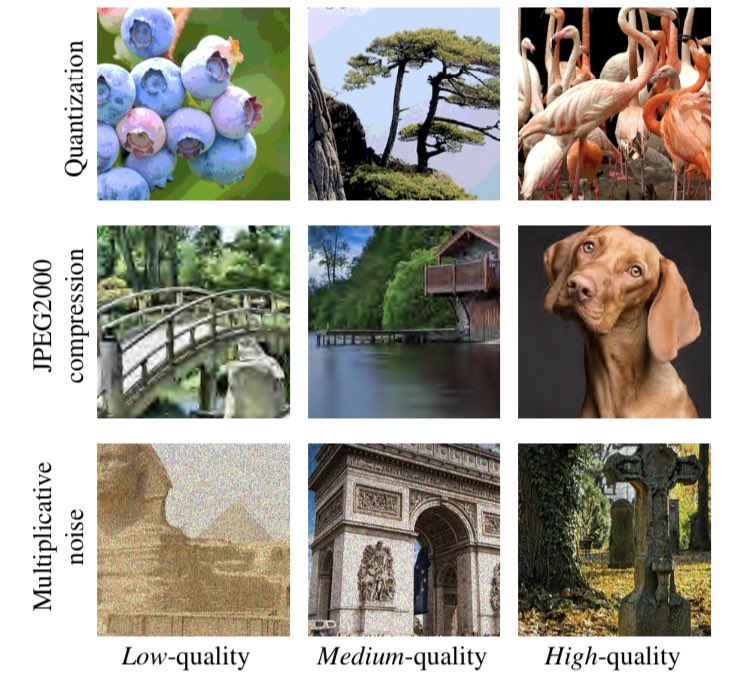
Interested in image quality assessment? Or how to derive differentiable correlation coefficients?
Join us today at #BMVC2022 to know more!
Paper: https://t.co/ql8l2WAxu4
Joint work with Jose Costa Pereira, @s_parisot, Ales Leonardis and @steve_mcdonagh
3, 2, 1 🏁
Meet Gran Turismo Sophy, a superhuman racing AI agent.
Developed as a collab between Sony AI, PDI, and SIE, #GTSophy is the world's first AI agent to outrace the world's top players in @thegranturismo, achieving a new breakthrough in #AI. https://t.co/LG9QyFn7TG
What is #GTSophy? 🏁
GT Sophy is an autonomous #AI agent trained utilizing a novel deep reinforcement learning platform. Our breakthrough research "Outracing Champion Gran Turismo Drivers with Deep Reinforcement Learning" was published today in @Nature. https://t.co/CmPh5A1dQp
In summary, we derive real-valued vector representations for every class and each protected attribute value.
By doing so at both feature and label spaces, we can improve algorithm fairness and preserve classification performance.
(4/4)
Excited to share that my first work in the field of algorithmic fairness and bias mitigation has been accepted at #BMVC2021!
Come say hi if you are attending the conference 🤗
🧵 (1/4):
We are also grateful to the work of Zeyu Wang and colleagues at @VisualAILab (CVPR'20) for benchmarking multiple mitigation methods.
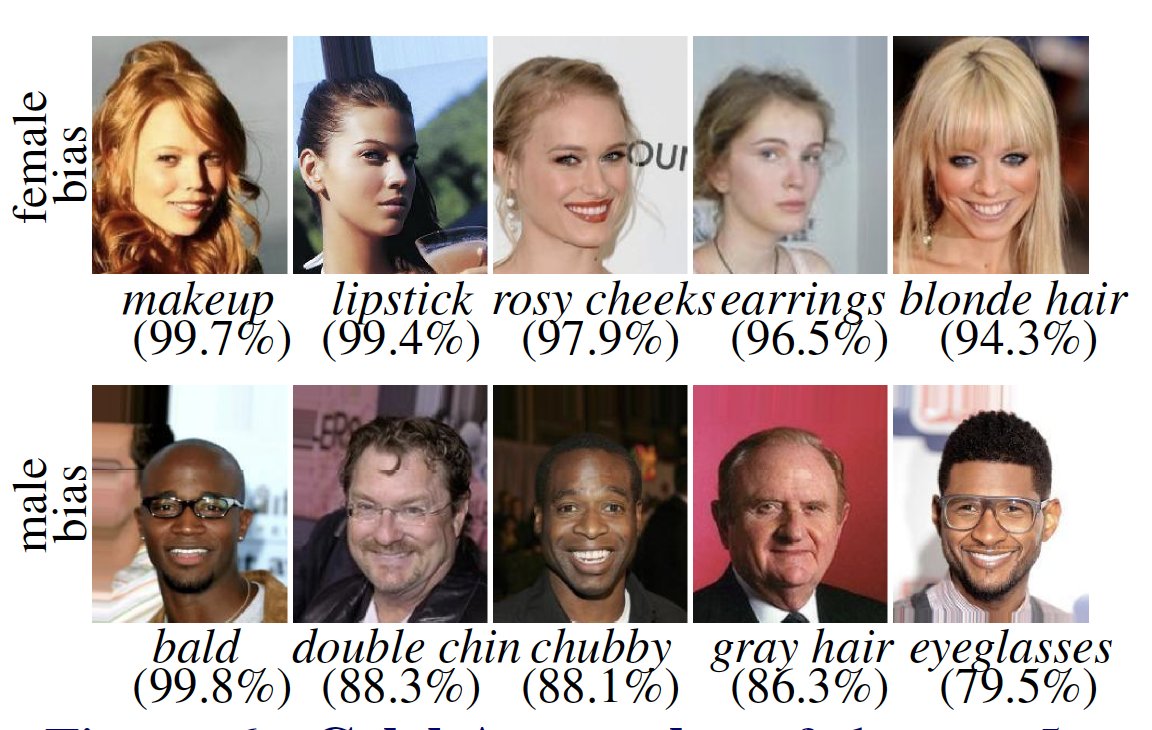
On these benchmarks, we improve the fairness of image classifiers by switching to a label embedding space, instead of a one-hot encoding.
(3/4)