In an era where real human-made art and animation is at serious risk I beg folks to please support this gorgeously crafted film. Those folks have been through hell to finally get it made and out there and they deserve success.
The U.S. soccer federation is a poor return on invested capital.
I played soccer for 20+ years.
Grassroots.
Academy.
D1 college.
Pursued professionally after.
And I’ll say the quiet part out loud:
The US soccer infrastructure is broken.
In America, we treat playing D1 soccer like it is the peak achievement.
For most families, clubs, coaches, and players, the entire youth soccer machine is built around one goal:
Get recruited.
Get a scholarship.
Play college soccer.
But if the objective is to produce world-class players, D1 soccer is a terrible development path.
From 18-22, some of the most important technical development years of your career, you are preparing for a 3-4 month season built largely around athleticism, direct play, set pieces, fitness, and survival.
Now compare that to an 18-year-old in Spain, Argentina, Morocco, Italy, England, or France.
That player has likely been in a professional environment for years.
Training daily.
Playing meaningful matches year-round.
Competing against grown professionals.
Getting thousands more touches.
Learning how to solve the game under pressure.
The gap is massive.
And it shows.
American players are usually athletic.
They are usually fit.
They usually compete hard.
But at the highest levels, that is not enough.
The biggest difference is technical comfort.
We do not move the ball like Spain.
We do not combine like Argentina.
We do not play with the same fluidity, rhythm, and confidence you see from countries where the game is embedded into the culture from childhood.
That comes down to volume.
Volume of touches.
Volume of street soccer.
Volume of futsal.
Volume of unstructured play.
Volume of high-level training environments.
Volume of meaningful games.
In the US, youth soccer is expensive, overly organized, overly coached, tournament-driven, and too often built around winning games at 13 instead of developing players for 23.
Parents spend thousands.
Clubs charge thousands.
Travel teams fly all over the country.
Showcases become the product.
Recruiting becomes the scoreboard.
But the return on invested capital is poor.
We probably spend more money on youth soccer than almost any country in the world, yet the technical output does not match the investment.
That is a broken operating model.
And like any business, if the output is weak, you do not blame the customer.
You inspect the system.
The US has talent.
The US has athletes.
The US has money.
The US has facilities.
But the foundation is wrong.
We built a pay-to-play, college-recruiting machine and confused it for a world-class player development system.
Those are not the same thing.
Until we fix the grassroots layer, increase meaningful touches, make development less dependent on family income, and stop treating college soccer as the top of the mountain, the US will keep underperforming relative to its resources.
I’m not saying this to trash US Soccer.
I’m saying it because I lived it.
And if we actually want to become a powerhouse, we have to be honest about the infrastructure first.
Read nothing else: The tweet below is a perfect explanation of why America, which has the greatest athletes and infrastructure, will never compete against the greatest countries in the World Cup.
The day US soccer players stop needing to have an average household income of 300k a year to have youth development is the day we start competing for a cup
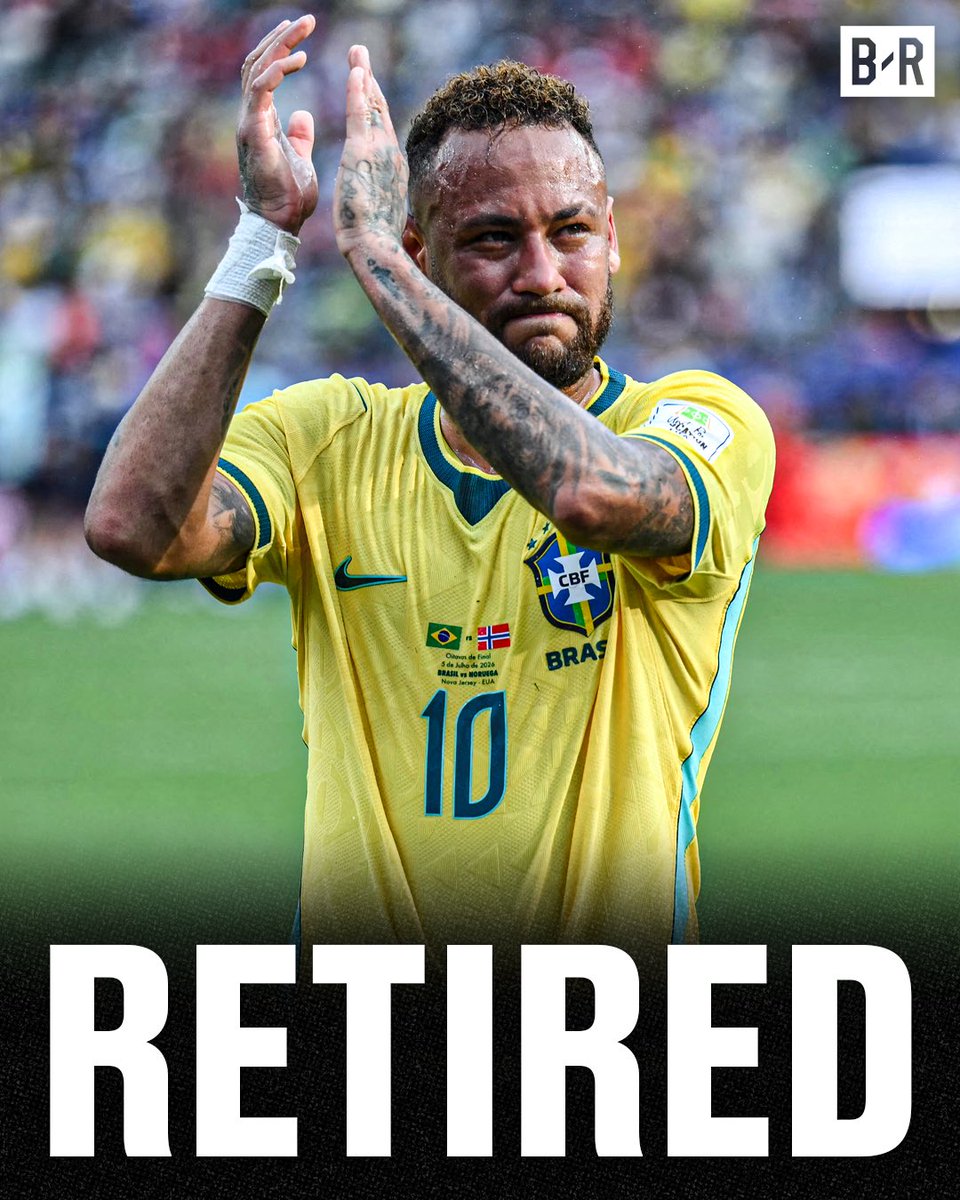
Neymar made his debut for Brazil and scored his first international goal at MetLife Stadium in August 2010.
The 34-year-old scored a late consolation goal before slumping to the ground in tears following the final whistle at the very same place on Sunday.
BREAKING: Neymar has announced his retirement from international football, per @FabrizioRomano 🚨
“I tried. I tried. It started here at MetLife stadium and I finished here. It is now over."