Watching Lionel Messi at the 2026 World Cup, I found myself turning over one of the oldest questions a working life presents.
We are often told: leave when the ovation is loudest. It is sound advice. But I no longer believe it is the whole truth.
I believe that there is a time to step aside, when others must be given room to lead, or when we can no longer serve as we once did. But there is also a quieter danger: leaving too soon, not because we are finished, but because we are afraid of what a stumble might do to how we are remembered.
A stumble in the second act does not erase the first, and an exit timed to applause is no guarantee that history will remember you at all.
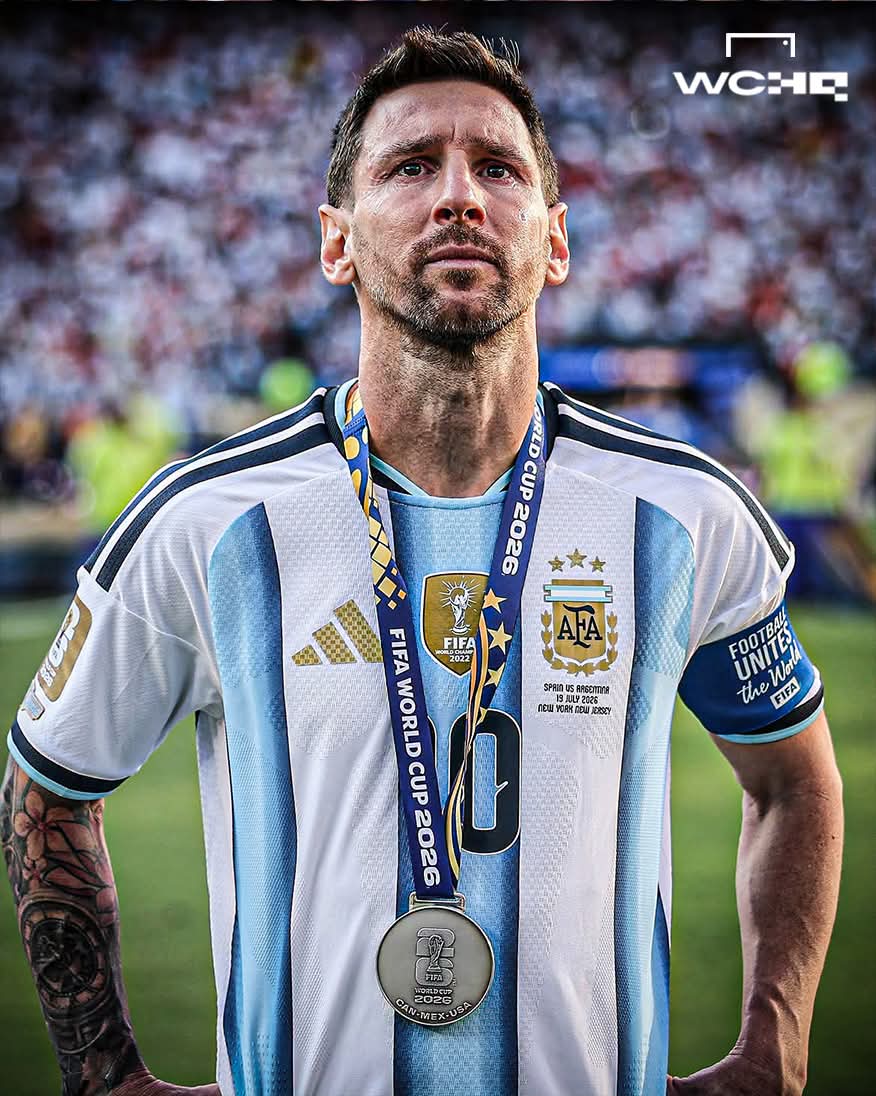
Messi could have walked away after 2022. Trophy in hand, story complete, the perfect close to a perfect career. Instead, he came back.
He risked comparison with the man he used to be, the possibility of falling short in front of a watching world, the chance that this second act would dim what the first had built. Argentina did not lift the cup this time.
But at thirty-nine, his composure and his experience still carried his country to a final. That is not a small thing.
His legacy was not diminished by trying again. If anything, it was enriched.
That is the deeper truth.
Do not retire from your purpose because you fear failure more than you love the work.
If your work remains honest, your contribution still matters, and you still have something left to give, then keep going.
A life well lived is measured as much by the courage to continue as by the wisdom to know when to stop.
Conquer fear. Keep playing the game of life.
Osita Chidoka
20 July 2026
After 2022, none of us imagined we’d even be here. We all thought Messi wouldn’t play in 2026. At 39, he reached a level no athlete has ever reached at that age. He owed us nothing, yet gave us everything.
You’ll always be the greatest, Leo.
Tus lágrimas son las nuestras, Capitán 👑🇦🇷
Nos diste las alegrías más grandes de nuestras vidas. Gracias por la entrega, por la magia y por dar la vida hasta el último segundo 🙌
¡Te amamos para siempre, Leo! 🩵🤍
✉️🇦🇷 Leo Messi’s letter.
“The pain is immense, it will take time for this wound to heal.
But I also choose to hold on to all the good things, all matches we turned around by giving everything and moments that will remain in our memories forever.
I will always remember the support of an entire country that, together with the work and effort of this group, brought us back once again among the best teams in the world.
Today, it is difficult to appreciate what we achieved… but this group has really reached two consecutive World Cup finals.
Thank you from the bottom of my heart for every greeting and every message.
Once again, we managed to come together as a country and stand united, sharing the immense pride of being Argentine.
I also want to congratulate Spain on winning World Cup”. 🇪🇸
50 years. The Jubilee year.
In the Bible, every 50th year was declared a Jubilee. The name comes from the Hebrew word yōḇel, meaning the ram's horn that was blown across the land to announce a new beginning. It was a year of freedom, restoration, and celebration.
Debts were forgiven. Slaves were set free. Families were reunited with their ancestral land. It was a fresh start, a reminder that after years of waiting, restoration would finally come.
So why talk about the Jubilee year?
Because, ladies and gentlemen... even though Arsenal didn't have to wait 50 years, after years of near misses, heartbreak and perseverance, they too experienced their own season of restoration.
It's been 50 days since Arsenal were crowned 2025/26 Premier League champions.
I’m going to take my time with this one. If you’re busy, save this post and read it later. If you’re a night owl like me, this is a good late-night read.
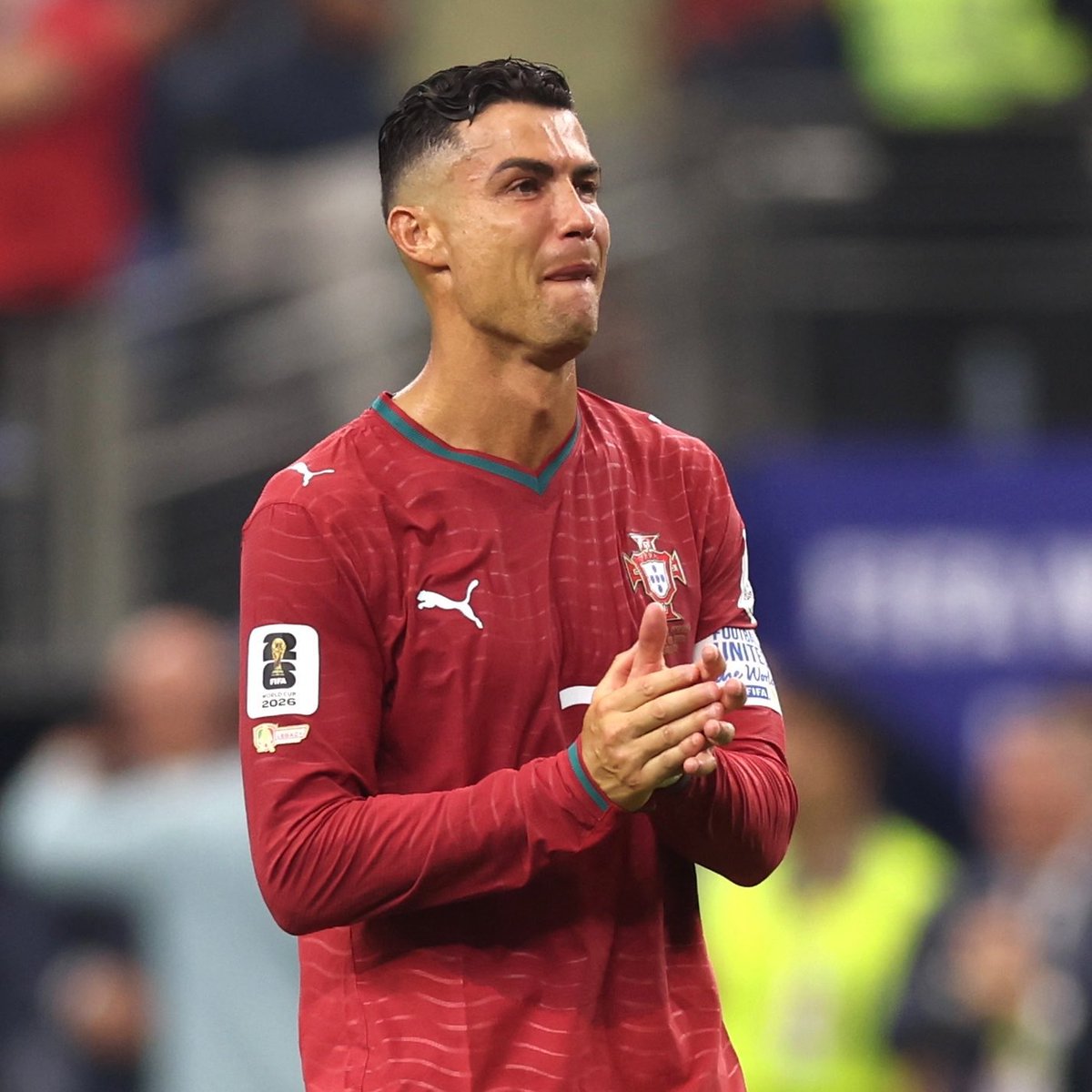
Do you know the worst thing about Cristiano Ronaldo?
It’s that he set the standards for what defines a legend… and in the end, he couldn’t even live up to the standards he created himself.
After winning Euro 2016, Ronaldo said:
“You can’t become a legend until you win a trophy with your national team.”
It was an obvious dig at Messi.
Argentina had just lost the 2014 World Cup final to Germany, and Messi was going through the toughest period of his international career. Those words only added fuel to the fire.
Where was the respect for a rival, Ronaldo?
The surprising part was that social media completely embraced that narrative. Messi was labeled a bottler, while Ronaldo was declared the winner of the rivalry—at least in the media, not on the pitch.
Then Messi retired from international football, came back, won the Copa América, and suddenly they were level in major international trophies.
What happened next?
Ronaldo fans started saying that one Euro is worth more than a hundred Copa Américas, claiming there was no competition in South America. Not true—but that became the excuse.
Then Messi went on to win the World Cup.
This time, the excuses changed again.
They claimed FIFA had fixed the tournament for Messi. That the World Cup was scripted in his favor. They simply didn’t know what else to say.
Then Ronaldo himself came out with one of the strangest quotes imaginable:
“A legend’s career can’t be defined by just seven games.”
At first glance, it sounds reasonable.
But beneath it was another attempt to diminish what Messi had achieved.
Before the World Cup, they insisted it would be Ronaldo’s tournament. On paper, Portugal had a fantastic squad. If the manager couldn’t get the best out of them, that’s Portugal’s problem—not Ronaldo’s.
Yet that same Portugal squad wasn’t any weaker than the Argentina team Messi led to the 2014 World Cup final—the same team people mocked Messi for not carrying to the title.
Just a couple of days ago, Ronaldo said:
“The World Cup doesn’t define my career, whether I win it or not.”
A statement that directly contradicts what he had said years earlier, when he admitted that winning the World Cup would make him feel completely fulfilled.
Now you’re 41 years old, Cristiano.
By your own standards:
* You have 5 Ballon d’Ors, not 8.
* You have one European Championship, not two Copa América titles.
* You never won the World Cup.
* You have four European Golden Shoes, while Messi has six—even though you’re an out-and-out striker.
So what now?
Will you keep playing until the next World Cup and become the first player to appear in one at 45, hoping to finally win it?
If we judged you by the standards you created, you wouldn’t qualify as a legend.
Of course, nobody actually judges you that way. Everyone still recognizes you as one of football’s greatest legends.
The real mistake was comparing Ronaldo to Messi in the first place.
That rivalry was exaggerated from the beginning by the media and figures like José Mourinho.
Messi conquered every major trophy available to him, shattered records that once seemed untouchable, and at 39 years old he’s still competing with Kylian Mbappé and Erling Haaland—the stars of the next generation—for the Golden Boot. And honestly, he could still win it.
What made Messi beloved by so many fans is that he never tried to diminish Ronaldo’s achievements.
Ronaldo, on the other hand, repeatedly made comments that many interpreted as attempts to downplay his greatest rival’s accomplishments—and that’s never an admirable trait.
Cristiano helped create a generation that thinks belittling other people’s achievements while constantly glorifying your own is a way to establish dominance.
Good bye. Ronaldo.
If you’re happy that Portugal and Cristiano Ronaldo are out, don’t say anything. Just retweet and drop laughing emojis in the comment section. 😂😂😂😂😂😂😂😂😂😂😭😂😂😂😂😂😂😂😂😂😂😂😂😂😭😭😂😂😂😂😂😂😂😂😂😂
Follow everyone who retweets and comments under this post.
They conveniently cut out the part where the referee blew the whistle to suit their propaganda. Also, notice how the Cape Verde players didn’t complain because they heard the whistle too 😂
https://t.co/LfXMDQC6wE