To support early recovery, @ICRC & @SYRedCrescent carried out urgent repairs at Al-Khafseh water treatment plant, boosting capacity to 400.000 m³/day. This upgrade strengthens the system’s ability to supply 60% of Aleppo’s water needs in case other sources need to be complemented
On SDF-Damascus front: Several important developments in recent weeks have made the direction of the SDF-Damascus integration agreement much clearer, even if implementation remains gradual and incomplete.
The broad contours of the deal are now becoming visible, and they point in one direction: the SDF may gain influence, positions, and cultural recognition, but from within the Syrian state, not through a parallel structure outside it.
The central red line for Damascus appears to be that there will be no separate entity. Any authority the SDF or its affiliated actors receive as part of the agreement is increasingly being framed as authority exercised within the institutions of the Syrian government apparatus, not through an autonomous political or administrative order of its own. That is the key principle now emerging.
This is visible in the growing number of SDF-linked officials moving into formal state roles. The SDF side has secured the Hasakah governorship, today gained the position of assistant to the defence minister (given to YPG commander Sipan Hemo), and is expected to receive additional positions in other state institutions, likely including the deputy or assistant to the foreign minister. The pattern is clear: representation is being offered, but only within the Syrian government apparatus.
This is also likely the beginning of a broader template. One apparent reason the Syrian government has shown some leniency on this file, beyond the pressure from Washington, is that it may see the arrangement as a model for integrating other minorities as well, especially the Druze. In that sense, what is being worked out in the northeast is not an isolated case but the outline of a wider state approach to post-war minority incorporation.
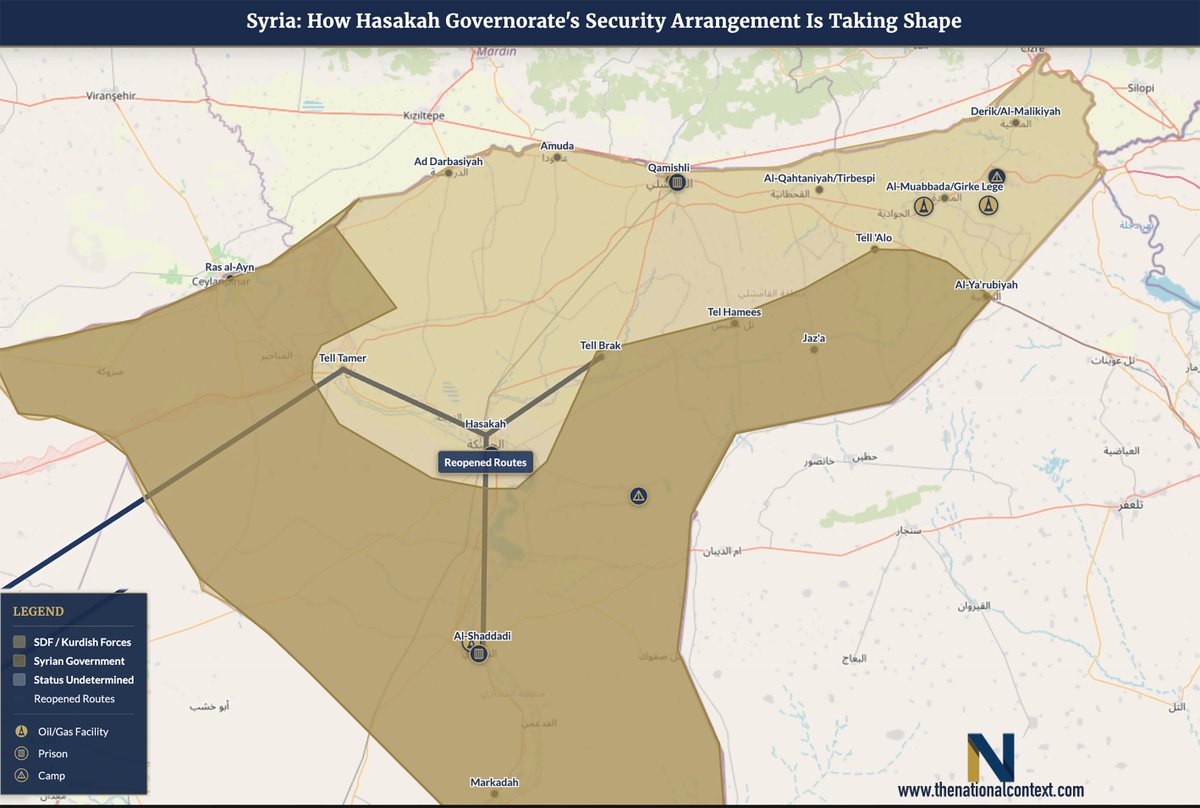
The clearest sign that hard autonomy is being hollowed out, however, lies not in appointments or symbolism but in the fate of the northeast’s core sovereign files. Ilham Ahmed, one of the most senior SDF-linked political figures, recently told Rudaw that the remaining oil fields, the border crossings including Semalka, and Qamishli Airport would all fall under central government control. This is not merely administrative authority but physical control as well. The model she described is one in which people from the region may still be incorporated into these institutions, but as civil servants and employees working within a state-run structure. In other words, locals may remain present, but the authority itself would belong to Damascus. The Syrian government has already deployed its own interior ministry personnel to staff the Qamishli airport, as reported by the official news agency SANA.
That distinction is crucial. If the airport, the oil fields, and the border crossings are all physically controlled by the Syrian government, then the basis for any separate hard-autonomy structure is largely gone. Whatever remains would be local influence and representation within the Syrian state, not a separate region with its own sovereign levers. The question is no longer whether the SDF will retain influence. It probably will. The real question is whether it will retain any separate sovereign structure of its own. Control over the border, oil, and airport suggests the answer is increasingly no.
The education file points in the same direction. Recent moves by the Syrian education ministry suggest that Kurdish will be introduced as a school subject, not as the language of instruction. That distinction matters. The circular in question refers specifically to preparing curricula for the Kurdish language subject across educational stages, not to teaching the wider curriculum in Kurdish. The emerging model appears to be one in which students in these areas would continue studying in Arabic, like the rest of Syria, while taking Kurdish as an additional class in all grades. That falls well short of the broader Kurdish-medium educational structure the SDF had sought, and instead points to Kurdish language recognition within the Syrian state system rather than a separate educational order.
Other developments point toward deeper integration as well. Some of the roads between Hasakah and the rest of Syria have gradually reopened, and similar steps are expected around Qamishli. What remains unclear is who will man these routes and whether residents will still face the restrictions and permit requirements that previously reflected the area’s separate administrative status. If such barriers continue to fall, that would be another significant signal that these areas are being fully reintegrated into Syria proper and that free movement is returning under a single state framework.
The same pattern can be seen in the symbolic and institutional sphere. As integration advances, official buildings in Hasakah are increasingly displaying bilingual Arabic-Kurdish signage. In Kobani, the official name endorsed and displayed on municipal and government buildings is now Kobani rather than Ayn al-Arab. These are important cultural and symbolic concessions. They show that the state is willing to absorb some Kurdish identity markers into the new order. But they remain concessions in recognition, not markers of parallel sovereignty.
The security file is more complex, but even there the direction appears similar. Kurdish security structures are likely to continue in Kurdish areas, but as forces integrated into the Syrian state rather than operating as an independent apparatus. Taken together, the trajectory is becoming much clearer. The SDF is not simply disappearing, but it is increasingly being transformed from a standalone authority into a bloc operating within the Syrian state. Kurdish actors are gaining positions, cultural recognition, and some local role, but the structure being built does not point to an autonomous entity existing alongside Damascus. It points instead to incorporation into a unitary state framework. One important set of unresolved questions remains: who controls arrests, whether the courts are folded into the Syrian judicial system, and how the chain of command on the ground is ultimately defined. Those issues will determine how deep this integration really goes.
Another important development is the start of returns by displaced Afrin residents from Hasakah to their home areas. The first batch, around 400 families, began returning today, with more expected to follow. For Kurds, this is highly symbolic. Families uprooted from their native areas are finally going home. But it also fits the broader logic of the emerging settlement. As Kurdish cultural and linguistic rights are increasingly absorbed into the Syrian state framework, the return of displaced Kurds to places such as Afrin reduces the wartime concentration of Kurdish populations in Hasakah and diffuses them back across their original localities. That does not diminish Kurdish presence in Syria, but it does make the idea of a territorially concentrated separate entity harder to sustain.
The overall trajectory, then, is not one of preserved hard autonomy under a different label. It is one of gradual state reabsorption. Kurdish actors may still hold influence, and in some areas meaningful influence, but the decisive levers of sovereignty are returning to Damascus. The border, oil, and airport are the heart of the story. Once those return to central state control, what remains is not autonomy in the classic sense but Kurdish participation within the Syrian state.
Within the standards and history of Syria, these are unprecedented gains for Kurds, even if the recent territorial setbacks make them appear otherwise. In a sense, the SDF’s high initial expectations served it well: had it not controlled such a wide territory, the scale of its losses would not have been so dramatic, and the leverage to extract what it has now secured would not have existed. What the SDF has gained is significant in context, even if it falls far short of what it once envisioned.
More: https://t.co/vJJbJNow9P
With the valued assistance of the @ICRC, 25 government fighters and 61 Druze fighters were exchanged yesterday in a smooth and orderly process. Families reunited. A step away from vengeance, and a step toward stability.
The United States was honored to help facilitate this effort. My sincere thanks to Representative @AbrahamHamadeh for his initiative, quiet persistence, and moral clarity in helping get this process started. Leadership matters, especially when it brings people home.
Today, ICRC teams facilitated the release of 86 detainees between Damascus & Sweida. I would like to thank all parties who played a role in reuniting families who spent months anxiously waiting for their relatives. …/…
Full news release:
https://t.co/x5mFBeiJOa
@CdricLabrousse Agreed on all. I would add that the wall of fear al-Hijri has created with the help of Tareq, Muhannad, Rami, and others is far more fragile than it appears from the outside. The Takfir-like mechanism they employ to punish criticism today is impossible to sustain long term.
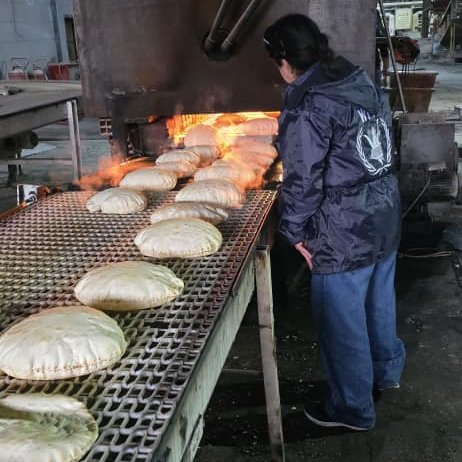
Thanks to 🇺🇸, @WFP in #Syria continues delivering wheat flour to As-Sweida governorate.
🚚Today’s convoy delivered 502 MT of wheat flour - that’s enough to produce over 6 million bread loaves 🫓 and support food security for thousands.
#FoodSecurity@StateDept@USEmbassySyria
@SyrianShabab Very true. I would add that, for a variety of reasons, many of the minority leaders who have emerged are stained by association with the Assad regime - something casual observers don't fully appreciate. Jihad Al-Ghoutani is not a protector but a war criminal, for example.
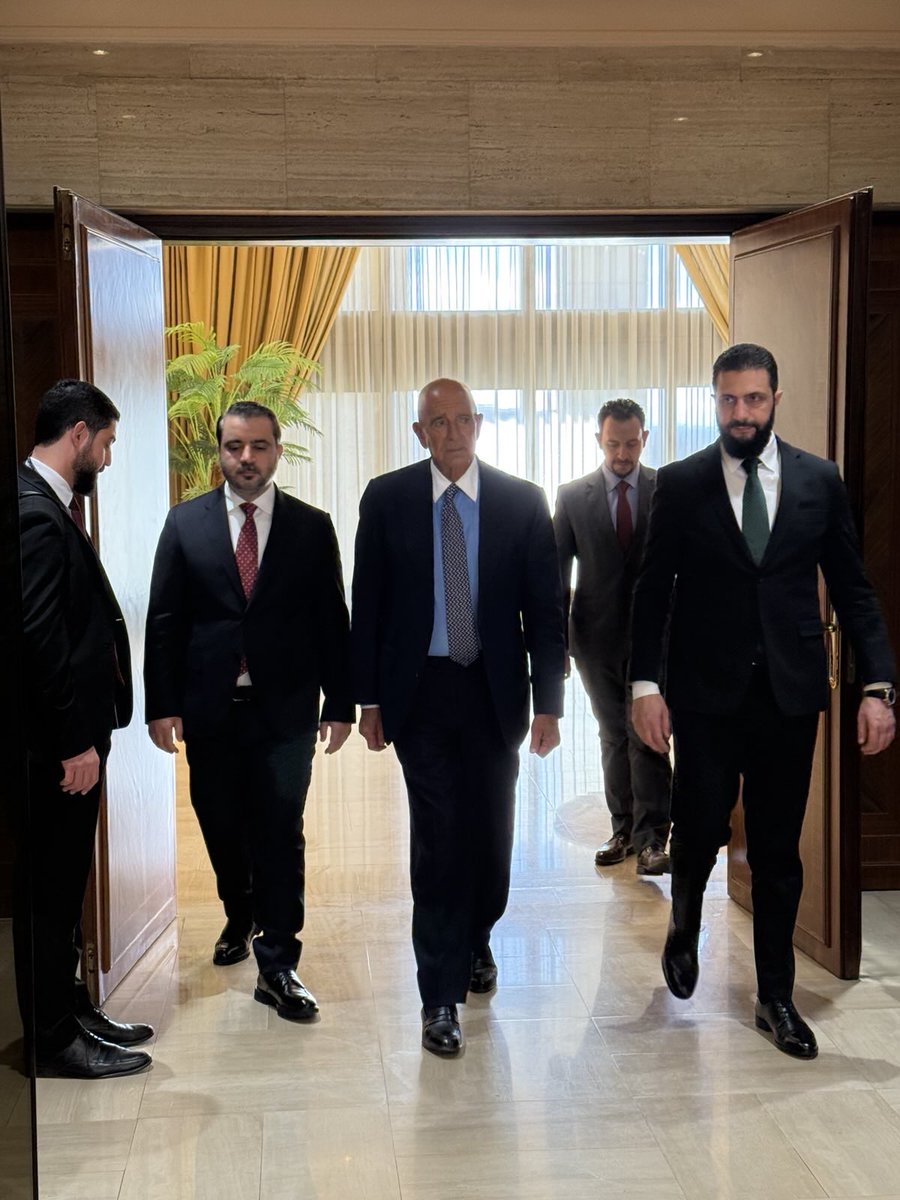
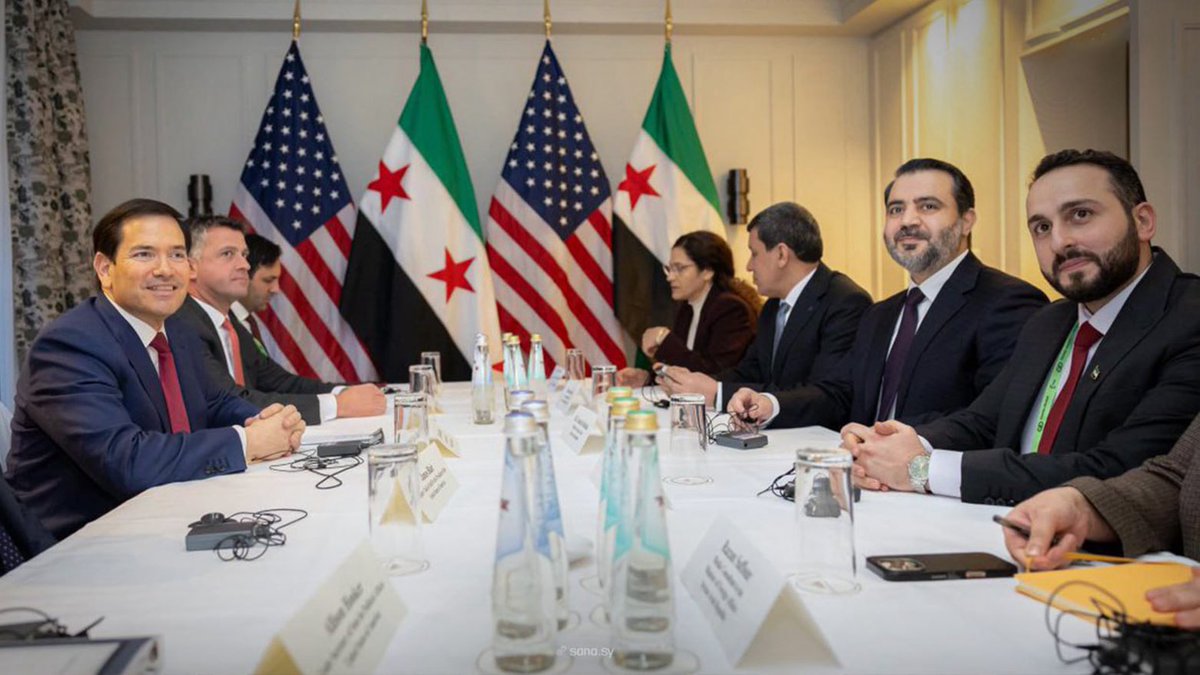
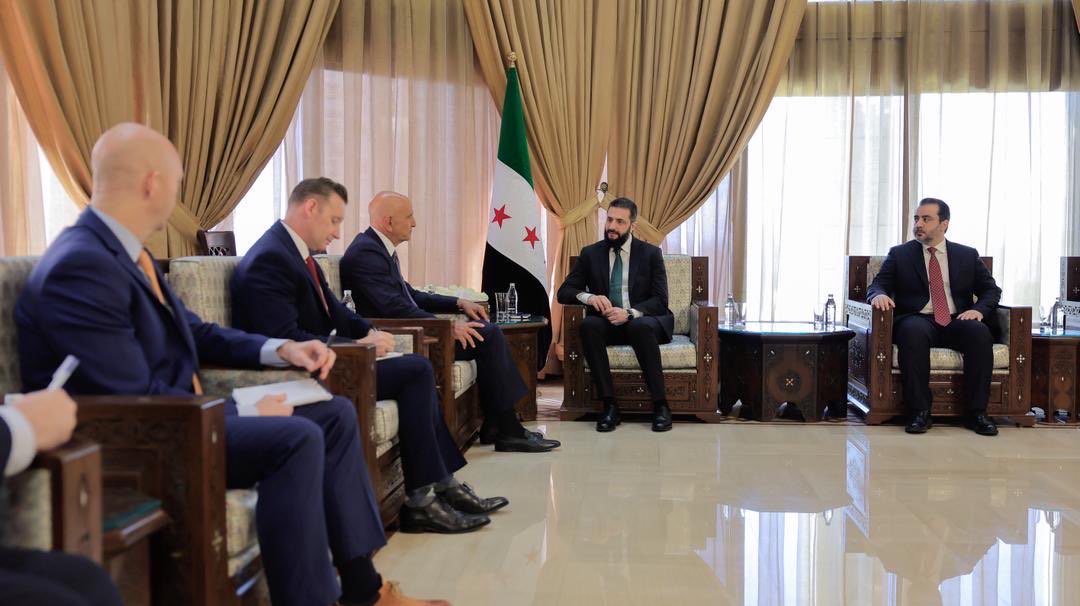
Today, on behalf of President Donald J. Trump and Secretary of State Marco Rubio, I met with Syrian President Ahmed al-Sharaa, Foreign Minister Asaad al-Shaibani, and members of their team in Damascus to discuss recent developments in Aleppo and the broader path forward for Syria’s historic transition.
President Trump recognizes this moment as a pivotal opportunity for a new Syria — a unified nation in which all communities, including Arab, Kurdish, Druze, Christian, Alawite, Turkmen, Assyrian, and others, are treated with respect and dignity and afforded meaningful participation in governance and security institutions. In recognition of this opportunity, he agreed to lift sanctions in order to “give Syria a chance” to move forward.
The United States Government welcomes Syria’s historic transition and extends its support to the Syrian government under President Ahmed al-Sharaa as it works to stabilize the country, rebuild national institutions, and fulfill the aspirations of all Syrians for peace, security, and prosperity.
The United States has long supported efforts to defeat ISIS and promote stability in Syria, including through Operation Inherent Resolve (OIR) and our partnership with the Syrian Democratic Forces (SDF), whose sacrifices have been instrumental in achieving enduring gains against terrorism.
In this context, the Syrian government has reaffirmed its commitment to the March 2025 integration agreement with the SDF, which provides a framework for incorporating SDF forces into national institutions in a manner that preserves Kurdish rights and strengthens Syria’s unity and sovereignty.
Recent developments in Aleppo that appear to challenge the terms of this agreement are deeply concerning. We urge all parties to exercise maximum restraint, immediately cease hostilities, and return to dialogue in accordance with the March 10 and April 1, 2025 agreements between the Syrian government and the SDF. Violence risks undermining the progress achieved since the fall of the Assad regime and invites external interference that serves no party’s interests.
Secretary Rubio’s team stands ready to facilitate constructive engagement between the Syrian government and the SDF to advance an inclusive and responsible integration process — one that respects Syria’s unity, upholds the principle of a single sovereign state, and supports the goal of one legitimate national military.
The objective remains a sovereign, unified Syria — at peace with itself and its neighbors — where equality, justice, and opportunity are extended to all its people.
We call upon Syria’s neighbors and the international community to support this vision and to provide the cooperation and assistance necessary to help make it a reality.
Joint Statement on the Trilateral Meeting Between the Governments of the United States of America, the State of Israel, and the Syrian Arab Republic
https://t.co/5ZZOcYCPXf
في معنى الكلام و قيمته...
يوحنا العاشر يازجي...
بقلم الدكتور نوار نجمة .
لقد استطاع الرجل خلال عام على التحرير أن يضع المسيحيين السوريين في مكانتهم الحقيقية، شركاء في وطن عاشوا على أرضه منذ آلاف السنين وشاركوا في بناء أعظم دوله ولحظاته وأحداثه التاريخية .
يرددها البطريرك يوحنا العاشر يازجي في كل مناسبة وفي كل لقاء وعند كل مفترق طرق ، ان المسيحيين السوريين هم جزء من هذا الشرق، وهذا الشرق جزء منهم، يزدهرون بازدهاره و يزدهر بوجودهم، و في هذا الشرق لهم وطنُ هو سوريا يحميهم ويحمونه، يحبهم ويحيونه، يدافعون عنه ويدافع عنهم.
شركاء مع اخوتهم وأحبتهم مسلمو هذا الوطن الذين عاشوا معهم منذ اربعة عشر قرن، فكانوا لبعضهم السند والقوة، وكانوا مع بعضهم الموقف الوطني للعظيم الذي يتجسد اليوم في هذه اللقاءات والزيارات والتي وإن دلّت على شيء فهي تدل على المكانة الطبيعية والراسخة لمسيحي سوريا في مرحلة بناء الدولة .
أدرك غبطة البطريرك يوحنا العاشر يازجي منذ الأيام الأولى للتحرير أن عليه حمل كبير ومسؤولية وطنية عظيمة، فأبى إلا أن يتصدى له بقوته ال��سدية والروحية والوطنية، فكان رجل الدين الوطني بامتياز يقود رعيته وابناء طائفته نحو الانتماء الوطني السوري، و يدافع بقوة عن كرامة هذا الوطن وكرامة مواطنيه رافضاً دائماً أي تدخل خارجي في القرار المسيحي السوري الذي أراده دائماً قراراً وطنياً منسجماً مع الأحداث في سبيل انجاح مرحلة انتقالية دقيقة ريما تكون من أعظم التحديات التي تواحه الشعب السوري منذ اكثر من قرن من الزمان.
فكان موقفه الصريح والواضح وهو أن المسيحيين السوريين شركاء وداعمين حقيقيين للقرار الوطني في بناء الدولة السورية الجديدة التي تعلي الانتماء الوطني و تعمل من أجل كرامة وحرية كل السوريين .
لأنه وطنُ لنا جميعاً، و علينا جميعاً تقع مسؤولية حمايته ويناءه وازدهاره.