🚨 A junior at Jane Street reportedly landed a $220K–$600K role because he used AI to analyze trillions of data points faster than most teams ever could.
In this 1-hour lecture, he breaks down the exact system behind it:
• how he researches massive datasets
• how AI finds patterns humans miss
• how his machine turns raw data into decisions
• how you can apply the same thinking yourself
Skip Netflix tonight.
Watch this instead.
One hour could completely change how you think about research, AI, and opportunity.
For HFT interviews, I had to prepare for computer science round even for a senior role. And all companies ask these questions from freshers.
Here's the list of commonly asked computer science questions you must prepare as a fresher.
Operating Systems:
1. Process vs thread
2. Virtual memory, paging, thrashing
3. Fragmentation: internal vs external
4. Semaphore vs mutex
5. Producer consumer problem
6. Deadlock and its conditions
7. Banker’s algorithm
8. Scheduling algorithms: FCFS, SJF, SRTF, RR
9. RAID and its types
10. Direct mapping vs associative mapping
11. socket, kernel and monolithic kernel
12. main memory vs secondary memory
DBMS:
13. ACID properties
14. Normalization vs denormalization
15. Conflict serializability
16. Concurrency control protocols
17. Shared lock vs exclusive lock
18. Indexing
19. Vertical vs horizontal scaling
Computer Networks:
20. TCP vs UDP
21. Types of network delays
22. What happens when you type google[dot]com
23. Three way handshaking
24. IPv4 vs IPv6
25. how DNS works
26. IP address vs MAC address
27. Subnetting
28. Firewalls
29. Server side load balancing
30. HTTP vs HTTPS
31. Hub vs switch
Good sources for prep are Gate videos and TUF blogs.
The wind came and never left.
They spoke of the calm at the center.
Other raised walls,
learned to rest beneath thunder,
grew familiar with shudder.
He pressed forward,
until he was only motion.
Even now, he rattles their shutters,
the eye forever at his center.
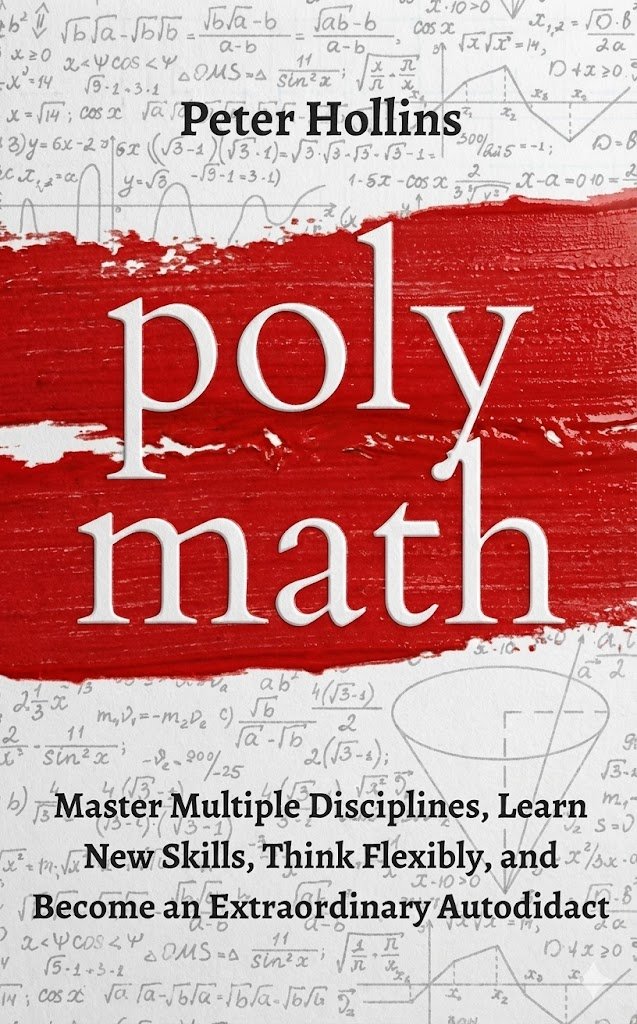
a framework for building range without losing depth.
> this book breaks down how to learn across disciplines, acquire skills fast, and think flexibly without becoming scattered.
> written for serious autodidacts
- LR is mostly about L1 (lasso) or L2 (ridge) penalty
- Naive Bayes is alpha
- Decision tree nobody uses as a standalone algorithm but needs to be learnt how it works
- Random forest is all about max depth, no. of estimators, max features (cannot be all of them), min. samples split and leaf
- GBT is about using xgboost/catboost/lightgbm and focusing on the same as above + learning rate, alpha/lambda, no. of leaves, subsample/col. sample by tree, and boosting type if applicable
- PCA is all about leaving it alone for time series unless you roll / use it for research. PLS is good though. Types of PCA and when to use it:
-> linear for assuming linear relationships between features
-> kernel for nonlinear relationships between features
-> incremental if you have tons of features and samples, and want to run PCA fast
-> robust PCA when you have outliers
- If we talk about PCA, one can mention ICA if you want statistically independent features rather than uncorrelated ones
- kNN nobody uses but k-means is useful where obviously no. of clusters matter the most
- Support vector machine when nothing works and you're just curious if this one works. Relies on C and kernel, for capturing linear or nonlinear relationships
- NNs params is a story for another post, since these depend on types of NNs. But remember NN layer -> normalisation layer -> dropout layer. Sometimes you see activation layer between normalisation and dropout or even later; this depends if you want flexibility in terms of when to put it or you just drop it and add activation param inside the NN layer.
- Better System Trader
- Flirting with models
- Excess Returns
- Top Traders Unplugged
- Odds on Open Podcast
- Systematic Shenanigans (quick plug)
(No particular order)