Sharing:How to Travel: An Ancient Guide for the Modern Tourist
Herodotus
Edited and translated by M. D. Usher
A transporting anthology of ancient Greek and Roman travel writings…https://t.co/etZQAnFuU6
Note: thanks to generous support from the IAHR, we hope to make participation as accessible as possible. Limited travel support may be available for participants with financial need. Please indicate in your submission if you would like to be considered.
https://t.co/M2o0Tnt61r
Heidegger's Metaphysics is "well-written and tightly argued" and "exemplifies how to work on European philosophy..." (The Review of Metaphysics).
Now out in paperback!
Order your copy: https://t.co/YiAF9OK10f
Read a preview: https://t.co/8qJ1IOaEkc
Today's featured title:
"Death and the Afterlife in Syriac Christianity: Creating Social Identity and Emotional Communities," by Maria E. Doerfler, Cambridge University Press, 2025
@CambridgeUP
https://t.co/2xbfcqpxBL
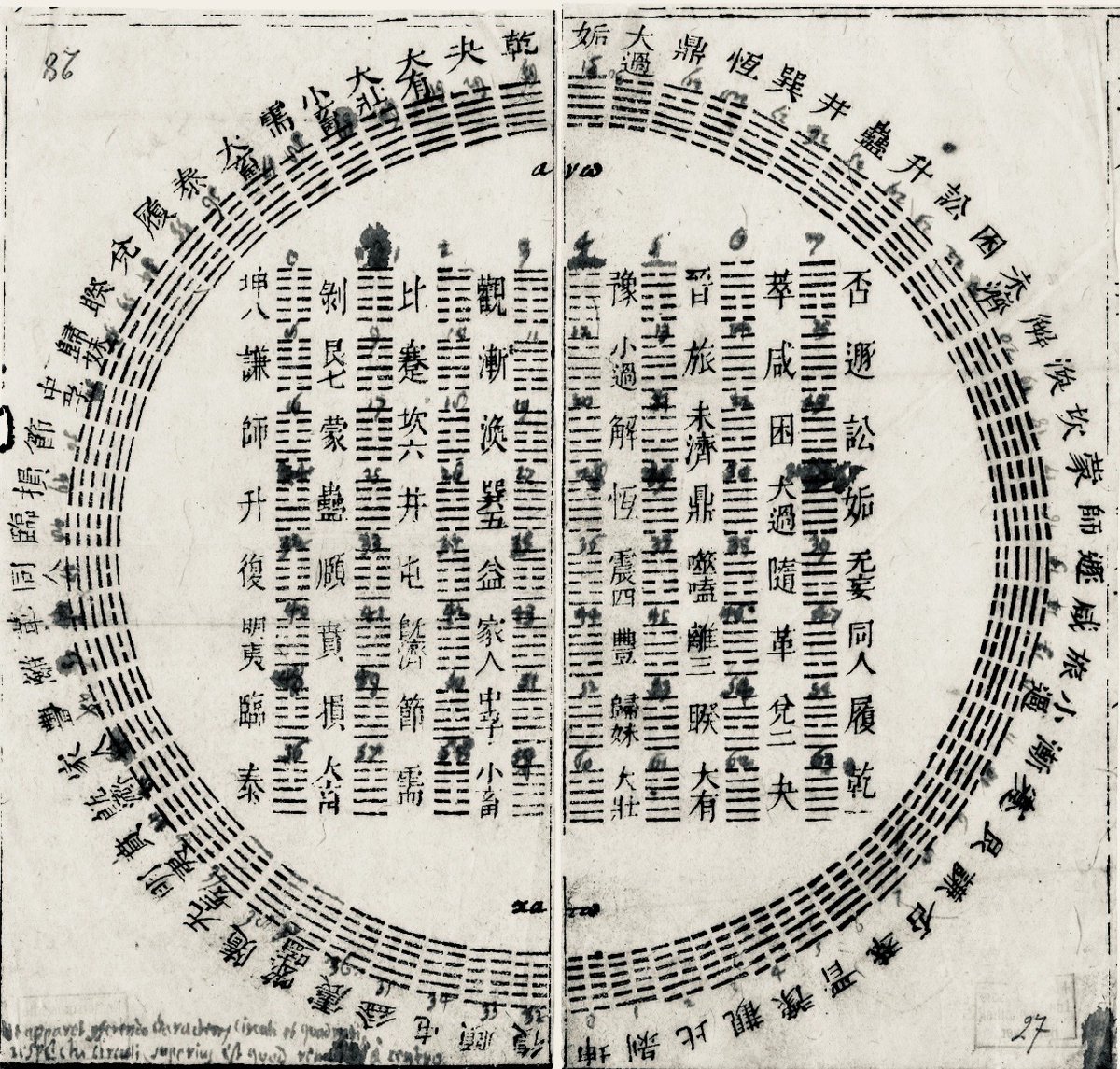
A French Jesuit in Peking, Joachim Bouvet (d. 1730), came to believe that the “I Ching” was not only China’s oldest text — but humankind’s.
Older, even, than the “Book of Genesis”.
Bouvet’s theory led G. W. Leibniz to perfect his binomial notation of mathematics (0-1) — which led, several centuries on, to digital computing, cybernetics & AI.
#future #humanities
New Medieval Books: The Conqueror’s Gift: Roman Ethnography and the End of Antiquity, published by @PrincetonUPress https://t.co/v193BAg5L6 #history#historybooks
"A genuinely novel contribution to the phenomenological discussion of religious experience. It breaks new ground on multiple levels and will serve as a key text..." (Christina M. Gschwandtner)
Order Material Spirituality: https://t.co/TOPEYd5dlx
Preview: https://t.co/LIZkS2gRoO
I had this book bookmarked at the start of the year, and I recently read a review and listened to a podcast interview with the author.
It offers a fascinating account of the cultural and religious transformation of Egypt and the Levant. Contrary to popular belief, this transformation, although rapid, began several centuries after the Muslim conquests and was driven less by the direct imposition of Islam by early Muslim states than by the collapse of those empires and the crises that subsequently gripped the region.
This is not to suggest that onerous taxation and social discrimination had not gradually eroded Christian demographic predominance in these regions. However, they alone did not turn them into predominantly Muslim societies, and early Muslim rulers were not especially intent on converting a population that constituted a major source of tax revenue.
The decisive shift appears to have occurred later, amid state breakdown and regional fragmentation under competing warlords, until the Ottomans eventually restored a prolonged period of stability.
This.
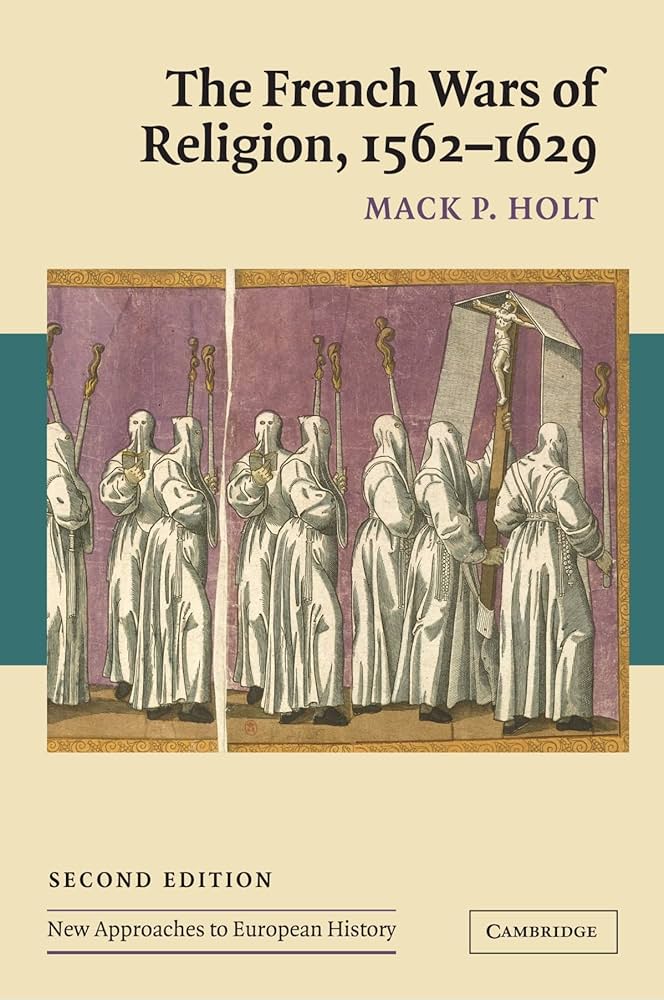
"To begin with, the pages which follow will argue at some length that the series of French civil wars which began with the massacre at Vassy in 1562 and concluded with the Peace of Alais in 1629 was a conflict fought primarily over the issue of religion.
This may startle some readers, used to the generations of historians and not a few sixteenth-century contemporaries who believed steadfastly that the main actors in the religious wars only used religion as a pretext, a ‘cloak’ in the words of the Parisian diarist Pierre de l’Estoile, to mask their political, dynastic, or personal power struggles. Moreover, other historians (and not just Marxist historians) have interpreted the civil wars as fomented mainly by socio-economic tensions rather than ideology... religion was nevertheless the fulcrum upon which the civil wars balanced."