Cardano (ADA) is a blockchain platform with smart contracts and decentralized apps (dApps), using ADA for transactions and staking. It aims to surpass Ethereum and Bitcoin with PoS consensus and strong governance.
Read more about ADA: https://t.co/Ipufjh4qCG
💡🔭Have you seen our new homepage animation yet?
This month, we’re shining a spotlight on the incredible achievements of women in STEM throughout history.
Check out the animation to meet some of the women whose breakthroughs changed the course of science and technology. https://t.co/ZCUkd9ZDBw
#HERitageofInnovation
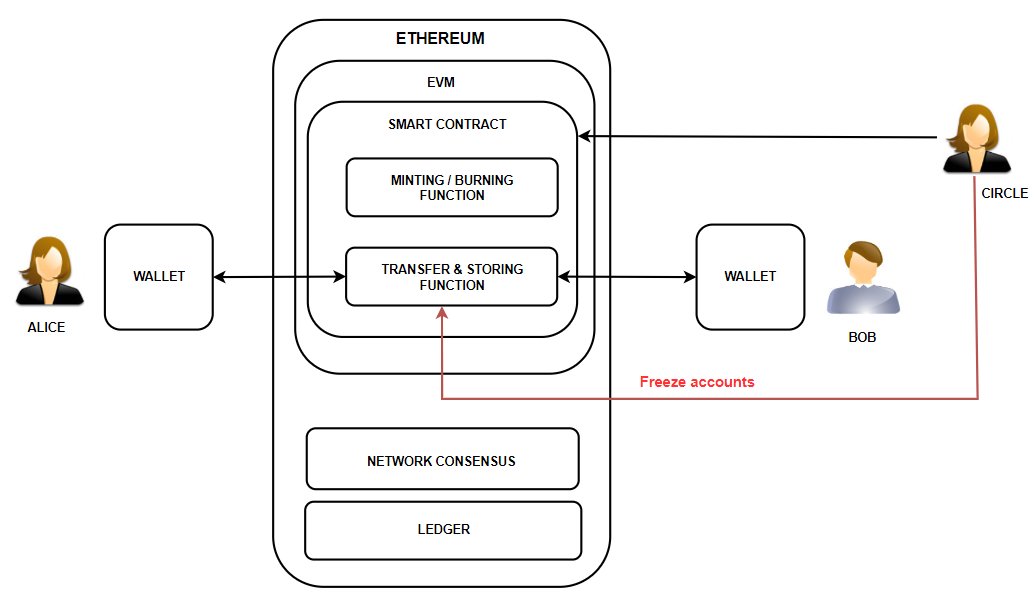
Circle can freeze your $USDC account because it has control over the smart contract deployed on #Ethereum.
#Cardano has native assets.
It is not possible for a third party to have control over the assets in your Cardano wallet.
I will explain how Cardano tokens differ from tokens on other platforms.
First, it is necessary to understand what native assets are.
$ADA is a native asset like $ETH or $BTC.
Cardano provides these functions for native coins.
- Storing coins in a ledger.
- Transferring coins between users.
- The ability to use coins in apps (DeFi).
Monetary policy, project treasury, and gradual release of ADA coins from circulation are rules implemented directly in the protocol.
The IOG team has no control over rules, transactions, or DeFi, as the Cardano network is composed of participants running nodes.
It is not possible to freeze an account (addresses) with ADA coins or prevent the spending of coins, as this is not implemented in the Cardano protocol.
It is not possible to add malicious code to the protocol.
ADA coin is an asset that no one can confiscate.
Transactions and storage of ADA in the ledger are the most secure operations as they are secured by the protocol code.
This code was delivered by the IOG team. It is the most tested functionality in Cardano as thousands of users use it daily.
See Figure 1.
Why shouldn't tokens have the same characteristics as ADA coins?
Is there a use case where it makes sense for a third party to retain control over the tokens you have in your own wallet?
Cardano handles tokens just like ADA coins. With one difference.
Everyone has the opportunity to mint tokens on Cardano. The third party has control over the name of the token, the number of tokens, and the monetary policy (and a few other things).
The third party will decide whether to mint a certain number of tokens once and the number of tokens will never change, or whether it will be possible to burn tokens or mint new ones.
The third party may be an entity minting stablecoins.
The bank holds the fiat currency and the third party mints (and burns) the tokens at a 1:1 ratio. In this case, the third party must retain control of the ability to mint and burn tokens forever.
In the case of minting NFT series, control over the ability to mint new NFTs in the series can be relinquished. It can be ensured that the amount of NFTs will never increase.
The token issuer has control only over the minting policy, i.e. the basic properties of tokens.
Cardano is fully responsible for the storage and transfer of tokens. These are features over which the token issuer has no control by design.
Control over monetary policy is separated from token ownership.
See Figure 2.
Cardano treats tokens natively. That is, just like ADA coins.
The token issuer can burn tokens only if the user sends them to his address. If the user has tokens at his address (in his wallet), it is not possible to burn the tokens.
Why is it possible to freeze an account with USDC (and USDT) tokens or blacklist addresses on Ethereum, but also on #Avalanche, #Solana, #Algorand, Near, #Polkadot, and other platforms?
Because tokens are issued via a smart contract. Protocols do not handle tokens natively.
Let's focus on Ethereum.
A token issuer on Ethereum must write a smart contract that defines all functionality related to tokens.
Tokens are not only minted but also managed by smart contracts.
The most common token standards, such as ERC-20, define a set of functions for interacting with the tokens, including transferring tokens and querying the balance of an address.
The Ethereum protocol itself doesn’t directly manage tokens. Instead, it has an Ethereum Virtual Machine (EVM) that allows smart contracts to be executed.
See Figure 3.
Without EVM, Ethereum could not mint, transfer, or store tokens.
When a token is minted, the smart contract records the quantity of the token and assigns it to an Ethereum address.
Each Ethereum address that interacts with the token has an associated balance, which is stored in the smart contract’s state.
When a token is transferred, the contract updates the state to reflect the new balances.
The transfer function is a part of the smart contract that allows tokens to be sent from one address to another.
Through a smart contract, it is possible for a third party (such as Circle) to retain control of the tokens forever.
It is possible to insert a code into the smart contract that will limit the rights of users.
See Figure 4.
It is fair to say that it is possible to write such a smart contract where the third party does not retain control of the tokens.
The problem is that if a regulated financial entity decides to use blockchain, it will write smart contracts in such a way that they comply with regulations (KYC & AML).
Simply put, Ethereum is regulatory-friendly while Cardano is not.
Those who care about preserving all the principles of decentralization and do not want to allow censorship of transactions will love Cardano.
On the other hand, it is easier for regulated financial institutions to use Ethereum (and other similar platforms) as it is possible to build an infrastructure that will comply with regulations.
Circle may not want to mint USDC as native tokens on Cardano. Native assets may be one of the main reasons why there is still no USD-backed stablecoin on Cardano.
Cardano is not regulatory compliant. This is good for users, but it can slow down adoption.
If decentralization is to win, then with all the principles that are important.
Censoring transactions is against the interests of users. There is no reason to be regulatory compliant.
It is necessary to fight the current financial system at the level of the source code and enforce such functioning that will be beneficial for users, not institutions.
Regulators must adapt to the principles of decentralization, not the other way around.
It makes sense to keep Cardano as it is.
Happy Winter Veil everyone! As is our tradition, we're hosting a sweepstakes to celebrate the holidays! 72 lucky winners will gain +60 Days of WoW Game Time!🙌
Like, RT and visit to enter: https://t.co/10oGhUpz4f
#warcraft#Dragonflight#SeasonofDiscovery#WowClassic
🎊 New Product Launch 🚀
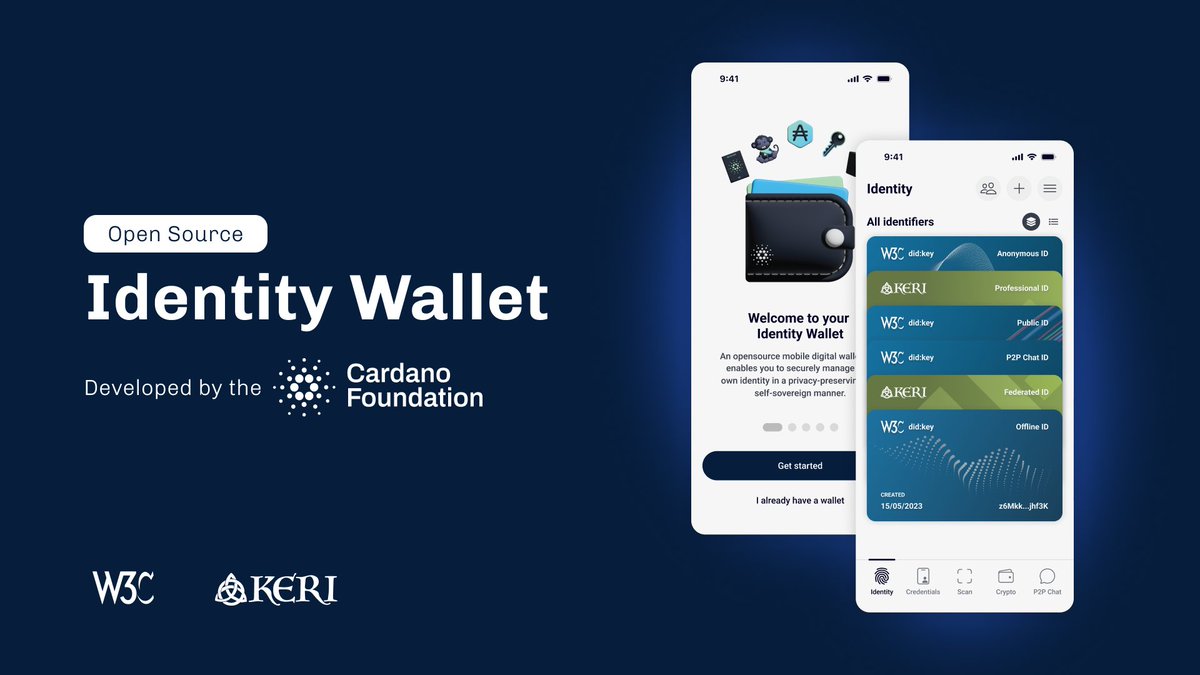
Introducing the Identity Wallet developed by the Cardano Foundation - a W3C-compatible mobile wallet that manages self-sovereign identities across Cardano and other blockchain networks
Key benefits:
🔹 Supports multiple identity and credential standards
🔹 Securely manage digital assets
🔹 Seamless - Interact with DApps on Cardano
🔹 Lowers entry barriers for new users
🔹 Interoperability across ecosystems
🔹 Integrates Key Event Receipt Infrastructure (KERI) for enhanced interoperability
Check it out ➡️ https://t.co/84ljdEgie4
#Cardano #OpenSource #IdentityWallet
@igiturbi@cryptorecruitr shares are regulated, but it does not change your outcome if you trade emotionally. You trade without experience with all your savings, do you realize the mistake ?