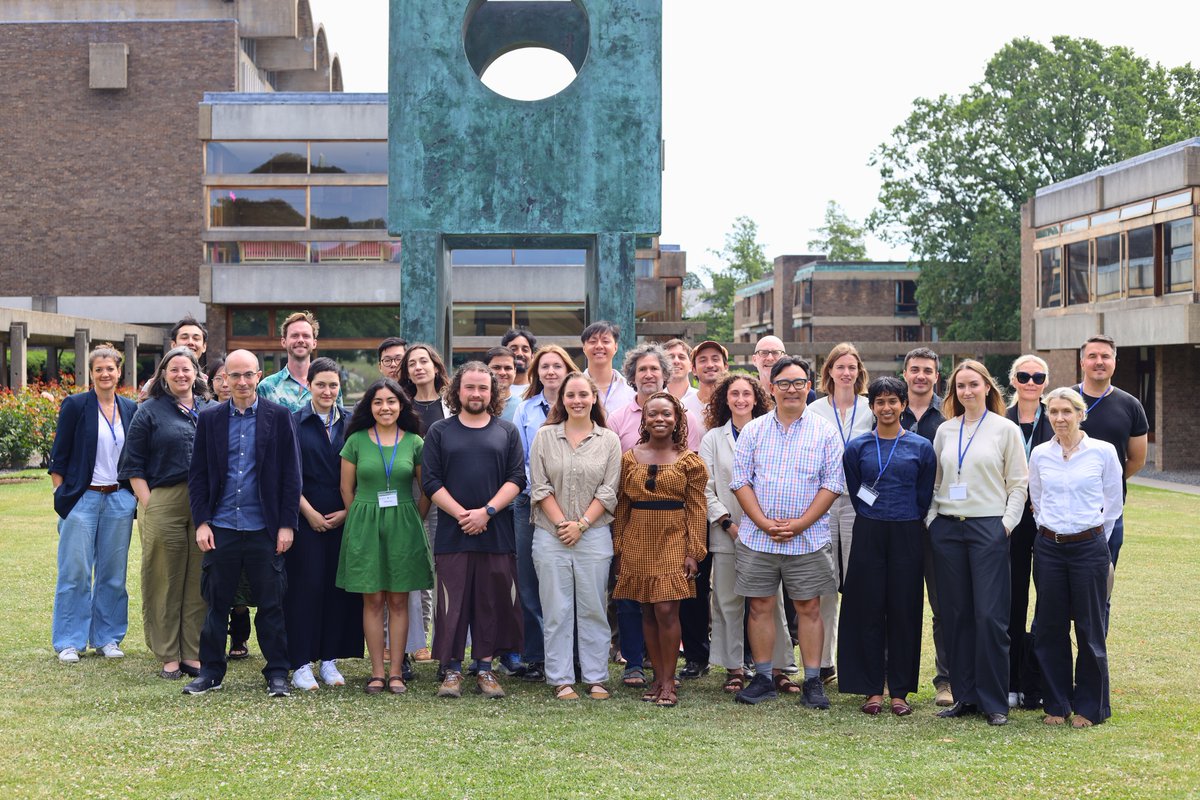
XLab's Daniel Holz and @KanuparthiRhea traveled to Italy for the Global Nobel Laureate Assembly on AI and Nuclear War in mid-July at Castle Gandolfo. Read the Rome Declaration and about the event, linked below.
New blog post from me and @Yixiong_Hao: "Empirical safety claims from frontier labs should be replicated, scrutinized, and open-sourced"
more thoughts in thread🧵
https://t.co/Gn06UHSdDl
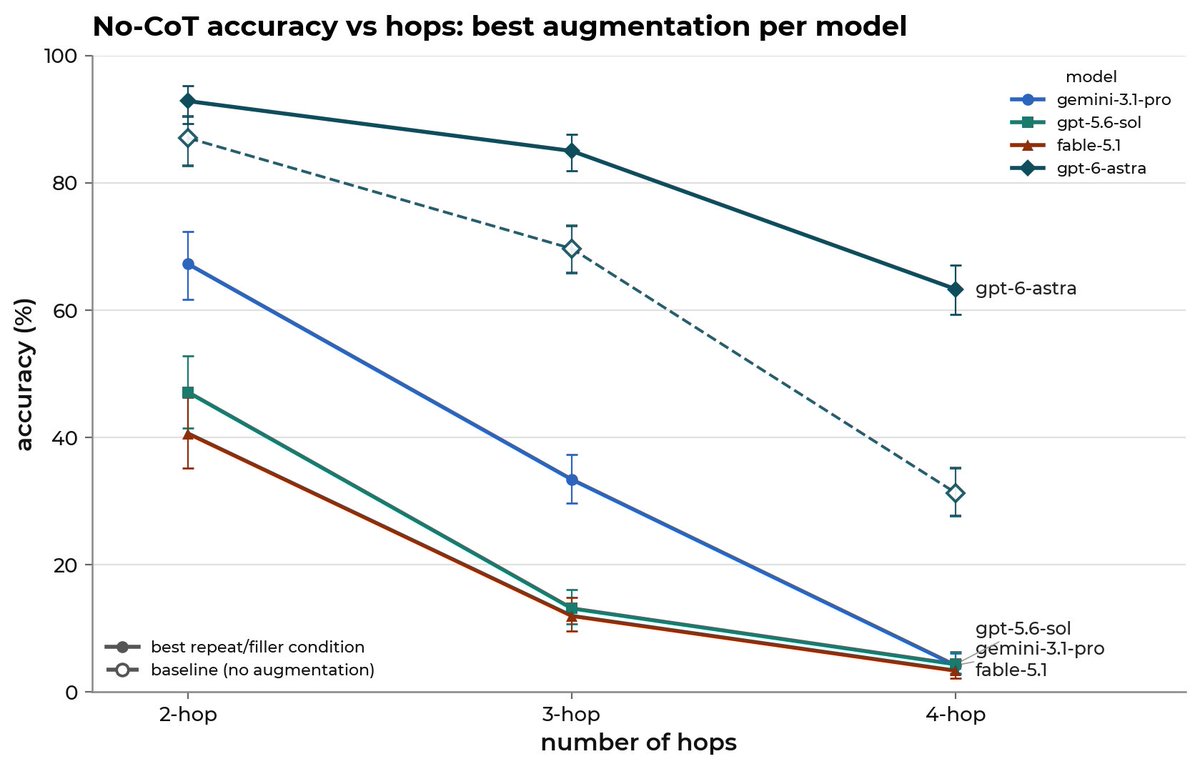
In case you need more confirmation that GPT-Astra is terrifyingly good at no-CoT computation: I ran my replication of Ryan Greenblatt’s no-CoT evals on Astra (+ Gemini 3.1 Pro, Kimi k3, Fable 5.1). It is a qualitative jump on every dataset, especially competition math and multi-hop reasoning. 🧵
GDM recently found that Gemini's safety eval results are mostly set after SFT, and later stages like RL barely move them. The authors were surprised by this, so we replicated it on Olmo 3 Think. We find the SFT, DPO, and RLVR are within noise of each other on every safety eval we ran.
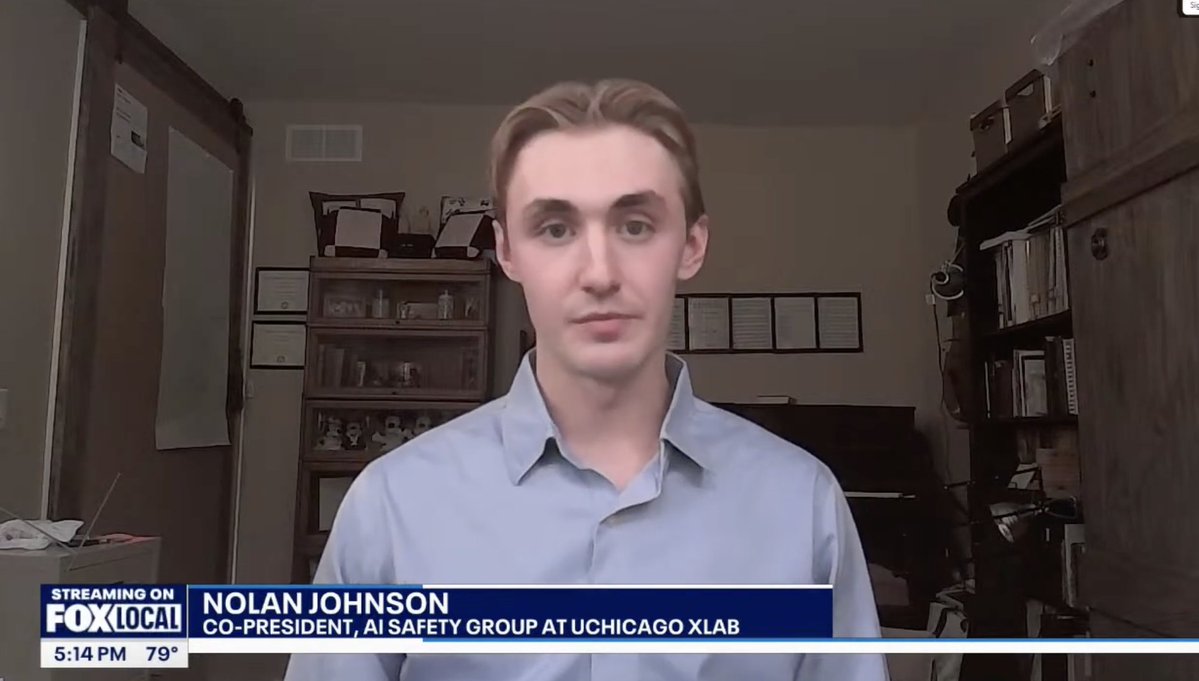
XLab AI Safety Group's Nolan Johnson was interviewed on FOX 32 Chicago yesterday!
Nolan talked about recent shakeups at Anthropic, the case for AI x-risk, and the UChicago AI safety group. Full segment linked below.
Busy busy this summer! In June, XLab's Daniel Holz and @madelineberzak joined @CSERCambridge for the AI Historical Dimensions of Power Program with Yuval Noah Harari at Cambridge University.
We replicate experiments showing the relationship between superposition and adversarial examples in toy models!
Xijia did a great job making this highly confusing topic clear and concise. There is also an open source organized repo which we recommend readers play around with!
Applications for the UChicago XLab 2026 Summer Research Fellowship are open!
The Fellowship runs June 15 – Aug 22 It's made for early career researchers in AI safety, nuclear security, and governance to develop their research agendas. Fellows are given a 10k stipend + housing and food!
I had a great time and met some of my best friends & close collaborators there last summer. If you're interested in exploring these topics, you should apply!
Deadline: March 15 at 11:59 PM
Apply here: https://t.co/SWxYMTWGKJ
Applications open! 2026 Summer Research Fellowship
Develop your own research agenda on a problem in AI safety/security/governance; nuclear security; or the intersection of these fields.
Deadline: March 15, 11:59 PM
Details here: https://t.co/PBhgg4WGhm
How can we make science funding work for large-scale AI projects?
@calebwatney proposes X-Labs: 25 independent research institutions funded at $10–50M/year to support the infrastructure-heavy, team-based work that AI-driven science requires.
Current science funding mechanisms are unfit for large AI projects. AlphaFold came from Google DeepMind. The DNA foundation model Evo 2 came from the Arc Institute (philanthropically funded). The materials discovery AI GNoME came from Google. These breakthroughs required years of sustained investment, large interdisciplinary teams, and shared infrastructure. Big AI projects are not coming out of traditional research institutions largely because our science funding mechanisms are outdated.
Most federal science funding flows through mechanisms designed for individual scientific investigators pursuing discrete, short-term projects without large upfront infrastructure costs. An example is NIH R01 grants, the workhorse of biomedical research funding, which typically fund individual principal investigators to work on a specific, pre-specified project for 3–5 years with a total budget of around $600,000. AI training runs often cost more than this entire budget.
An X-Labs pilot would cost just ~1% of combined NSF, NIH, and DOE science budgets while filling this gap: work that's too infrastructure-heavy, multidisciplinary, or exploratory for existing mechanisms. The program doesn’t need new legislation, and could launch immediately via Other Transaction Authority (OTA). If the pilot yields good results, Congress could expand appropriations to scale this program 5–10x.
The online piece: https://t.co/8Lx9zH5hHo
Everyone is overlooking how gpt-oss-20b is sometimes … weird.
We probe the model using a simple CoT-hijacking jailbreak and find some surprising trends (1/5)
https://t.co/EFV4bDrwQR
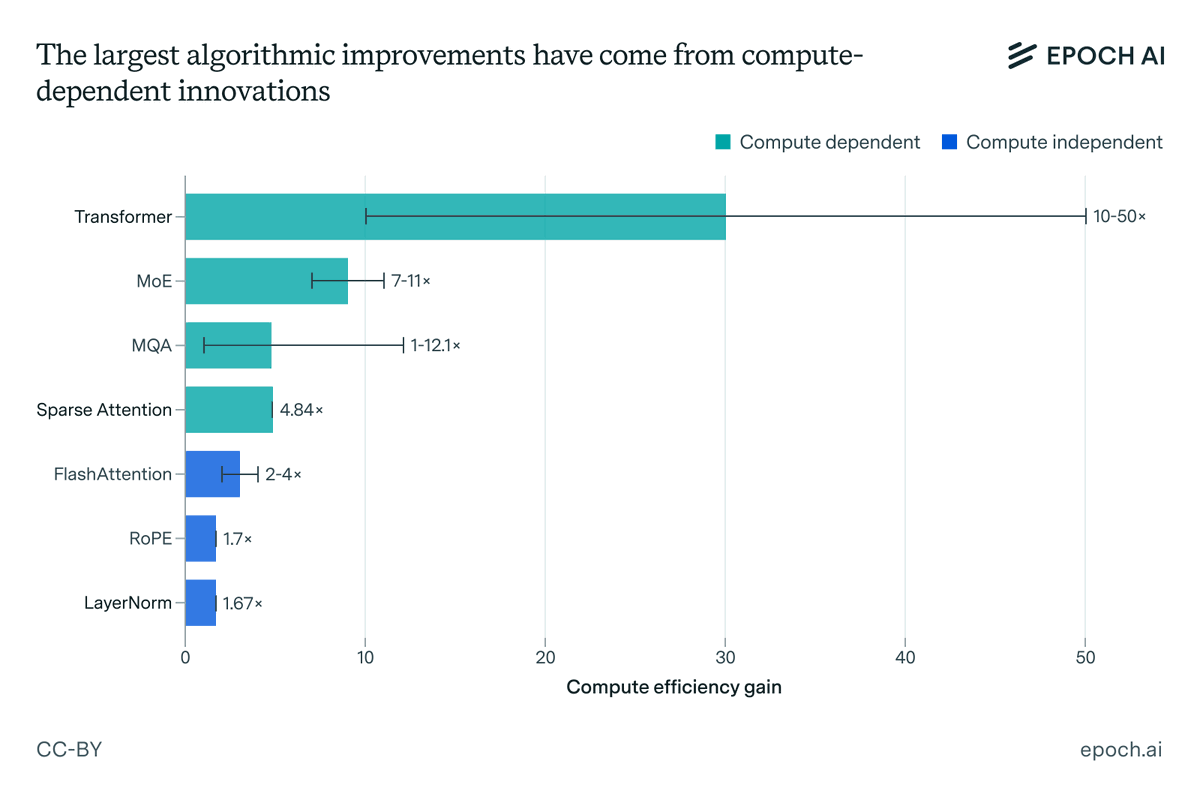
How likely is an intelligence explosion as forecast in AI 2027?
Algorithmic advances that could drive an intelligence explosion may be bottlenecked by compute, according to new research from @noshpesoj and @uchicagoxlab described in this week’s Gradient Update.
Here’s why: