Congratulations to professor Stuart Rowan who has been named as interim dean of the Pritzker School of Molecular Engineering at the University of Chicago!
A leading researcher in polymeric materials and a member of the UChicago faculty since 2016, Rowan steps into the role at a pivotal moment for UChicago PME.
"What has always distinguished UChicago PME is its willingness to bring together people, ideas, and disciplines in pursuit of impactful solutions to some of humankind’s most pressing challenges. I look forward to working alongside my outstanding colleagues to build on that foundation and support the school's continued success and growth,” said Rowan.
He succeeds Nadya Mason, who was recently appointed Vice President for Research for the University of Chicago.
🔗 Read more: https://t.co/t3lFnUUOLU
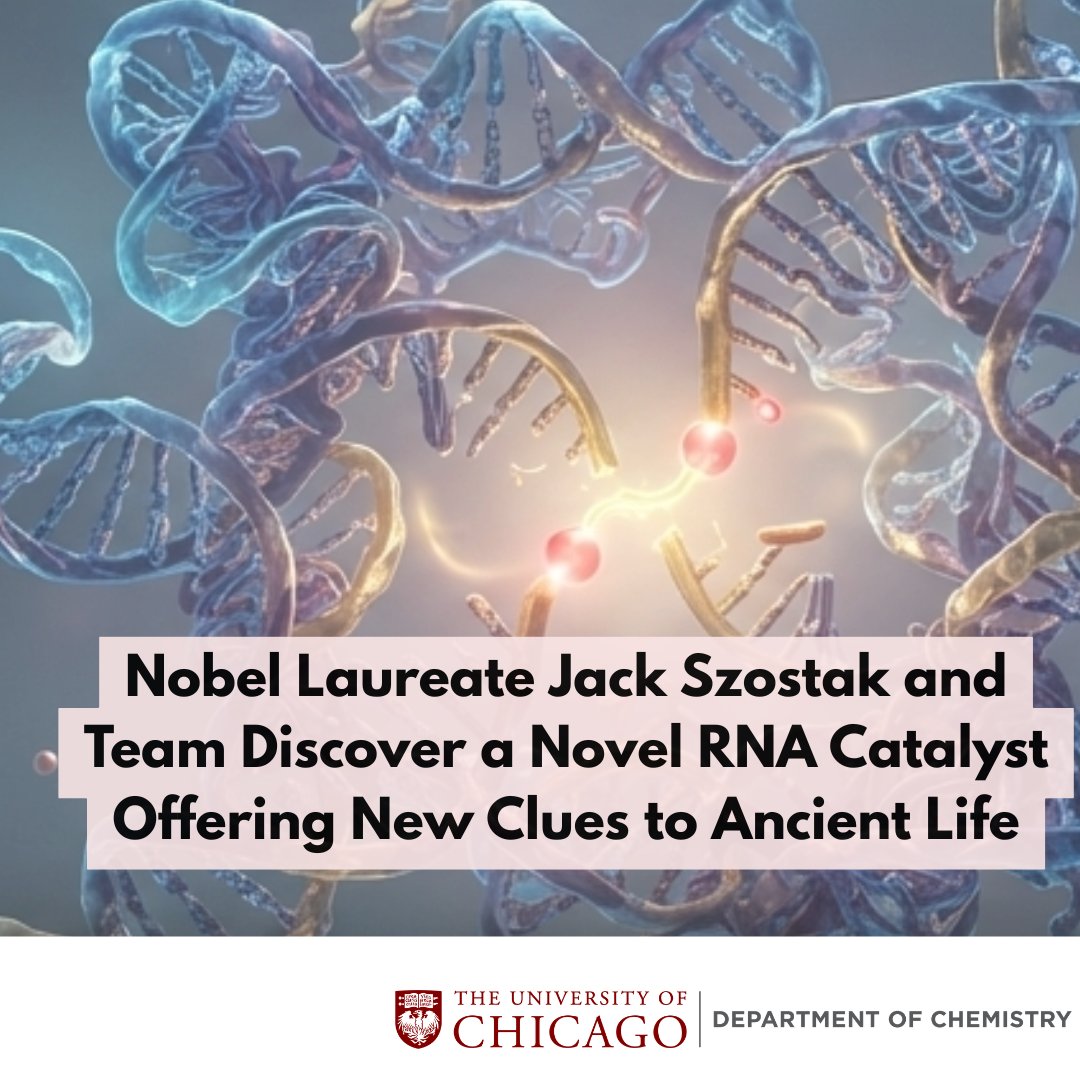
How did early life manage to repair its genetic material before modern proteins evolved? A new study in Nature Communications co-authored by Jack Szostak and colleagues at Notre Dame's Chemistry & Biochemistry Club and Harvard Medical School uncovers a unique category of RNA molecules that act as molecular builders requiring a specific chemical signpost—a 3'-terminal phosphate—to stitch RNA together.
This unexpected capability mirrors how modern proteins handle RNA repair, offering fresh clues into early evolutionary chemistry. Beyond these theoretical insights, the team demonstrated that these ribozymes can be adapted as practical lab tools to selectively capture and analyze fragmented RNA, opening new avenues for genomic research.
Read the open-access study to explore the details here: https://t.co/O6DZKmjfhS
#RNAWorld #Biochemistry #MolecularBiology #Genomics #Research
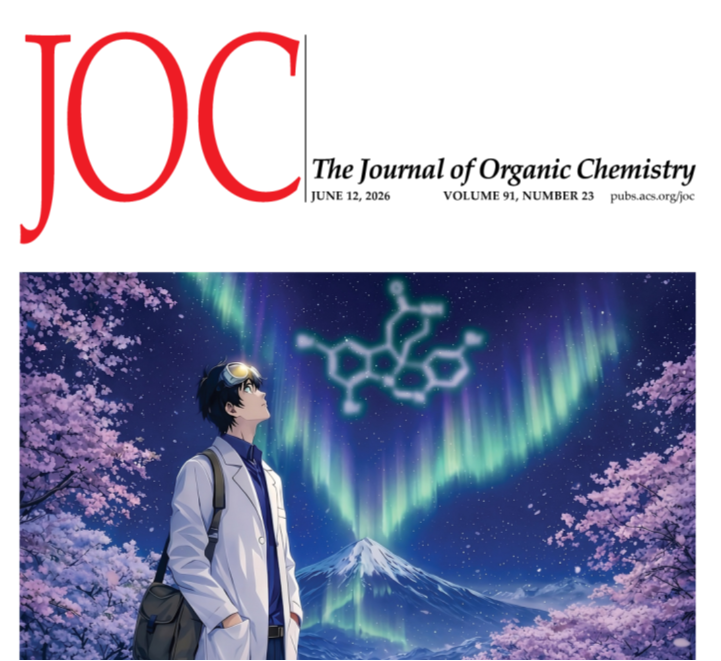
We are thrilled to share the Viresh Rawal group’s full account of their total synthesis of (+)-hinckdentine A, featured as the June issue cover story in the @AmerChemSociety Journal of Organic Chemistry. In pursuit of the “ideal” synthesis, several routes were explored by the Lab before an indole-based Claisen rearrangement enabled a concise (5 operations) synthesis of the target.
The cover art, titled ‘A quick but arduous journey to the summit: Hinckdentine A,’ beautifully visualizes this synthesis as a mountain expedition. According to the editors, "Like climbing a mountain, total synthesis demands navigating unforeseen obstacles, circumventing treacherous paths, and balancing methodical approaches against daring explorations of uncharted terrain."
The paper was selected as an ACS Editors’ Choice and is currently free to read: https://t.co/Gzp2tQFZc2
#TotalSynthesis #OrganicChemistry #JOC #ChemistryResearch #ScienceCommunication #ACS #UChicagoChemistry
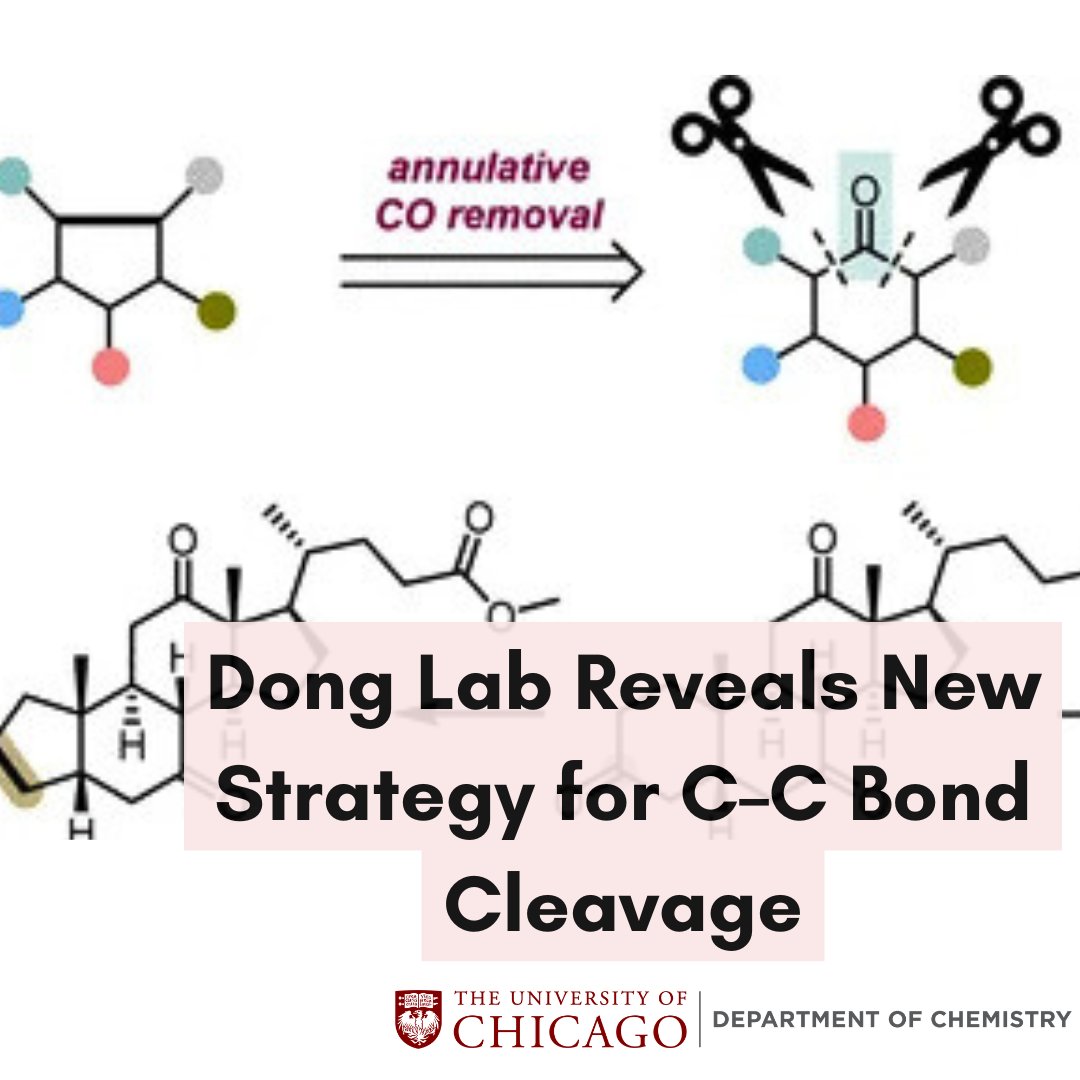
The @GuangbinDong Lab is redefining synthetic efficiency. In their latest publication in the Journal of the American Chemical Society, graduate student Zining Zhang unveils a powerful strategy for late-stage carbonyl removal via sequential double carbon–carbon bond cleavage. Previously, late-stage removal of these groups was notoriously difficult; this method solves that bottleneck, drastically streamlining the assembly of complex molecular architectures.
Read the full research here:
https://t.co/1ujM5zIYGO
#Chemistry #OrganicSynthesis #SyntheticChemistry #JACS #ChemicalResearch #ScienceInnovation #UChiChem
"This expands the boundaries of the field beyond what were previously fundamental constraints, and lays the foundation for the use of nitrides as nanomaterials,” said Prof. Dmitri Talapin.
As described in new research published in Nature, the Talapin Lab and Argonne National Laboratory have achieved a significant breakthrough by developing a method to synthesize nanocrystals from metal nitrides—a task previously thought to be impossible. This advancement is set to broaden the utility of these durable materials (such as gallium nitride, a staple in modern lighting) to include cutting-edge applications like flexible electronics, printed circuits, and medical implants.
Read more at: https://t.co/s7JfpoaEt4
#TotalSynthesis of Ussuriedine via a Late-Stage Stevens Rearrangement: Implications for Biosynthesis by Daler Baidilov, Kyle J. Cassaidy, Yun-Jeong Shin, and Viresh H. Rawal @chem_chair at @UChiChemistry in @J_A_C_S https://t.co/NbL0ZYEsBX
Check out our recent work on @angew_chem ! We developed a transition-metal-free “cut-and-sew” reaction that formally inserts five-membered heteroarynes into benzocyclobutenones, providing rapid access to fused heteropolycycles. Congrats to Cole!
https://t.co/QM7B3TgBkr
2026 @UChicago Bay Area Summer @UChicagoAlumni Dinner in San Francisco! What a fantastic evening! 🎉
Amazing to reconnect with alumni across @UChicagoMath, @UChi_Economics, @ChicagoBooth, @UChicagoLaw, @UChicago Financial Mathematics @uofcstevanovich, @HarrisPolicy, @UChiChemistry, @UChicagoMed, @UChicagoNews and more.
What makes the @UChicago community so special is its intellectual curiosity. Every table turned into a fascinating discussion, bringing together researchers, founders, engineers, investors, and students who are building exciting things across the Bay Area.
❤️ Go Maroons!
#UChicago #BayArea #AI #Startups #VC #Research #Technology #UChicagoAlumni #GoMaroons #SanFrancisco
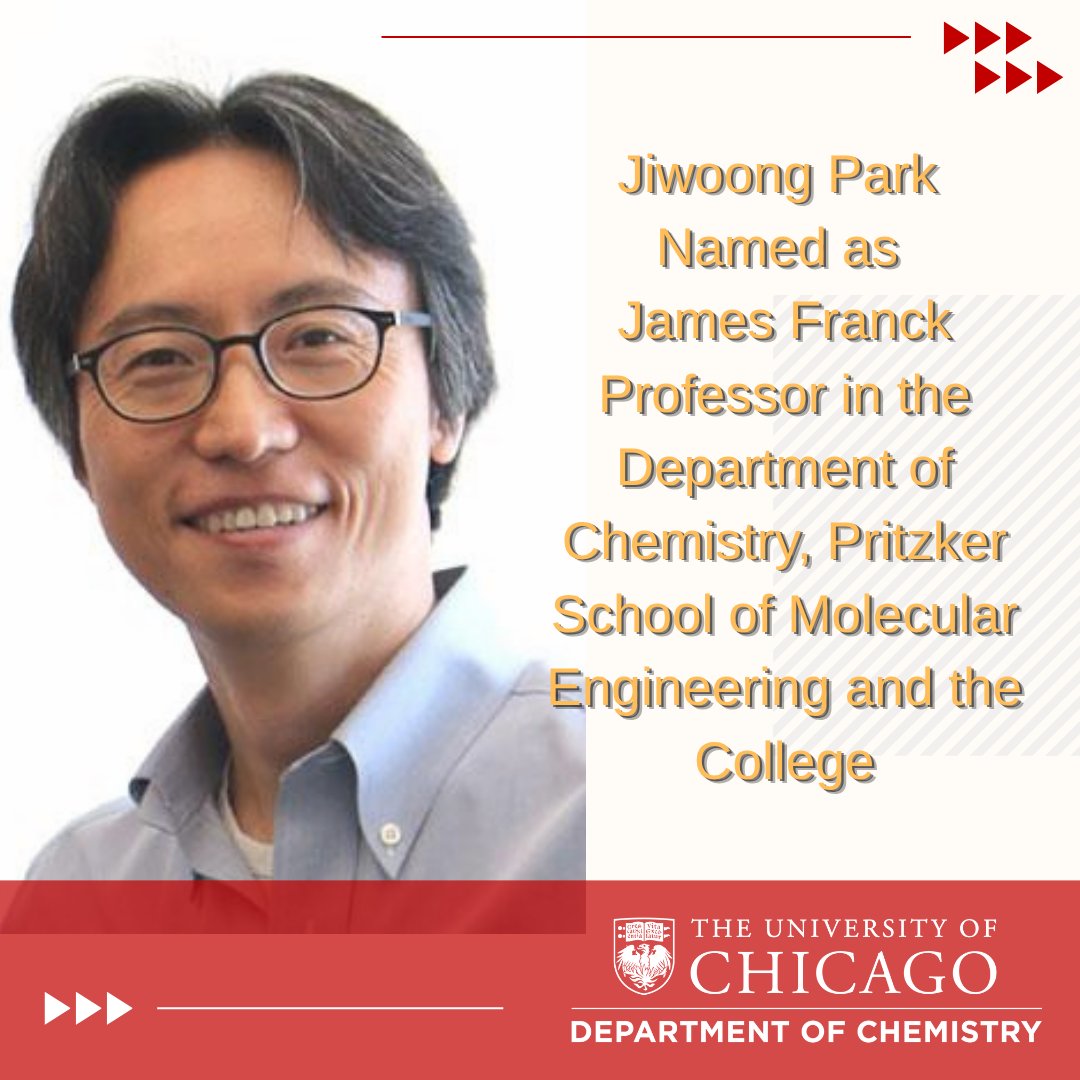
Huge congratulations to Prof. Jiwoong Park on being named the James Franck Professor in the Department of Chemistry, the Pritzker School of Molecular Engineering, and the College at the University of Chicago. This prestigious honor recognizes his groundbreaking work engineering atomically thin 2D materials—including his lab's remarkable creation of the smallest known way to guide light. Following three stellar years of leadership as Chair of the Department of Chemistry, Park is one of three exceptional PSD faculty members receiving named professorships this July, perfectly capping off an era of profound impact as both a scientific pioneer and an institutional leader.
#UChicagoChemistry #PritzkerMolecularEngineering #Nanotechnology #JiwoongPark #jamesfranckinstitute
📢Out now! A study from @JaehyeokJin, Zhefu Li and @VothGroup from @UChiChemistry introduces HUMID, a coarse-grained framework for proton transport that enables simulations of reactive transport dynamics with improved efficiency. https://t.co/1UgAsyMPml
🔓https://t.co/qZKwW9VxaI
Welcome Senior Editor Bryan Dickinson, PhD, who brings expertise in chemical biology, protein engineering, and RNA-targeting therapeutics. Learn more about Molecular Cancer Therapeutics: https://t.co/BBExcghxi0 @UChiChemistry
Researchers in the Bozhi Tian Lab have engineered a wireless, bioinspired "artificial leaf" that harvests light to power next-generation biomedical devices. Published in Nature Photonics, the study by lead author Pengju Li and co-first authors Mengzhan Liufu, Cooper R. Johnston, Young-Woo Pyo, Yuze Zheng, Guangqing Yang introduces a breakthrough nanoplasmonic material—composed of microscopic gold and titanium dioxide structures—that efficiently converts light into high-performance electrical energy. The team successfully used this wireless bioelectronic platform in animal models to pace heartbeats and stimulate sciatic nerves via external light activation, offering a powerful new avenue for target-specific medical therapies like nerve pain management. Beyond biostimulation, the material can even serve as a secure human-computer interface, allowing users to input information via invisible light that is instantly decoded by AI. Read the full story at - https://t.co/Jm0RhAe5VG
#Bioelectronics #BiomedicalEngineering #MaterialsScience #TechInnovation #Neurostimulation #NaturePhotonics #BozhiTian #Tianlab #UChiChemistry
The emergence of translation was a pivotal event in the early evolution of life, yet the mechanistic steps linking the RNA World to modern translation remain poorly understood. This Wednesday, June 17th, Dr. Aleksandar Radakovic will describe his research in a seminar investigating both the primordial role of RNA aminoacylation and the subsequent evolution of aminoacyl-tRNA synthetases (aaRSs), the enzymes responsible for establishing the genetic code.
The discussion will cover findings regarding how aminoacylated RNAs enhance chemical reactivity to facilitate ribozyme assembly, as well as insights into how modern aaRS specificity evolved. Additionally, Dr. Radakovic will discuss ongoing efforts to extend evolutionary inference deeper into the past through structure-based phylogenetic approaches.
"The Origin and Evolution of RNA Aminoacylation" | Wednesday, June 17, 2026 | 2:15 PM | Kent 120
For more details, visit https://t.co/TWL2PkmgBs
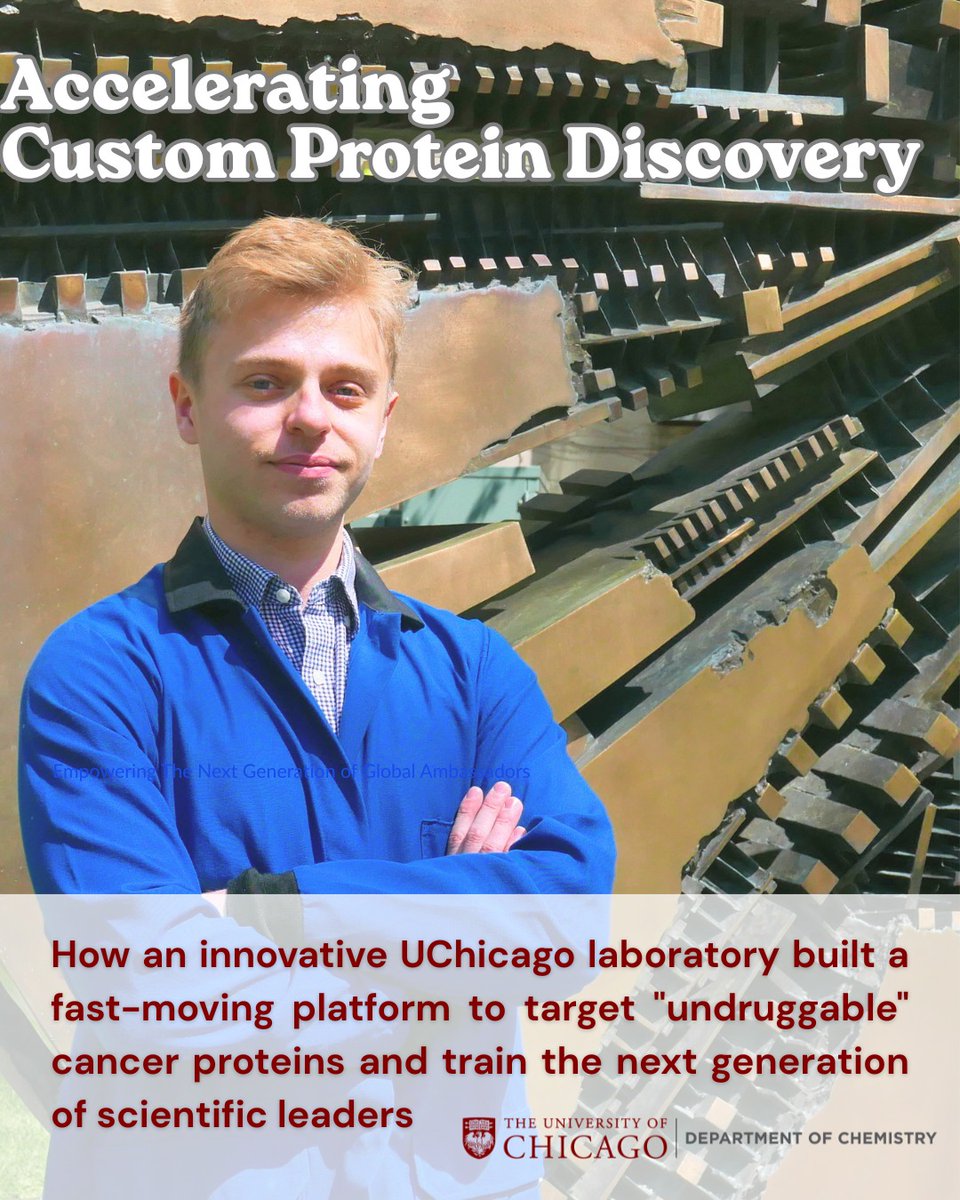
Custom protein binders are crucial for treating disease, but discovering them usually takes months.
Recently published in PNAS, new research from the Bryan Dickinson lab has introduced an innovative new platform that completely rewrites that timeline.
Spearheaded by researchers Joshua A. Pixley and Matthew Styles, the PANCS-spec-Binders platform screens billions of synthetic variants to isolate high-fidelity custom binders in just days. By eliminating a notorious biochemical bottleneck and removing the need for secondary screenings, their work opens the door for rapid, highly targeted therapeutic discovery.
Read the full story behind this significant breakthrough and the culture of innovation at UChicago driving it home: https://t.co/CjkqCDIBSx
#Biotech #ProteinEngineering #DrugDiscovery #UChicago #Chemistry #PNAS #ChemicalBiology
At the end of this month, the 2026 Chicago Chemical Biology and Therapeutics Symposium will bring together researchers for 1.5 days of intensive scientific exchange focused on the latest developments in drug discovery and molecular biology.
The event features a comprehensive program of expert lectures, interactive poster sessions, and professional networking opportunities. With keynote speakers Dr. Jim Wells and Dr. Benjamin Cravatt, the event will include presentations from UChicago Chemistry faculty members Yamuna Krishnan and Jie Zhou. Attendees must register by tomorrow, May 20, to secure their spot and access the full schedule of sessions. Register today via Eventbrite. https://t.co/YYiExJASAq
The Andrew Ferguson Lab at the University of Chicago, in collaboration with the Allen Liu Lab at the University of Michigan, has shown a new advancement in bio-design that borrows a survival trick from the tardigrade. By combining the Liu Lab’s experimental synthetic biology with advanced computational simulations—provided by UChicago graduate student and co-author Jianming Mao—the team revealed how unique proteins form a gel-like "molecular shield" to protect synthetic cells from extreme dehydration. This cross-institutional discovery offers a transformative roadmap for bio-preservation, potentially enabling the global distribution of life-saving vaccines without the need for refrigeration. Link: https://t.co/QA3BA5f1MN
#UChiChemistry #FergusonLab #NatureCommunications #Biopreservation #MolecularEngineering #Tardigrade #Biotech
Precision is the heart of nanotechnology. Nowhere is that more evident than in the work of University of Chicago President and renowned chemist Paul Alivisatos, whose latest study in ACS Nano provides a definitive look at the mechanics of photochemical propulsion.
Joining with a team of researchers from UC Berkeley, the group explored the dynamics of Janus micromotors—asymmetric particles that convert light into directed motion. By moving beyond bulk observations to a single-particle framework, the team has quantified the exact force behind the "swim," capturing measurements in the 4.5–6.2 pN range.
The Result: A new blueprint for bridging the gap between chemical energy and mechanical work. Link: https://t.co/JMEsAhXbhE
#UChiChemistry #UChicago #UCBerkeley #AlivisatosLab #Nanoscience #ResearchInnovation #Janusmicromotors #nano
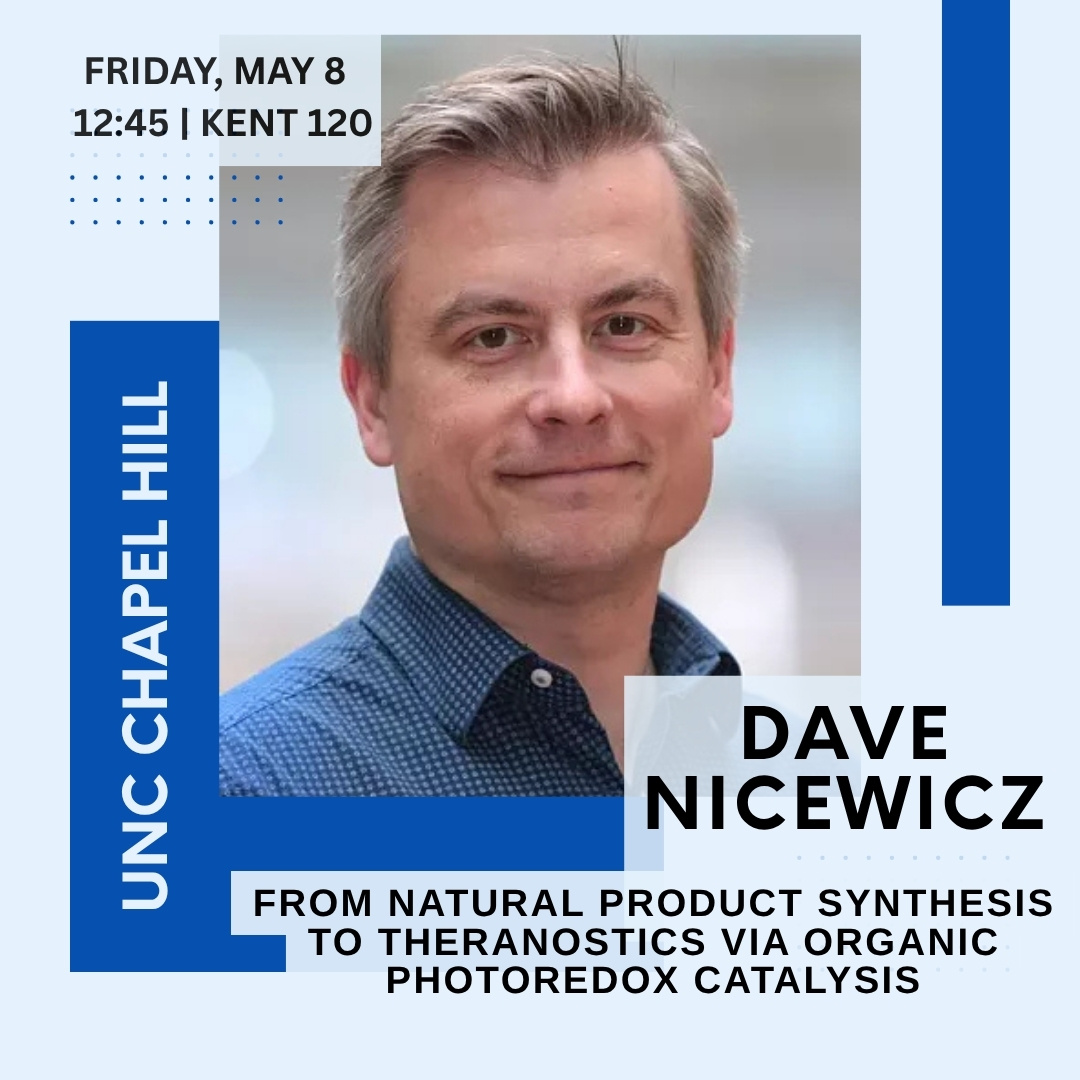
This Friday, join us as we welcome Dave Nicewicz (UNC Chapel Hill) for a lecture on the evolution of organic photoredox catalysis. From mimicking biological single-electron pathways to advancing natural product synthesis and radiolabeling technology, explore how organic salts are being harnessed to develop the next generation of pharmaceuticals and materials.
May 8th | 12:45 PM | Kent 120 | Link: https://t.co/Zd6VlrJADA
#OrganicChemistry #Photoredox #Catalysis #STEM #Innovation
We are thrilled to announce that the World Association of Theoretical and Computational Chemists (WATOC) has named Professor Laura Gagliardi the recipient of the 2026 Schrödinger Medal.
One of the field’s highest distinctions, the award recognizes Gagliardi’s “seminal work in multireference electronic-structure theory and its transformative applications in catalysis, carbon capture, and water harvesting.” This honor is particularly significant as 2026 marks the centenary of the Schrödinger equation—the very foundation of modern quantum chemistry.
By developing MC-PDFT and LAS methods, Gagliardi has pioneered the high-fidelity simulations necessary to design advanced materials for environmental remediation. As Director of the Center for Advanced Materials for Environmental Solutions (CAMES) and the Catalyst Design for Decarbonization Center (CD4DC), she continues to leverage quantum mechanics to drive global sustainability.
“These achievements have been possible because I have had the privilege of working in the highly collaborative and intellectually inspiring environment of the University of Chicago, with exceptional students, postdocs and colleagues,” Gagliardi said.
Her recognition reaffirms UChicago’s commitment to research that aligns mathematical rigor with the most urgent needs of the global community. Please join us in celebrating Professor Gagliardi on this well-deserved honor. Link: https://t.co/tKfzUSHCIf
#QuantumChemistry #Sustainability #UChicago #SchrodingerMedal #Innovation #CarbonCapture #TheoreticalChemistry #LauraGagliardi #WATOC #UChiChemistry
The countdown is on for "MXene: The Next Horizon," the 4th International Conference hosted at the University of Chicago this August. Organized by University of Chicago Department of Chemistry professors Dmitri Talapin and John Anderson, this event brings together global experts to explore the latest breakthroughs in 2D carbides and nitrides.
If you want to be part of the conversation shaping the future of nanomaterials, now is the time to act, as abstract submissions close: May 15, 2026
Join us in Chicago just before Fall ACS for three days of high-impact science, networking, and innovation. Scan the code on this post or click the link to submit today! https://t.co/fOzhw4gpfm
#MXene #MaterialsScience #UChicago #Chemistry #Nanotechnology #AcademicConference