In 2023, @Clement_Ang17 was ready to quit trading. After a brutal ~60% drawdown in just 1–2 weeks, he stopped trading and seriously questioned whether he could make it.
Then he changed his entire approach.
He started studying @Qullamaggie building model books, collecting screenshots and studying how the biggest winning stocks actually move.
He started treating trading like a business and putting in the hard work required to actually find an edge.
That became the turning point.
He later went on to produce a combined +522% across the 2024 & 2025 US Investing Championships.
The lesson:
Your edge isn’t something you find on X. It’s something you build through thousands of hours of deliberate work.
One of my favorite moments from @Wordsofrizdom new interview with Clement. ��
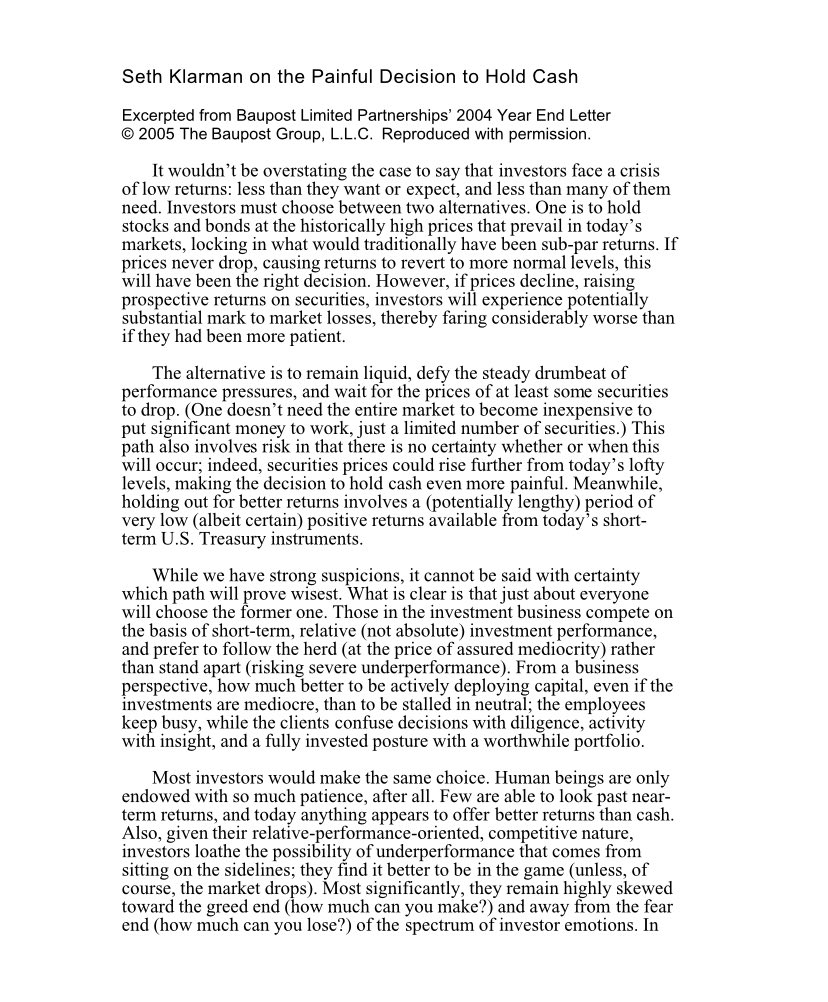
Within "AI" oriented names, I own $WDC, $MU, $SNDK. I also have $FIX (which I don't quite understand anymore but guess it's finally time I'm on the right side of a meme) $POWL, and $IESC.
Peter Buffett inherited $90,000 in Berkshire Hathaway stock at nineteen. His father was Warren Buffett.
He sold every share. Moved to San Francisco, rented a small apartment, bought recording gear.
No one asked him to become a musician. He chose it anyway.
He'd watched siblings burn through cash fast. He wanted a different kind of pressure.
That stock, held, would be worth over $500 million today.
"I used my nest egg to buy something infinitely more valuable than money," he said. "I used it to buy time."
He never called it a mistake.
The safest asset is still a bet. Sometimes the house is your own last name.
Shocking stat of the day:
The Breakwave Tanker Shipping ETF, $BWET, is up +5,820% over the last 12 months.
This ETF reflects futures linked to the cost of transporting crude oil from the Middle East and West Africa to China and other destinations, making it highly sensitive to disruptions in global oil shipping.
In 2026 alone, $BWET is up +4,556%, leaving it the world’s best-performing ETF this year.
The surge reflects skyrocketing tanker shipping costs amid disruptions to global oil transportation caused by the Iran War.
We are seeing an unprecedented global energy shock.
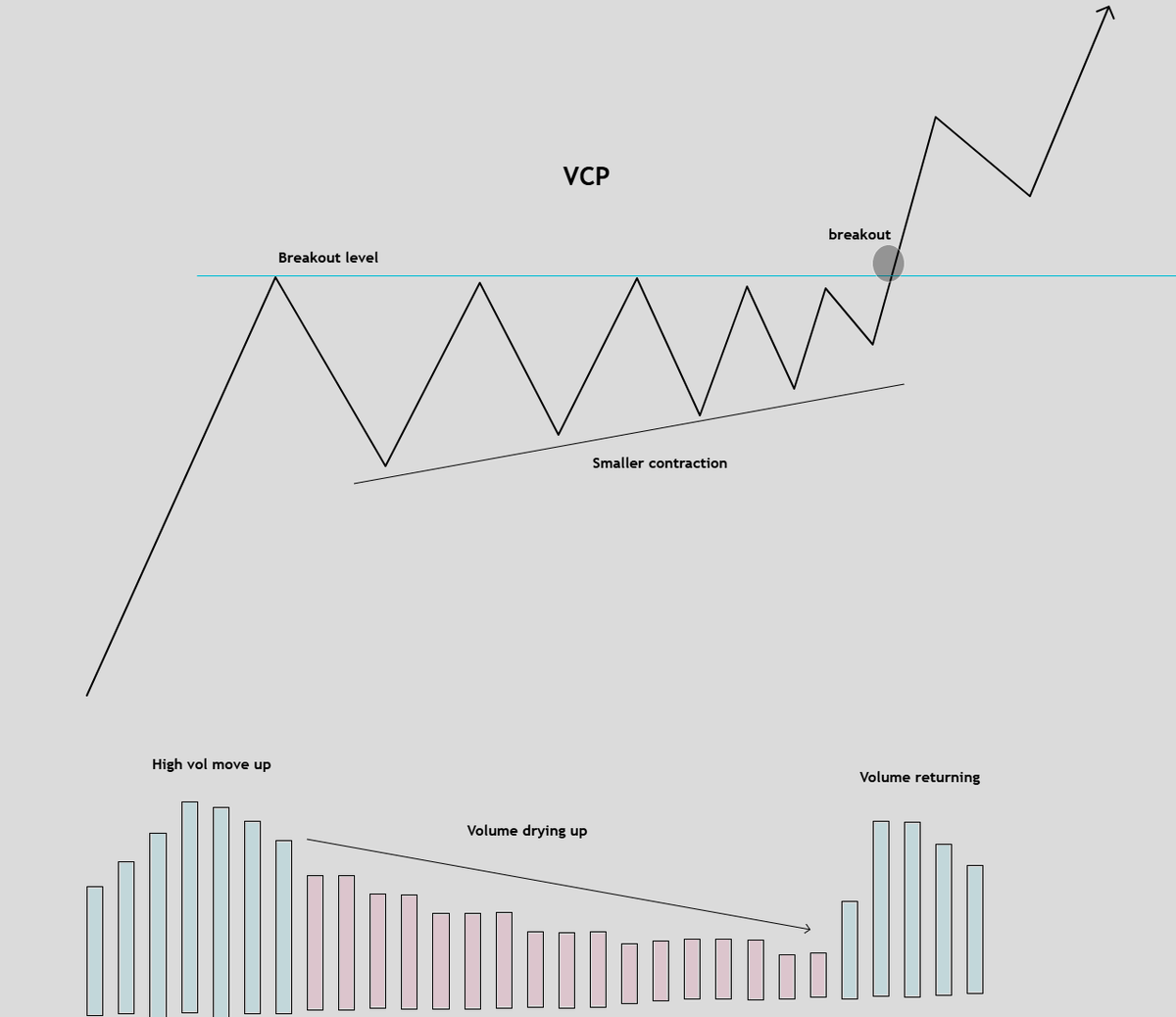
The simplest yet most effective pattern in trading:
The volatility contraction pattern or (VCP) popularized by @markminervini
Big movement → smaller movement → even smaller movement → breakout
It comes down to the stock getting tighter and tighter while volume continues to dry up
This sets up a coiled spring...
Then volatility and volume will pick back up and expand out of the range
What the VCP is showing you
Imagine price behaving like this:
-You get a super strong move higher
-Demand dries up and price start to go sideways
-Buyers are still in control but waiting for key moving averages or catalyst to reignite
-Every pullback becomes more and more shallow
-Volume returns and expansion occurs
Each contraction tells you something:
Sellers are becoming less aggressive
Buyers are willing to step in at progressively higher levels
Many stocks right now setting up in these big bases... start paying attention
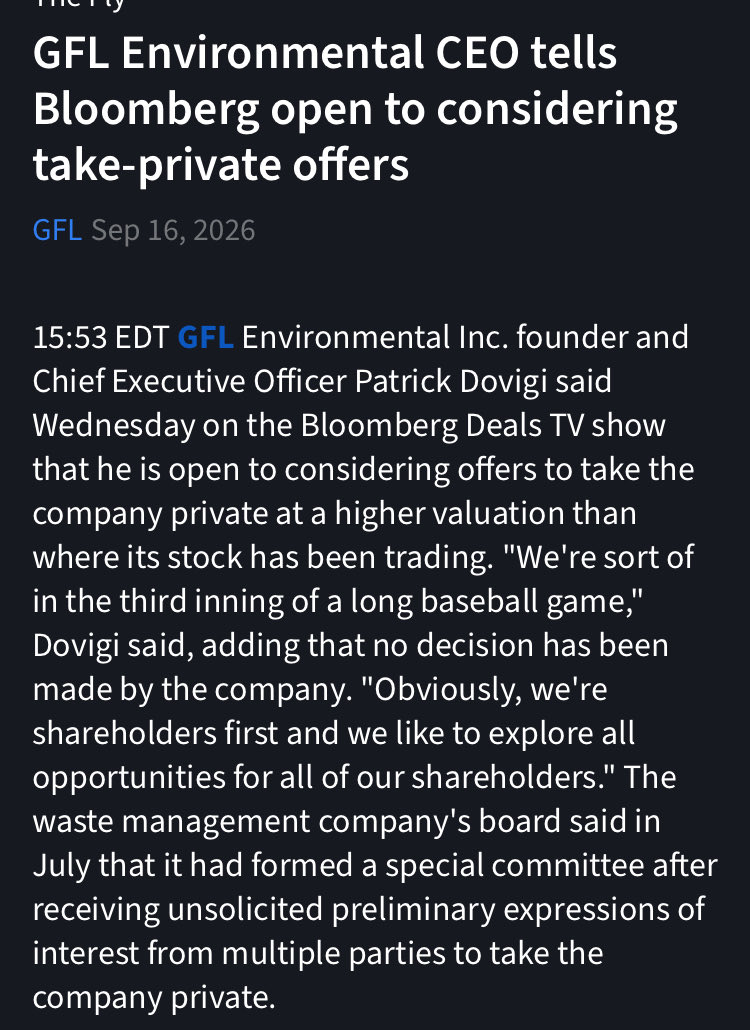
ProEnergy, a power generation firm backed by Energy Capital Partners, is seeking a valuation of as much as $50 billion in a US initial public offering, according to people familiar with the matter. https://t.co/o29ITIajJs
Big Short investor Steve Eisman says the AI labs know they have no moats and are manufacturing a crisis to get regulation that hands them a duopoly
"I think this is all nonsense."
[ You think it's all nonsense? ]
"All nonsense. I think that there's something else completely going on here. ... What I think is happening is that token maxing is over. The open weight models are taking big market share. I think these companies are very nervous. They realize that there are no moats around their business whatsoever, and they're trying to manufacture a crisis that will create regulation, and that they think they can then manipulate to create the moats, to create the duopoly that they want."
[ Wow. ]
"That's what I think is going on."
"Honestly, I think this whole Terminator thing is garbage. That's for sure."
WARREN BUFFETT JUST SENT THIS LETTER TO BERKSHIRE HATHAWAY $BRK.B SHAREHOLDERS
To My Fellow Shareholders:
Berkshire has an extraordinary group of shareholders. From the beginning, Charlie and I looked for owners who thought in decades rather than quarters, and we were fortunate to find a
great many of you.
Recently, I celebrated my 96th birthday with family and friends, including one of my great-grandchildren, who had just turned one. He’s moving a bit faster than I am these days.
I have served Berkshire since 1965. Sixty-plus years in, I still have the best job in the world. That is not something many people my age can say, and I have never felt better about what comes next.
Part of the reason is Greg. My expectations for him were sky high from the start, and he has exceeded them. He has taken hold of the Chief Executive Officer job in every respect. He has been making the decisions that matter for some time now, and I have not had to think twice
about any of them.
So the timing is right to complete the transition. I will become Chairman Emeritus and remain a Director. My son, Howard, will succeed me as Chairman.
Howard has been a Berkshire Director for 33 years. That is a longer apprenticeship than I served before taking the reins at the age of 34. Greg runs the company; Howard will guard its culture and values – both worth more than anything on our balance sheet. Think of Howard as a policy the shareholders own and hope never to claim against.
Howard cares deeply about Berkshire, as do all of our Directors. No company has been or will be more shareholder-minded than Berkshire.
Serving as your Chairman has been the privilege of a lifetime, and I have never taken your trust for granted. Father Time always wins. He has, however, been generous with me. He has given me the opportunity to see Berkshire reach a point where I am more confident than ever about what lies ahead. The company is in excellent hands, and I look forward to remaining a shareholder alongside you.
September 18, 2026
Warren E. Buffett
Stan Weinstein doesn't force long breakouts in a neutral market.
He uses Stage Analysis to spot individual stocks forming clean Stage 2 bases while the broad market chops sideways. Instead of trusting market momentum, he lets strict stock selection create his edge.
Regime dictates your size.