El presidente Petro quiere que comparemos su gestión con la de Duque, y en algunos indicadores sociales la comparación le favorece: la pobreza monetaria bajó del 36,6% al 28%, el desempleo cayó del 10,6% al 8,8% y la inflación pasó del 13% al 6,14%. Pero esos "logros" tienen un costo oculto que Petro omite deliberadamente: una deuda pública que pasó de $800 billones a más de $1.200 billones, un déficit fiscal que cerró 2025 en 6,4% del PIB, y un crecimiento económico promedio de apenas 1,6% anual frente al 3,6% del gobierno Duque. Su gobierno firmó en un solo mes (enero de 2026) 164.813 contratos por $14,9 billones, superando en un 68% las cifras de Duque, una muestra del clientelismo que caracterizó su administración. Y mientras Petro presume de cifras sociales, el país que entrega es más violento, más endeudado y con una institucionalidad hecha trizas. No es un gobierno que haya mejorado el país: es un gobierno que hipotecó el futuro para maquillar el presente. Esa es la verdadera comparación que Petro no quiere que hagamos.
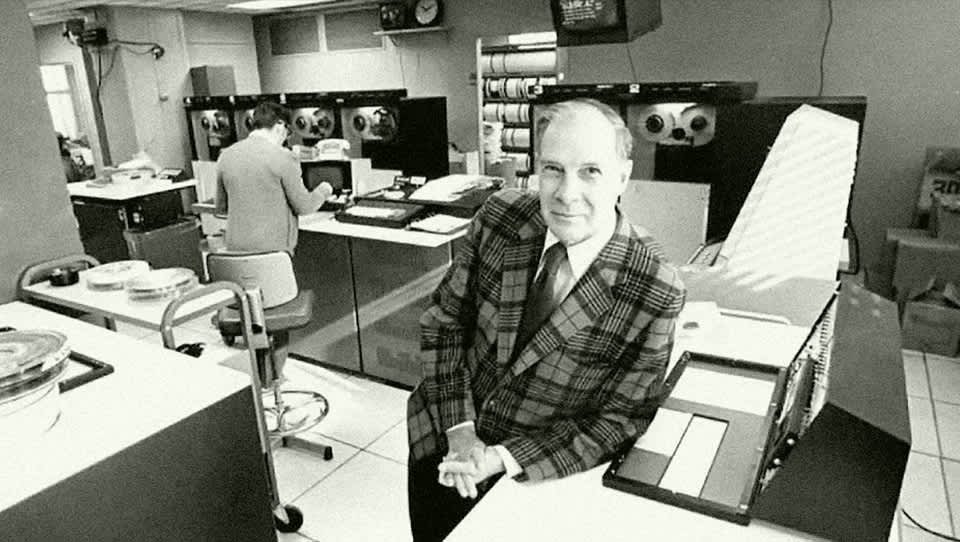
A mathematician who shared an office with Claude Shannon at Bell Labs gave one lecture in 1986 that explains why some people win Nobel Prizes and other equally smart people spend their whole lives doing forgettable work.
His name was Richard Hamming. He won the Turing Award. He invented error-correcting codes that made modern computing possible. And he spent 30 years at Bell Labs sitting in a cafeteria at lunch watching which scientists became legendary and which ones faded into nothing.
In March 1986, he walked into a Bellcore auditorium in front of 200 researchers and told them exactly what he had seen.
Here's the framework that has been quoted by every serious scientist for the last 40 years.
His opening line landed like a punch. He said most scientists he worked with at Bell Labs were just as smart as the Nobel Prize winners. Just as hardworking. Just as credentialed. And yet at the end of a 40-year career, one group had changed entire fields and the other group was forgotten by the time they retired.
He wanted to know what the difference actually was. And he said it wasn't luck. It wasn't IQ. It was a specific set of habits that almost nobody is willing to follow.
The first habit was the one that hurts the most to hear. He said most scientists deliberately avoid the most important problem in their field because the odds of failure are too high. They pick a safe adjacent problem, solve it cleanly, publish it, and move on. And because they never swing at the hard problem, they never hit it. He said if you do not work on an important problem, it is unlikely you will do important work. That is not a motivational line. That is a logical one.
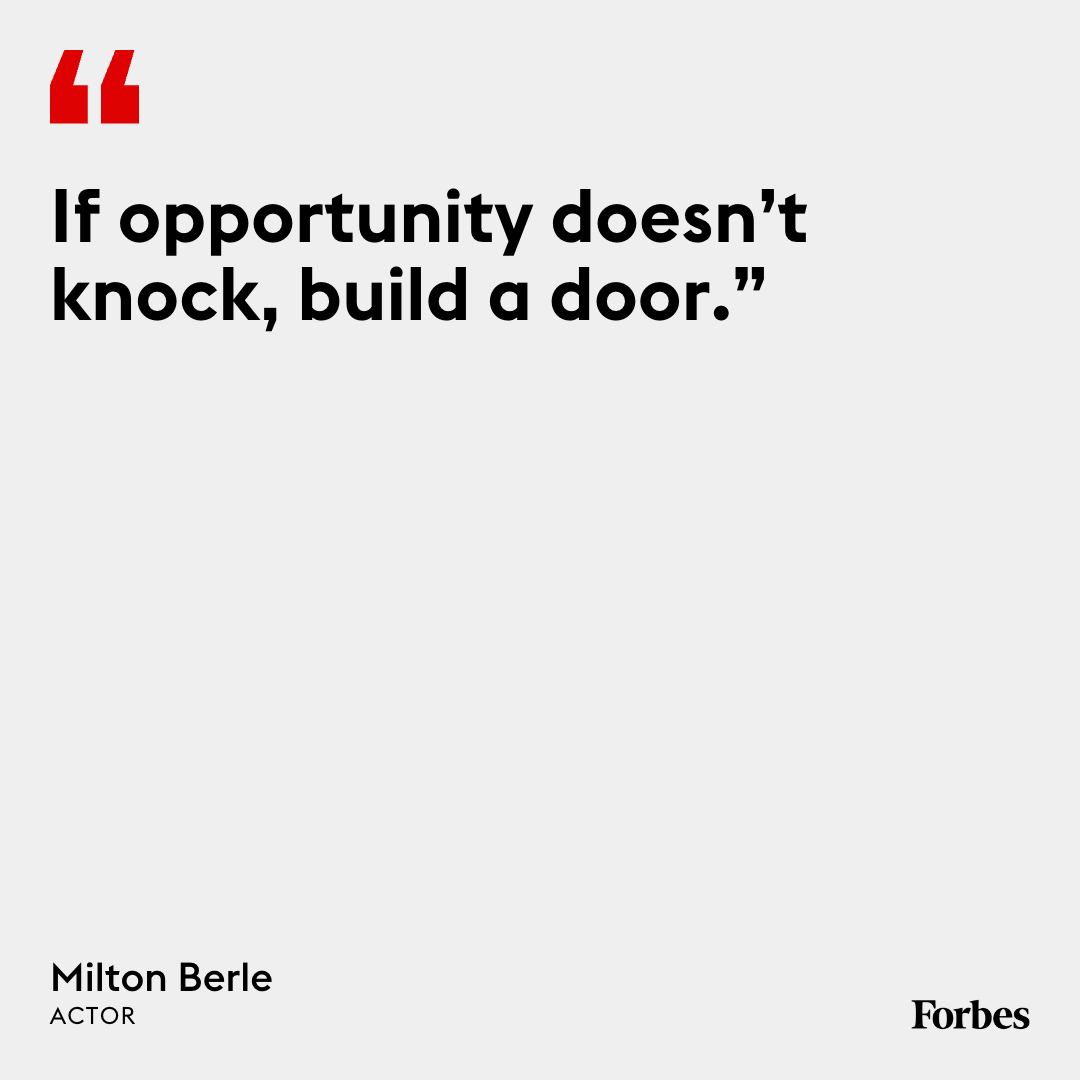
The second habit was about doors. Literal doors. He noticed that the scientists at Bell Labs who kept their office doors closed got more done in the short term because they had no interruptions. But the scientists who kept their doors open got more done over a career. The open-door scientists were interrupted constantly. They also absorbed every new idea passing through the hallway. Ten years in, they were working on problems the closed-door scientists did not even know existed.
The third habit was inversion. When Bell Labs refused to give him the team of programmers he wanted, Hamming sat with the rejection for weeks. Then he flipped the question. Instead of asking for programmers to write the programs, he asked why machines could not write the programs themselves. That single inversion pushed him into the frontier of computer science. He said the pattern repeats everywhere. What looks like a defect, if you flip it correctly, becomes the exact thing that pushes you ahead of everyone else.
The fourth habit was the one that hit me the hardest. He said knowledge and productivity compound like interest. Someone who works 10 percent harder than you does not produce 10 percent more over a career. They produce twice as much. The gap doesn't add. It multiplies. And it compounds silently for years before anyone notices.
He finished the lecture with a line I have never been able to shake.
He said Pasteur's famous quote is right. Luck favors the prepared mind. But he meant it literally. You don't hope for luck. You engineer the conditions where luck can land on you. Open doors. Important problems. Inverted questions. Compounded hours. Those are not traits. Those are choices you make every single day.
The transcript has been sitting on the University of Virginia's computer science website for almost 30 years. The video is free on YouTube. Stripe Press reprinted the full lectures as a book in 2020 and Bret Victor wrote the foreword.
Hamming died in 1998. He gave his final lecture a few weeks before. He was 82.
The lecture that explains why some careers become legendary and others disappear is still free. Most people who could benefit from it will never open it.
When you realize the intro of the famous song "Smoke on the Water" by Deep Purple is the intro of Beethoven's 5th Symphony simply played backward.
Mind-blowing.
Great managers are not philosophers, entertainers, doers, or artists. They are engineers. They see their organizations as machines and work assiduously to maintain and improve them. They create process- flow diagrams to show how the machine works and to evaluate its design. They build metrics to light up how well each of the individual parts of the machine (most importantly, the people) and the machine as a whole are working. And they tinker constantly with its designs and its people to make both better. #principleoftheday
Every kid should learn that humility and kindness aren't signs of weakness. They're strengths of character.
Recognizing your faults doesn't mean you lack self-esteem. It shows you have self-awareness.
Showing compassion doesn't mean you lack backbone. It shows you have heart.
Richard Feynman's Lectures on Physics are timeless: their main strength is in demonstrating how to reason about physics. You may not know all the lectures are completely online:
Volume 1: https://t.co/yDpyRViG61
Volume 2: https://t.co/oEctaDhy2X
Volume 3: https://t.co/eXS03nu9fE
World Water Day 2023 asks people to “Be the change you want to see in the world”.
Ahead of the celebration in March, post World Water Day social media assets using #WorldWaterDay to generate debate and raise awareness on #water.
Join the #WaterAction!
#UN2023WaterConference
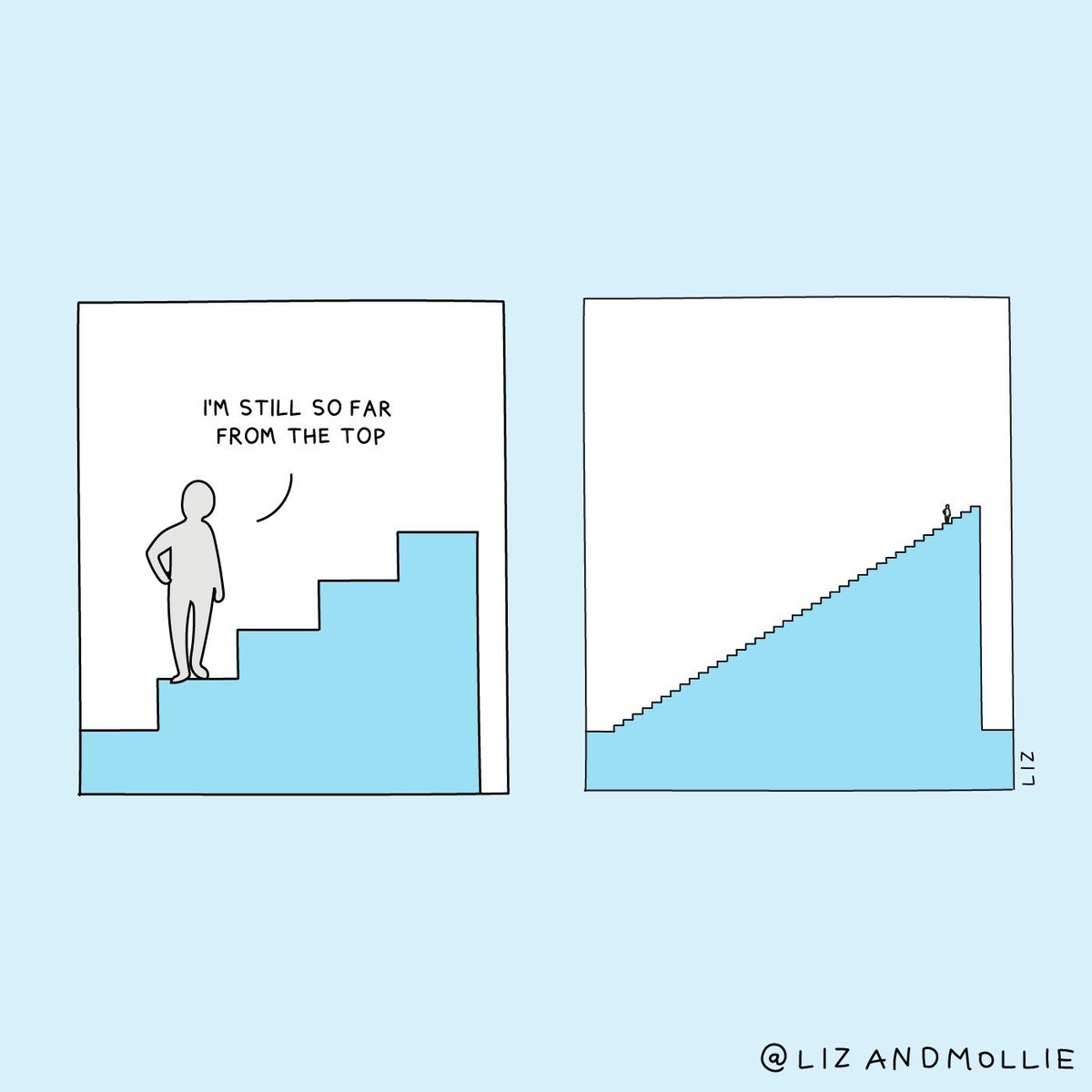
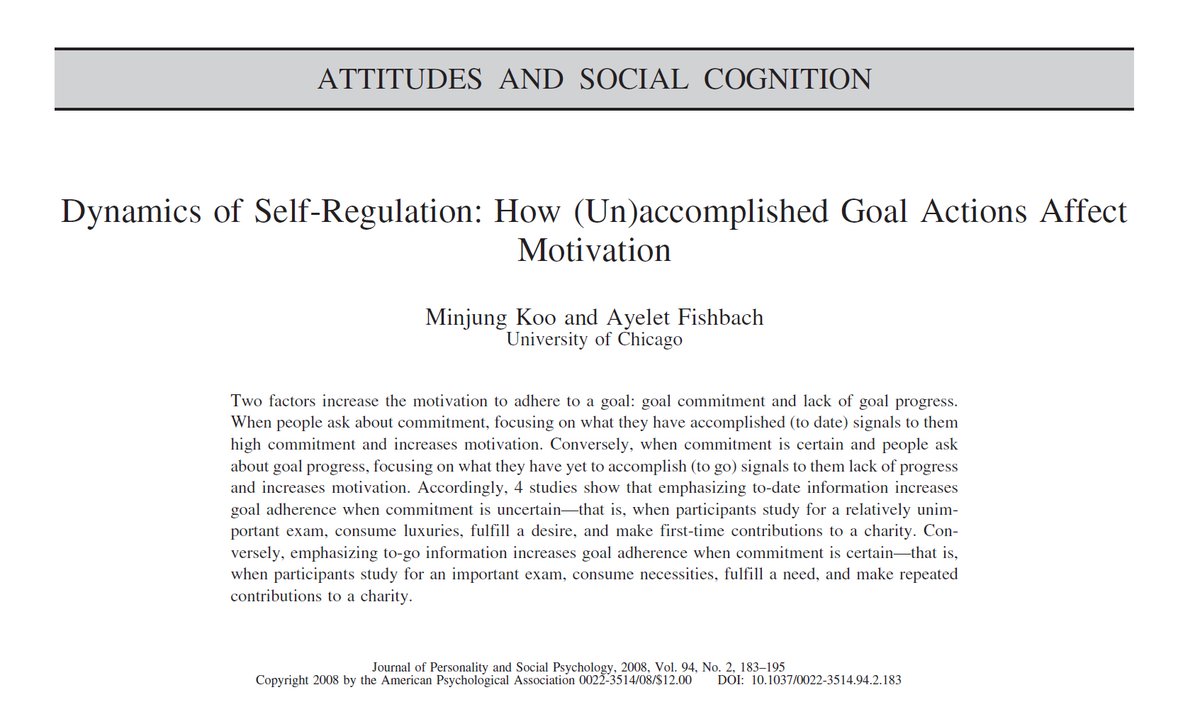
When you're committed to a goal, it’s motivating to look ahead at how far you have left to go. Staring at the summit fuels grit.
When doubt creeps in, you’re better off looking back at how far you've already come. Seeing your progress builds confidence and commitment.
#MondayMotivation 🌊 Ready to act for #water?👍
🍅Don't let the faucet run while you clean vegetables.
🌧️Catch rainwater and reuse it.
🍲Reduce food waste: it takes lots of water to produce food.
💸 Save the planet, protect #water.
Every day, 1 change. For the water we need.