Did you know we have a Twitch? If not, you can stop by our stream tomorrow at 3 p.m. EDT to learn what we're all about. Members of the Early Career Leadership Program will be discussing the program and why you should join! https://t.co/cITFBoNgyw
Check out our collaboration work on gene regulatory networks (GRN) with @santosmoreno_j@ETasiudi Joerg Stelling and @YSchaerli. Here, we quantify robustness and evolvability for the complete genotype-phenotype map and link these features to GRN motifs.
https://t.co/dkavvza8bj
Meet Uyen Linh Ho, member of the ECLP Community and Membership Engagement Subcommittee, and learn about her passion for making science accessible for everyone: #ECS#ECLP#ECSLeadershipSpotlight https://t.co/xx8FTSjl60
More details on all of this in the paper. We are collecting feedback from the community before submitting this to a journal, so if you have any comments, please let me know!
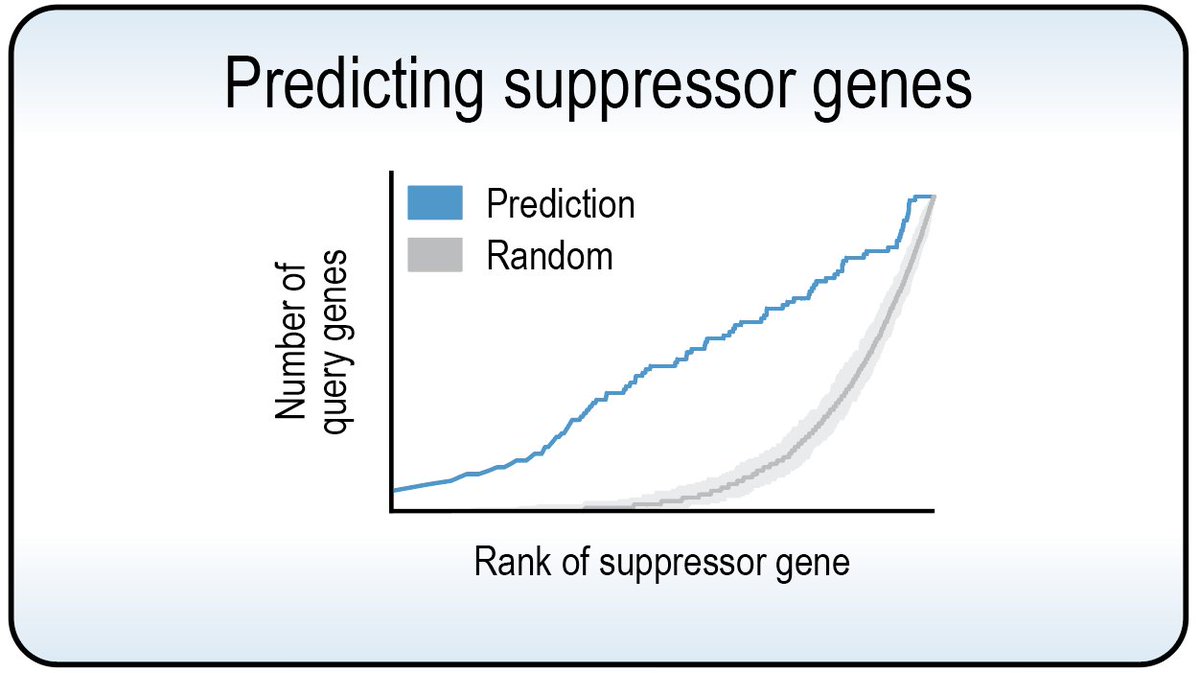
Did we learn enough about suppressors from this study to be able to predict them? Yes -- for about half of query genes we can predict suppressor genes reasonably well. For the other half, we'll still have some work to do!
We next had a look at cancer cells, which generally accumulate lots of passenger mutations. We found that damaging passenger mutations in query genes are more likely to persist in a tumor if they are accompanied by mutations in the corresponding suppressor gene
So what are these suppressor genes? We found that there are many ways in which suppression can occur -- and that the underlying mechanisms of suppression can tell you something about disease pathology
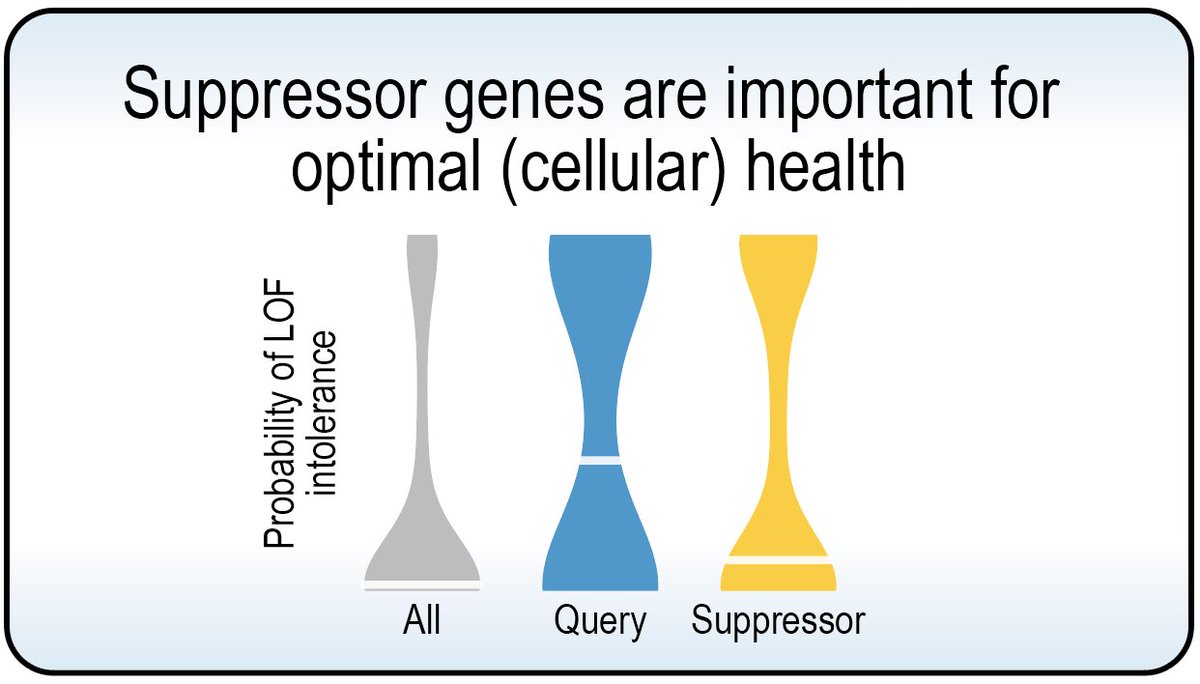
As expected, the query genes were generally intolerant to loss-of-function mutations in the human population or in cultured cells. But to our surprise, so were the suppressor genes, in apparent contrast with their protective role in the presence of the query
Now online, a new preprint in which we look at suppressor variants that can compensate for human genetic defects
So what did we find?
https://t.co/U28aypdI8p
@betulunlu86 and @ulinhho read 2,400 papers (!!) to look for cases in which the deleterious effects of a "query" mutation (for example a disease mutation) were rescued by a "suppressor" mutation elsewhere in the genome. They found 476 different examples
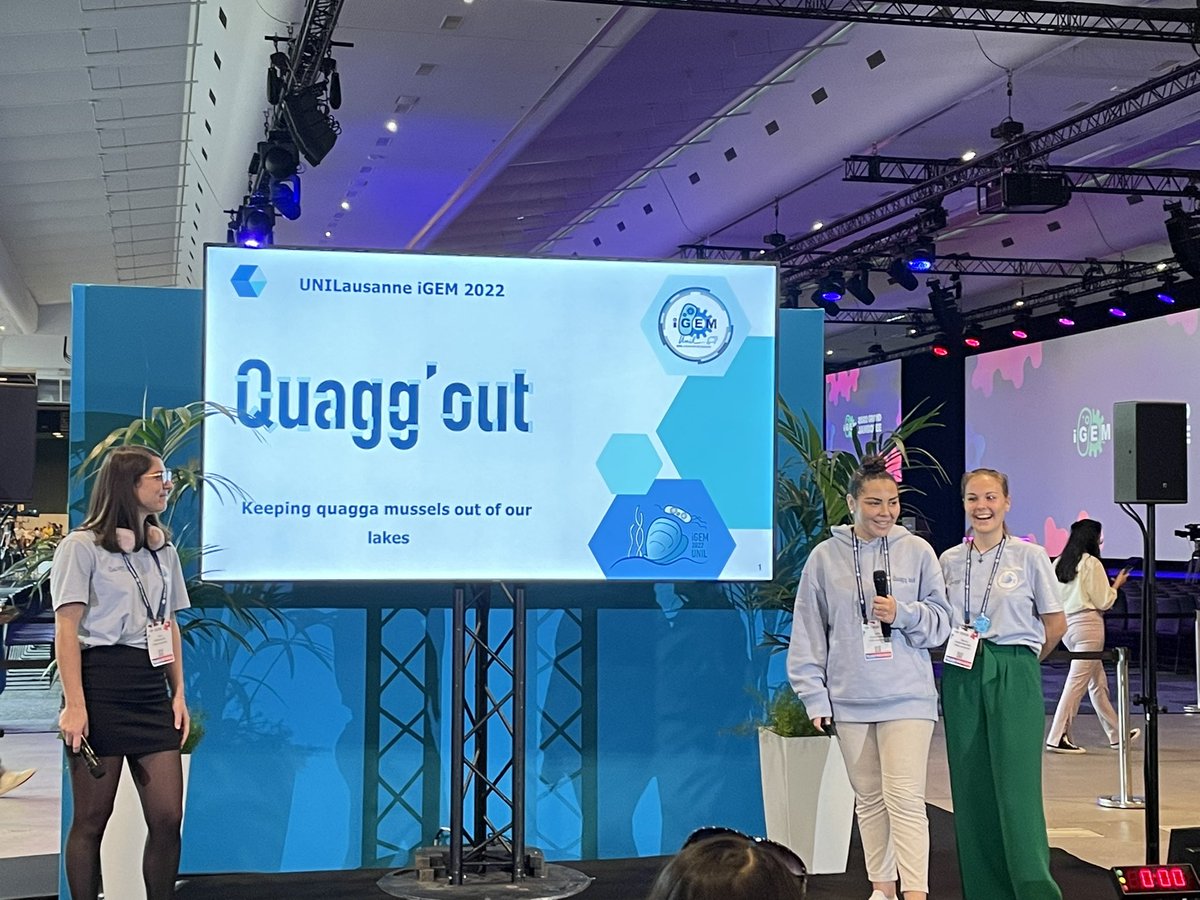
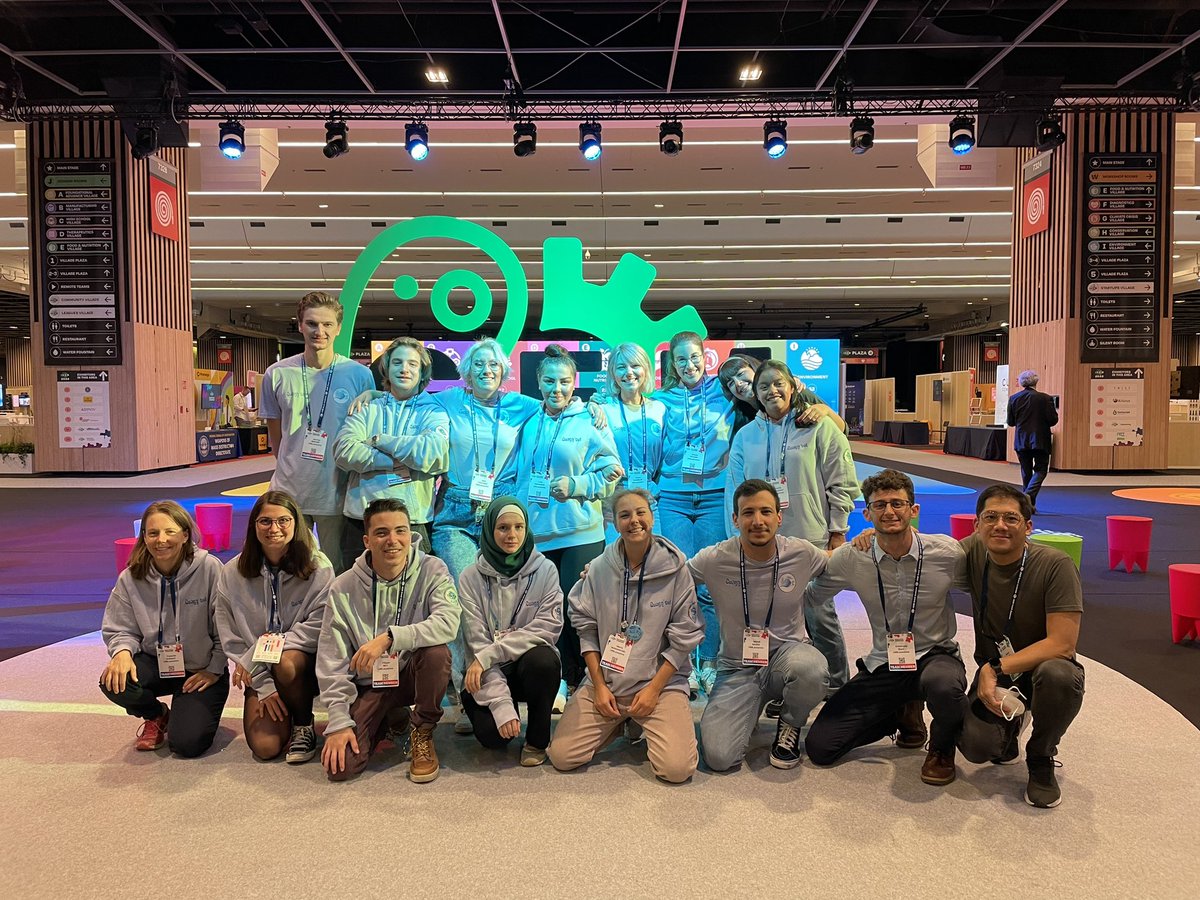
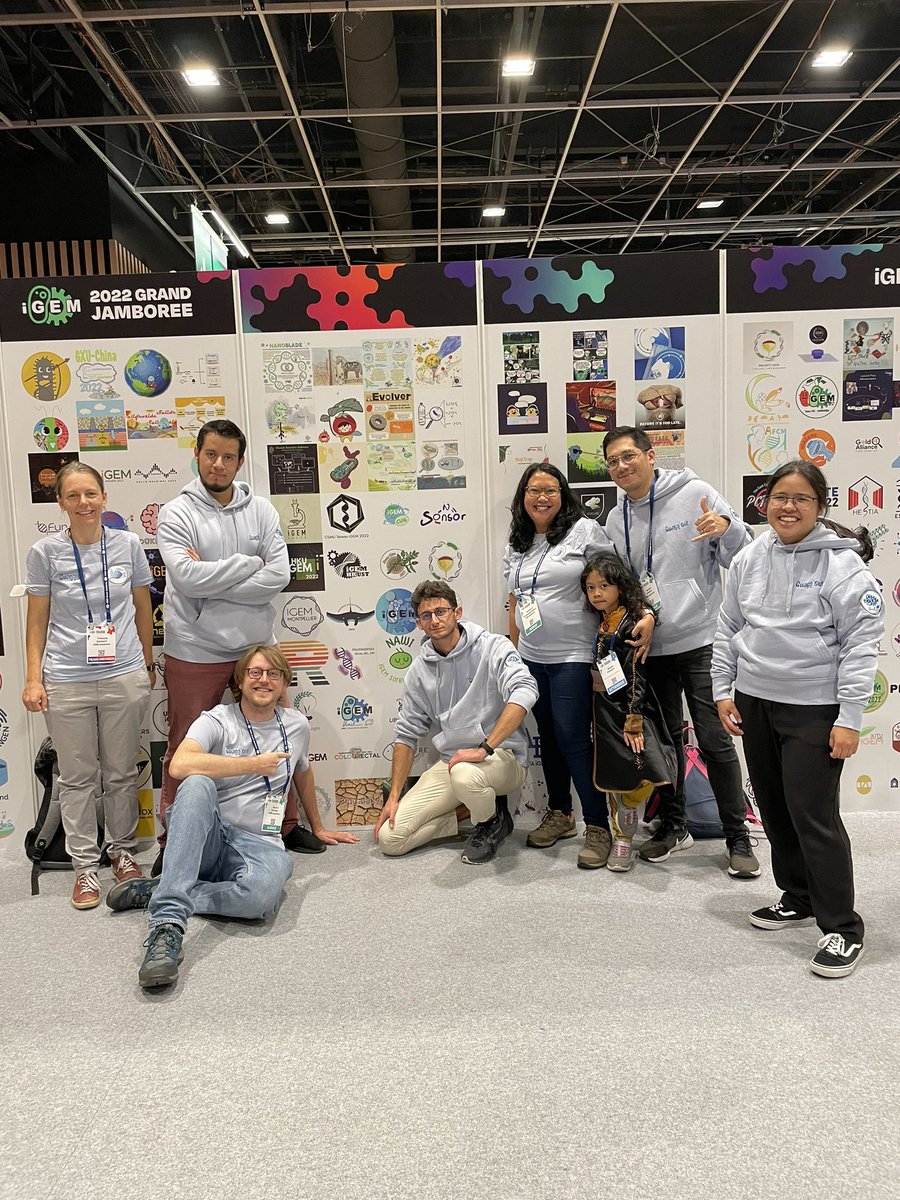
Where do you find the most motivated students at UNIL? In the iGEM course @ecolebiolunil. They were working all night (!!!) to deliver a splendid wiki: https://t.co/LB3UtLL00N
Check it out!
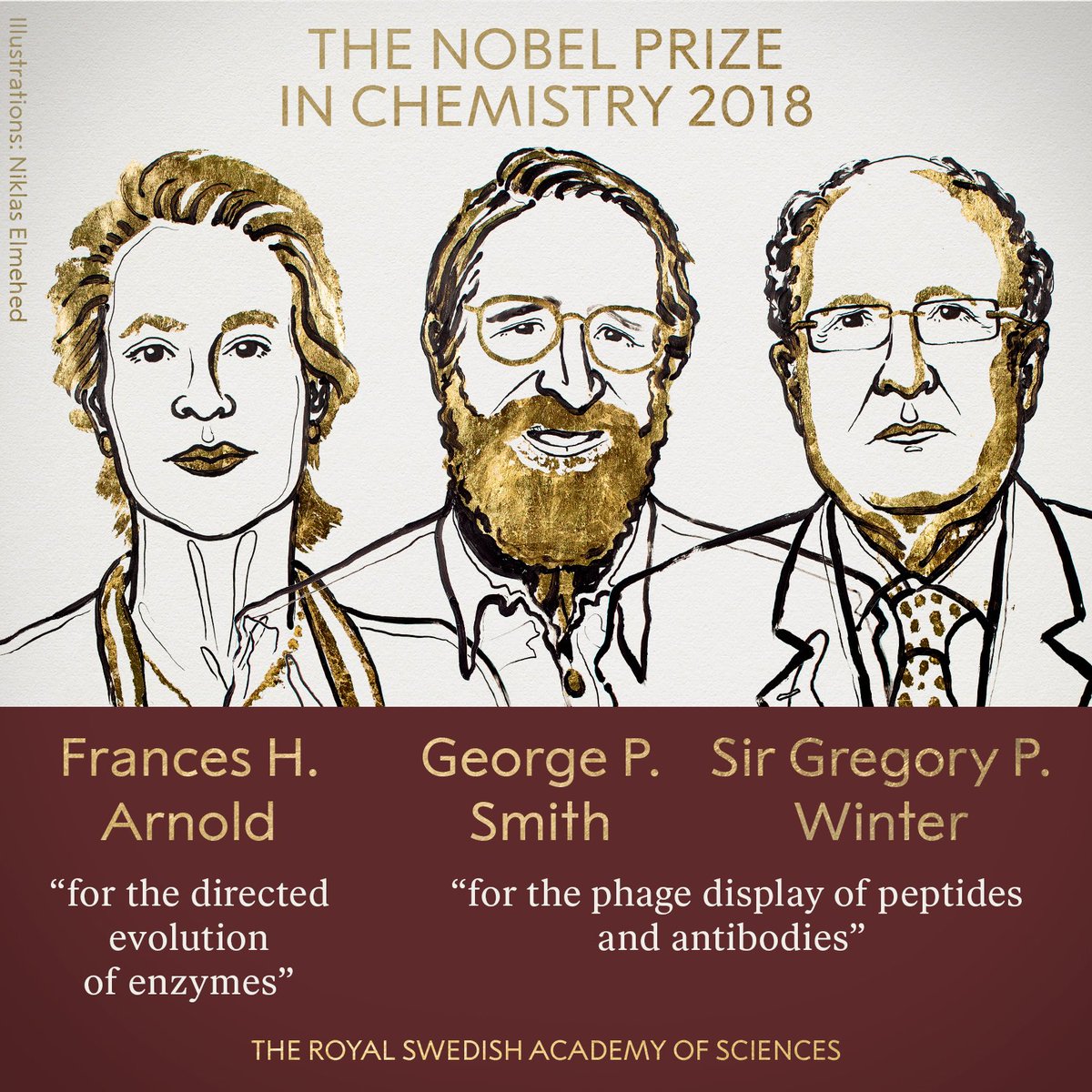
BREAKING NEWS:
The Royal Swedish Academy of Sciences has decided to award the #NobelPrize in Chemistry 2018 with one half to Frances H. Arnold and the other half jointly to George P. Smith and Sir Gregory P. Winter.