🇺🇸Happy 250th Birthday, America and Happy 4th of July!!
Never forget how great this country is, how blessed we are to live here, and how many generations before us sacrificed to give us the freedom and opportunities we enjoy today.
God bless America! 🇺🇸
🇺🇸 Countdown Until America’s 250th Birthday: Day 10
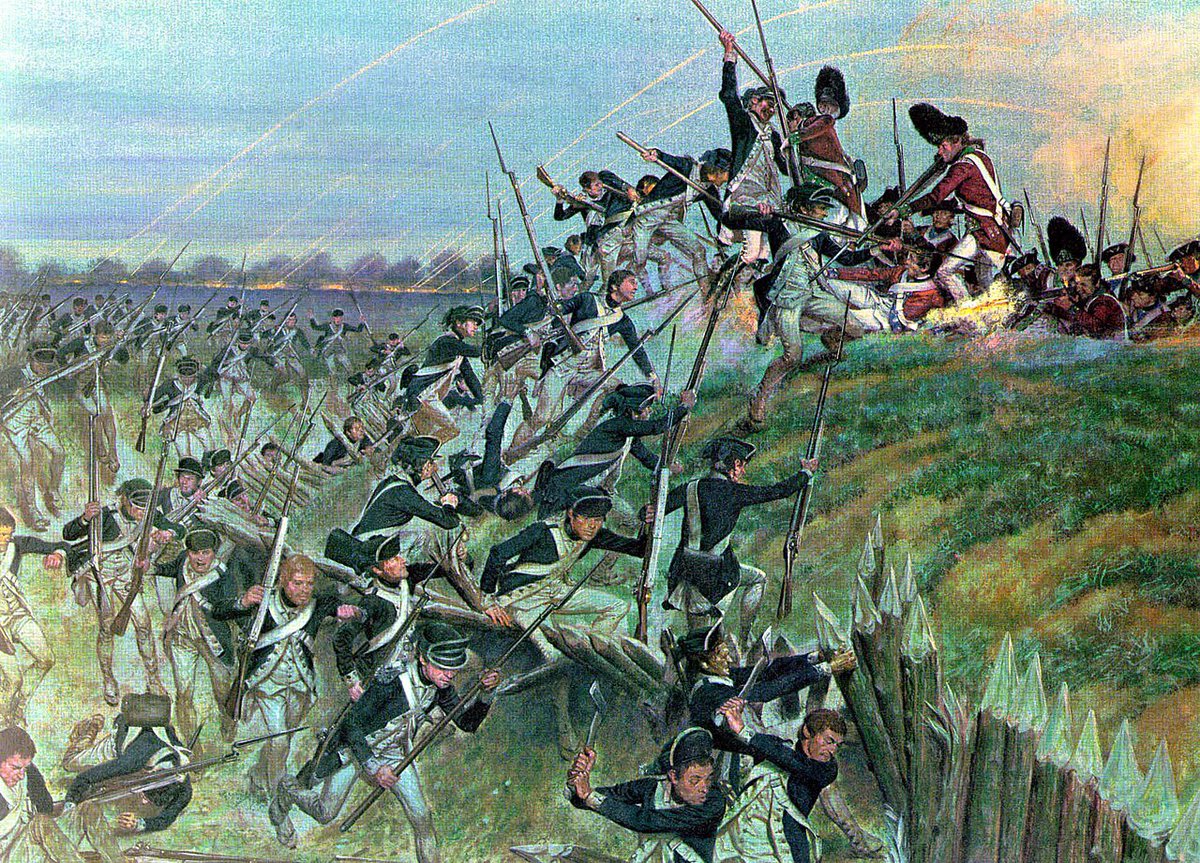
Redoubt #10 was stormed and captured by American forces on the night of October 14, 1781, during the Siege of Yorktown.
Led by Alexander Hamilton, the assault helped break the British defensive line and allowed siege guns to be brought within range of Cornwallis’s army.
The British surrendered five days later.
🇺🇸
🇺🇸 The true story behind the song “Take Me Home, Country Roads” from a WVU graduate
The song was released in 1971. WVU began the tradition of singing it at games in 1972.
The songwriters, Bill Danoff and Taffy Nivert, got the idea for the song riding down Clopper Road in Montgomery County, Maryland. They are husband and wife.
The songwriters have confirmed the song is about West Virginia. It’s not about Western Virginia.
Bill originally wanted to write the song about his home state of Massachusetts, but couldn’t get the cadence and syllable count right.
Danoff and Nivert opened for John Denver in DC in 1970. Later that night they played the song for Denver who loved it. They all stayed up that night finalizing the lyrics.
John Denver had not yet even been to West Virginia when he recorded the song.
Blue Ridge Mountains and Shenandoah River were added because they sounded poetic. They are also physically present in Jefferson County, WV.
Video: John Denver playing Country Roads at dedication of Mountaineer Field in 1980.
It’s a beautiful song and I love hearing it, especially after Mountaineer wins!
🇺🇸 Most Badass Americans You Don’t Know: Peter Francisco
He was a giant of his time and a living celebrity across the entire Continental Army.
Legend says George Washington personally called him his “One-Man-Army” and had a massive six-foot broadsword specially forged just for him.
Peter’s story starts as a five year old when he was kidnapped from his home in the Portuguese Azores islands, sailed across the Atlantic, and abandoned on a Virginia dock.
He was found dressed nicely with silver buckles marked “P.F.” on his shoes and was adopted by Patrick Henry’s uncle.
He grew into a literal giant: 6 foot 6 inches tall and 260 pounds of pure muscle from blacksmith work and hard labor.
At 16 he personally heard Patrick Henry’s “Give me liberty or give me death” speech and begged to enlist in the 10th Virginia Regiment.
He fought in nearly every major battle of the Revolutionary War.
At Brandywine he took a musket ball to the leg while holding a narrow gap so Washington’s army could escape.
He was wounded again at Monmouth when a ball tore through his right thigh.
In 1779 Washington picked him for the “forlorn hope” assault on Stony Point.
In the dead of night he scrambled up the cliff with 19 other men. He was the second to reach the top, took a 9-inch bayonet slash across his stomach, killed the man who stabbed him plus two more Redcoats, and was the first to seize the British flag.
At the disastrous Battle of Camden, with the army collapsing, he single handedly lifted a massive cannon barrel onto his shoulders and carried it to safety, then bayoneted a charging British dragoon.
During the chaotic retreat a British grenadier raised his musket to bayonet Colonel Mayo.
Francisco shot the grenadier dead.
A cavalryman charged him with a saber. Francisco sidestepped two swings, lifted the man out of the saddle with his bayonet, took the horse, and rode through enemy lines yelling like a Loyalist.
He caught up to Colonel Mayo, cut down the British officer holding him, and gave his colonel the horse so he could escape.
After Camden he reenlisted in Colonel William Washington’s cavalry.
He complained his sword felt like a toothpick, so Washington ordered a true giant’s broadsword forged for him, six feet long with a 5 foot blade, and it was delivered just two days before Guilford Court House.
At Guilford on March 15, 1781, Francisco led the cavalry charge. Swinging his great sword he personally felled 11 Redcoats in one furious assault.
When a bayonet pinned his leg to his horse he calmly helped the soldier yank it free. Then, with one crushing swing, he brought down his giant broadsword and split the man’s head clean down to his shoulders.
Moments later another bayonet impaled his right thigh completely through. He kept fighting until he tumbled unconscious from his horse.
He was found beside four corpses and nursed back to health by a kindly Quaker.
Francisco walked back to Virginia and was given a special scout assignment.
One day at Ben Ward’s Tavern nine of Tarleton’s feared dragoons surrounded him. Eight went inside.
The paymaster demanded his silver shoe buckles. When the man bent down Francisco grabbed the saber, slashed him across the head and neck, took a pistol ball to the side (his sixth wound), and fought off the rest. He captured all eight of their horses as seven dragoons fled for their lives.
This legendary stand made him known far and wide as the “Giant of Virginia” and the “Hercules of the Revolution.” It marked the end of his fighting career.
He formed a lifelong friendship with the Marquis de Lafayette.
The two men first bonded while recovering from wounds after Brandywine and later stood together watching Cornwallis surrender at Yorktown.
After the war, in 1825 he was appointed Sergeant-at-Arms of the Virginia Legislature, where he worked alongside Chief Justice John Marshall and Senator Henry Clay.
When Peter passed away in 1831 at the age of 70, the Virginia House of Delegates adjourned out of respect for this amazing man.
His funeral was conducted in the House of Delegates Hall at the state capitol, and the funeral procession comprised the governor, legislators, citizens and units of the light infantry, artillery, dragoons and the Public Guard.
Peter Francisco was buried with full military honors in Richmond’s Shockoe Cemetery. His tombstone simply reads “a soldier of revolutionary fame.”
Soil from his grave later nourished Virginia’s Liberty Tree at Golden Gate Park in San Francisco.
Colonel Mayo never forgot that Peter had saved his life.
Years later he presented Francisco with his own dress sword in gratitude. That dress sword is preserved today at the Virginia Museum of History & Culture in Richmond.
His famous broadsword, the one Washington forged for him, was presented to the Virginia Historical Society by his daughter but has since disappeared.
A granite column now marks the spot at Guilford Court House where he felled eleven Redcoats.
Five states (Massachusetts, Rhode Island, Virginia, Maryland, and New Jersey) have celebrated March 15 as Peter Francisco Day. March 15 marks the day of battle at Guilford Court House.
The Portuguese Continental Union created a Peter Francisco Award in his honor. The first recipient was President John F. Kennedy.
A historical marker still stands at City Point where the five year old boy with the silver “P.F.” buckles first arrived in America.
Peter Francisco is an American Legend 🇺🇸
🇺🇸 Most Badass Football Players: Combat Veterans Edition #7 Alejandro Villanueva
Alejandro Villanueva, an Army Ranger and two time Pro Bowler, was one badass football player.
Born in 1988 and raised in a military family, Villanueva attended the U.S. Military Academy at West Point, where he primarily played offensive tackle for the Army Black Knights.
After graduating in 2010 and being commissioned as an infantry officer, he served with the 2nd Battalion, 87th Infantry Regiment, 10th Mountain Division.
During his first deployment to Afghanistan as a rifle platoon leader, Villanueva’s unit responded to a call involving a local teacher who had opened fire on Taliban fighters near a mosque.
As they moved in, the platoon walked into a heavy Taliban ambush.
One of his soldiers, Pfc. Jesse Dietrich, was shot near the armpit.
While under intense enemy fire, Villanueva pulled the wounded Dietrich down an alley and into a second mosque so a medic could begin treating him.
He then returned to the fight.
Later, when the medic told him the wounded needed to be moved to a safer location for medevac, Villanueva personally carried another injured soldier on his shoulders through the danger zone to a nearby school, where they waited for a helicopter.
Despite these efforts, Dietrich tragically died of his wounds on the helicopter.
The loss deeply affected him.
For his actions in rescuing wounded soldiers while under enemy fire, Villanueva was awarded the Bronze Star with “V” for valor in combat.
He had earned his Ranger tab and served two additional tours in Afghanistan with the 1st Battalion, 75th Ranger Regiment.
Many of those operations remain classified.
He was also awarded a second Bronze Star for service.
After nearly five years of active duty and three combat deployments, Villanueva left the Army as a captain to pursue a career in the NFL.
He signed with the Philadelphia Eagles as an undrafted free agent before joining the Pittsburgh Steelers, where he became one of the league’s most reliable left tackles.
During his time with the NFL, he started over 100 games and was selected to the Pro Bowl twice, in 2017 and 2018.
Alejandro Villanueva is an American Badass.
Thank you, Captain! 🫡🇺🇸
🏴��� Honorary Scottish Badass D-Day Edition: Bill Millin
Bill Millin played his bagpipes on Sword Beach. The Germans thought he was nuts.
And yes, that’s him in the picture.
On June 6, 1944, as Lord Lovat’s commandos stormed Sword Beach, a lone Scottish piper waded through the surf and enemy fire playing his bagpipes.
William “Bill” Millin was born in Canada to Scottish parents and raised in the Highland tradition.
At 21 he was the personal piper to Brigadier Simon Fraser, 15th Lord Lovat, commander of the 1st Special Service Brigade.
Lovat had specifically chosen Millin during commando training at Achnacarry.
When the moment came on D-Day, Lovat ordered him to play.
Millin hesitated, citing regulations against piping in combat.
Lovat replied: “Ah, but that’s the English War Office. You and I are both Scottish, and that doesn’t apply.”
Millin went ashore wearing the Cameron tartan kilt his father had worn in the First World War.
He carried only his pipes and the traditional sgian-dubh knife in his stocking.
He was the only man in the entire invasion armada wearing a kilt.
True to Highland tradition, he went "commando" under the kilt.
As bullets and mortar rounds exploded around him, Millin played “Highland Laddie,” “The Road to the Isles,” and “All the Blue Bonnets Are Over the Border.”
He marched through the water and onto the beach while his fellow commandos fell around him.
The Germans reportedly thought he was mad and held their fire.
His defiant music cut through the chaos, lifting the spirits of the assault troops and becoming one of the most iconic images of D-Day.
Bill Millin survived the war and lived to see his story become legend.
He passed in 2010.
The Mad Piper of Sword Beach.
Bill Millin was a badass.
Thank you, Piper Bill! 🫡🏴
🇺🇸 Most Badass Presidents: Combat Veteran Edition #1 George Washington
George Washington, our 1st President, was one badass President.
Was the Father of our country under the miraculous care of divine Providence?
You tell me.
We all know his stories. But these will leave you absolutely awestruck.
Born February 22, 1732, in Westmoreland County, Virginia.
At age 21, Washington volunteered for a 500-mile winter expedition through the frozen wilderness to deliver a warning to the French near Lake Erie.
On the return trip, the deep snow crippled their horses. He and his guide went out on foot and followed an Indian on a treacherous shortcut. When they reached a clearing, the Indian stepped ahead, turned, and fired at him point blank.
The bullet passed harmlessly by him.
In 1755, during the Battle of the Monongahela, Washington rode straight into a French and Indian ambush as aide to Gen. Braddock.
He was suffering from severe dysentery but dragged himself onto his saddle.
The slaughter was horrifying, and every other mounted officer was targeted and killed around him.
Two horses were shot out from under him.
Four bullets ripped through his coat and one his hat.
He emerged completely unscathed.
He later wrote in awe that “I was saved by the miraculous care of Providence.”
Fifteen years later in 1770, an old Native American chief traveled a long path just to look upon Washington’s face again.
The chief revealed that during that bloody battle, he had personally fired at Washington 17 times with a rifle that never missed.
He ordered his warriors to target him exclusively, but every single musket ball failed to pierce him.
Awed and terrified, the chief commanded his men to stop firing, declaring that Washington was under the special guardianship of the Great Spirit and could never die in battle.
In 1758 near Fort Duquesne, his own troops, mistaking the other for enemy, began firing wildly at each other in the darkness and smoke.
Washington charged between the two lines.
He desperately used his sword to knock up the presented muskets of his own men.
Bullets flew all around him.
14 men were killed and 26 wounded, but he came away untouched.
At the Battle of Kip’s Bay in September 1776, he galloped alone toward the British lines when his militia troops broke and ran without firing a shot.
He faced about fifty redcoats at close range as they leveled their muskets.
His aides seized his horse’s bridle and dragged him to safety at the very last second.
At the Battle of Princeton in January 1777, Washington rode his white horse directly between the British and American lines to rally his wavering troops.
He was 30 yards from the British front line.
He then ordered his men to fire.
An aide covered his eyes with a handkerchief, certain the commander would meet his death.
When the smoke cleared, Washington then chased the fleeing British alone shouting, “It’s a fine fox chase, my boys!”
At the Battle of Brandywine in September 1777, Washington was secretly scouted in the woods by British Captain Patrick Ferguson, the inventor of a revolutionary, rapid fire rifle.
Ferguson crept close, leveled his lethal weapon, and had him directly in his crosshairs.
As Washington turned to ride away, Ferguson’s gentlemanly code of honor stopped him from shooting an unsuspecting man in the back.
The sniper lowered his rifle and let him ride on, completely unaware that he could have ended the American Revolution.
Ferguson later wrote that he could have easily lodged half a dozen balls in him, but admitted, “I let him alone.”
Time after time he emerged from battle without a single scratch.
Did I mention this man also defeated the greatest empire on earth?
When King George III learned that Washington planned to surrender his military commission and return to farming at wars end, he said, “If he does that, he will be the greatest man in the world.”
Yes, he was.
And we were blessed to have him.
Thank you, Mr. President! 🇺🇸🫡
🇺🇸 Most Badass Americans You Don’t Know: #1 Roy Benavidez
Roy Benavidez is the badass of American badasses.
A doctor was zipping him into a body bag. He spit in his face to prove he was still very much alive.
Born in 1935 in Cuero, Texas, to Mexican and Yaqui Indian parents. Orphaned young. Raised poor. Dropped out of school at 15 to shine shoes and pick crops.
He enlisted anyway.
Became a Green Beret with the 5th Special Forces Group.
In 1965, on his first Vietnam tour, he stepped on a landmine during a reconnaissance patrol and was badly wounded.
Paralyzed from the waist down. Doctors said he’d never walk again and started his medical discharge papers.
He refused to accept it. Every night when the hospital was quiet he crawled out of bed and dragged himself across the floor to the wall to force his body to stand.
Night after night he fought for every inch of strength until after more than a year in hospitals he walked out ready to return to combat..
May 2, 1968, west of Loc Ninh near the Cambodian border.
A 12-man Special Forces recon team plus nine Montagnard allies was surrounded by over 1,000 NVA troops.
Benavidez was back at the forward base listening to the desperate radio calls.
He volunteered instantly.
Armed with nothing but a knife and a medical bag, he jumped from a hovering helicopter straight into the kill zone.
He sprinted 75 meters through withering fire to reach the pinned-down team.
Wounded in the leg, face, and head before he even got there.
Took command anyway. Repositioned the survivors. Directed their fire. Threw smoke to guide the birds in.
Carried and dragged wounded men to the extraction helicopter while under constant fire.
Went back for the team leader’s body and the classified documents on it.
Hit again — small-arms fire ripped into his abdomen, grenade fragments shredded his back. His intestines were hanging out.
The extraction helicopter’s pilot was mortally wounded at the exact same moment. The aircraft, riddled with bullets, crashed hard into the jungle.
Benavidez pulled the stunned survivors from the overturned wreckage and formed a tiny defensive perimeter.
He moved through heavy fire passing out ammo and water, encouraging the men, calling in air strikes and gunship runs.
Wounded a third time — shot in the thigh while treating another soldier.
In brutal hand-to-hand fighting an NVA soldier clubbed him from behind and bayoneted him. Benavidez yanked the bayonet out of his own body, drew his knife, and killed the man.
Spotted two more enemies rushing the second extraction chopper. Grabbed an AK-47 and dropped them both.
Made trip after trip carrying wounded men aboard while taking devastating fire.
37 separate wounds — gunshots, shrapnel, bayonets.
Only after every surviving man and every classified document was safely loaded did he allow himself to be pulled aboard the last helicopter.
He collapsed as it lifted off.
Medics later thought he was dead and put him into a body bag.
A friend recognized him and called a doctor over for help.
The doctor, convinced he was gone, began to zip the bag shut.
Benavidez spit in the doctor’s face to prove he was still alive.
Roy Benavidez saved at least eight men that day.
He was initially awarded only the Distinguished Service Cross.
The Medal of Honor was denied multiple times — at the time no living eyewitnesses corroborated his actions, and Benavidez himself believed the entire team had been wiped out.
Twelve years later the team’s radioman, Brian O’Connor, was on holiday in Australia when he read a newspaper story about Benavidez.
He sat down and wrote a detailed 10-page eyewitness report that verified everything, then came forward and finally made the upgrade possible.
President Ronald Reagan personally presented him the Medal of Honor in 1981 and said if the story were a movie script, no one would believe it.
Roy Benavidez is an American Legend 🇺🇸
🇺🇸 Most Badass Americans You Don’t Know: #2 Peter Francisco
(Thread 1/2)
Peter Francisco is an American badass.
He was a giant of his time — towering 6’6” and 260 pounds of muscle, and a living celebrity across the entire Continental Army.
Legend says George Washington personally called him his “one-man army” and had a massive six-foot broadsword specially forged just for him.
Peter’s story starts as a five year old when he was kidnapped from his home in the Portuguese Azores islands, sailed across the Atlantic, and abandoned on a Virginia dock.
He was found dressed nicely with silver buckles marked “P.F.” on his shoes and was adopted by Patrick Henry’s uncle.
He grew into a literal giant: 6 foot 6 inches tall and 260 pounds of pure muscle from blacksmith work and hard labor.
At 16 he heard Patrick Henry’s “Give me liberty or give me death” speech and begged to enlist in the 10th Virginia Regiment. He fought in nearly every major battle of the Revolutionary War.
At Brandywine he took a musket ball to the leg while holding a narrow gap so Washington’s army could escape. He was wounded again at Monmouth when a ball tore through his right thigh.
In 1779 Washington picked him for the “forlorn hope” assault on Stony Point. In the dead of night he scrambled up the cliff with 19 other men. He was the second to reach the top, took a 9-inch bayonet slash across his stomach, killed the man who stabbed him plus two more Redcoats, and was the first to seize the British flag.
At the disastrous Battle of Camden, with the army collapsing, he single-handedly lifted a massive cannon barrel onto his shoulders and carried it to safety, then bayoneted a charging British dragoon.
During the chaotic retreat a British grenadier raised his musket to bayonet Colonel Mayo. Francisco shot the grenadier dead. A cavalryman charged him with a saber. Francisco sidestepped two swings, lifted the man out of the saddle with his bayonet, took the horse, and rode through enemy lines yelling like a Loyalist. He caught up to Mayo, cut down the British officer holding him, and gave his colonel the horse so he could escape.
After Camden he reenlisted in Colonel William Washington’s cavalry. He complained his sword felt like a toothpick, so Washington ordered a true giant’s broadsword forged for him — six feet long with a 5-foot blade — delivered just two days before Guilford Court House.
At Guilford on March 15, 1781, Francisco led the cavalry charge. Swinging his great sword he personally felled 11 Redcoats in one furious assault. When a bayonet pinned his leg to his horse he calmly helped the soldier yank it free. Then, with one crushing swing, he brought down his giant broadsword and split the man’s head clean down to his shoulders. Moments later another bayonet impaled his right thigh completely through. He kept fighting until he tumbled unconscious from his horse.
He was found beside four corpses and nursed back to health by a kindly Quaker.
Francisco walked back to Virginia and was given a special scout assignment. One day at Ben Ward’s Tavern nine of Tarleton’s feared dragoons surrounded him. Eight went inside. The paymaster demanded his silver shoe buckles. When the man bent down Francisco grabbed the saber, slashed him across the head and neck, took a pistol ball to the side (his sixth wound), and fought off the rest — capturing all eight horses as seven dragoons fled for their lives.
This legendary stand made him known far and wide as the “Giant of Virginia” and the “Hercules of the Revolution.” It marked the end of his fighting career.
(Continued in 2/2)
Here’s what Wyatt Teller is pissed about! Very very very clearly offsides by the Ravens on 4th and 5.
Guy who jumps offsides causes immediate pressure.
Browns get screwed, again.
This was the finest and most consequential political speech of my lifetime. It was what Americans needed to hear. JD Vance earned my vote. Thank you JD.
Justice for Charlie is coming.
I thought about clipping this but honestly? It's the most consequential speech of our time and you all need to watch it in full.
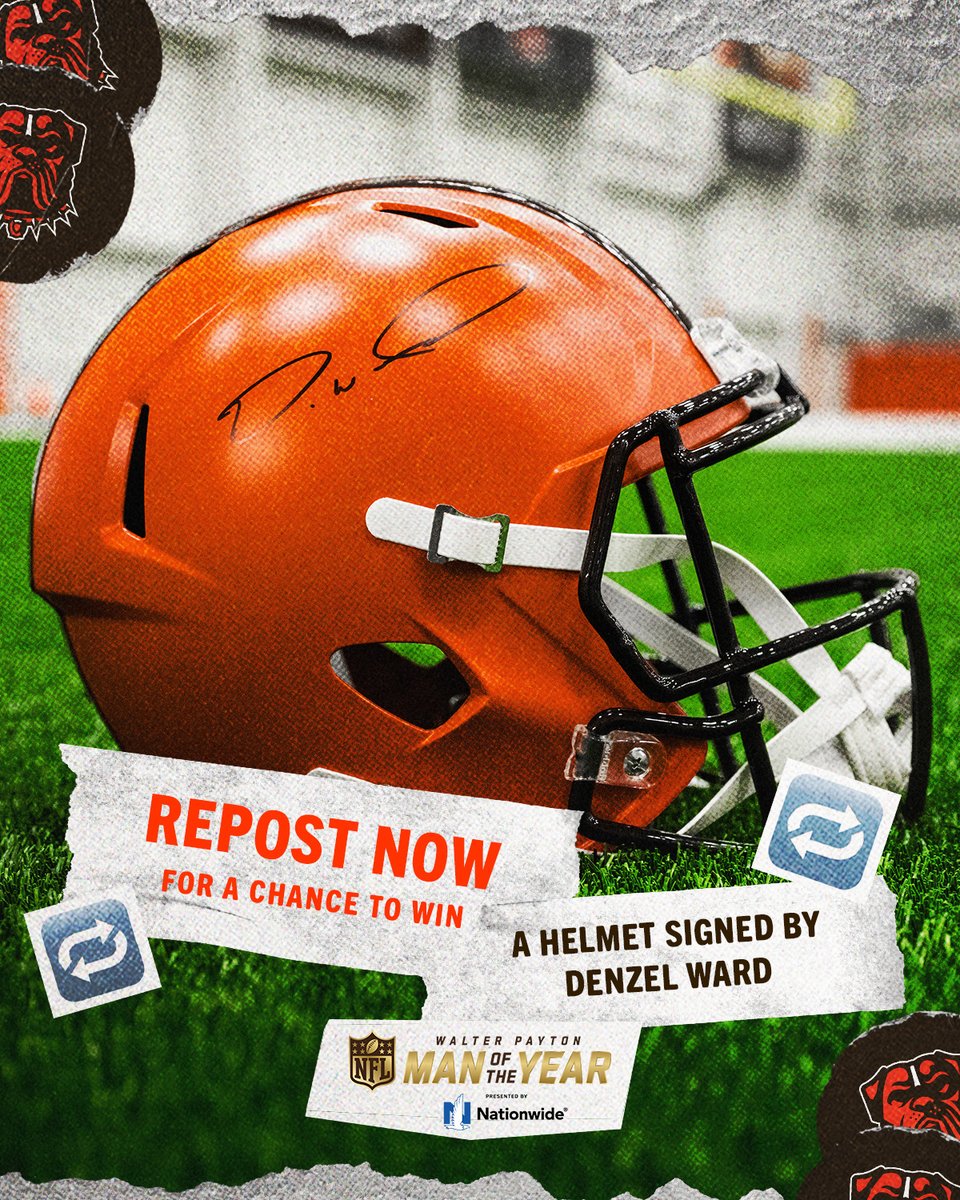
🚨 WIN a helmet signed by our very own #WPMOYChallenge nominee, @denzelward! 🚨
Hit us with a repost for your chance to win. Since today is a double vote day, each entry also counts as two votes cast for Denzel!
@Nationwide | #WPMOY
On The 14th of June 1946 a baby boy was born In the Jamaica district of Queens, New York.
In 1995 his car had a flat tire. A black man walking by noticed the owner was wearing a suit, so he stepped in and fixed the flat.
"How can I repay you?" asked the gentleman. "My wife has always wanted some flowers," the man says.
A few days later, the man's wife received a beautiful bouquet of flowers with a note saying, "thanks for helping me. By the way, the mortgage on your house is paid off."
A United States Marine spent 7 months in a Mexican prison on a minor charge. He was beaten.
After he was returned to America, the man from Queens sent him a check for $25,000, "To get you started."
A black bus driver saved a suicidal girl from jumping off a bridge. The man from Queen sent him a check for $10,000.
A rabbi's critically ill son needed to get from NYC to California for special care but no airlines would fly him.
The generous man from Queens used his private jet to fly the child.
This kind man from Queens did many other quiet acts of kindness over the years.
Everyone loved him.
I'm voting for Donald Trump!
#614clinton