Fourteen infants have been burnt to death in a fire in Islamabad’s largest public sector hospital, in Pakistan’s capital and its premier showcase of modern urban life. Let that sink in.
Apathy cannot be repackaged as endurance and sold to the public after every national tragedy. Stop romanticising the suffering of your own people and fix the system.
It's getting bad in Pakistan's Balochistan. Pakistan are still stuck there due to the paralysis regarding Afghanistan, and there are some not so encouraging signs.
IF PAKISTAN WANTS TO END THE TERRORISM THEN ACTUAL TARGETS ARE THESE .
TTP is TTA now, eliminating Talibans' means eliminating the TTP.
Why are strikes only against TTP.
Why not against those harbouring these terrorists.
Those who host them, provide them money, weapons, training and all the support, they should also be targeted from bottom to top.
Hit Taliban Regime not only TTP.
Afghanistan has been contracted by the west, east and south to disrupt Balochistan. TTP BLA and SRA all are working in coordination to disrupt Balochistan.
Solution is not caving into pressure but play the game even harder and increase the stakes. Shine the green lights and unleash the hell.
Pakistanis are misreading the situation in Afghanistan.
The problem isn't simply whether you can kill Taliban leaders or launch an invasion to create some buffer zone.
Pakistan still faces a deeply entrenched domestic security and political challenge in KP, while also lacking any coherent long-term strategy for Afghanistan itself.
You can pretend it's something else, but that's on you.
Tit-for-tat strikes look bad internationally, reinforce anti-state sentiment among sections of the population in KP, and give domestic political actors opportunities to exploit the situation. You know how politics works there.
They also do very little to reduce Taliban confidence or encourage credible non-Taliban alternatives.
Now, that's not to say military action has no value. Pakistan's sustained border operations that destroyed Taliban supplies, infrastructure and border posts had genuine strategic and psychological benefits. They imposed costs and demonstrated capability.
But there's a reason those operations stopped short of a wider campaign. There was no credible political end state. There was also the issue of Iran, which complicated the strategic picture further.
So what's the actual proposal?
Invade and occupy parts of Afghanistan while your own border province remains politically divided over the military? Decapitate the Taliban leadership when many Afghans, and even some regional actors, still treat them as the country's legitimate government, despite there being no clear succession plan or viable alternative authority ready to take over?
Military action can create opportunities. It cannot replace strategy.
I don't care whether the answer is partition, backing a viable anti-jihadi alternative, or something else entirely. But until there's a credible answer to what comes after the Taliban, don't expect Pakistan to commit to a devastating campaign whose political destination nobody can define.
There's more, but will talk about other things elsewhere.
@DThucydides I hope we hit them really hard and go for a thorough cleanup operation throughout the whole country especially KPK & Balochistan. We're already too late.
A rangers HQ has come under attack at Karachi’s busy university road, initial reports suggest atleast 5 terrorists have been killed, a terrorist group splinter of TTP is said to have claimed responsibility.
Today in History
On 26 June 2010, Pakistan Air Force entered a new era with the arrival of the first batch of F-16 C/D Block 52 fighters. More than a routine induction, it was a strategic leap that significantly enhanced Pakistan’s aerial combat capability and reinforced credible deterrence in an evolving security environment.
Ferried home by PAF pilots trained in the United States, these advanced fighters represented the successful execution of the landmark Pakistan-US agreement for induction of these state-of-the-art aircraft. Welcomed by PAF's senior leadership, the aircraft's arrival reflected a clear vision for force modernization and operational excellence. The Block 52 platform brought a generational upgrade to PAF inventory; advanced avionics, precision-guided weapons, enhanced situational awareness and all-weather day/night strike capability. With greater reach, survivability and mission flexibility, the aircraft expanded PAF’s ability to operate effectively across the full spectrum of conflict.
Sixteen years later, the induction remains a defining milestone in Pakistan’s air power journey—an enduring symbol of readiness, technological advancement and the relentless pursuit of air superiority.
#PAF #TodayInHistory #F16 #AirPower #AirSuperiority #PakistanAirForce
@utggondal Do you think India will also be compelled to do so in respect to proxy wars? As it has intensified proxy wars in recent years, especially after the May 2025 war.
A life devoted to serving people has come to an end far too soon. The passing of Senator Taj Muhammad Afridi is a sorrowful moment for all who knew him and valued his contributions.
My thoughts and prayers are with his family and all those mourning this painful loss. May Allah swt envelop him in His mercy, elevate his ranks in the hereafter, and grant comfort and fortitude to those he has left behind. Ameen.
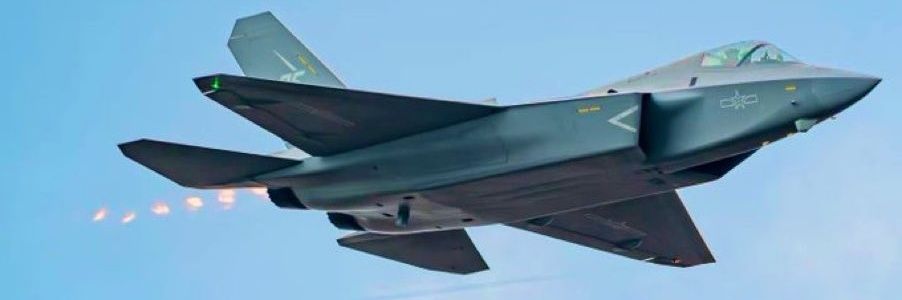
If you thought the Indian Air Force had a rough time last May against the Pakistani J-10C/PL-15 combo, imagine the challenge a J-35/PL-16 pairing would bring to the table. In 2025, the IAF could at least see the threat coming (well, almost), even if they were outranged. With the J-35, they'll face an invisible enemy that's more capable in almost every respect and is carrying a much longer-ranged AAM. The J-35 wouldn't just be a new jet on the Pakistani roster; it'll be the harbinger of a paradigm shift in how the next air war, especially the air-to-air component, will be fought in the subcontinent. 1/2