Egypt head coach Hossam Hassan crossed his arms during the match against Argentina to denounce racist attacks, but his gesture was not only ignored, the referee also showed him a yellow card.
Morocco's players and head coach showed solidarity with him by posting this image on social media.
This is How Israel Turned Egypt’s World Cup Defeat into a Celebration of Hatred Toward Egypt and Palestine:
As Egypt was eliminated from the FIFA World Cup by Argentina, celebrations erupted in Tel Aviv, where Israeli crowds celebrated Egypt’s defeat.
During the match, some Argentina supporters also waved Israeli flags toward Egypt head coach Hossam Hassan, who had become a target after repeatedly raising the Palestinian flag and publicly condemning Israel’s crimes against Palestinians in Gaza.
The celebrations came as Israel killed the head of the Egyptian Committee in Gaza during the opening stages of the match. According to Palestinian rights advocates, Israeli social media accounts celebrated the killing and cynically dedicated it to Argentina’s victory over Egypt.
The scenes highlighted Israel’s hostility not only toward Palestinian solidarity but also toward Egypt’s historic support for the Palestinian cause.
Hossam Hassan had previously dedicated Egypt’s victories to the Palestinian people and declared that “football must stand with Palestine because it is a humanitarian cause,” making him a repeated target of pro-Israel outrage.
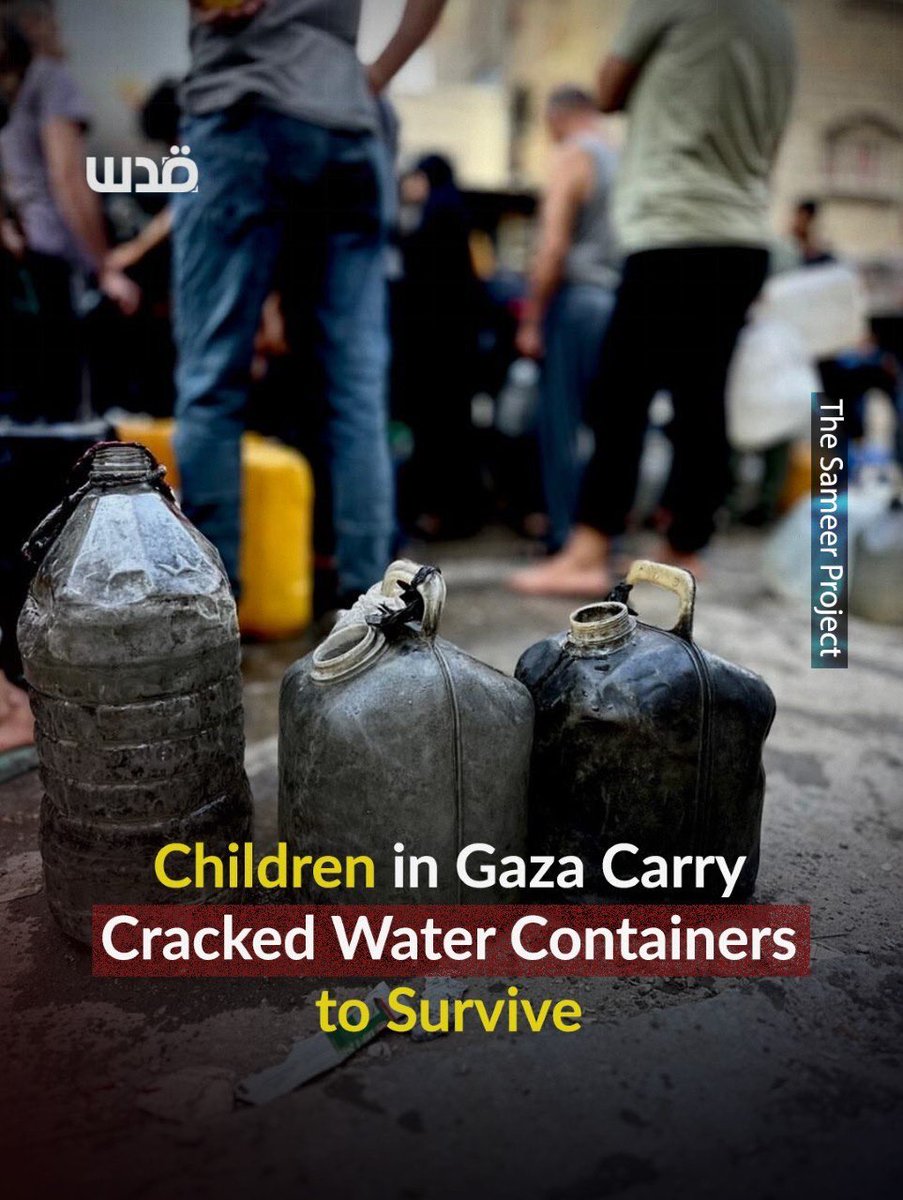
Palestinian children in the Gaza Strip are forced to carry cracked and damaged water containers every day. Despite being dirty and unsafe, they have no choice but to use them to collect water.
Before Israeli genocide, these children lived ordinary lives: they woke up in the morning to go to school, received their education, and spent time playing like any other children. But after the Israeli occupation launched its war on the Gaza Strip, their daily reality changed completely.
Their childhood routines were replaced with long queues for water, as they are now forced to stand in line every day just to fill containers for their families’ basic needs.
Ibn Abī Zayd al-Qayrawānī (d. 386 AH) said about the Rulership of Banū Umayyah:
“May Allah have mercy on Banū Umayyah there was never among them, ever, a caliph who introduced an innovation (bidʿah) into Islam. Most of their governors and companions were such that the Arabs were not held in suspicion.
But when the caliphate departed from them and passed to Banū al-ʿAbbās, their state was established through the Persians, and leadership came to rest among them, while in the hearts of most of their leaders lay disbelief and hatred for the Arabs and for the state of Islam.
So those people brought about the events which herald the destruction of Islam. Were it not that Allah had promised His Prophet that his religion and its people would remain triumphant until the Day of Resurrection, they would have nullified Islam altogether. But as it is, they have indeed damaged it and weakened its pillars. Yet His promise will be fulfilled, if Allah wills.”
New essay - What is Time? Pt. 1 The Islamic Peripatetic Account and 'Abd al-Azīz Parhārwī on the Illuminationist (Ishrāqī) View.
https://t.co/YNEDJfmf1i
#OpenAccess#NewPublication
Islam and Extraterrestrial Life
Parandis Tajbakhsh, Cambridge Univ Pr, 2026
https://t.co/FnJPSXueDd
PDF 🎯
https://t.co/eJAv95hwHD
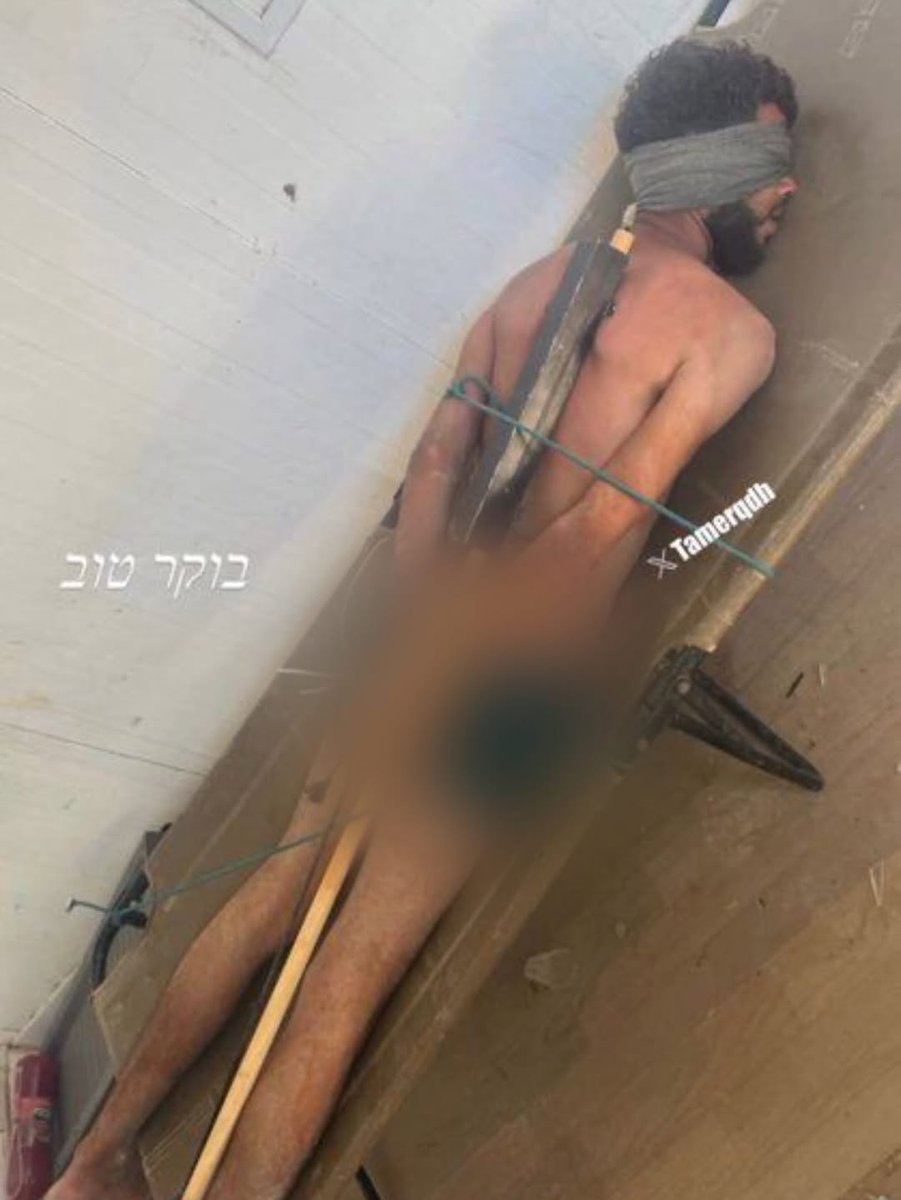
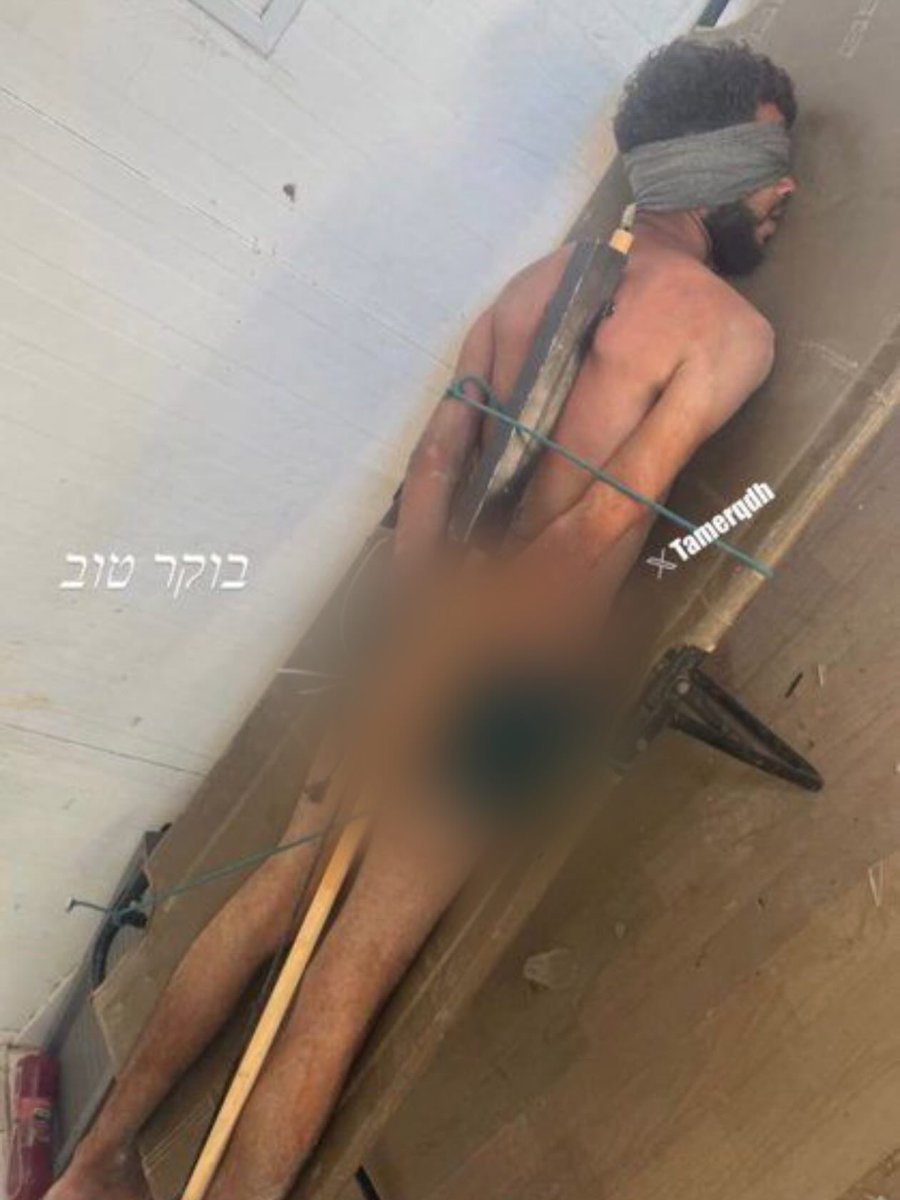
A widely circulated image published by Israeli media shows a Palestinian man detained in the Gaza Strip, bound and blindfolded in an extremely harsh and degrading manner.
Palestinian footballer Salim Al Ashqar, 31, was killed yesterday by Israeli army fire in southern Gaza.
He had married five months earlier and was expecting his first child. He was the only son among seven sisters.
The number of athletes killed since the start of the Israeli genocide in Gaza has now risen to 1,009.
The Practice of Politics in Safavid Iran
Power, Religion and Rhetoric
Colin P. Mitchell . I.B. Tauris
Front matter, Introduction
PDF 🎯
https://t.co/YzAT5HefYs
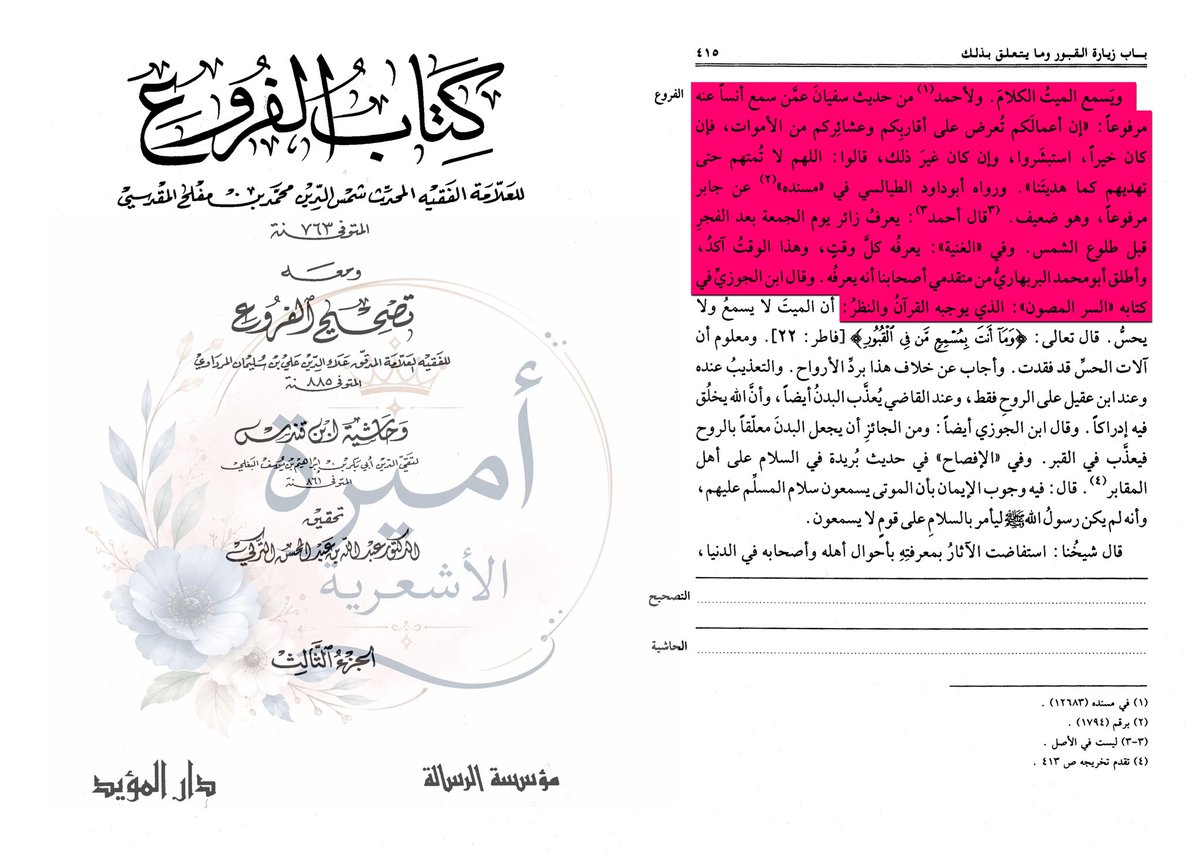
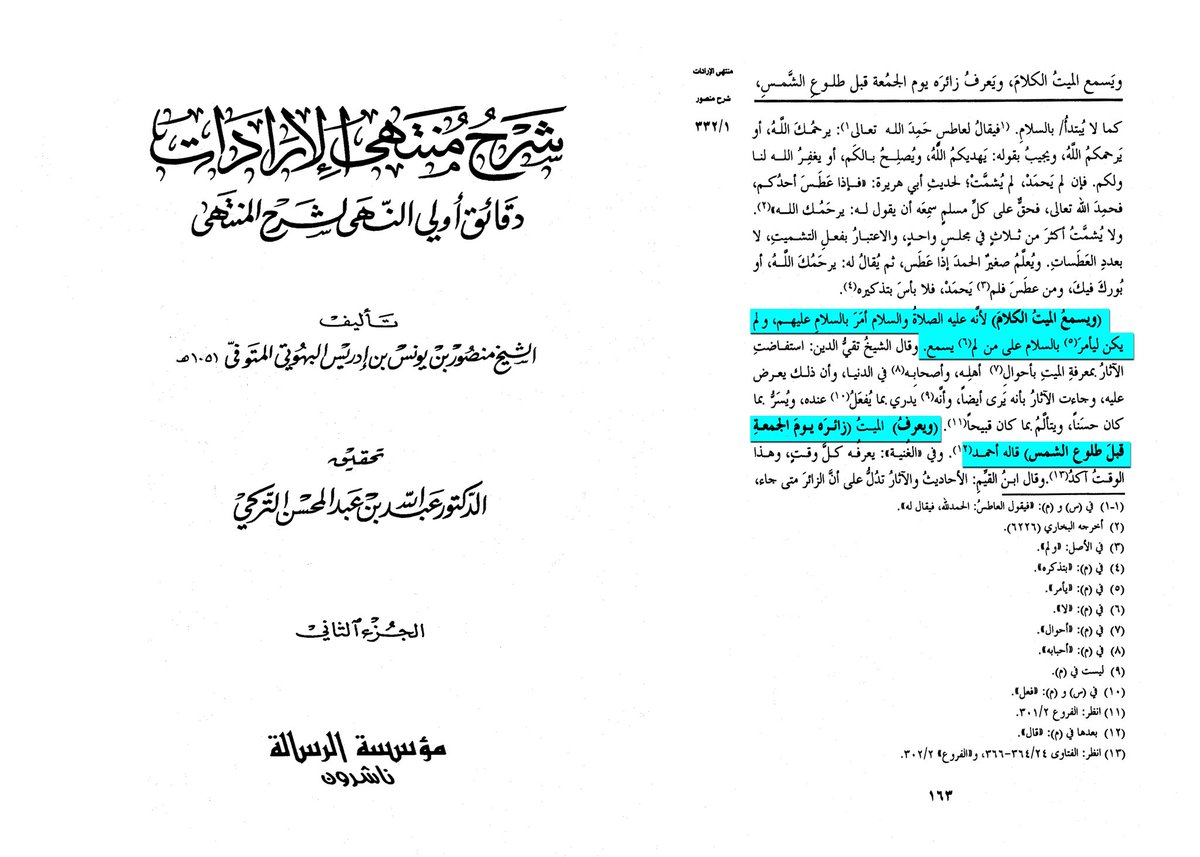
Do the Dead Hear the Living?
Statements from Hanbali Scholars on the Deceased Hearing Speech and Recognizing Visitors
Shams al-Dīn Ibn Mufliḥ al-Ḥanbalī 763 AH) said:
“The dead person hears speech. Aḥmad transmitted, through the ḥadīth of Sufyān from someone who heard Anas, from him as a marfūʿ report: ‘Indeed, your deeds are presented to your deceased relatives and kinsfolk. If they are good, they rejoice, and if they are otherwise, they say: “O Allāh, do not cause them to die until You guide them as You guided us.”’ It was also transmitted by Abū Dāwūd al-Ṭayālisī in his Musnad, from Jābir as a marfūʿ report, but it is weak. Aḥmad said: ‘The deceased recognizes the one who visits him on Friday after dawn and before sunrise.’ In al-Ghunyah, it is said: ‘He recognizes him at all times, though this particular time is more emphatic.’ And Abū Muḥammad al-Barbahārī, one of the early scholars among our companions, stated without qualification that the deceased recognizes his visitor.”
—
al-Buhūtī al-Ḥanbalī | d. 1051 AH) said:
“The dead person hears speech, because he (i.e., the Prophet ﷺ), ʿalayhi al-salām, commanded us to give them salām, which would not make sense for those who cannot hear in the first place.”
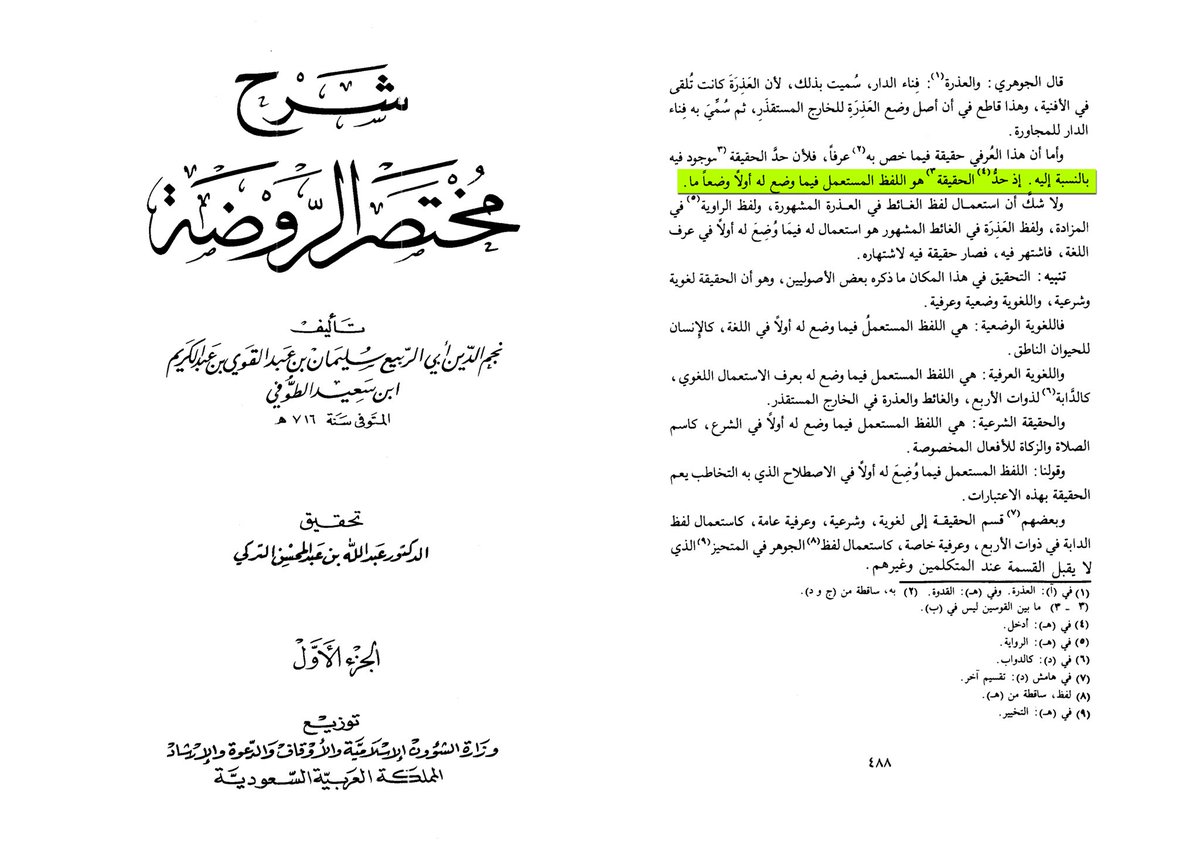
Definition Of Haqiqah (reality) and Majaz (metaphor) According to the Usuliyyun 📖
later Hanbalis, asharis, and maturidis could all accept the technical definitions of haqiqah and majaz while discussing about whether terms like يد, وجه, استوى, and نزول should be interpreted as haqiqah, majaz, tafwid, or tawil.
In usul al-fiqh, haqiqah is a word used in the meaning for which it was originally coined, while majaz is a word used in a meaning other than that for which it was originally coined due to a relationship and accompanied by a qarinah preventing the original meaning from being intended.
if a word is used according to its original linguistic meaning, it is haqiqah. If it is transferred from its original meaning to another meaning, and there is a qarinah indicating that transfer, it is majaz.
Scholars:
al-Juwayni Al-Shafi'i
Sa’d al-Din al-Taftazani Al-Hanafi
Najm al-Din al-Tufi Al-Hanbali
Ibn al-Najjar al-fuhuti Al-Hanbali
The Views of Hanbali and Hanafi Scholars Regarding the Salvation of the Prophet’s Parents [They are not in hellfire!] — 🧵
Mariʿ al-Karmī al-Ḥanbalī Said:
“Know that the clear, manifest truth, about which there is no doubt whatsoever, is that the parents of the Prophet ﷺ are saved and will not be punished. Likewise, all of the People of the Intermission (Ahl al-Fatrah) are saved.“
—
In Radd al-Muḥtār ʿalā al-Durr al-Mukhtār by the Hanafi jurist Ibn Abidin He Said:
“Do you not see that our Prophet ﷺ was honored by Allah Most High through the restoration of life to his parents until they believed in him, according to a hadith that was authenticated by al-Qurṭubī, Ibn Nāṣir al-Dīn (the hadith master of Syria), and others?”
“In summary, as some of the verifying scholars have said: this issue should not be mentioned except with increased propriety and respect. It is not among the matters whose ignorance harms a person, nor among the matters about which one will be questioned in the grave or at the Standing (on the Day of Resurrection). Therefore, restraining the tongue from speaking about it except in a good manner is more appropriate and safer.”




![asharimaliki_x1's tweet photo. The Views of Hanbali and Hanafi Scholars Regarding the Salvation of the Prophet’s Parents [They are not in hellfire!] — 🧵
Mariʿ al-Karmī al-Ḥanbalī Said:
“Know that the clear, manifest truth, about which there is no doubt whatsoever, is that the parents of the Prophet ﷺ are saved and will not be punished. Likewise, all of the People of the Intermission (Ahl al-Fatrah) are saved.“
—
In Radd al-Muḥtār ʿalā al-Durr al-Mukhtār by the Hanafi jurist Ibn Abidin He Said:
“Do you not see that our Prophet ﷺ was honored by Allah Most High through the restoration of life to his parents until they believed in him, according to a hadith that was authenticated by al-Qurṭubī, Ibn Nāṣir al-Dīn (the hadith master of Syria), and others?”
“In summary, as some of the verifying scholars have said: this issue should not be mentioned except with increased propriety and respect. It is not among the matters whose ignorance harms a person, nor among the matters about which one will be questioned in the grave or at the Standing (on the Day of Resurrection). Therefore, restraining the tongue from speaking about it except in a good manner is more appropriate and safer.”](https://pbs.twimg.com/media/HLmbJe4WYAA9EIL.jpg)
![asharimaliki_x1's tweet photo. The Views of Hanbali and Hanafi Scholars Regarding the Salvation of the Prophet’s Parents [They are not in hellfire!] — 🧵
Mariʿ al-Karmī al-Ḥanbalī Said:
“Know that the clear, manifest truth, about which there is no doubt whatsoever, is that the parents of the Prophet ﷺ are saved and will not be punished. Likewise, all of the People of the Intermission (Ahl al-Fatrah) are saved.“
—
In Radd al-Muḥtār ʿalā al-Durr al-Mukhtār by the Hanafi jurist Ibn Abidin He Said:
“Do you not see that our Prophet ﷺ was honored by Allah Most High through the restoration of life to his parents until they believed in him, according to a hadith that was authenticated by al-Qurṭubī, Ibn Nāṣir al-Dīn (the hadith master of Syria), and others?”
“In summary, as some of the verifying scholars have said: this issue should not be mentioned except with increased propriety and respect. It is not among the matters whose ignorance harms a person, nor among the matters about which one will be questioned in the grave or at the Standing (on the Day of Resurrection). Therefore, restraining the tongue from speaking about it except in a good manner is more appropriate and safer.”](https://pbs.twimg.com/media/HLmbJe1WAAEdogt.jpg)









![asharimaliki_x1's tweet photo. The Views of Hanbali and Hanafi Scholars Regarding the Salvation of the Prophet’s Parents [They are not in hellfire!] — 🧵
Mariʿ al-Karmī al-Ḥanbalī Said:
“Know that the clear, manifest truth, about which there is no doubt whatsoever, is that the parents of the Prophet ﷺ are saved and will not be punished. Likewise, all of the People of the Intermission (Ahl al-Fatrah) are saved.“
—
In Radd al-Muḥtār ʿalā al-Durr al-Mukhtār by the Hanafi jurist Ibn Abidin He Said:
“Do you not see that our Prophet ﷺ was honored by Allah Most High through the restoration of life to his parents until they believed in him, according to a hadith that was authenticated by al-Qurṭubī, Ibn Nāṣir al-Dīn (the hadith master of Syria), and others?”
“In summary, as some of the verifying scholars have said: this issue should not be mentioned except with increased propriety and respect. It is not among the matters whose ignorance harms a person, nor among the matters about which one will be questioned in the grave or at the Standing (on the Day of Resurrection). Therefore, restraining the tongue from speaking about it except in a good manner is more appropriate and safer.”](https://pbs.twimg.com/media/HLmbJe7XoAIu4EI.jpg)