BREAKING: 🇺🇸 GIANT EXCHANGE COINBASE JUST LAUNCHED A NEW AD URGING THE SENATE TO PASS THE #BITCOIN CLARITY ACT
“82% OF AMERICANS THINK THE FINANCIAL SYSTEM NEEDS TO BE UPDATED”
"1 IN 4 AMERICANS OWN CRYPTO"
"CRYPTO IS OUR GENERATION'S CHANCE TO MOVE AMERICA FORWARD"
“AMERICA NEEDS CLARITY”
THE PRESSURE IS RISING IN DC
PASS THE BILL NOW 🔥🔥
"So schadet der Börsenboom der der Demokratie". Deutschland verblödet. Deshalb stirbt Print. Marcel Fratzscher ist und bleibt der schelchteste Ökonom Deutschlands 🇩🇪📉. Seine linksgrüne NGOs und er werden ausschließlich mit unserem Steuergeld bezahlt.
Wait, you're telling me that running $2 trillion deficits, introducing new taxes on goods, and starting a fresh war in the Middle East, has not been effective at getting the cost of living down?
Il Governo ha deciso di sospendere temporaneamente il regime di libera circolazione previsto da Schengen nei collegamenti marittimi e aerei con la Spagna, reintroducendo i controlli di frontiera.
Si tratta di una misura straordinaria, adottata per tutelare la sicurezza nazionale e prevenire possibili ripercussioni per la nostra Nazione. La misura sarà mantenuta in vigore solo per il tempo necessario, con particolare attenzione a limitare qualsiasi impatto sui flussi turistici estivi.
Parallelamente, l'Italia è pronta a sostenere ogni iniziativa europea di supporto alle istituzioni spagnole necessaria per ristabilire il pieno controllo delle frontiere esterne dell'Unione e affrontare con determinazione la situazione in corso.
Difendere i confini significa difendere la sicurezza dei cittadini, contrastare l'immigrazione irregolare e colpire le reti criminali che trafficano esseri umani.
More than a year ago, the House passed the Clarity Act.
There’s been progress since — thousands of hours of bipartisan negotiations took place at the staff and Member levels. The Senate Committees on Banking and Agriculture advanced their respective titles. And Senate Republicans produced a floor-ready product that, as I type this, is waiting for a vote.
It’s disappointing — but not surprising — that Senate Democrats are choosing politics on the cusp of a major victory for American leadership. Find another instance in history where Congress, when given the choice, opted to push an industry out of the United States rather than smartly regulate it. American Exceptionalism was once a bipartisan goal; if Clarity fails, I have serious doubts.
These same Democrats — many of whom have taken millions of dollars from the crypto industry — proclaim that Clarity lacks safeguards for consumers and falls short in countering illicit finance. Nothing could be further from the truth. Titles II and III materially uplift regulatory and compliance obligations for digital asset intermediaries, placing them on similar footing with traditional financial institutions. The Blockchain Regulatory Certainty Act — which Washington lobbyists have spun up as a boogeyman for certain groups of prosecutors and law enforcement — does nothing other than codify longstanding Treasury Department policy that’s remained consistent across Administrations: non-custodial builders and developers are not, and have never been, subject to registration obligations under the Bank Secrecy Act. And at this point, major law enforcement trades that once opposed the bill, including the Fraternal Order of Police, have now endorsed it.
The Senate needs to vote NOW on this landmark legislation. The truth is that Senate Democrats are afraid to advance the Clarity Act as they fear Senator Warren and the “Anti-Crypto Army” she once promised to build. In the days ahead, Leader Thune will put this theory to the test. Will Senate Democrats be on the side of American Exceptionalism, or will they opt to cede American leadership of a global industry for fear of the bespectacled squirrel’s Left flank?
America will lead or America won’t. It’s not more complicated than that. I believe Satoshi once said it best:
“If you don’t believe me or don’t get it, I don’t have time to try to convince you, sorry.”
Vielleicht ist an diesem Kapitalismus ja doch was dran?
Innerhalb von nur drei Monaten haben alle großen Ratingagenturen Argentinien eine bessere Note verpasst: Fitch im Mai, Standard & Poor’s im Juni und nun im Juli Moody’s.
Man würde meinen, die argentinische Wirtschaftserholung sei ein Wunder - wäre sie nicht streng nach ökonomischem Lehrbuch. Ein kleinerer Staat, ein freierer Markt, mehr Wettbewerb und weniger Regulierung: Dass das funktioniert, sollte eigentlich niemanden überraschen.
Dass die Ratingagenturen den Kurs bestätigen, ist für das Land nun ein Segen. Mehr ausländische Investoren und günstigere Kredite werden helfen, die Jahrzehnte der staatsgläubigen Misswirtschaft weiter abzuschütteln. Der Rest der Welt sollte sich ein Beispiel nehmen.
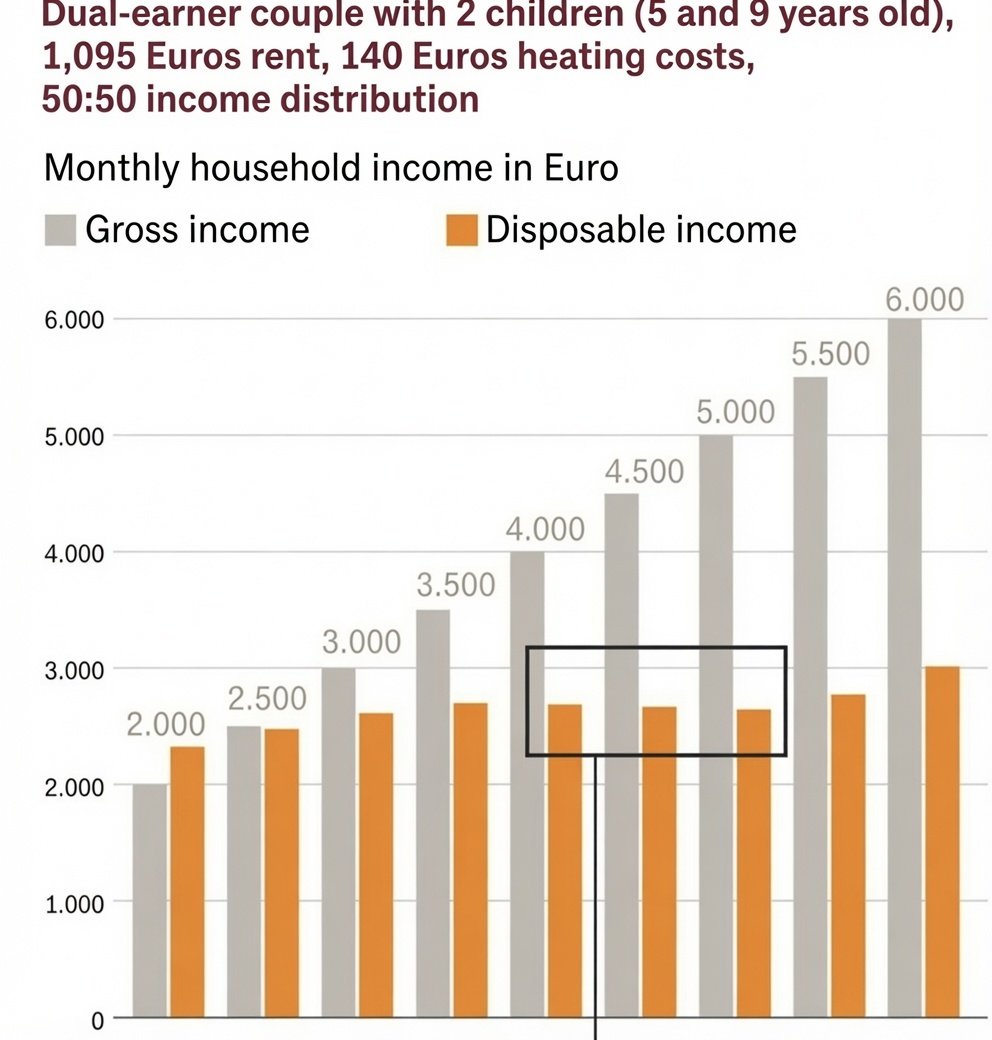
Look at this. In Germany, it doesn't matter whether you earn 3,000 EUR or 6,000 EUR per month. The tax office equalizes you either way.
It means that someone who went to university for 5 years to get a degree will have the same disposable income as an uneducated truck driver who started working at age 18.
This isn't "fair". This is punishing people with talent in order to pay for people without.
Anyone with competencies should take note and start quietly exiting society. (I have)
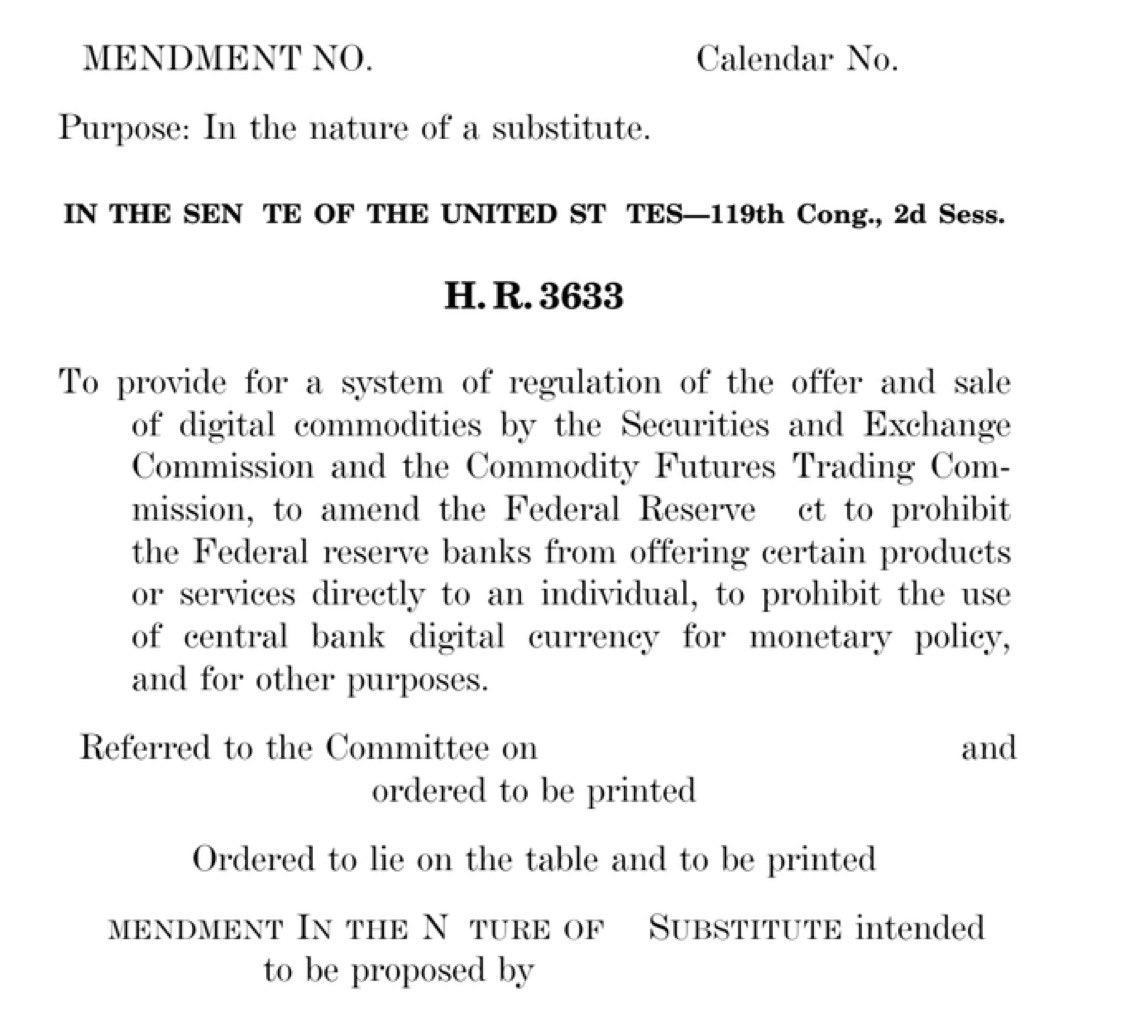
BREAKING: Die Senatsrepublikaner haben einen aktualisierten Text des Clarity Act veröffentlicht, dem großen US-Gesetz zur Krypto-Regulierung.
Neu darin: Der Präsident und betroffene Amtsträger dürfen keine eigenen digitalen Assets mehr herausgeben. Bestehende Krypto-Bestände müssen sie verkaufen oder in einen Blind Trust übertragen, also ein Treuhandvermögen, auf das sie keinen Zugriff haben.
Genau diese Ethik-Klausel war der letzte große Streitpunkt mit den Demokraten. Für die nötigen 60 Stimmen im Senat braucht es mindestens 7 von ihnen, und die Zeit bis zur Sommerpause Anfang August wird knapp.
Amartya Sen hat 1994 im New York Review of Books einen bemerkenswerten kleinen Beitrag geschrieben. Es ging um die Angst vor Überbevölkerung, um Vorschläge, die Weltbevölkerung mit aufgezwungener Geburtenkontrolle zu steuern, um apokalyptische Visionen.
1/
Bitte nie vergessen, wer Zohran Mamdani ist.
Unmittelbar nach dem 7. Oktober 2023 schrieb er, er "trauere um die Hunderte getötete Menschen in Israel und Palästina". Frieden könne es nur geben, wenn "die Besatzung" beendet und die "Apartheid beseitigt" werde. Kein Wort über die Hamas und deren Gräuel. Weder gab es seit 2005 eine israelische Besatzung in Gaza noch gibt es Apartheid in Israel.
Er war Mitbegründer eines Ablegers der Gruppe "Students for Justice in Palestine" am Bowdoin College in Main. Die nationale Gruppe rief am 8. Oktober 2023 ihre Ableger dazu auf, "den historischen Sieg des palästinensischen Widerstands zu feiern.“
Während seiner Rapper-Karriere nahm er 2017 einen Song auf, in dem es heißt: "Meine Liebe den Holy Land Five. Guckt sie Euch mal an!" Sollte man in der Tat tun: Die fünf Gründer der Holy Land Foundation wurden 2008 wegen Finanzierung der Hamas verurteilt.
Als Abgeordneter der New Yorker Stadtversammlung nannte einen Boykott Israels "die einzige Lösung", 2023 schlug er ein Gesetz vor, um gegen jüdische Einrichtungen vorzugehen, die an Israel spenden sprach sich dagegen aus, Holocaust-Gedenkveranstaltungen mitzufinanzieren.
Er verteidigt den Spruch "globalize the intifada". Wem es vielleicht nicht klar ist: Während der letzten Intifada wurden mehr als tausend Israelis getötet.
Quellen:
https://t.co/fi8qEfKXRV
https://t.co/dqsX57VAQH
⚡️The debt has already won.
No future Congress is going to reverse the trajectory through discipline.
No electorate will vote for the scale of sacrifice required.
No administration will voluntarily trigger the recession, asset collapse, entitlement cuts, tax shock, and political revolt needed to restore a genuinely hard fiscal path.
The system will preserve continuity.
That means the currency will absorb the damage.
The national debt is a claim on future production. When claims grow faster than the productive base, the gap has to close somewhere. It closes through inflation, repression, taxation, reduced public capacity, lower real returns, slower private investment, and periodic monetary rescue.
The number itself is almost secondary now.
The real signal is that the United States has crossed from using debt as a tool into depending on debt as a condition of social order.
Government spending holds together retirement systems, healthcare, defense, state budgets, research, infrastructure, household transfers, corporate revenues, and entire regional economies. Remove the borrowing and large sections of the country discover that what looked like private prosperity was partially public leverage.
That is why the machine cannot stop.
The debt is embedded inside income.
Income is embedded inside asset prices.
Asset prices are embedded inside pensions, collateral, banks, housing, consumption, and political legitimacy.
Any serious attempt to shrink the debt burden violently would detonate the structure built around it.
So policy will choose erosion over rupture.
The state will keep paying every nominal promise.
The unit in which those promises are paid will weaken over time.
That is the real default.
No courtroom declaration.
No missed Treasury payment.
No cinematic collapse.
A long transfer from savers, wage earners, and fixed-income holders toward debtors, asset owners, and institutions closest to money creation.
The public will be told that inflation is temporary, manageable, external, or necessary.
The deeper reality is that inflation becomes part of the solvency mechanism.
The Federal Reserve will resist this until resistance threatens the system. Then the definition of responsibility will change. Stability will come to mean keeping markets functioning. Market functioning will require liquidity. Liquidity will protect Treasury financing. Treasury financing will protect the political order.
That loop is already visible.
The most important consequence is moral.
Once debt becomes structurally permanent, honest pricing disappears.
Capital no longer flows only toward the most productive use. It flows toward whatever benefits from policy support, liquidity, guarantees, regulation, and proximity to the sovereign balance sheet.
The economy becomes less capitalist in the classical sense and more managerial.
Returns become increasingly political.
Risk becomes increasingly socialized.
Losses become negotiable for institutions and terminal for individuals.
That corrodes legitimacy because people can feel the asymmetry even when they cannot name the mechanism.
Millions of Americans already hold digital assets with no federal framework protecting them. The Clarity Act gives Americans the confidence and security they need to participate in our digital economy.