Do all the good you can, in all the ways you can, to all the souls you can, in every place you can, at all the times you can, with all the zeal you can, as long as ever you can. John Wesley
This is the most detailed MRI scan of an unborn baby.
At just 20 weeks, she is moving, turning her head, kicking—even standing. Her beating heart is also visible.
Human life is a miracle.
1. The fine-tuning of the universe is due to either physical necessity, chance, or design.
2. It is not due to physical necessity or chance.
3. Therefore, it is due to design!
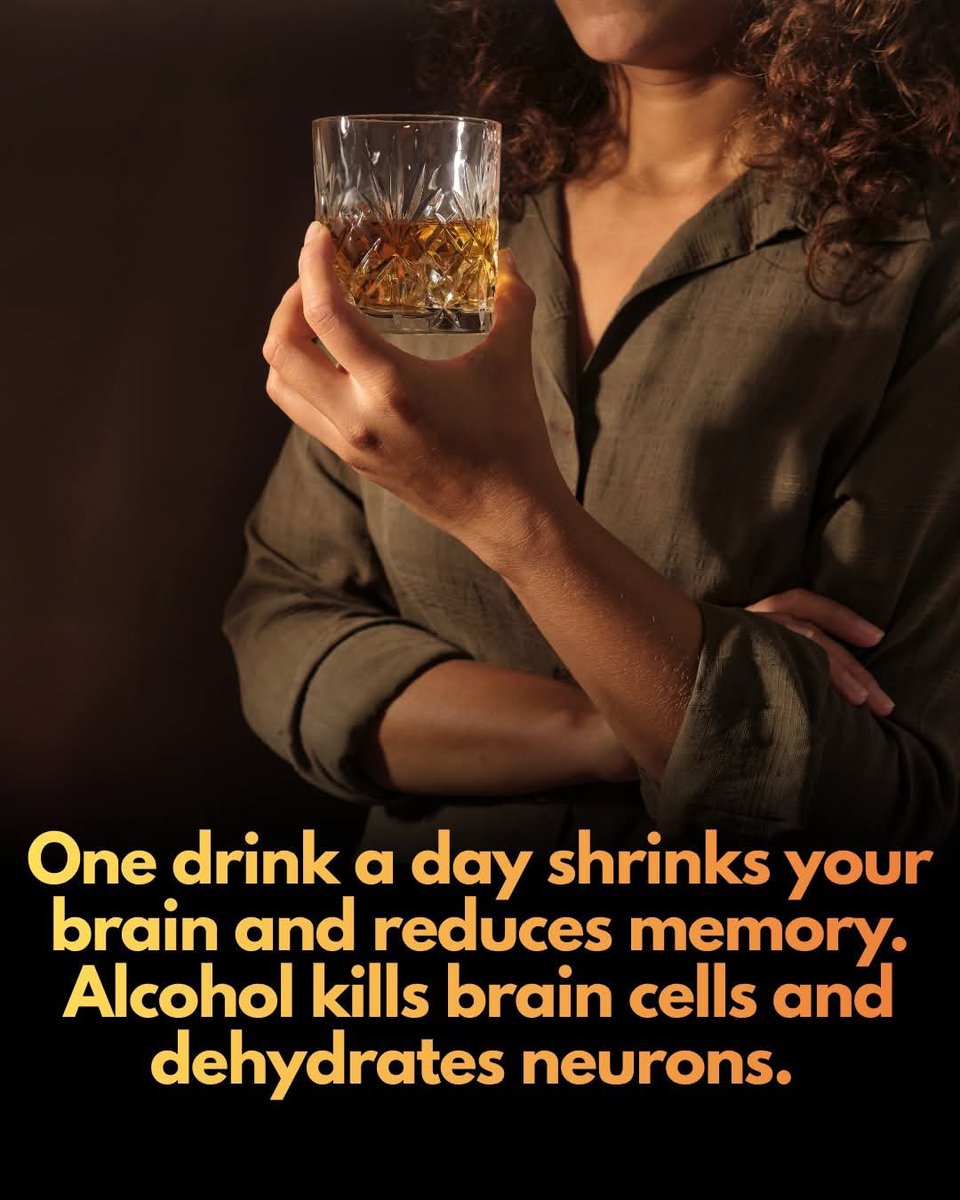
🚨 New research shows even a single daily alcoholic beverage physically shrinks your brain and accelerates aging by years.
Recent large-scale studies are overturning the long-held belief that moderate drinking is harmless, or even beneficial. A massive analysis of over 36,000 adults found that even light-to-moderate alcohol consumption—equivalent to one pint of beer or a single glass of wine per day—is directly linked to a reduction in overall brain volume. These changes affect both gray and white matter, with the hippocampus, a critical hub for memory and learning, being particularly vulnerable. Scientists warn that moving from one to two drinks a day can cause structural changes equivalent to aging the brain by two full years, leading to cognitive decline and increased "brain fog."
Beyond physical shrinkage, alcohol acts as a potent neurotoxin that damages the dendrites at the ends of neurons, effectively hindering the brain's ability to communicate internally. While chronic use is most damaging, the diuretic nature of alcohol also causes immediate dehydration of neurons, impairing mental clarity. However, there is a silver lining for those looking to protect their cognitive health: research suggests that the brain possesses a remarkable capacity for recovery. By reducing or eliminating alcohol consumption, individuals can allow their brain to regain some lost volume and repair vital neural connections, potentially halting or even reversing some of the damage caused by exposure.
Source: Daviet, R., Aradhye, H., Litt, G. W., & Nave, G. Associations between alcohol consumption and gray and white matter volumes in the UK Biobank. Nature Communications.
You can love someone and not approve of what they do. In fact, it's required. I mean, every parent knows this. Every parent understands that if you approve of everything your child wants to do, you're not loving.
@brandonmbanks@howertonjosh If I understand you correctly, you are saying that Jesus commanded someone in the kingdom of darkness who was serving Satan to preach the gospel and to heal the sick
@brandonmbanks@howertonjosh Are you saying the same Jesus who commissioned Judas to preach with the other 12 and to perform miracles with the other 12, was never known by Jesus?
Biblically, a “pastor,” “elder,” and “bishop” are 3 words for the same thing.
In the New Testament, the terms “elder,” (πρεσβύτερος), “bishop,” and “overseer” (ἐ��ίσκοπος) are essentially interchangeable, referring to the same leadership role in the early church. “Elder” stems from the Jewish context and “bishop” from the Greek term, both essentially meaning an overseer. The slight nuance is that qualifications for an “elder” stipulate standards of character, emphasizing a wise, mature leader who is respected, while “overseer” and “pastor” describe the functional aspects of leading and shepherding. The word “pastor” originates from the Old French “pastour” meaning “herdsman or shepherd”, a derivative of virtually the same word in Latin.
The three-tiered ecclesiastical system that eventually separated bishops, elders, and pastoral roles only emerged in the 2nd century, specifically in the writings of Ignatius, who first distinguished the overseer as the sole head of the city-church. Earlier writings like 1 Clement and the Didache still used the terms interchangeably.
Visit and subscribe to our YouTube channel to access acapella gospel singing and Bible-based context. Check out dozens of one minute reels that give evidence for God from science and Scripture.
https://t.co/zjHR6ccZ8q
Did you know that statistics show that in marriages where couples compliment one another five times more than they criticize, that the divorce rate drops to 12%? All because you're choosing to praise more than you criticize.
One of the biggest misconceptions about marriage is you only work on your marriage when it’s struggling. People in healthy marriages know that if they want to keep a healthy marriage, they will work on it even when it’s good.
Couples who make it aren't the ones who never had a reason to get divorced; they are simply the ones who decided that their commitment to each other was more important than their differences and flaws.