Ever wonder where Start9 got our name?
Pokemon is a game for Gameboy. Twitch is a live video streaming app. “Twitch Plays Pokemon” was a popular phenomenon where Twitch users would collaborate to play a SHARED game of Pokemon on Gameboy. Here’s how it worked:
Participants would use the Twitch message board to enter commands that then got executed in the gameplay. For example, if someone entered the command "right”, that would cause the player to move 1 space to the right. Commands would execute immediately after they were received, and anyone could enter a valid command at any time. You can think of Twitch Plays Pokemon as the more practical equivalent of placing a Gameboy in the middle of a crowded room and telling everyone to push buttons at the same time. As you might expect, the gameplay of Twitch Plays Pokemon was quite “twitchy”, but in a very "infinite monkey theory" way, progress could eventually be made.
In an effort to streamline play, a new game mode was devised in which players would “vote” for the next command and, every 4 seconds, whatever command received the most votes over the previous 4 seconds would execute in the game. Also introduced in this mode was the ability to attach multipliers to a command, such that the command would execute that number of times. For example, “right2” would cause the player to move 2 spaces to the right. “right3” would cause the player to move 3 spaces to the right, and so on. The highest number any participant could place after a command was 9, meaning whatever command they entered would execute 9 times. As you might expect, gameplay in this mode was less chaotic, more efficient, but it also meant each participant had less direct and immediate influence over the game. If a group of even 5-10 got together and colluded on their votes, they could practically take over the game and make contrarian ideas irrelevant. The new game mode was called “Democracy”, and the original game mode became known as “Anarchy”. Which game mode was engaged was itself governed by a democratic process: if more participants wanted to play in Democracy mode, then Democracy mode engaged; if more wanted to play in Anarchy mode, then Anarchy mode engaged.
To summarize: in Anarchy mode, everyone had equal influence over the game, but progress was slow and clunky. In Democracy mode, progress was fast and efficient, but colluding groups could marginalize individual participants and ruin the game for them.
So…individual participants discovered a means of effective protest whenever Democracy mode became suffocating, but they could not garner enough votes to switch back to Anarchy mode. Someone would type the command “start9” into the comments. This command meant “open the start menu 9 times in a row”, which, as you might imagine, would be enormously disruptive if executed. The entire screen would be blocked by the start menu, over and over. Typing “start9” was a participant’s way of signaling to other participants that they felt marginalized by Democracy mode, and they were ready to fight back. If others felt the same, they could also begin typing “start9” - then, sure enough, “start9” would finally receive more votes than the colluding group’s command, and the menu opening would begin. Every 4 seconds, the menu would open 9 times…again, and again, and again…until finally, the colluding group would be forced to either cooperate in reverting the game mode back to Anarchy mode or quit altogether.
Playing in Anarchy mode was impractical, but neither did people want to play a game where they had no voice, where a group of insiders had taken total control. And so “start9” became the battle cry of the individual, the out-group, a means of signaling to other individuals that it was time to fight back against the usurpers - to use their own rules against them, until there was no alternative but to return control to the individual participants.
The driver is one of the most severe winter storms in years.
When grid demand spikes, industrial Bitcoin miners curtail. They shut off in minutes to free power for homes, hospitals, and critical infrastructure.
Starting March 1, Steak n Shake will give all hourly employees at its company-operated restaurants a Bitcoin bonus of $0.21 for every hour worked.
Employees will be able to collect their Bitcoin pay after a two-year vesting period. Thank you, @Fold_app, for the assist.
We take care of our employees; they, in turn, take care of customers; and the results take care of themselves.
An apt meditation for today, as I reflect on the sacraments--particularly the wedding--that I have administered specifically to families who are preparing for the impending death of a loved one.
Today is Childermas, the feast of the Holy Innocents, on the fourth day of Christmas. It's a fitting day for the Coventry Carol and other medieval lullaby-laments, which give voice to the grief that lies near the heart of the Christmas season: https://t.co/KYr5ltYAe2
I was surprised to learn that a lot of stores are open today. When I was a kid, opening on holidays like Easter, 4th of July and New Year was unheard of. It speaks to the primacy of economic considerations in modern life.
Fiat ruins holidays.
Rubia Gallega
España🇪🇸
Rubia Gallega es una raza de ternera premium originaria de Galicia, una región del noroeste de España. Conocida por su rico marmoleado, sabor profundo y ternura excepcional, esta carne proviene de vacas más viejas, a menudo de 8 a 12 años, lo que aumenta su complejidad. El nombre "Rubia" se refiere al pelaje rubio rojizo distintivo de la raza. Reverenciada por chefs de todo el mundo, la Rubia Gallega suele ser envejecida en seco y apreciada por su sabor intenso y casi mantecoso.
I've picked up quite a few new followers in the last couple of months, so I thought I'd post a little introduction.
I'm a Catholic father of nine (soon to be ten!), homeschooling and trying to make cool things in the Shenandoah area of Virginia. We live on a little homestead, but we don't do much real homesteading - we have some chickens and a handful of goats, and do some feeble attempts at gardening, though our pumpkin patch is absolutely crushing this year. But we still have to buy most of our food from the store or farmer's market, unfortunately.
My background is military: I enlisted in the Navy at 17 to become a SEAL, but got dropped from BUD/S for heatstroke in 2003. After my Navy enlistment I switched to the Army and went through the pipeline to Ranger Regiment. I served 4 years as a team leader in 3rd Ranger Battalion, deploying to Afghanistan 4 times from 2009 - 2013. After I got out I built a tiny house on a trailer and we hit the road, living nomadically as I tried some different things. I ended up landing back in my native Virginia, and spend several years working close protection overseas in Iraq and East Africa.
We were homeschooling our young children at the time, and I knew I wanted to be more available to build a more robust home environment and input more with my children's In 2017 I began teaching at the small private school my older children attended (I had 6 by this point). I was thrilled to teach and to finally be able to spend significant time with my children, contributing to their education at the level I always wanted to. It was a major pay-cut, though, and with my salary falling far short of my monthly bills with a family of 8 and 1 more on the way, I decided to turn my long-time hobby of calligraphy, illuminated art, and bookbinding into a side-business and so I started Tamburn Bindery to specialize in unique artistic texts and medieval-style books. I've been doing that now for 7 years.
Now we host a little forest school on our property for pre-school ages, and I spend my time doing classical and adventure-based education for my kids, helping with the forest school, and working on illuminated and artistic edition book projects, as well as a bit of calligraphy on the side when I can. I also love building things, and I'm often working on fort projects in the woods with the kids, and currently building a cabin for my oldest son. My X account is mostly a stream-of-consciousness recording of different projects I'm working on and dives into mythology and European/American cultural patrimony topics.
https://t.co/xaKk3tod7h
Lynx.
Abstract
This proposal introduces a periodic, consensus-enforced mechanism for rendering UTXOs below the network's dust threshold permanently unspendable. At each halving block, UTXOs that have remained below the dust threshold since the previous halving become unspendable. These UTXOs become unspendable and may be pruned from the UTXO set entirely, reducing node storage requirements and eliminating the economic model that incentivizes their creation.
Motivation
The Bitcoin UTXO set has grown substantially due to various factors, including inscription protocols, spam attacks, and general dust accumulation. Recent proposals such as "The Cat" (Non-monetary UTXO Cleanup) by @ostrom72158 have attempted to address this by creating lists of specific UTXOs to render unspendable, identified by external protocol indexers.
The Cat's approach has a fatal flaw: it relies on a list.
Using a curated list of "non-monetary UTXOs" introduces several problems:
1) External dependency: The Cat requires reference indexers (Ord, Stamps, etc.) to define which UTXOs qualify. This introduces consensus-level dependency on external, non-Bitcoin software that can change, have bugs, or interpret protocols differently.
2) Protocol targeting: By specifically identifying inscription and stamp outputs, the proposal makes subjective judgments about which Bitcoin uses are legitimate. This sets a precedent for protocol-level discrimination.
3) Cat-and-mouse dynamics: Targeting specific protocols incentivizes workarounds. If Ordinals dust is targeted, protocols will adapt to create dust that doesn't match the list criteria.
4) Static snapshot: A one-time list cleanup provides temporary relief but does nothing for future UTXO accumulation.
5) Political vulnerability: Any list-based approach requires ongoing governance decisions about what belongs on the list, creating a permanent political attack surface.
A better approach targets the economic reality, not the use case.
UTXOs below the dust threshold are, by definition, economically irrational to spend under normal fee conditions. The dust limit exists precisely because spending these outputs costs more in fees than the output is worth. These UTXOs are already "dead" in practice; this proposal simply makes that reality explicit at the consensus layer.
By using a threshold rather than a list, Lynx:
- Requires no external indexers
- Makes no judgment about why a UTXO is small
- Applies equally to all participants
- Provides ongoing, predictable maintenance
- Removes political discretion from the process
Impact on Inscription Protocols
The typical Ordinals inscription is stored in a UTXO containing exactly 546 sats; the minimum required to meet the dust limit for P2PKH addresses and ensure transferability across all address types. This "postage" amount is standard across inscription tooling and marketplaces.
A threshold of 999 sats captures the vast majority of inscription UTXOs without requiring any protocol-specific targeting. The economic model of inscriptions depends on these dust-level UTXOs being spendable; Lynx breaks that model through neutral, threshold-based rules rather than list-based discrimination.
Specification
Definitions
- Dust threshold: 999 sats. Any UTXO with a value less than 999 sats is subject to Lynx enforcement.
- Halving block: A block at height N * 210,000 where N ≥ 1.
- Snapshot block: A halving block at which the current dust threshold and qualifying UTXOs are recorded.
- Enforcement block: The halving block following a snapshot block (i.e., snapshot block + 210,000 blocks).
Lynx UTXOs:
- Existed at the snapshot block
- Had a value less than 999 sats
- Remained unspent through the enforcement period (~4 years)
Consensus Rules
After activation, the following rules apply:
1) Snapshot: At each halving block H, record the set of all UTXOs with value < 999 sats.
2) Enforcement: At halving block H + 210,000:
- Any UTXO that was in the snapshot set and remains unspent becomes permanently unspendable
- Transactions attempting to spend these UTXOs are invalid
3) Pruning: After enforcement, nodes MAY prune Lynx UTXOs from their local UTXO set. Transactions referencing unknown outpoints are already rejected as invalid; pruned Lynx UTXOs are simply treated as if they were already spent.
4) Grace period: The ~4 year window between snapshot and enforcement provides ample time for holders to consolidate sub-dust UTXOs if they wish to preserve the value.
Activation
Activation method: TBD (Speedy Trial, BIP8, or other mechanism as determined by community consensus)
Recommended first snapshot: The halving following activation lock-in
Rationale
Why a fixed threshold?
Using a fixed threshold of 999 sats rather than referencing the dynamic relay dust limit provides:
- Simplicity: One number, no script-type variations, no need to query policy settings
- Predictability: Everyone knows exactly what qualifies, forever
- Consensus clarity: No ambiguity about which outputs are affected.
Why tie to the halving?
The halving is Bitcoin's most recognized Schelling point, using it provides:
- Predictability: Everyone knows exactly when halvings occur
- Sufficient notice: ~4 years is generous warning for any cleanup action
- Aligned incentives: As block rewards decrease, fee revenue and UTXO efficiency become more critical to network sustainability
- Natural cadence: The halving already represents a moment of network-wide coordination
Why not a one-time cleanup?
A one-time cleanup (as proposed by The Cat) provides temporary relief but creates no ongoing pressure against dust accumulation. Periodic enforcement:
- Establishes a permanent, predictable norm
- Removes any expectation that dust UTXOs have indefinite longevity
- Discourages business models built on dust creation
- Provides continuous UTXO set maintenance
Why pruning works without a list
A key insight enables pruning without maintaining a separate list: Bitcoin nodes already reject transactions that reference unknown outpoints. When a node receives a transaction spending an outpoint not in its UTXO set, it rejects it as invalid — the node doesn't need to know why the outpoint is missing (spent? never existed? pruned?).
After enforcement, a Lynx UTXO is functionally equivalent to a spent output. Nodes can simply delete it from the UTXO set. Any future transaction attempting to spend it will reference an outpoint the node doesn't recognize, and will be rejected through existing validation logic.
This means:
- No separate "Lynx list" is required
- No new validation logic is needed
- Pruning is optional; nodes MAY keep Lynx UTXOs if they wish
- The UTXO set shrinks naturally as nodes prune
Why 999 sats?
The threshold of 999 sats is chosen because:
- Above all dust limits: Captures UTXOs at or below the dust limit for all script types (P2PKH: 546, P2TR: 330, etc.)
- Captures all standard inscriptions: Typical inscription UTXOs contain exactly 546 sats as "postage"; well under 999
- Simple and memorable: A clean number that's easy to communicate and reason about
Backward Compatibility
This is a soft fork. Nodes that do not upgrade will:
- Continue to consider all historical transactions valid
- Accept blocks that exclude spends of Lynx UTXOs
- Eventually converge with upgraded nodes (as upgraded miners will not include invalid spends)
Wallets & Services should:
- Warn users holding sub-threshold UTXOs after a snapshot block
- Provide consolidation tools during the grace period
- Update UTXO selection algorithms to deprioritize or exclude sub-threshold outputs approaching a snapshot
Security Considerations
No confiscation
This proposal does not transfer value to any party. Sub-threshold UTXOs become unspendable, similar to:
- Lost private keys
- Provably unspendable OP_RETURN outputs
- Satoshi's untouched coinbase rewards
The bitcoin supply cap remains unchanged; the affected outputs simply become irrecoverable. Holders receive ~4 years notice to consolidate if they value the sats.
Lightning Network
Some Lightning implementations create small HTLCs and dust outputs during channel operations. Analysis is needed to determine:
- Whether current dust thresholds affect normal LN operations
- If LN implementations need adjustment before activation
- Whether channel close scenarios create sub-threshold outputs
Preliminary assessment: LN dust limits are already set conservatively above relay dust limits, so impact should be minimal. However, this requires verification from LN implementers.
Fixed threshold vs. future fee markets
The 999 satoshi threshold is fixed in consensus rules and does not adjust based on fee market conditions.
This is intentional:
- A fixed threshold provides certainty for users and developers
- If fee markets change dramatically, a future soft fork could adjust the threshold
- The ~4 year grace period allows the community to observe and adapt
If Bitcoin's fee market evolves such that 999 sats becomes economically significant to spend, this would indicate broader success of the network; and the community could choose to lower or eliminate the threshold through a subsequent proposal.
Acknowledgments
This proposal builds on the problem identification in "The Cat" (Non-monetary UTXO Cleanup) while proposing a list-free alternative mechanism. The Cat correctly identifies UTXO bloat as a problem worth solving; Lynx offers a more neutral solution.
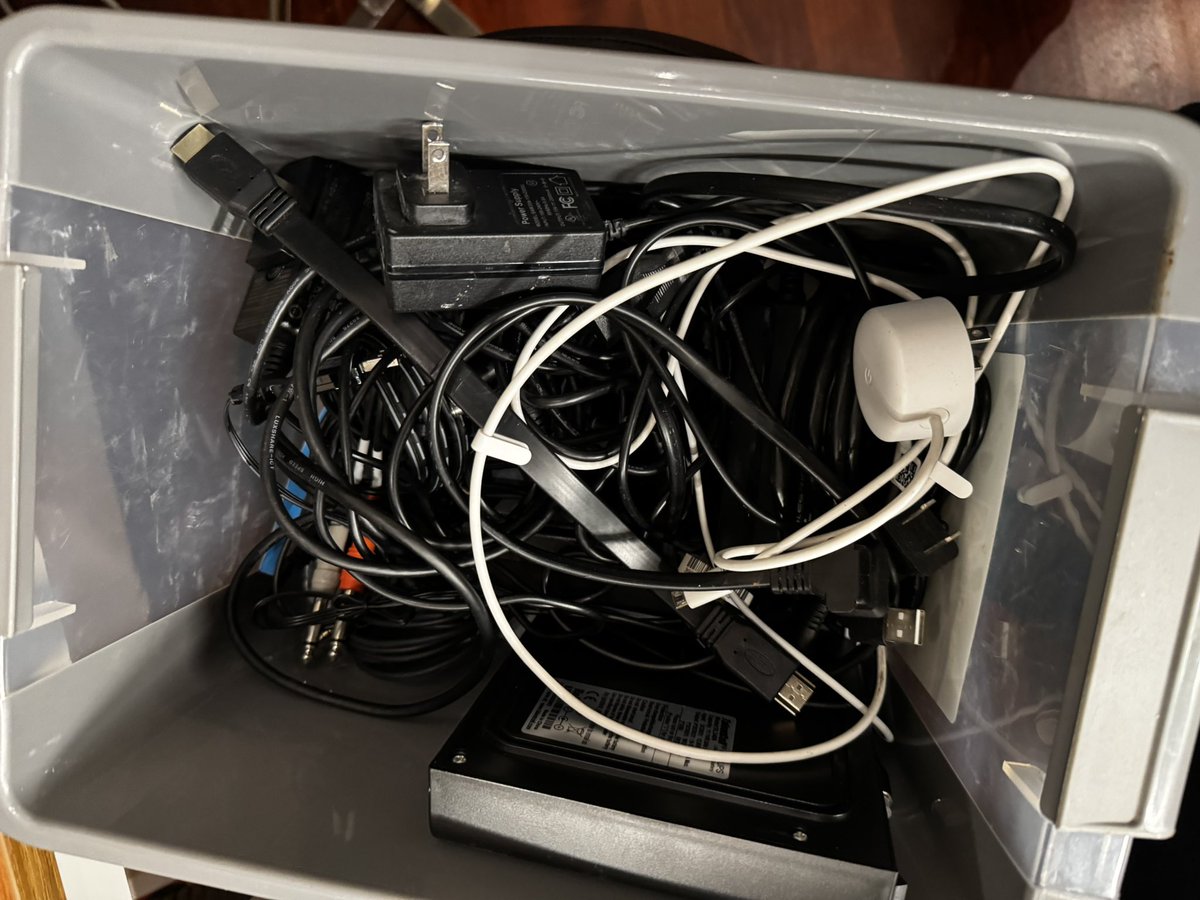
every god-fearing generation of men maintain and uphold The Wire Box, a strategic reserve of technical entropy from which the anonymous will rise up and become the prophesied Chosen Wire in Our Time of Need.
@tinytreethought Maybe on chivalry? I could be mistaking you for another channel, but I remember it as being in very much the same style, pace, etc. And your very recognizable voice.
@tinytreethought I found your channel again after some time and have been digging through your videos for one that I came across years ago about masculinity and the development of the man's soul/character. I can't find it. I'm not even sure it was your video. It was a banger tho!
@sallyreadwriter I, and many of my friends, rejoice that you have become such a light and a blessing to us through your work and your testimony. ¡Gloria!
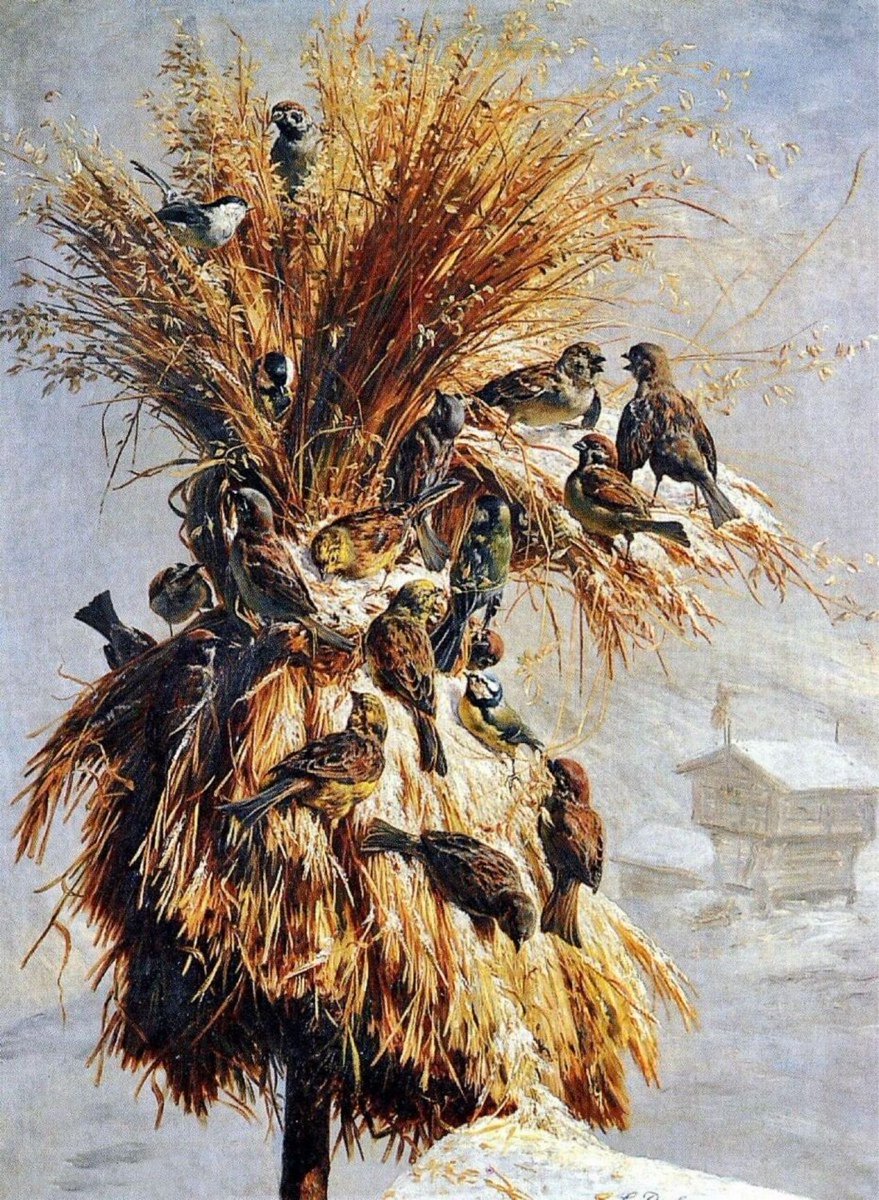
12 Dec: In Old Scandinavia, farmers set out a Julenek, a sheaf of grain kept from the summer harvest, for the birds to feast upon at #Christmas. Called the “Remembrance of Birds,” this act of #kindness was thought to ensure good luck and a plentiful harvest the following year.
It's crazy to me that there are basically no big studio epic movies about the Spanish conquest in the Americas - the number of insanely wild but true stories abound.
Cortez conquering the Aztec Empire, Cabaza de Vaca spending a decade as a wandering mystic, Pizzaro conquering the Incan Empire, Francis Drake stealing the Spanish treasure train in Panama, Ponce de Leon's expeditions in Florida... just a massive trove of top quality material to draw from.