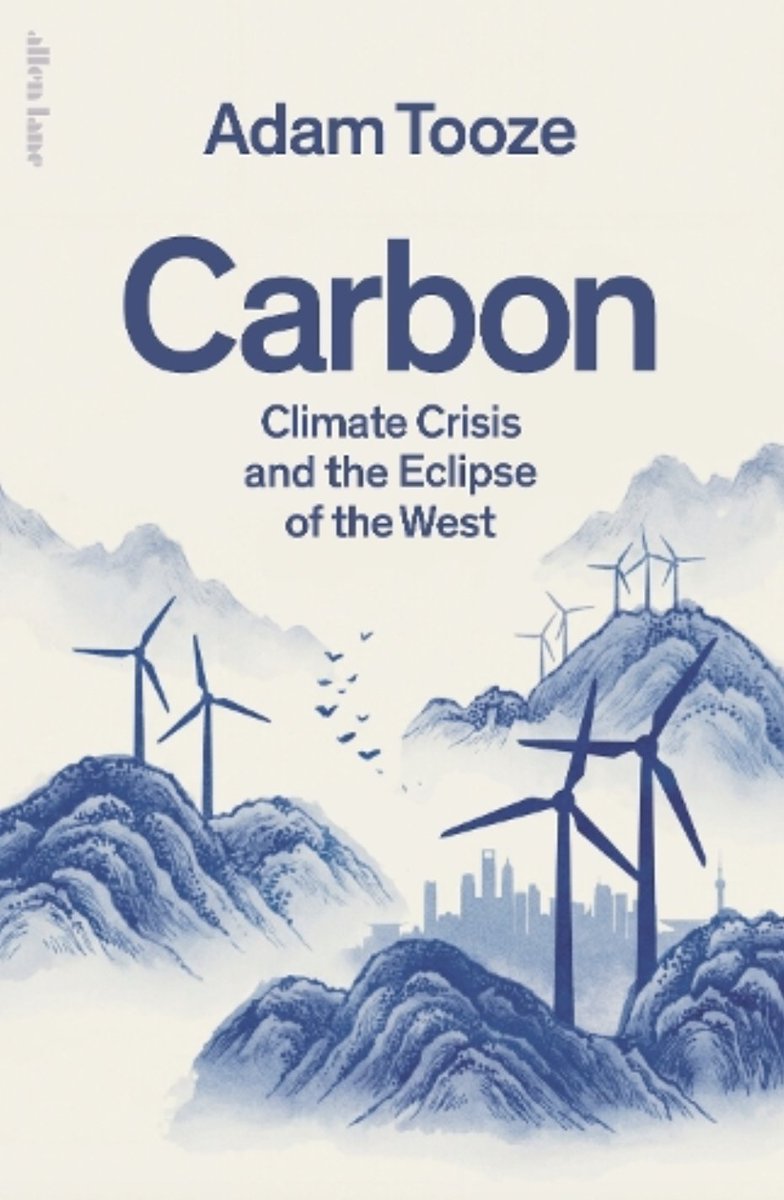
Super interesting!
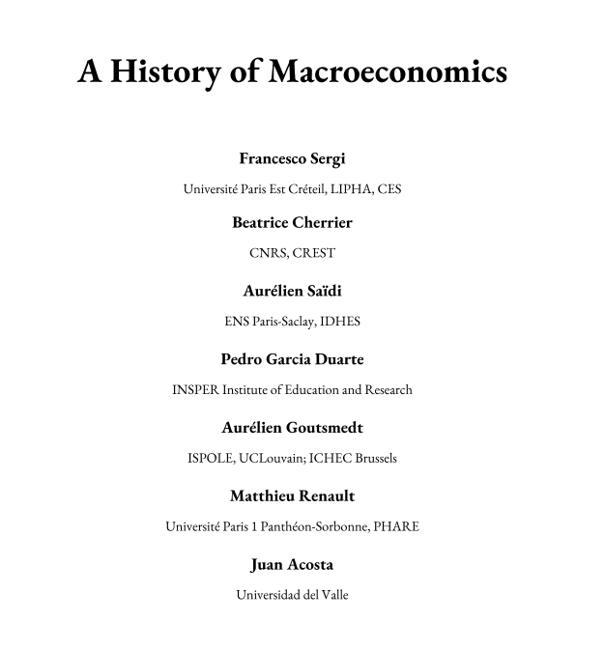
"A History of Macroeconomics" by Francesco Sergi, Beatrice Cherrier, Aurélien Saïdi, Pedro Duarte, Aurélien Goutsmedt, Matthieu Renault, and Juan Acosta.
"The history of macroeconomics outlined in this book is dense and complex. This mirrors both the flourishing historical scholarship and the richness of the subject itself. Yes, macroeconomics is complicated and hard (much more than usually acknowledged in macroeconomics textbook narratives). But this is a good thing, especially as it results from the sheer diversity of topics, of theoretical and methodological patterns, and from the entanglements with other fields as well as policymaking. And yet, the chronology that we offer (birth, bridges, frictions, constellation) helps navigate such a complex story by pointing to our main takeaways. We believe that the different audiences of macroeconomics deserve such an evidence-based, encompassing history, and that our history should, and can, be integrated into macroeconomics textbooks."
https://t.co/ps6Db8cbNp
"Comparing GDP levels over long spans of time is an exercise of anachronism. You cannot conclude much about quality of life of different societies that existed in very different worlds".
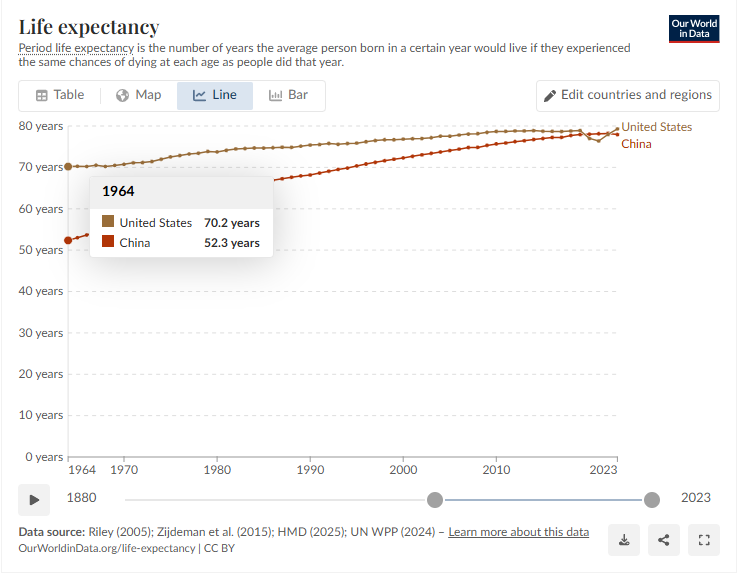
If you look at life expectancy:
US 1964: 70.2 years
China 2023: 78.0 years
US 2023: 79.3 years
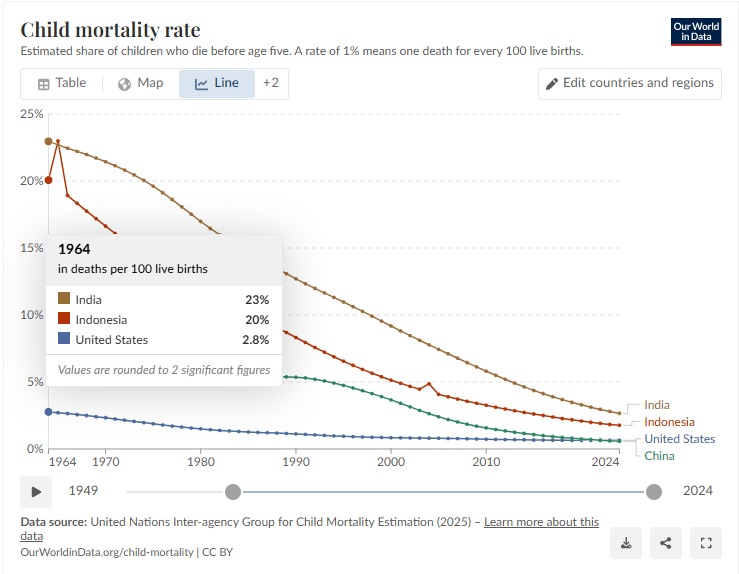
If you look at child mortality rates:
US 1964: 2.8%
China 2024: 0.6%
US 2024: 0.6%
Electricity generation per capita (strongly correlated with GDP levels):
US 1964: 5,145 kWh per capita
China 2025: 7,474 kWh per capita
US 2025: 13,015 kWh per capita
Comparing GDP levels over long spans of time is an exercise of anachronism. You cannot conclude much about quality of life of different societies that existed in very different worlds.
How about an Accord where both US and China agree to get to much improved universal healthcare at 12% of GDP from the current 17% and 7% of GDP respectively, thus tackling safety net quality, real exchange rates, C I S issues, and global imbalances all at the same time?
De l’annulation de la dette publique détenue par la Banque centrale
L'annulation de la dette publique détenue par la Banque de France est un leurre. Elle ne diminuerait pas le montant global de la dette publique, elle n'ouvrirait aucune marge de manoeuvre financière et réelle, elle n'est pas réalisable. Par contre, réduire l'influence des marchés financiers, nationaliser la détention de la dette publique serait difficile, mais nécessaire.
Un texte sur mon blog Mediapart
https://t.co/0NyHRc81qO
Chinesische Begriffsgeschichte.
Nello spirito dei pensatori progressisti del XIX secolo, l'espressione 革命 (gémìng), "mutamento di mandato" – dall'idea di "mandato celeste" (天命, tiānmìng) del sovrano – è venuta a tradurre la nozione di "rivoluzione".
#TeologiaPolitica
Is there a book or paper that takes us from March 1883 to June 1918, that gives us a play-by-play of how “Marxism” became “central planning without money or prices”?
Se la Cina non applicasse controlli sui movimenti di capitali, la quota di investimenti nazionali diminuirebbe sensibilmente, causando meccanicamente (a parità di risparmi) un aumento del surplus delle partite correnti (risparmi - investimenti).
Chi lo spiega ai liberoscambisti?
"In short, wealth may be capital, but it behaves differently than Keynesian capital. Some kinds of wealth produce services that are not counted in GDP, some kinds are not productive in what we call economic growth, and some kinds fluctuate violently".
Finished 50% of Capital in the 21st Century by Thomas Piketty, it is such a half baked analysis of grand dynamics of distribution and accumulation. I can't get myself to finish it because all he talks about is wealth, but never even acknowledges the role of capital in it.
OK. Countries that issue a ton of debt and then start to run primary surpluses are doing exactly what we'd expect. It's the intertemporal budget constraint of the government. Just like households who take out a huge mortgage and start to make the large monthly mortgage payments. The more debt the government issues, all else equal, the larger the primary surpluses that it will have to run later on. Especially if your economy is not really growing fast
Silver stater of Knossos (Cnossus), Crete, c. 425–360 BC; obverse: Minotaur in a kneeling–running stance to the right, head facing; reverse: a square labyrinth in gammadion form with five pellets arranged rosette‑wise at the center and four incuse corner squares.
If you think AI slop is taking over the internet consider this: the 150th anniversary version of the Wagner Ring Cycle in Bayreuth used AI freely for the staging and everyone hates it (not that it takes too much to get booed in that stage),