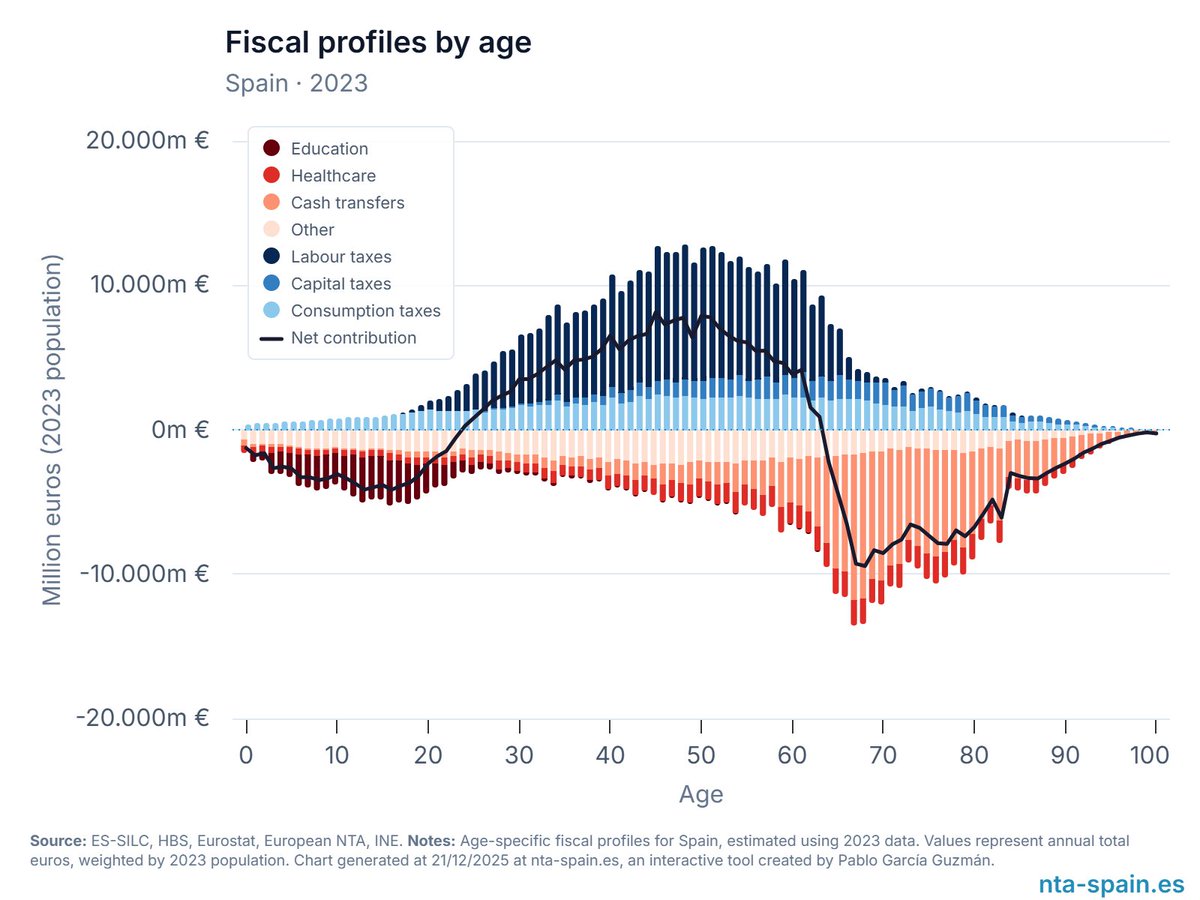
This graph from @pablogguz_ of Spanish fiscal contributions by age demonstrates an important fact. The 40 and 50 year olds are carrying both their kids and their parents. And not just economically. This is why it's hard to be middle-aged.
A Denver area worker was shocked and saddened to learn that, in line with American tradition, his employer was requiring him to work additional hours as a result of his being identified as one of the organization’s top performers of the year. https://t.co/bG28aUcmFk
"Happiness is the state when nothing is missing. When nothing is missing, your mind shuts down and stops running into the past or future to regret something or to plan something." - @naval
Kaplamino uses chain reaction tricks with marbles, dominoes, and random everyday objets. This is a qite impressive marble path
[source, tricks explanation: https://t.co/4JvTWf2JCS]
Probably the best thing you'll see today.
In 2017, a group of developers hilariously competed for who could create worst volume control interface in the world.
The results 🧵
1/22
The Gell-Man Amnesia Effect. Coined by Michael Crichton, author of Jurassic Park and so much more. Now replace “newspapers” with “ChatGPT”
“Briefly stated, the Gell-Mann Amnesia effect is as follows. You open the newspaper to an article on some subject you know well. In Murray's case, physics. In mine, show business. You read the article and see the journalist has absolutely no understanding of either the facts or the issues. Often, the article is so wrong it actually presents the story backward—reversing cause and effect. I call these the "wet streets cause rain" stories. Paper's full of them.
In any case, you read with exasperation or amusement the multiple errors in a story, and then turn the page to national or international affairs, and read as if the rest of the newspaper was somehow more accurate about Palestine than the baloney you just read. You turn the page, and forget what you know.
That is the Gell-Mann Amnesia effect. I'd point out it does not operate in other arenas of life. In ordinary life, if somebody consistently exaggerates or lies to you, you soon discount everything they say. In court, there is the legal doctrine of falsus in uno, falsus in omnibus, which means untruthful in one part, untruthful in all. But when it comes to the media, we believe against evidence that it is probably worth our time to read other parts of the paper. When, in fact, it almost certainly isn't. The only possible explanation for our behavior is amnesia.”