For International donors who want to donate to the PM Relief Fund following the flash flood disaster, please use the official link:
https://t.co/8xaInbFnx9
Cards are supported. #nepal
On the occasion of India's 80th Independence Day, I extend my heartfelt greetings and best wishes to PM @narendramodi and the friendly people and Government of India.
May the deep historical ties, close people-to-people relations and cooperation between Nepal and India continue to strengthen in the years ahead.
On the auspicious occasion of India's 80th Independence Day, I extend my heartfelt greetings to PM Shri @narendramodi ji,
the Government, and the people of India.
As close neighbors, our nations share not only deep-rooted civilizational bonds but also shared aspirations for good governance, democratic vitality, and economic prosperity. May the friendship between Nepal and India continue to strengthen, fostering mutual growth, innovation, and stability across the region.
Wishing India continued peace, progress, and success.
Warmest 80th Independence Day wishes to PM @narendramodi jee and the people of India! 🇮🇳🇳🇵 May the deep-rooted friendship between Nepal and India continue to thrive, and may India be blessed with everlasting peace and progress. 🙏🏽
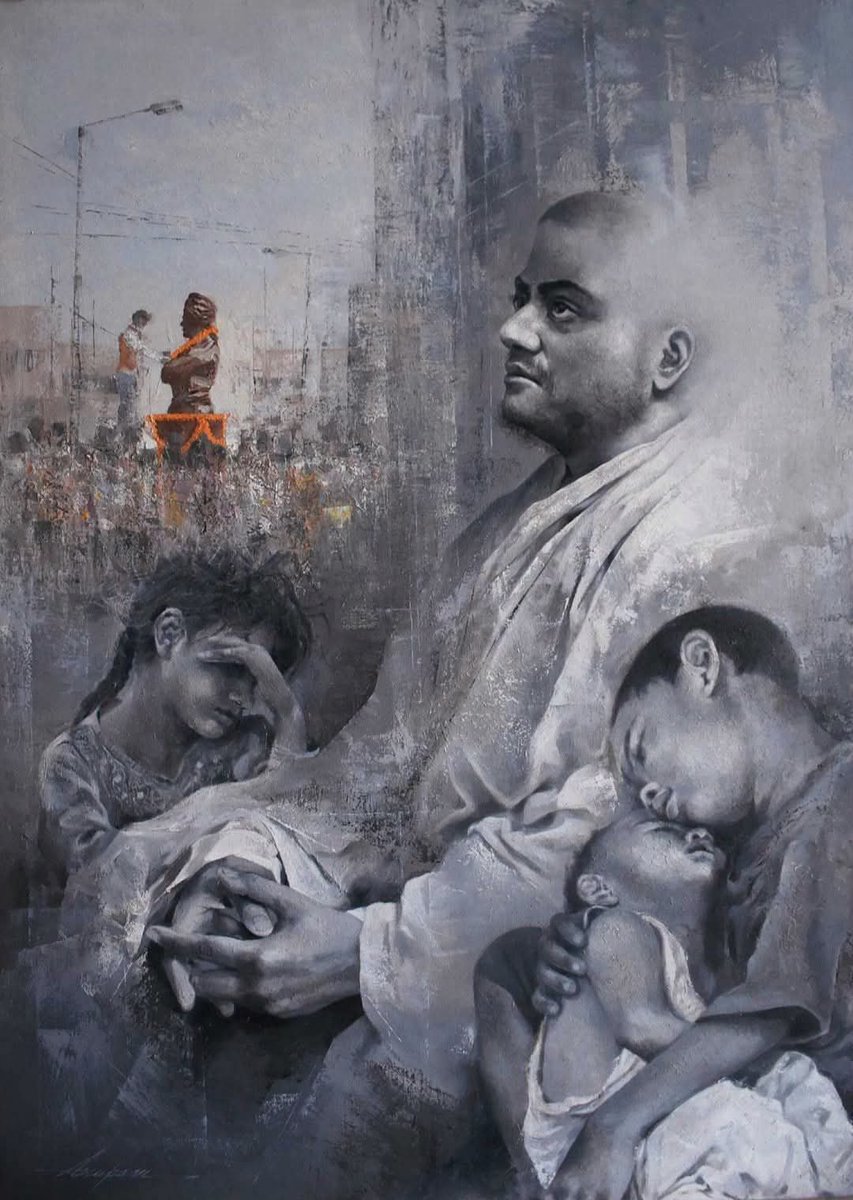
What Were the Final Days of Swami Vivekananda Like?
Swami Vivekananda passed away in 1902 at the age of just 39. It was 9:10 p.m. at Belur Math. At that time, neither Belur Math nor the nearby villages had electricity, although there was a telephone. Yet no news reporters arrived, and remarkably, none of the newspapers published in Bengal carried the news of his death the following day. Nor did any prominent political leader or celebrated Bengali publicly express condolences. It is astonishing to think about. 🔴
Throughout his short life, Swami Vivekananda endured humiliation, neglect, and repeated rejection. After his father's death, he became entangled in legal disputes with relatives over family property and had to appear in court on numerous occasions.
His family lived in extreme poverty. Every morning he would leave home in search of employment, wandering from office to office. Many days, knowing there was no rice, lentils, oil, or salt at home to feed his mother, brothers, and sisters, he would tell his mother, "Don't cook for me today, Mother. I've been invited to a friend's house for dinner." In reality, there was no invitation. He often went hungry so that the rest of the family could eat. It is almost unimaginable. 🍂
He struggled with poverty throughout his life. At the age of 23, he secured a teaching position at the Metropolitan Institution, founded by Ishwar Chandra Vidyasagar. However, the headmaster—Vidyasagar's son-in-law—disliked Narendra Nath Datta and reportedly had him dismissed, alleging that he did not teach well. This happened despite his extraordinary intellect, scholarship, and eloquence.
Once again, he found himself unemployed.
Even abroad, a Bengali religious leader allegedly spread false rumours that Vivekananda had several wives, ten or twelve children, and was nothing more than a fraud and a gambler. 💥
He often endured hunger both in India and overseas. In one of his letters, he wrote:
"Many times I have passed days without food. I felt that perhaps I would die that very day. Then I would rise, crying, 'Victory to Brahman!' and declare: 'I have no fear. I know neither death nor hunger. I am beyond thirst. What power does the world have to destroy me?'"
When the ailing Swami Vivekananda returned to Calcutta after achieving worldwide acclaim, many prominent Bengalis reportedly declined to attend or organise a public reception in his honour. Eventually, Paryichand Mitra agreed but is said to have remarked that since Vivekananda was a Kayastha rather than a Brahmin, he could not truly be a monk and would therefore address him merely as "Brother Vivekananda."
By 1898, Americans were deeply inspired by his speeches and writings, while many in his own homeland remained indifferent.
That same year, the sick Swami consulted the renowned physician Dr. Rasiklal Dutt at his clinic on Sadar Street in Calcutta. The doctor reportedly charged him forty rupees as a consultation fee and another ten rupees for medicines—a considerable sum in those days. The money was paid by Swami Brahmananda from funds collected for Belur Math.
There is no known photograph of Swami Vivekananda after his death. Nor is there an officially preserved death certificate, despite the existence of the Bally–Belur Municipality at the time. Ironically, that same municipality imposed an amusement tax on Belur Math.
Some people even mocked the monastery, dismissing it as a gathering place for idle young men and using insulting nicknames such as "Bichitra Ananda" or "Bibi-ka-Ananda"—
Perhaps that is why, toward the end of his life, he is said to have remarked:
"Only another Vivekananda could truly understand what this Vivekananda has accomplished."
Today, Swami Vivekananda is revered across India and around the world. Yet during his own lifetime, he endured poverty, insults, and neglect. One might even wonder whether, had he witnessed some of today's displays of admiration, he would have dismissed them as empty gestures
Collected n edited
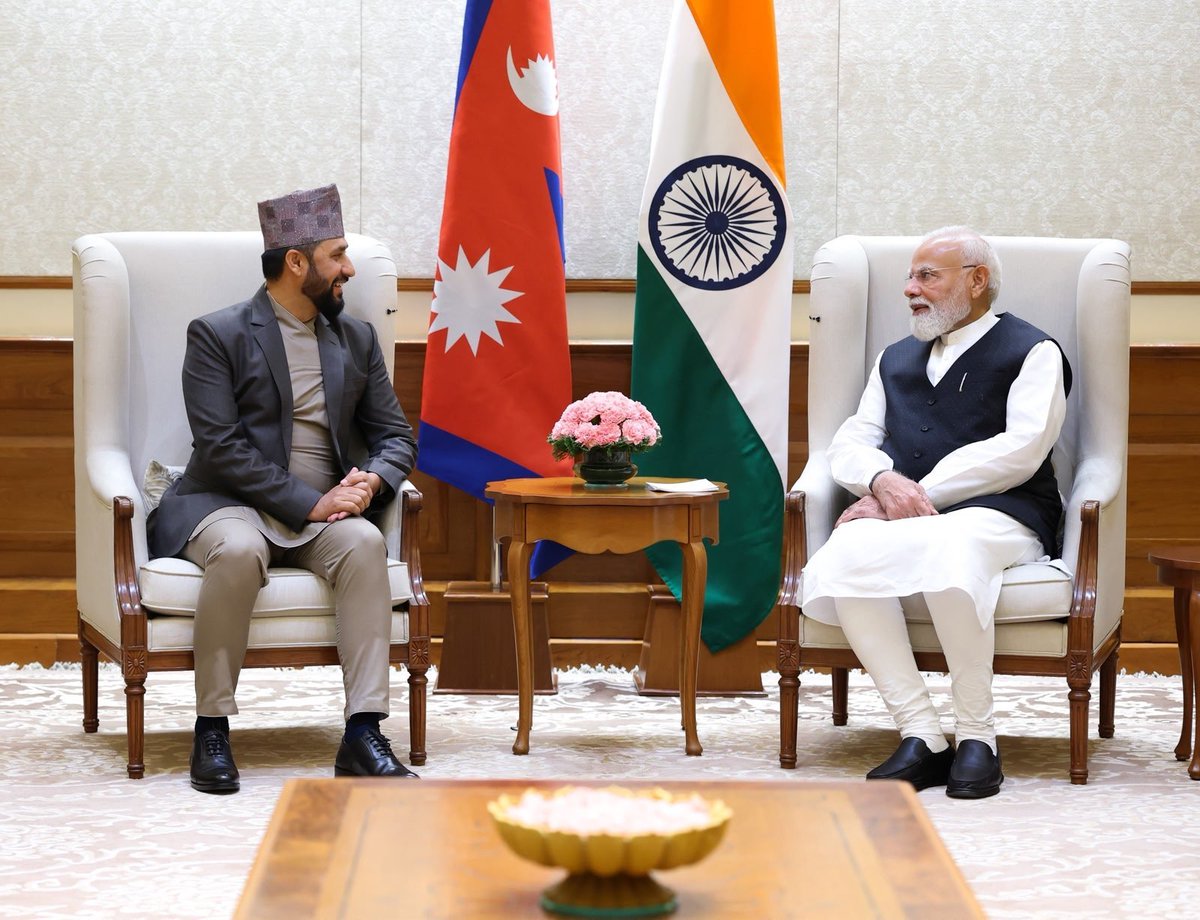
नेपालको राष्ट्रिय स्वतन्त्र पार्टीका सभापति श्री रवि लामिछानेज्यूसँग भेट्न पाउँदा अत्यन्तै खुशी लागेको छ । एक साझा र समृद्ध भविष्यका लागि मिलेर काम गर्ने वहाँको चाहनालाई म स्वागत गर्दछु र त्यसमा पूर्ण रुपमा सहमत छु ।
हाम्रो छिमेकी पहिलो नीति अन्तर्गत नेपाल प्राथमिकतामा रहेको साझेदार हो र हामी दुई देशबीचको विशिष्ट एवम् बहुआयामिक सम्बन्धलाई थप उचाइमा पुऱ्याउन नयाँ सरकारसँग सहकार्य गर्न उत्सुक छौँ ।
@hamrorabi
#India-#Nepal#RabiLamichhaneInDelhi
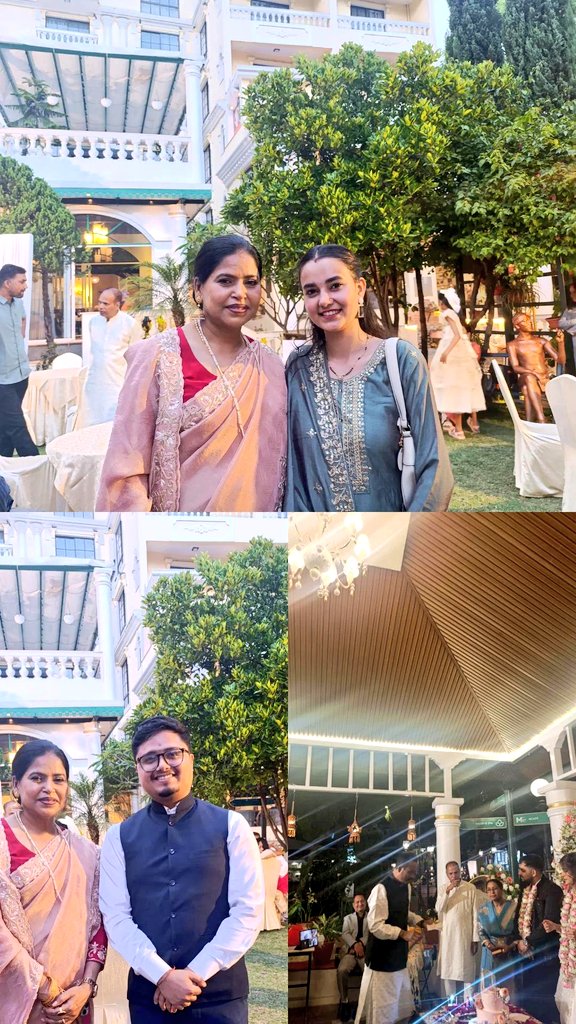
Privileged and honoured to join the dinner hosted in honour of Former Deputy Prime Minister and President of Rastriya Swatantra Party, Hon. Shri Rabi Lamichhane ji, Smt. Nikita Poudel ji, and members of the Nepali delegation.
Hon. Shri Ashish Sood ji, Minister of Education, Government of Delhi, and Smt. Anu Sood ji graciously hosted an evening marked by warmth, hospitality, and meaningful civilisational conversations. The home-cooked delicacies representing diverse Indian states added a special touch, reflecting the richness of India's cultural heritage.
The evening stood as a beautiful testimony to our Parivarik Sambandh strengthened over ghar ka khana, shared values, and heartfelt dialogue.
Insightful reflections from Ambassador Sujan Chinoy, DG-MP-IDSA, and Hon. Shri Arun Singh ji, National General Secretary, BJP, and Shri Shiv Prakash ji reinforced the enduring pillars of political, economic, and cultural connectivity while highlighting the importance of adapting them to new realities.
I also had the opportunity to share my reflections on the immense opportunities in India–Nepal relations, particularly the role of youth in strengthening people-to-people ties, fostering innovation, and shaping a shared future for our two nations.
My sincere gratitude to Dr. Vijay Chauthaiwale ji for the kind invitation and gracious hospitality. Thank you Ashwin Johar ji for being a steadfast support.
Hi @Quora, I had appealed to my account deletion. Yet I have not heard anything from you guys. Why was it banned? This is how you run business?
My answers used to gain hundreds of thousands of views every single month.
#WATCH | Kathmandu: Nepal's ancient city of Bhaktapur has, from Thursday, started early celebrations to welcome the Nepali New Year with music and festivities. On the eve of the formal start of Biska Jatra, the nine-day-long festivity of the ancient city of Bhaktapur, dozens of denarians and vicenarians performed a synchronised musical performance. (09.04)
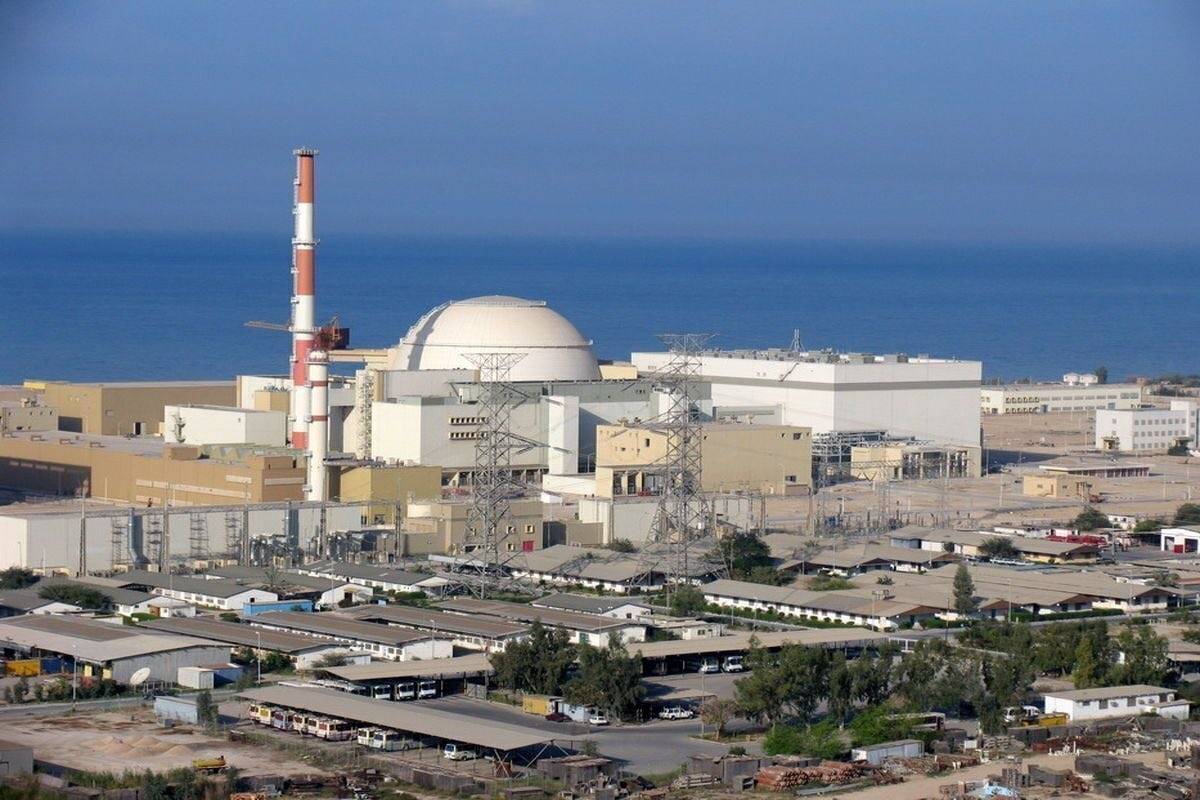
Remember the Western outrage about hostilities near Zaporizhzhia Nuclear Power Plant in Ukraine?
Israel-U.S. have bombed our Bushehr plant four times now. Radioactive fallout will end life in GCC capitals, not Tehran.
Attacks on our petrochemicals also convey real objectives.
@sudeepkhaniya@the_URP You may appreciate the fact that the former RBI governer Sh. Shaktikant Das has a masters in history. He got the best ratings amongst Central Bank governer ratings.
When was the last time you read something over 50 pages long?
If it has been a while, a critical part of your brain may be getting ignored. Not just figuratively.
INTRODUCING THE DMN
Neuroscientists call it the Default Mode Network. It activates during deep reading, long narratives and sustained reflection.
WHY THIS MATTERS
The DMN is associated with empathy, imagination and the ability to think about consequences over time.
It rarely switches on for a tweet. It does not fully engage for a reel. It needs length, patience and the slow build of a story that does not rush to pay you off.
THE CONSEQUENCE
When we stop engaging it regularly, the habits it supports begin to weaken. What are those habits?
Nuance. Perspective taking. Delayed judgment.
Ironically these are precisely the things no algorithm can replicate. Or for that matter, no AI.
SO WHAT SHOULD WE DO?
Stop reading this post. Okay, wait till the end!
Pick up something at least 25 pages long and read it continuously. The topic does not matter. Find something that interests you.
A few small tricks help:
1. Fix a daily reading hour. Even twenty minutes is enough. Treat it like an appointment.
2. Remove the phone from the room. Your attention cannot compete with an infinite scroll machine.
3. Read physical pages if you can. The brain treats paper differently from a screen.
4. Do not worry about finishing books. The goal is to rebuild the habit of sustained attention.
If you follow these steps, soon something interesting may happen. The reading hour expands. You find yourself reading before the hour starts, or after it ends.
And then one day you realise you are deep inside a 500 page book and looking forward to the next chapter.
PS: Before I sound too high and mighty, I have had my own struggles. I had to work toward this habit and I am still learning.
But this year I am on my seventh book. Two of them were over 600 pages long. Still a novice, but getting there.
You do not build a deep mind in 280 characters.
You build it one long page at a time.
Had warm telephone conversations with Mr. Rabi Lamichhane, Chairman of the Rastriya Swatantra Party (RSP) and Mr. Balendra Shah, Senior Leader of the RSP.
Congratulated both leaders on their electoral victories and RSP’s resounding success in the Nepal elections. Conveyed my best wishes for their forthcoming new Government and India's commitment to work with them for mutual prosperity, progress and well-being of our two countries.
I am confident that with our joint endeavours, India and Nepal relations will scale new heights in the years ahead.
@hamrorabi@ShahBalen@party_swatantra