The first #JustTheFacts episodes are officially live! Get the numbers — not rhetoric — on US immigration and the federal budget. Make sure to subscribe to our newsletter to get exclusive access to future episodes. #budget#immigration#usafacts
https://t.co/srWk3PRyFo
It's a fact: we have the best interns. On #NationalInternDay, we're celebrating all the ways they're helping us give Americans the data they deserve.
From building AI agents and running online workshops to digging into raw government data, we're so grateful for everything they do.
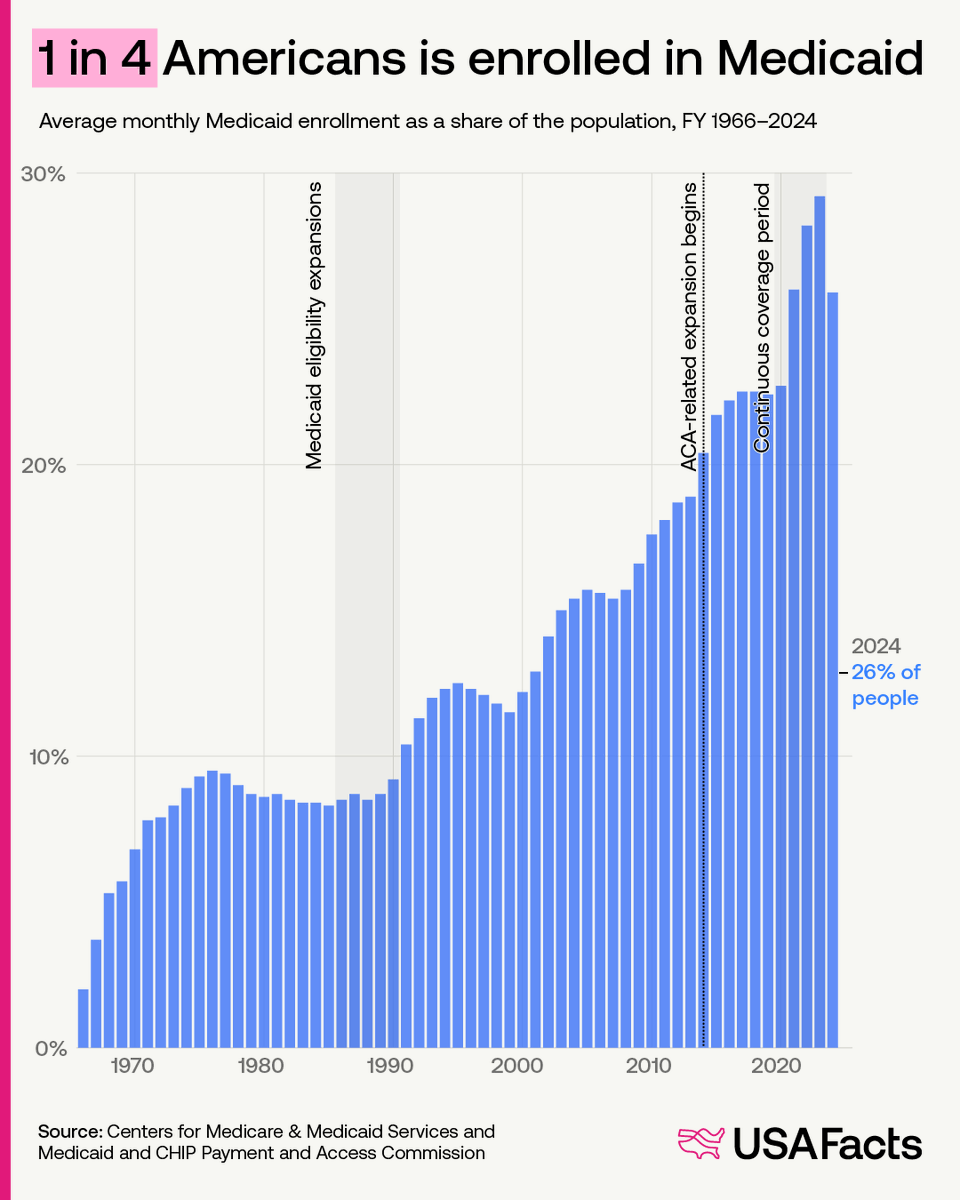
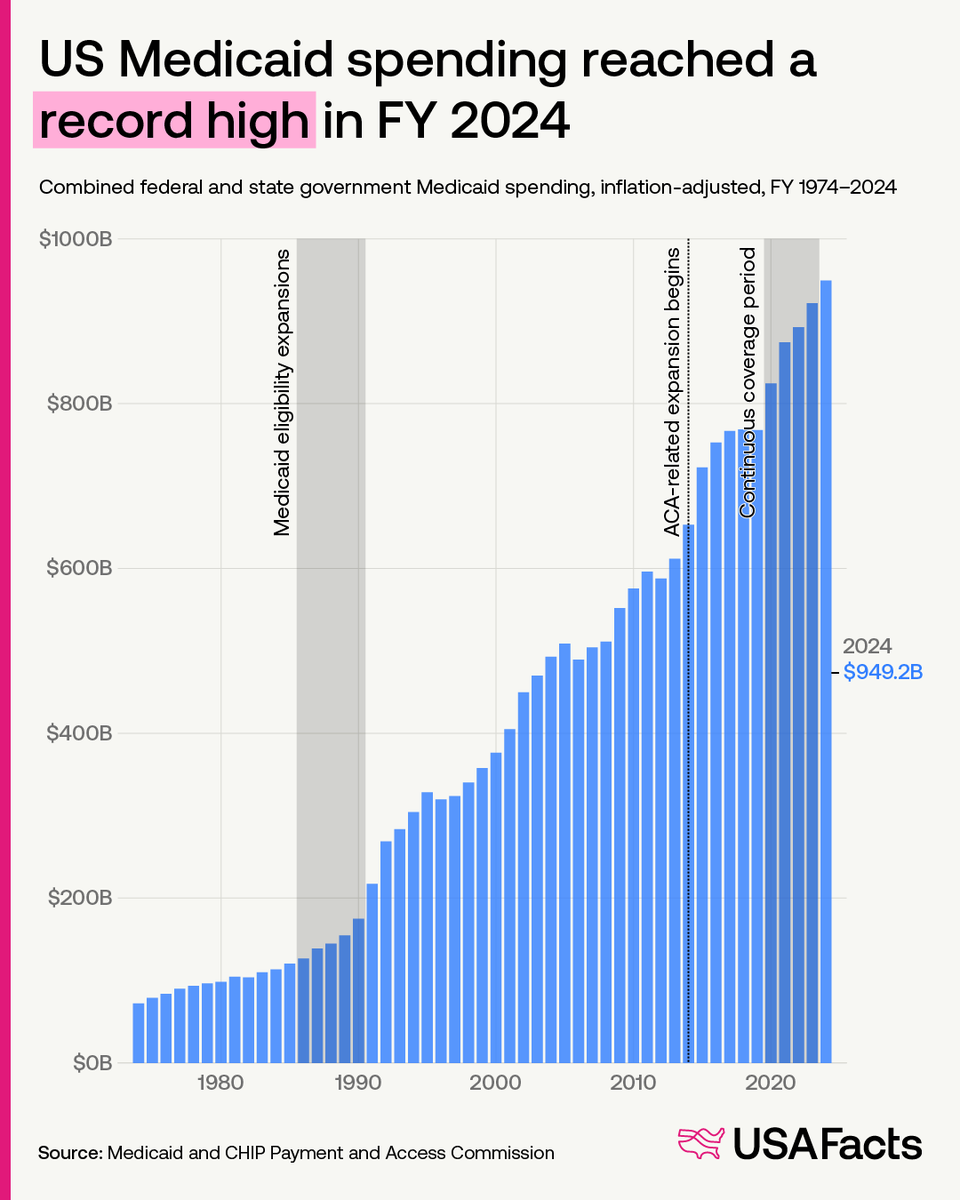
Medicaid was signed into law 61 years ago this week. Here are a few facts worth knowing:
🔹️1 in 4 Americans — 88.2 million people — were enrolled in Medicaid in FY 2024.
🔹 It's one of the largest health insurers in the US.
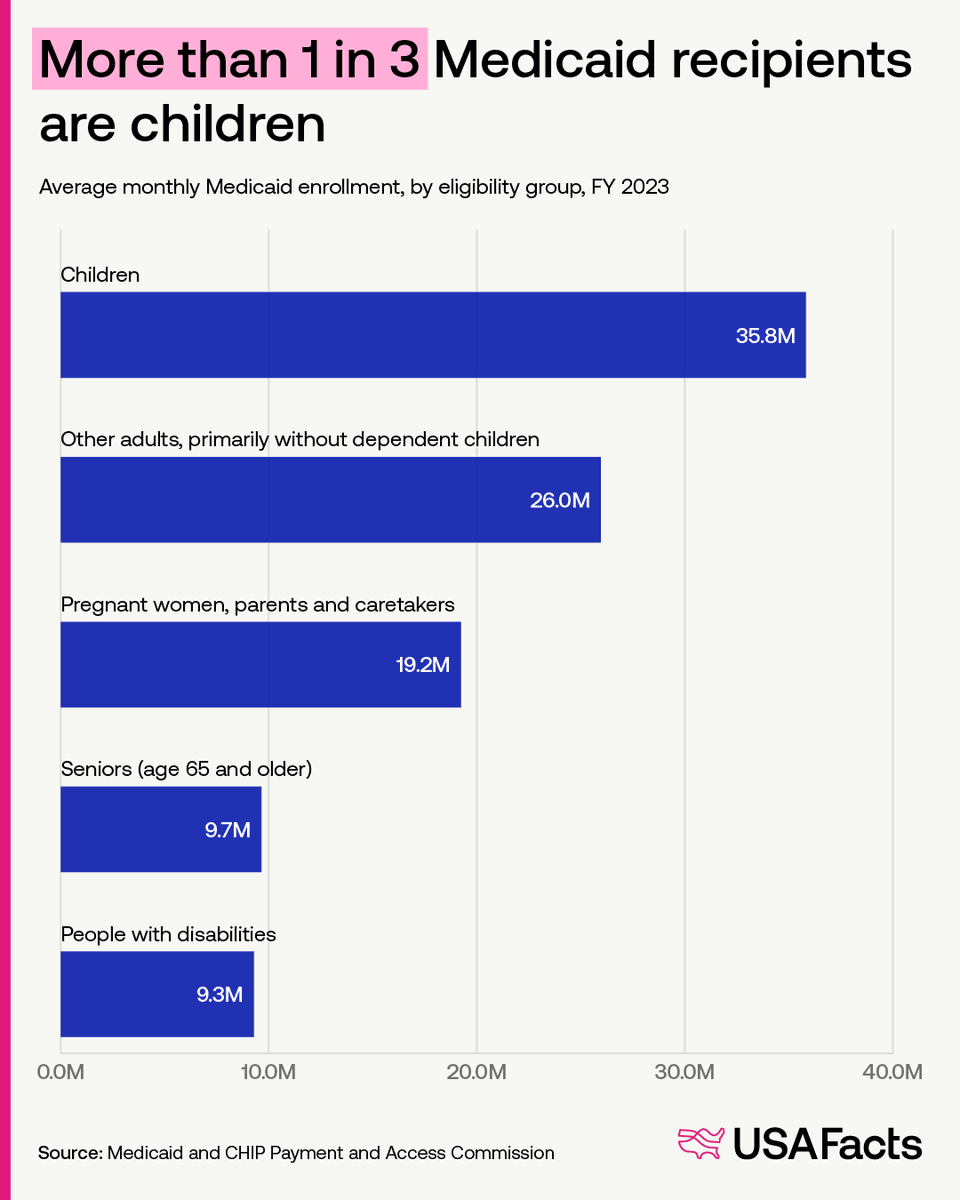
🔹 More than 1 in 3 Medicaid enrollees are children.
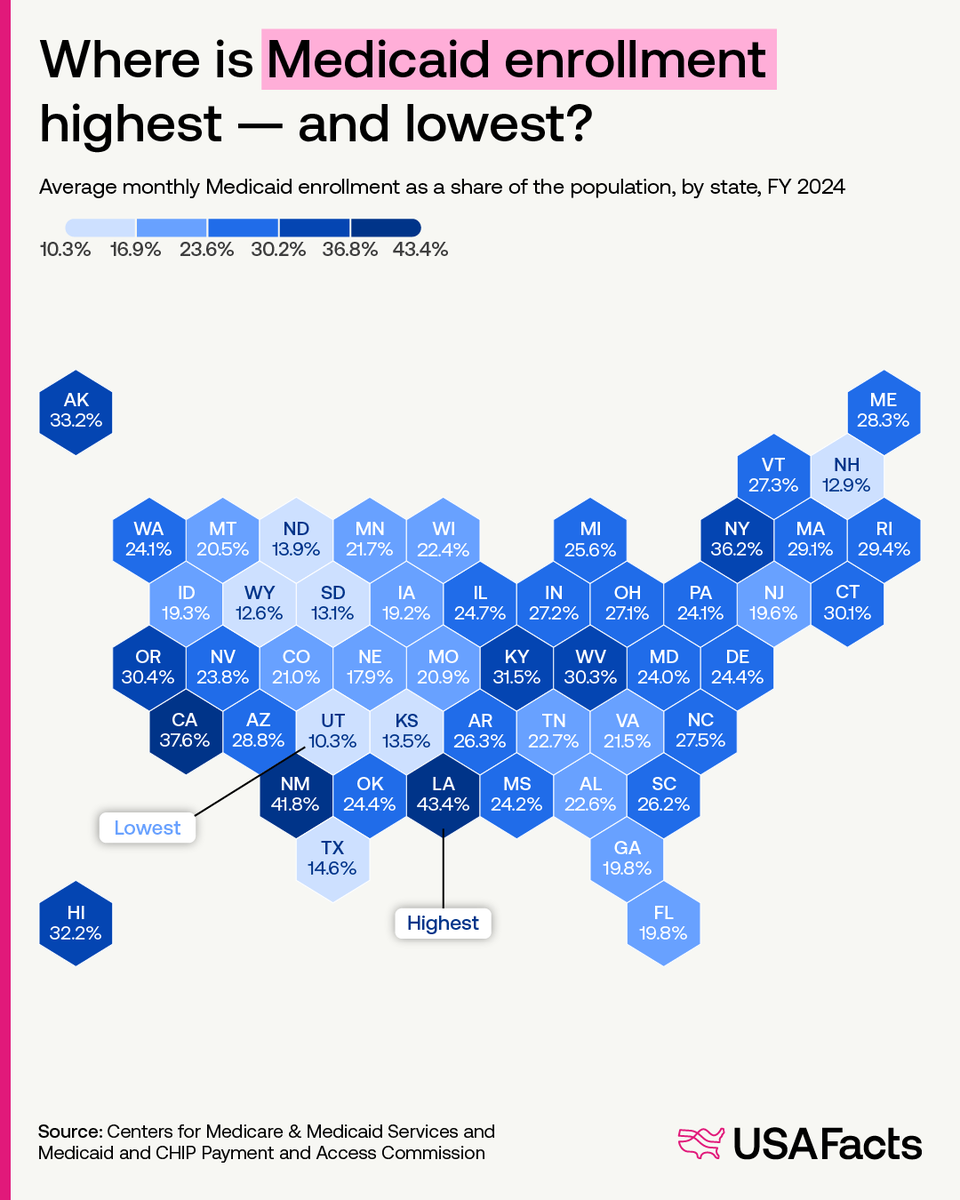
🔹 Louisiana had the highest Medicaid enrollment rate in FY 2024, with 43.4% of residents enrolled.
🔹 Utah had the lowest, at 10.3%.
This week, the Gordie Howe International Bridge officially opened between Detroit, Michigan and Windsor, Ontario, creating another key route for the people and goods that move between the US and Canada each year.
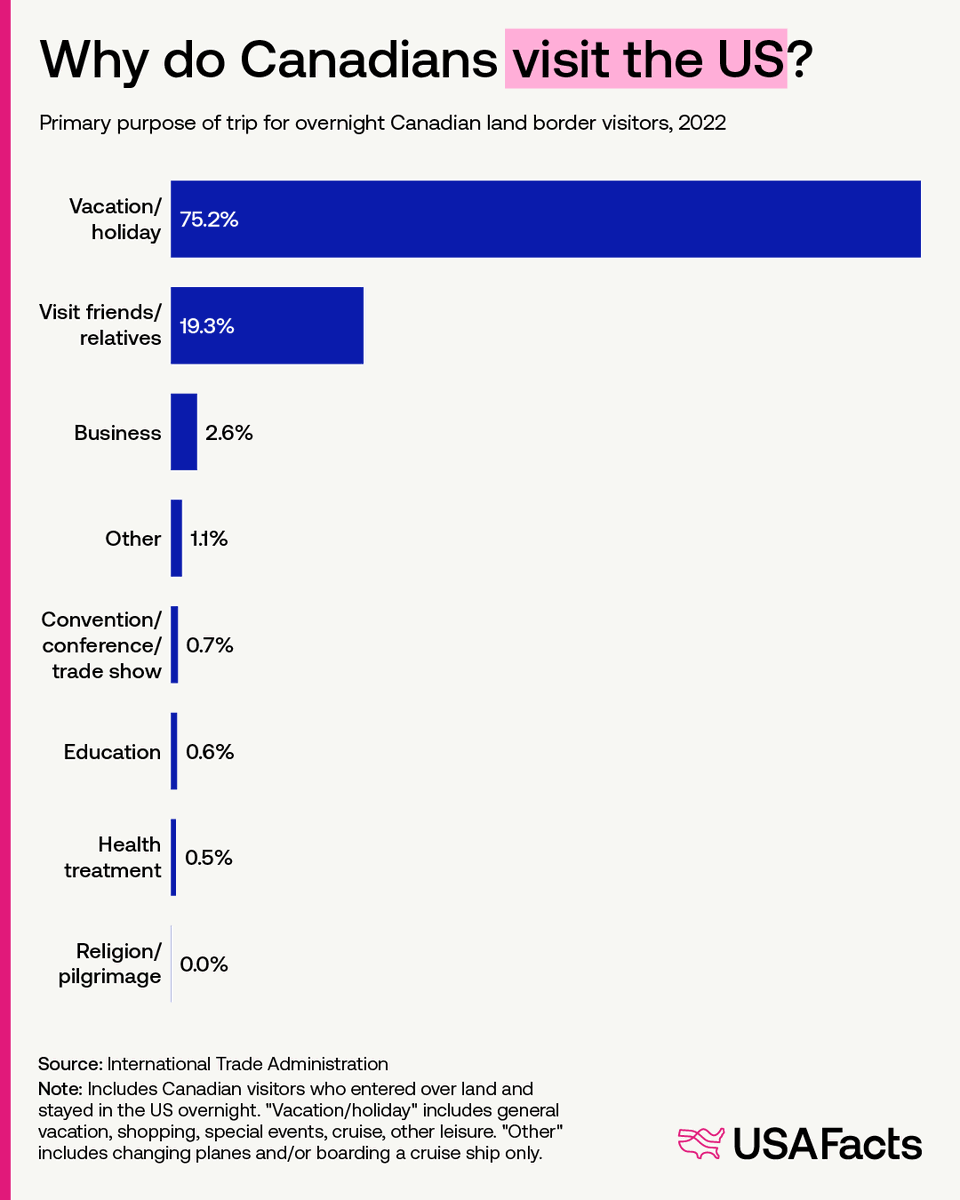
While border infrastructure is expanding, land border traffic doesn't always move in the same direction. In fact, land crossings into the US from Canada declined in 2025 — with all modes of transportation declining except trains.
Do you think this new bridge will lead to more US-Canada travel?
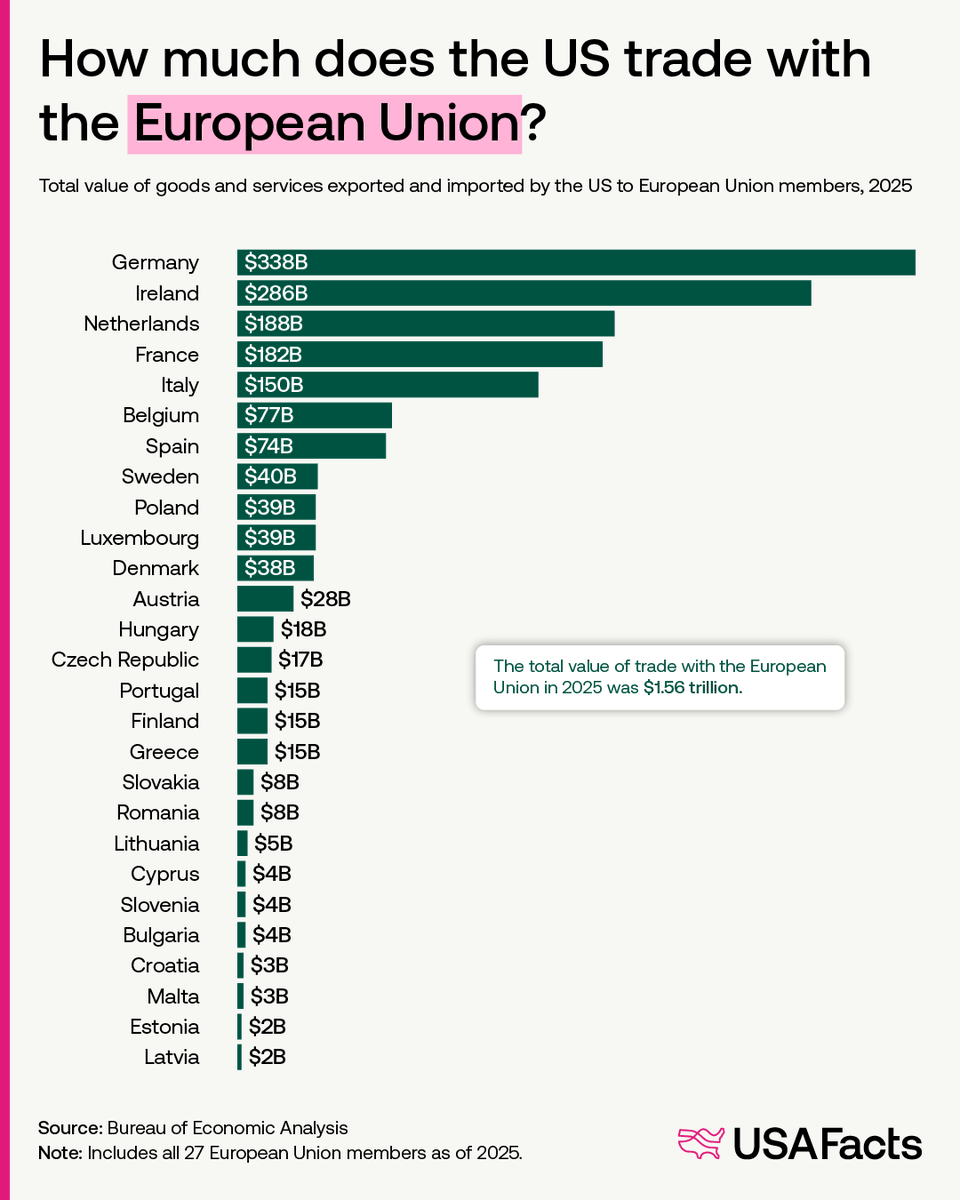
The Trump Administration enacted new tariffs ranging from 10% to 12.5% on goods from 60 trading partners, including the European Union.
In 2025, the US traded $1.56 trillion worth of goods and services with the EU.
Didn’t play for the win, played for the orange slices. 🍊
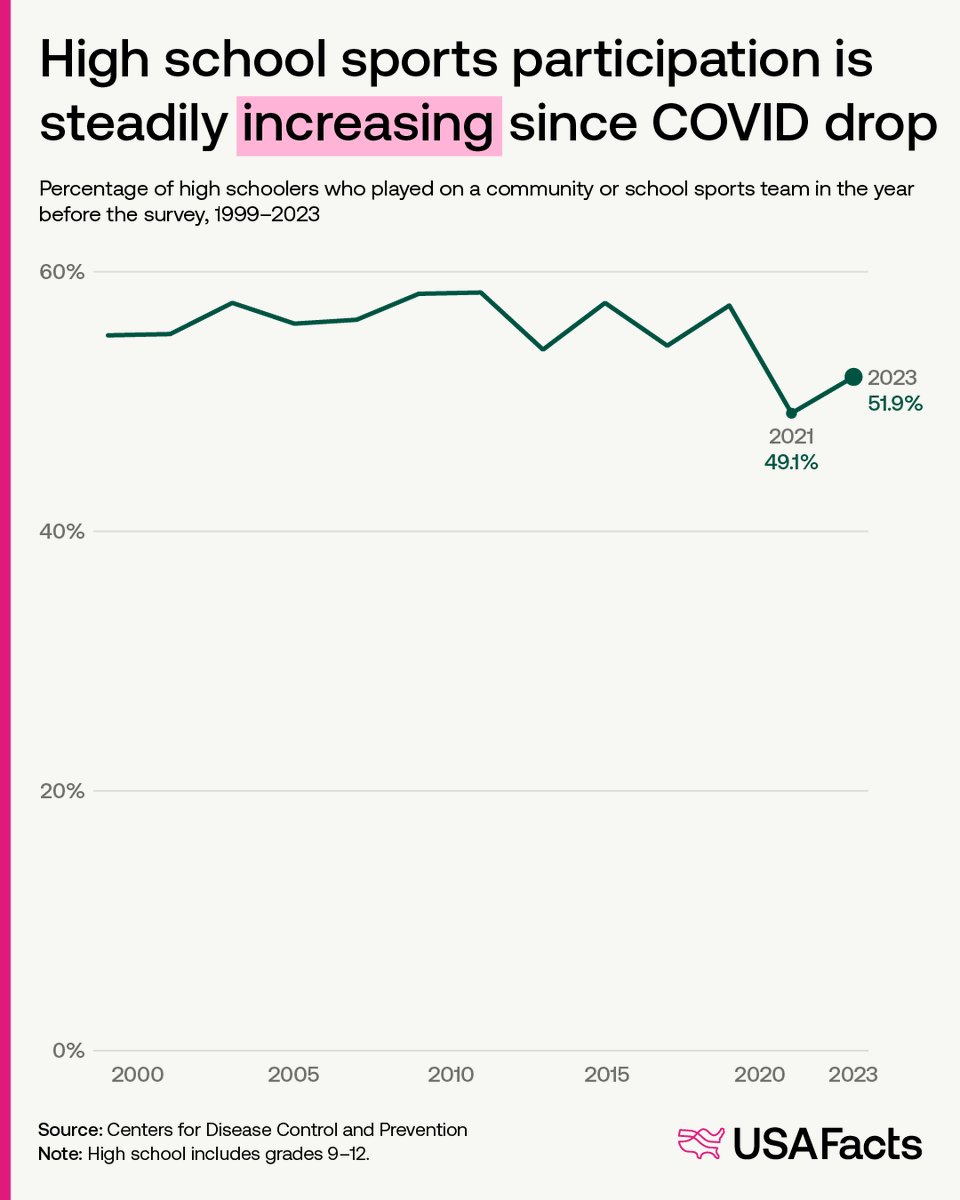
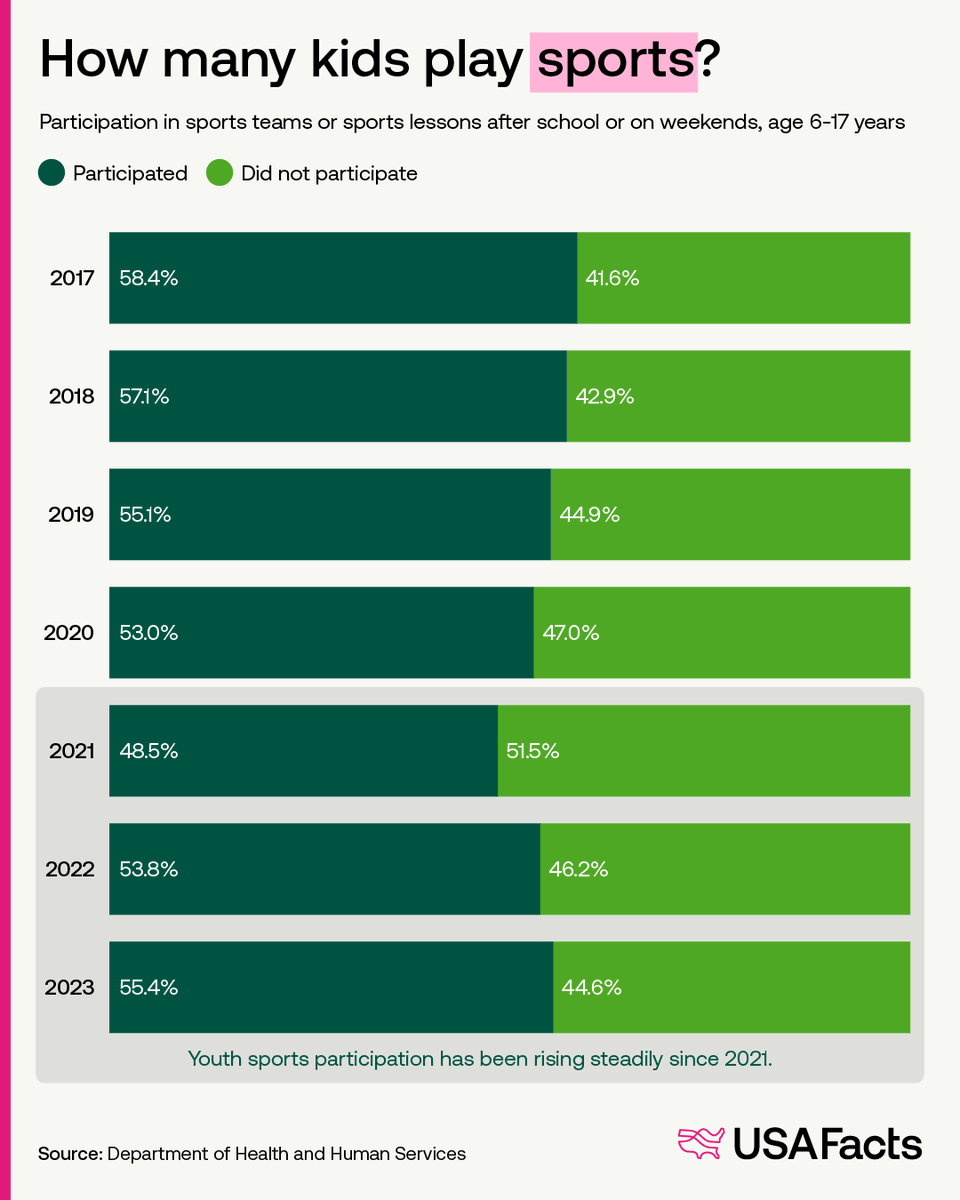
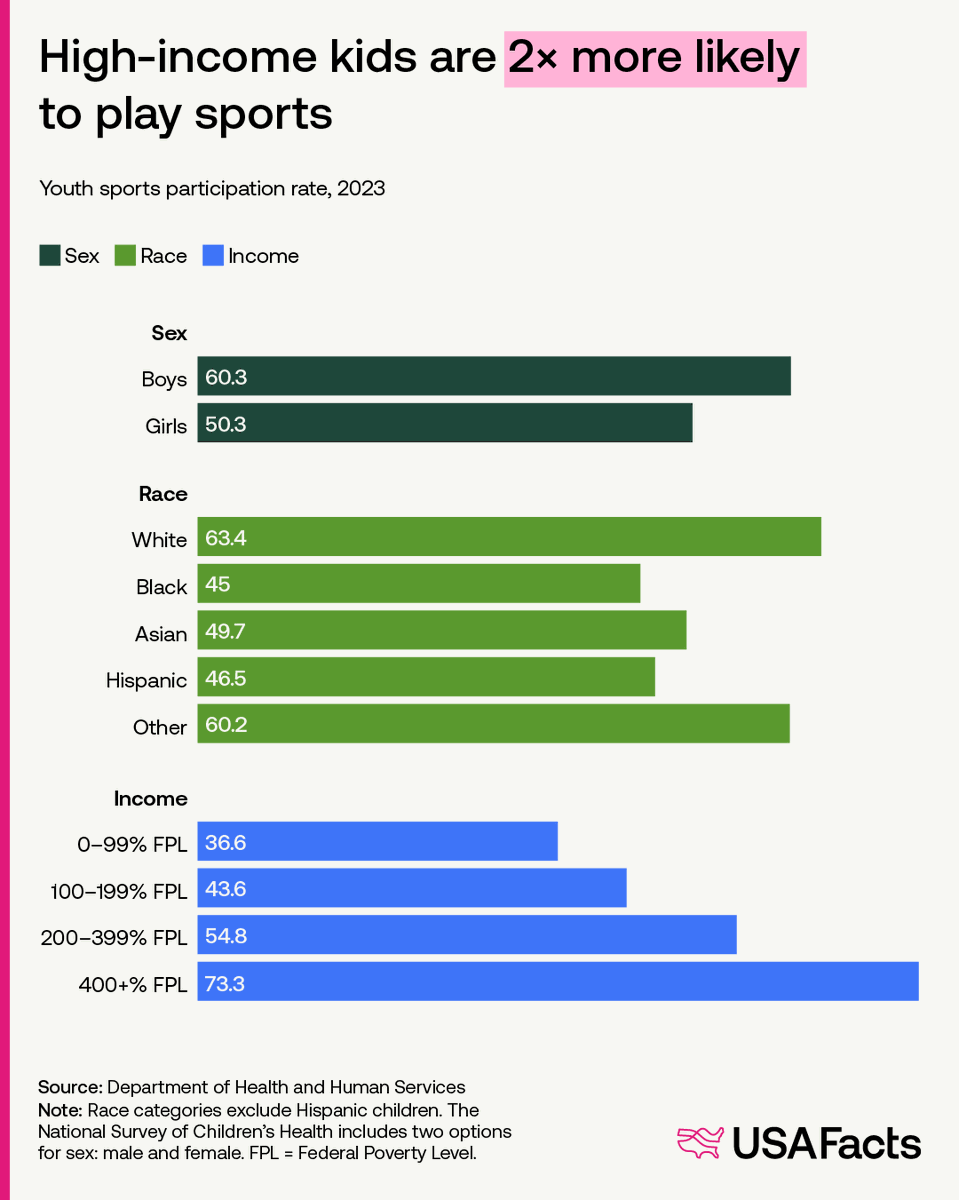
Youth sports participation has been rising steadily since 2021. In 2023, 55.4% of children aged 6-17 played on a sports team or took lessons — up from 53.8% in 2022.
Did you play sports growing up? Chances are high if you live in:
⚽Vermont (71.5% of kids play sports)
🏒 South Dakota (68.8%)
🏀 New Hampshire (67.6%)
🎾 Massachusetts (65.3%)
🏈 Iowa (64.8%)
Hundreds of wildfires are burning across the United States and Canada as of July 23, 2026. Here's where to find information about air quality and wildfire smoke, and how it impacts your neighborhood.
Whether you’re a Mainer deciding how to vote or tuning in to the candidate debates tonight, we've got all the key facts about the Pine Tree State in one place.
https://t.co/gNXZ1YOjam
This line has seen it all.
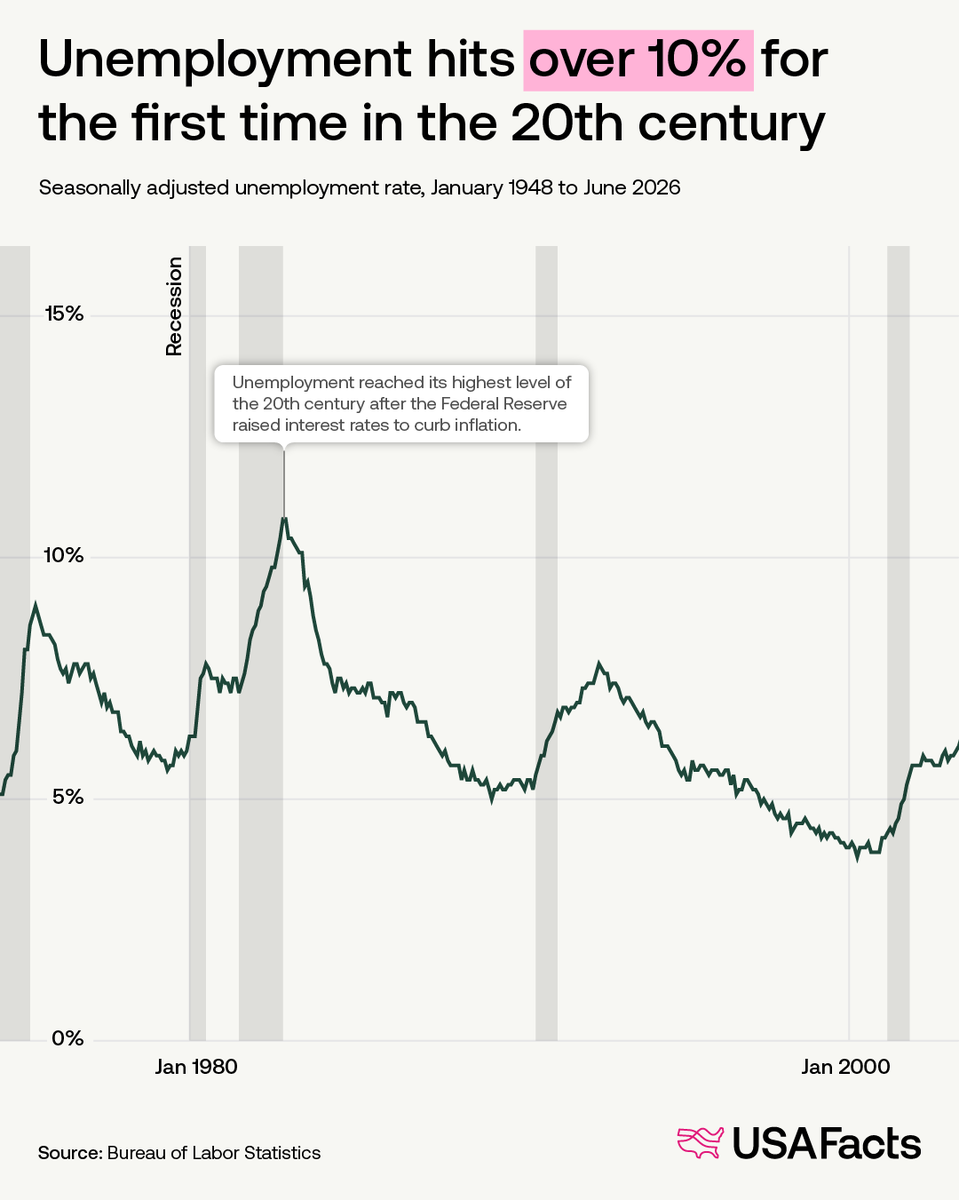
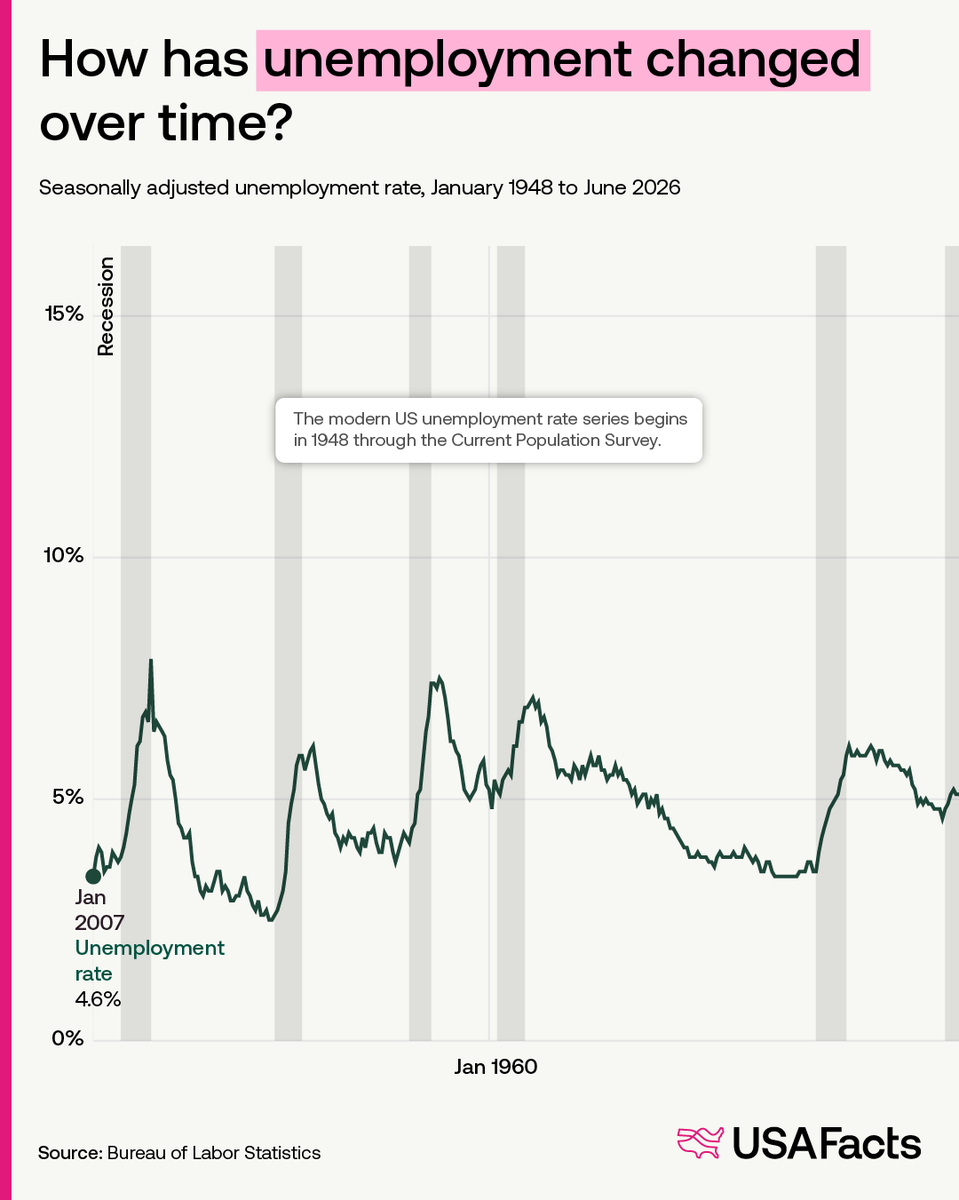
Nearly 80 years of unemployment data — from postwar America to the Great Recession to the pandemic and beyond. Every spike tells a story, and every recovery leaves its mark.
What moments in history can you spot in the line?
This is your reminder to send that thank you note you’ve been putting off because you can’t find a stamp. 💌
The price of forever stamps just went up to 82 cents but how does this 4-cent increase compare historically?
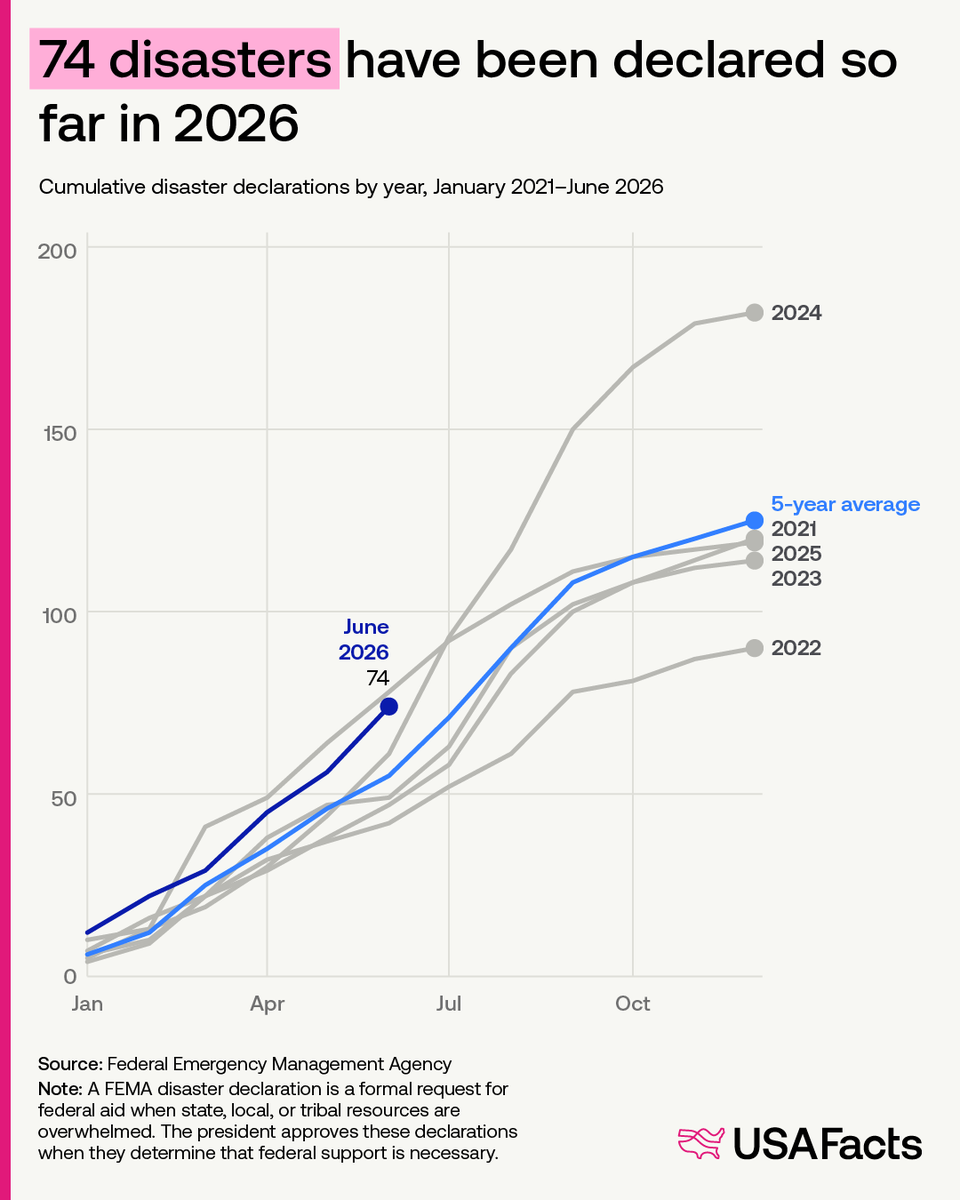
News of wildfires and flooding have been in the headlines recently, so how does this year compare to previous years?
On average, 125 disasters are declared in the US each year. So far, 2026 has seen 74 disasters — higher than the 5-year average.
In 1979, FEMA was founded to coordinate the federal government's response to disaster declarations. And since its founding, fires and severe storms have made up over 60% of declared disasters. Across the states, California has seen the most disasters of any state (362) since 1980.
@tmylesdesign 2024 data is the most recent data as of June 2026. These data come from the American Community Survey conducted by the Census Bureau which releases 1-year estimates annually. 2025 data will be released in September of this year.
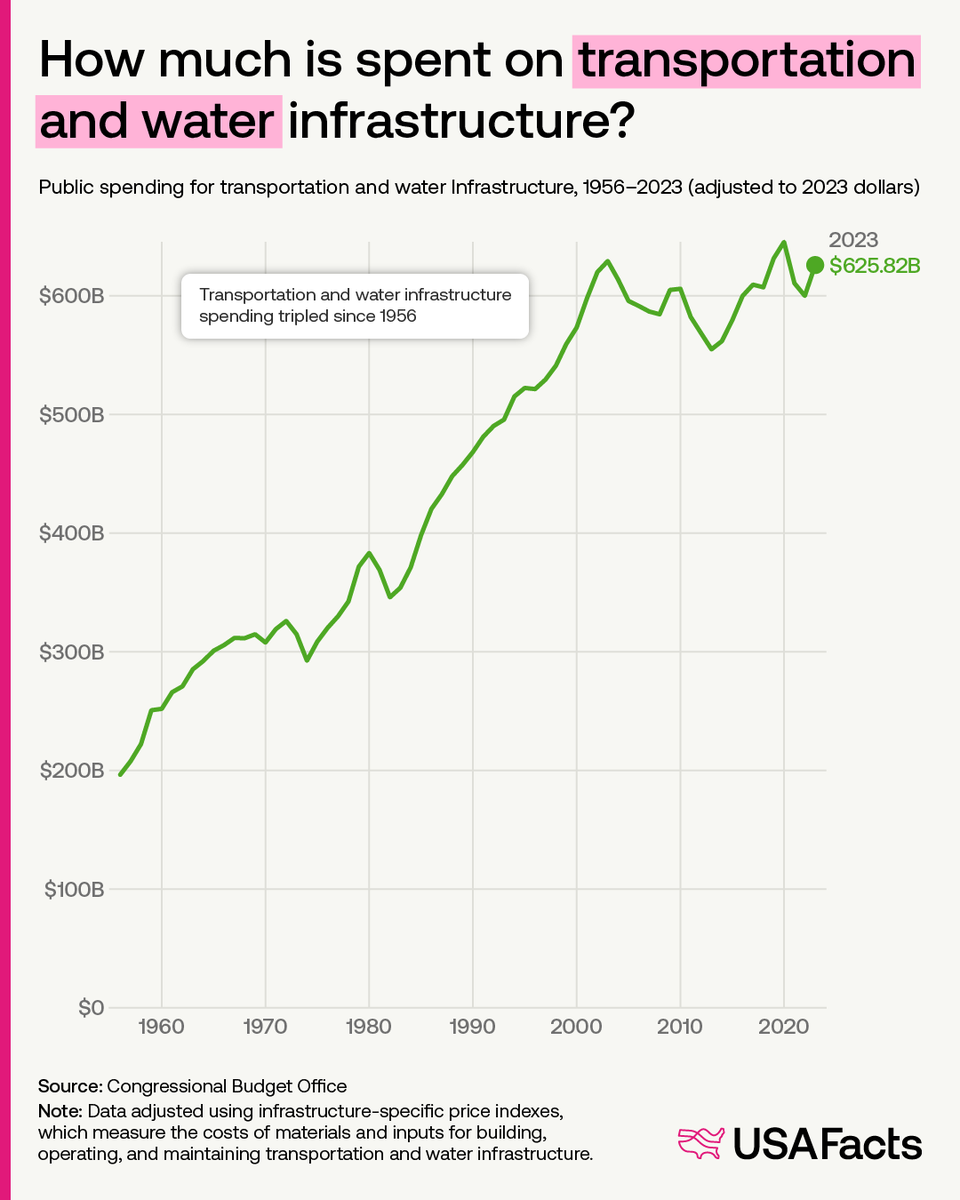
Summer heat is probably making you thirsty — for data. What’s more refreshing than keeping up with transportation and water infrastructure?
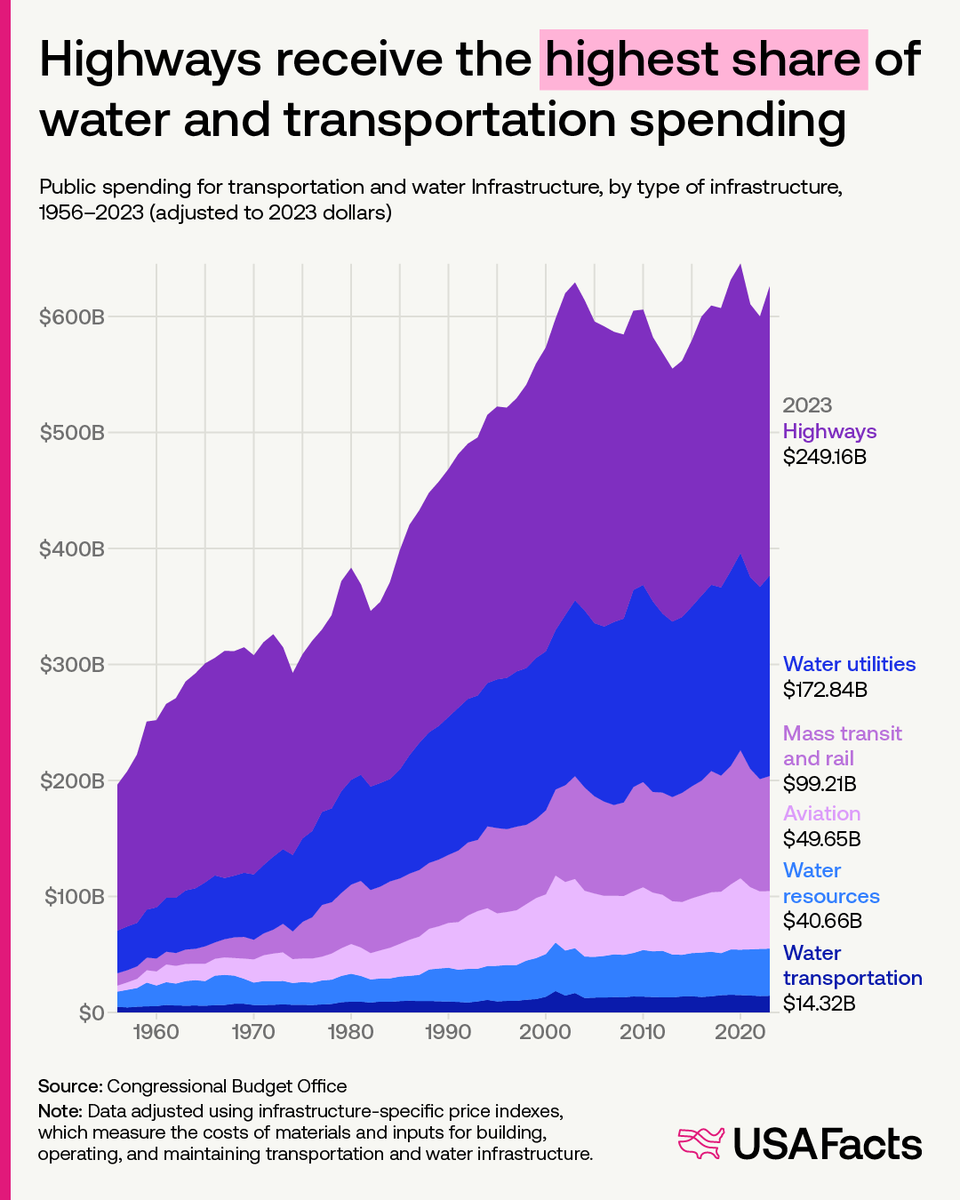
As of 2023, the government spent $625.82 billion (about $1,900 per person) on transportation and water infrastructure. Most of this spending goes towards operation and maintenance.
Let’s take a trip down spending lane to see where the money goes:
🚗 Highways: 40% of spending
💧 Water utilities: 28%
🚆 Mass transit and rail: 16%
So, which government pays for what?
Nearly 80% of spending comes from the state and local government. They cover infrastructure assets like highways and sewers. The federal government concentrates on conservation and development such as dams and levees.
As of July 14, 2026, the CDC has reported 1,645 cases of cyclosporiasis - aka explosive diarrhea — across 34 states.
But the CDC also says that's likely an undercount and is aware of over 5,000 additional cases that require further analysis. The result? We're not getting a complete picture of what's really happening.
Which isn't ideal in this kind of...explosive situation.
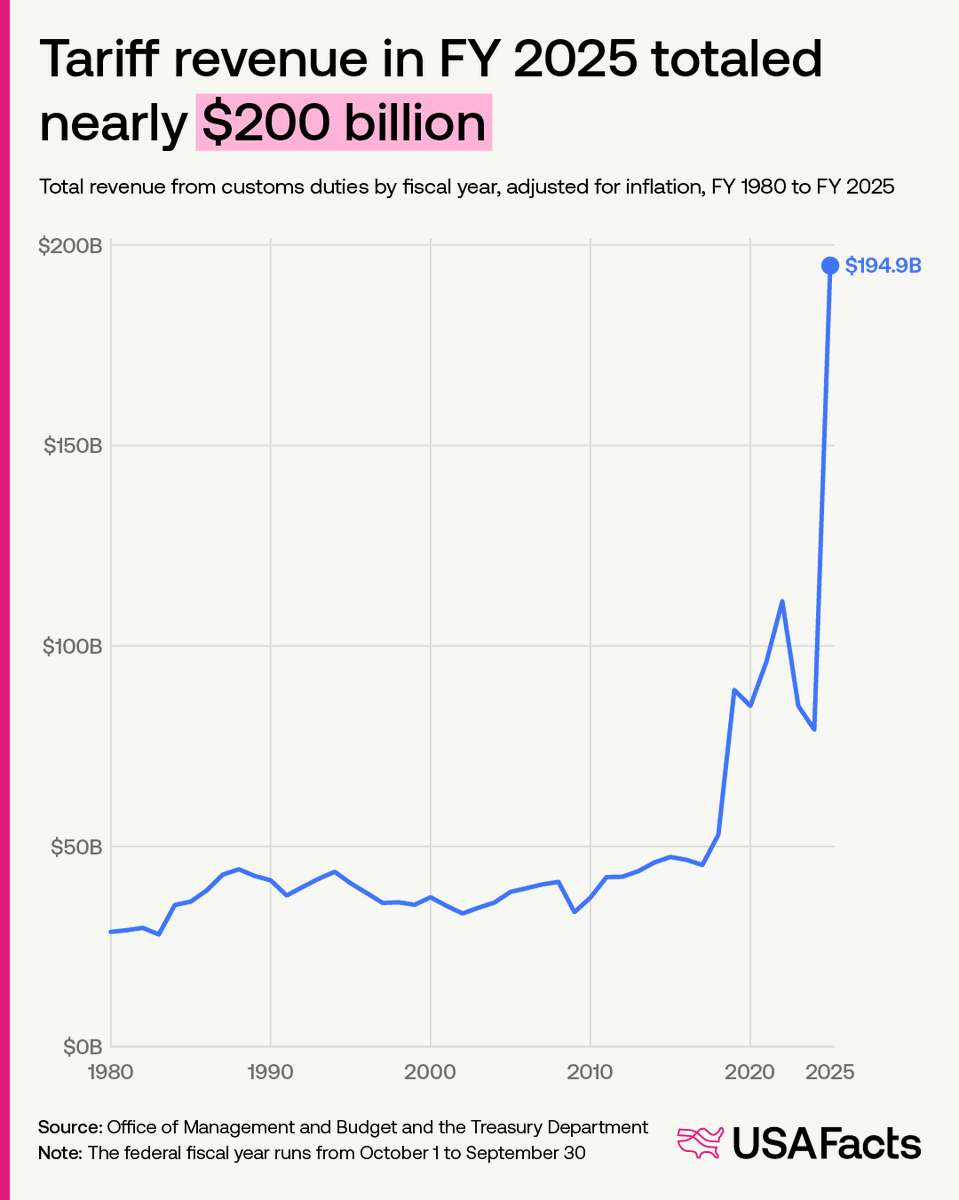
As of May, tariff revenue in FY 2026 is 131.7% higher than it was in the same month of FY 2025.
Though the total YTD revenue is higher than it was last year, between April and May of this year, tariff revenue dropped by about $42 million.
After the Supreme Court ruled in February that the IEEPA tariffs were unconstitutional, Customs and Border Protection began issuing refunds of previously collected customs duties, which contributed to the drop in revenue.
Do you think tariff collections for FY 2026 will surpass FY 2025?
*As a reminder, fiscal years run from October to September.