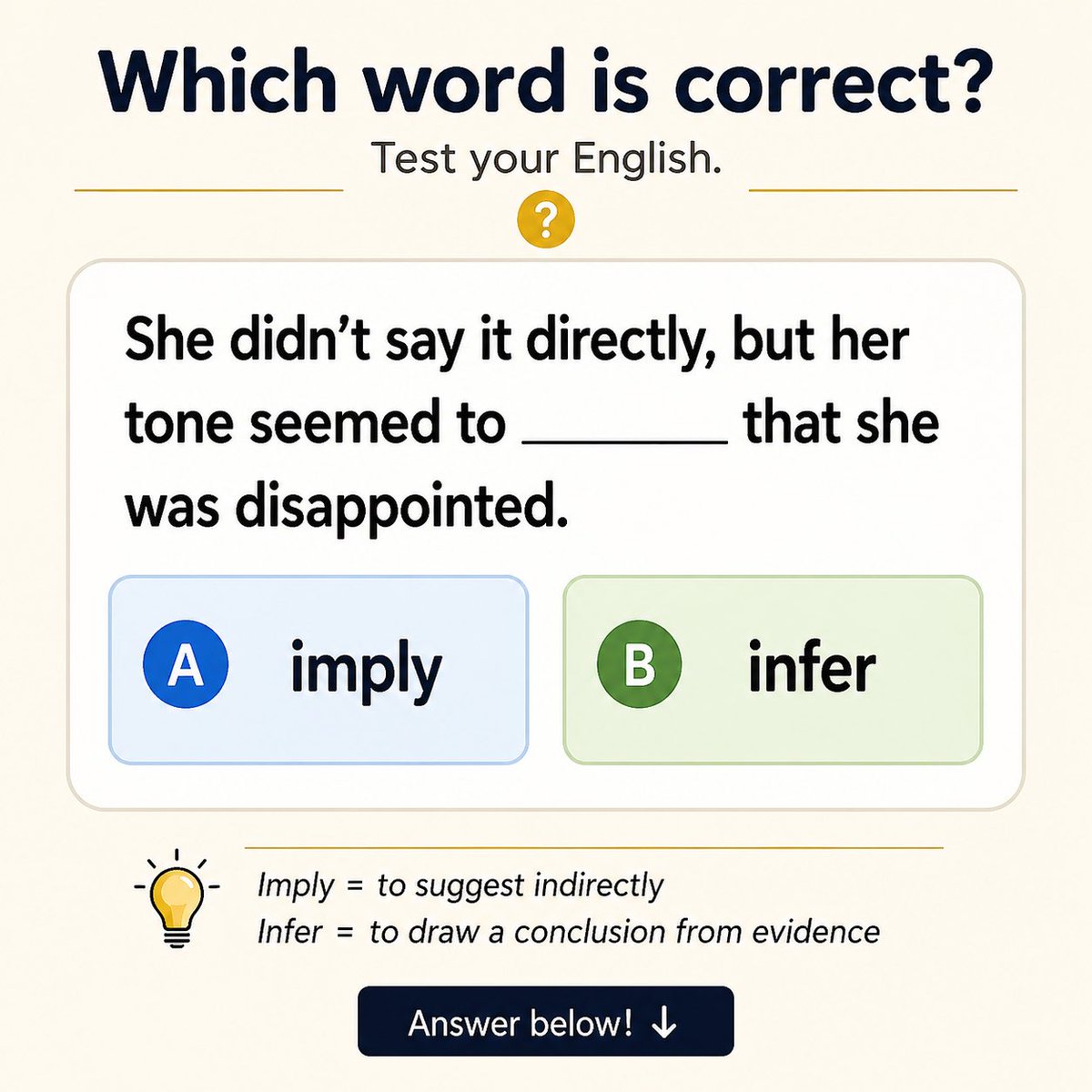
“Continual” vs. “continuous”—fill in the blank:
The _____ interruptions kept breaking my focus. (continual / continuous)
Reply with your choice.
Answer: “continual” = repeated with breaks; “continuous” = nonstop without breaks.
Etymology Bite: “Quarantine”
From Italian “quaranta” (forty).
It originally meant isolating ships for 40 days during plagues.
Today it means any period of separation to prevent spread.
#english#grammar
Most people say “less” when they mean “fewer.”
“Less” refers to quantity you cannot count.
“Fewer” refers to items you can count.
Less water.
Fewer trucks.
This distinction still matters in standard English.
Using the specific word required by the grammatical context removes ambiguity.
The choice of modifier affects the clarity of your prose. Substituting one for the other introduces a technical error that is avoided by identifying the noun type.
"Fewer" versus "less" is a matter of countability.
A noun is either a count noun (discrete units) or a mass noun (uncountable quantity). Precision in American English requires identifying this distinction before choosing a modifier. 🧵
A specific exception exists for measurements, time, and money.
Even though "dollars" and "miles" are countable, they are treated as a collective amount. Examples: "The trip is less than 20 miles" and "He has less than $50." In these contexts, "less" is standard.