With multiple wars, a total solar eclipse, the Summer Olympics, a presidential election and much more, the 2024 U.S. news cycle never had a dull moment.
Here's a collection of visual explainers the USA TODAY Graphics Team made throughout the year: https://t.co/Mpmlf3MtJS
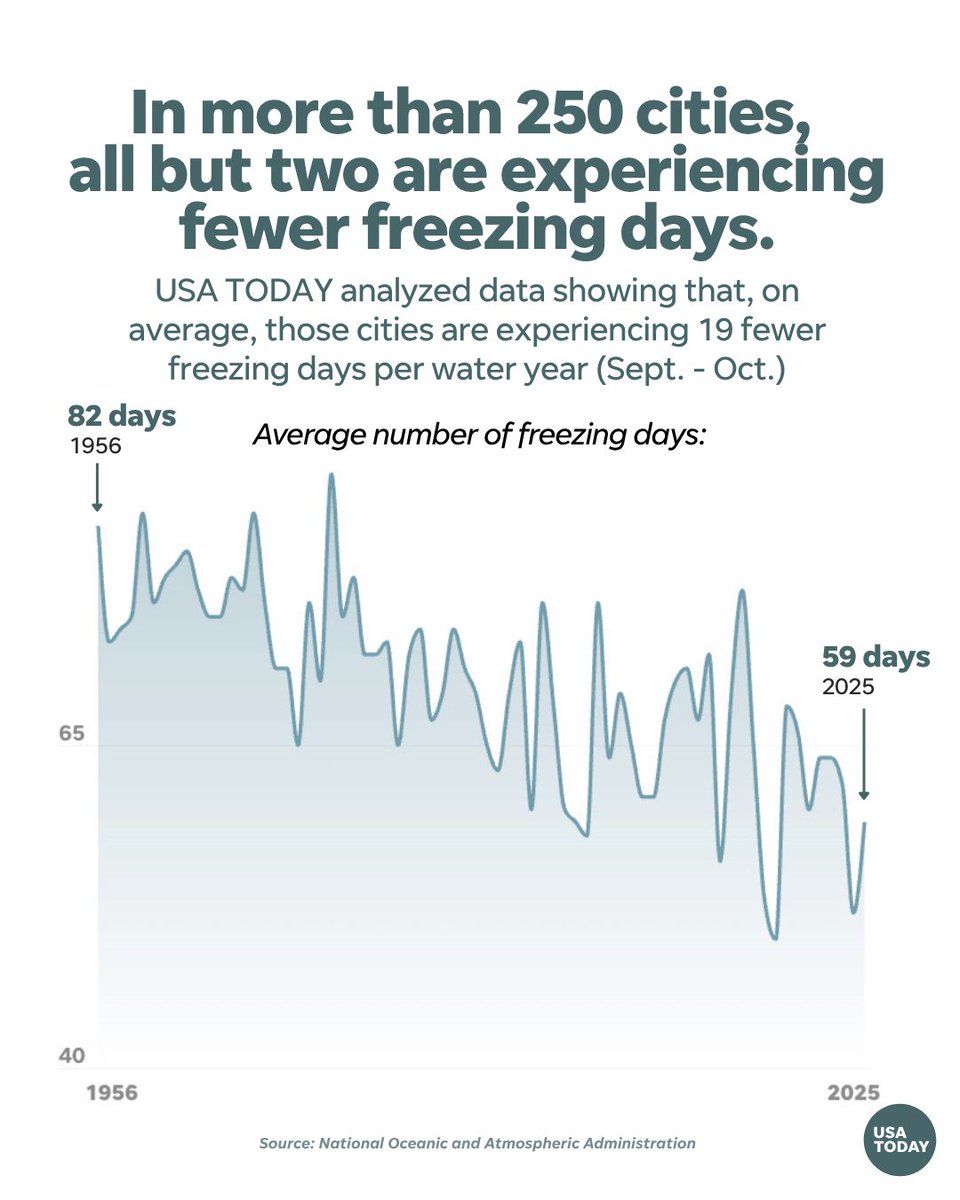
@USATODAY Hey, I'm Ignacio Calderon, one of the reporters working on this project. Your grandpa was right. Back in his day, winters were colder and longer. We analyzed 70 years of weather data to compare how our current winters stack against those in the mid 1950s.
Yes, winters really got shorter. ❄️
The number of freezing days has shrunk by weeks in most places across the United States over the past seven decades. Why you should care: https://t.co/NMZL1QKSZO
Trans-lunar injection is a go! Artemis II is cleared for a main engine burn that will take them into deep space. See how the crew will get to the moon and back again: https://t.co/5SYFz0j9XJ
Created my team's year-in-review that showcases our top stories month-by-month! Come for the news, stay for the expert Tetris-esque organization of the stories: https://t.co/R4sUy1vhgk
I made some graphics to track the current status of tariffs, as well as a timeline that details the back and forth between the U.S. and other countries with @dian_zhang_: https://t.co/8YgjsbwhoB
When did the Drake vs Kendrick Lamar feud begin? 🤔
I pieced together all the most pertinent moments in their lore through an illustrated, lyrics-driven timeline for @USATODAY: https://t.co/QrW1hEHQlp
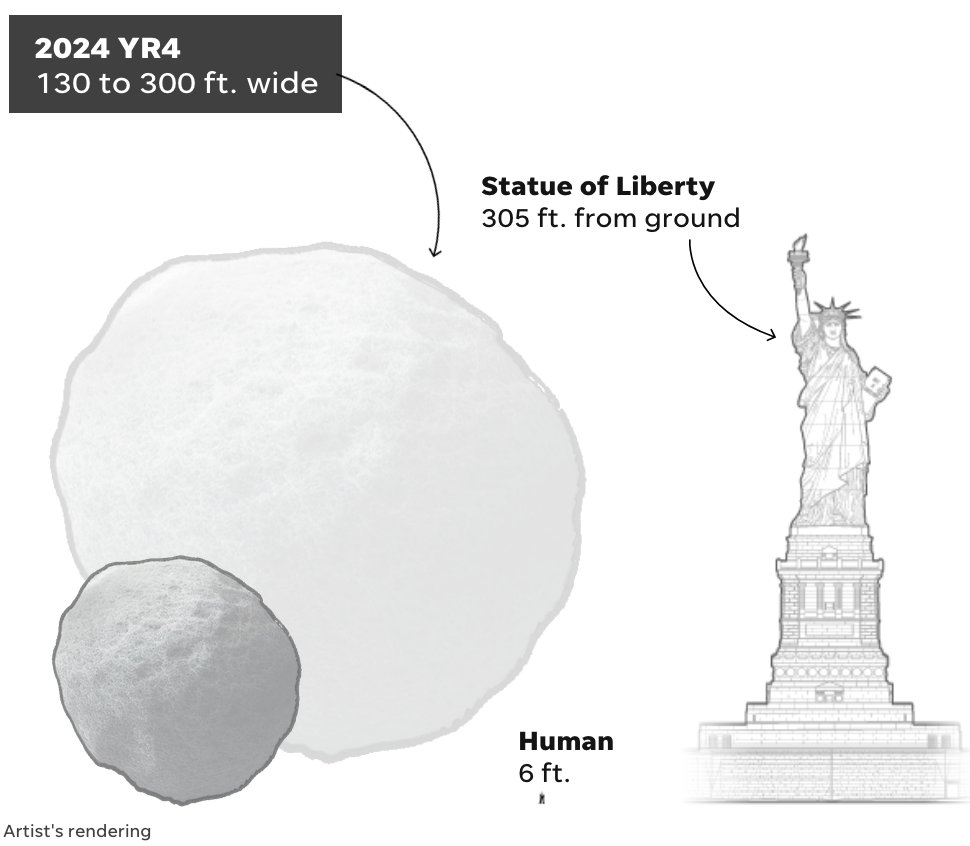
An asteroid with about a 1/50 chance of hitting the Earth in December 2032 is now being tracked by the James Webb Space Telescope: https://t.co/0zVWGJ6CNb
An analysis by NASA's JPL/CNEOS estimates the asteroid to be 130 to 300 feet wide.
At that size, the ESA published in a Jan. 29 statement, an impact on Earth "could cause severe damage to a local region."
China added export controls to five key metals that the U.S. is import-reliant on: tungsten, tellurium, bismuth, molybdenum and indium.
More on what they are & why they're important: https://t.co/i2V0oJ0lV1
The Doomsday Clock was moved to 89 seconds to midnight today, Jan. 28, the closest it's ever been.
The Doomsday Clock is a decades-long project of the Bulletin of the Atomic Scientists featuring a clock face where midnight represents Armageddon.
https://t.co/srKjbMqBKl