Dans les coins sombres de la #RDCongo,
Toute la terreur s'y accumule,
Les tueries à #Beni et #Ituri,
Laissent les habitants dans une tristesse immense.
Des corps massacrés,
Des vies perdues,
Des familles brisées,
Et des cœurs qui saignent.
1/3
23 ans de Rencontres Linux au Québec!
EvoluData est fière d’être commanditaire Platine de la Journée portes ouvertes Linux 2026!
Notre PDG, @MarcLaporte , y donnera une présentation. Venez rencontrer notre équipe et célébrer avec nous!
Lien : https://t.co/U50yr0bMBI
The computer science major is going through an identity crisis.
Claude Code can finish any programming assignment with a single prompt so what's the value of teaching students how to write a function in Python?
Here’s the point: we still need architects, not button-pushers.
The next decade will belong to people who understand theory and how to break complex systems into smaller components even without Wifi.
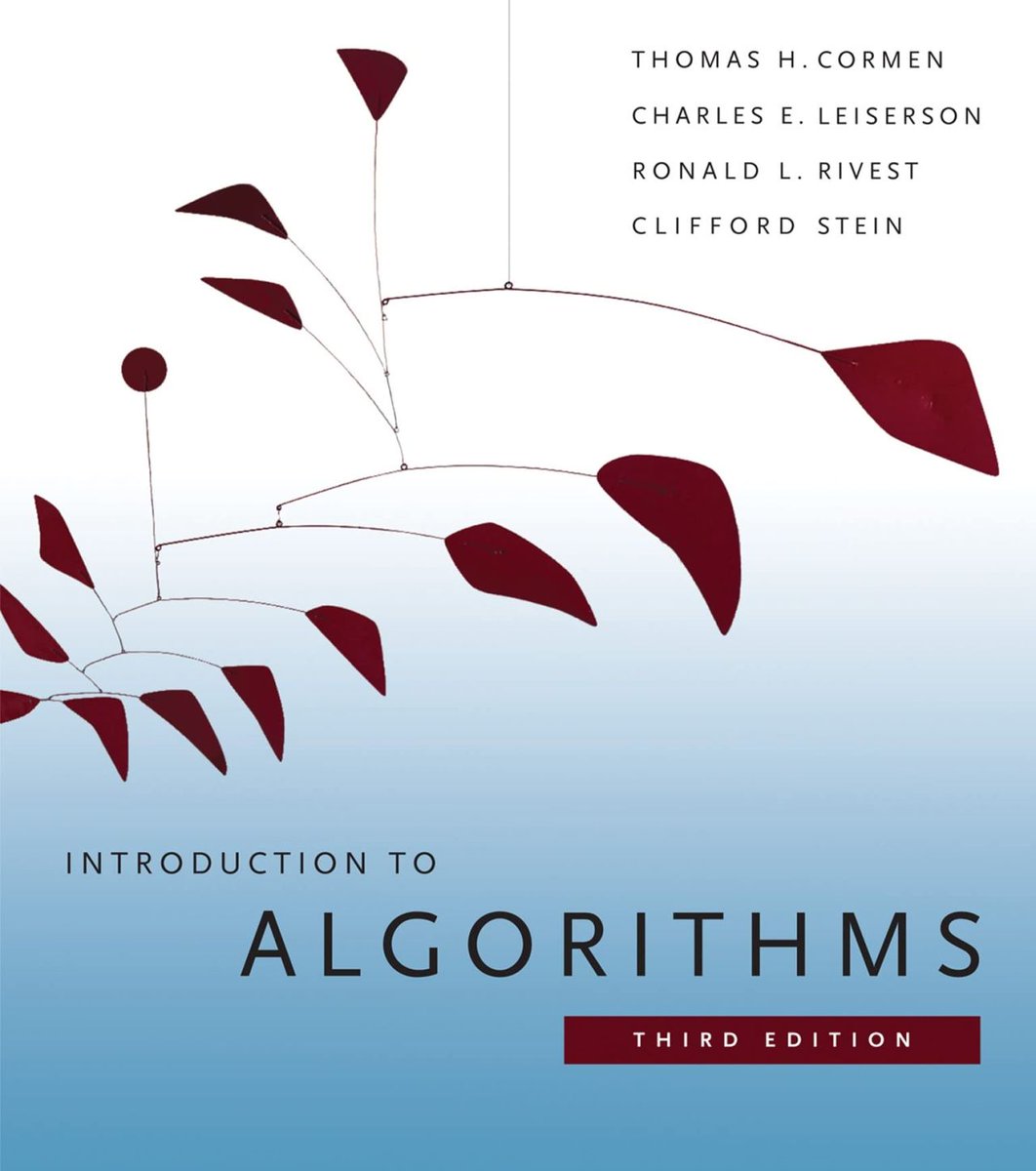
Imagine a degree that drills algorithmic thinking. Weekly closed-book exams. CLRS becomes the most important book in the major.
And software development? You’ll exercise that muscle only at internships and real jobs.
The computer science major will look more and more like a math degree.
Introducing Claude Meetings: add Claude to your team’s video call and it builds docs, whiteboards, and other artifacts with you while you’re still talking.
Starting to roll out in beta on Team and Enterprise plans.
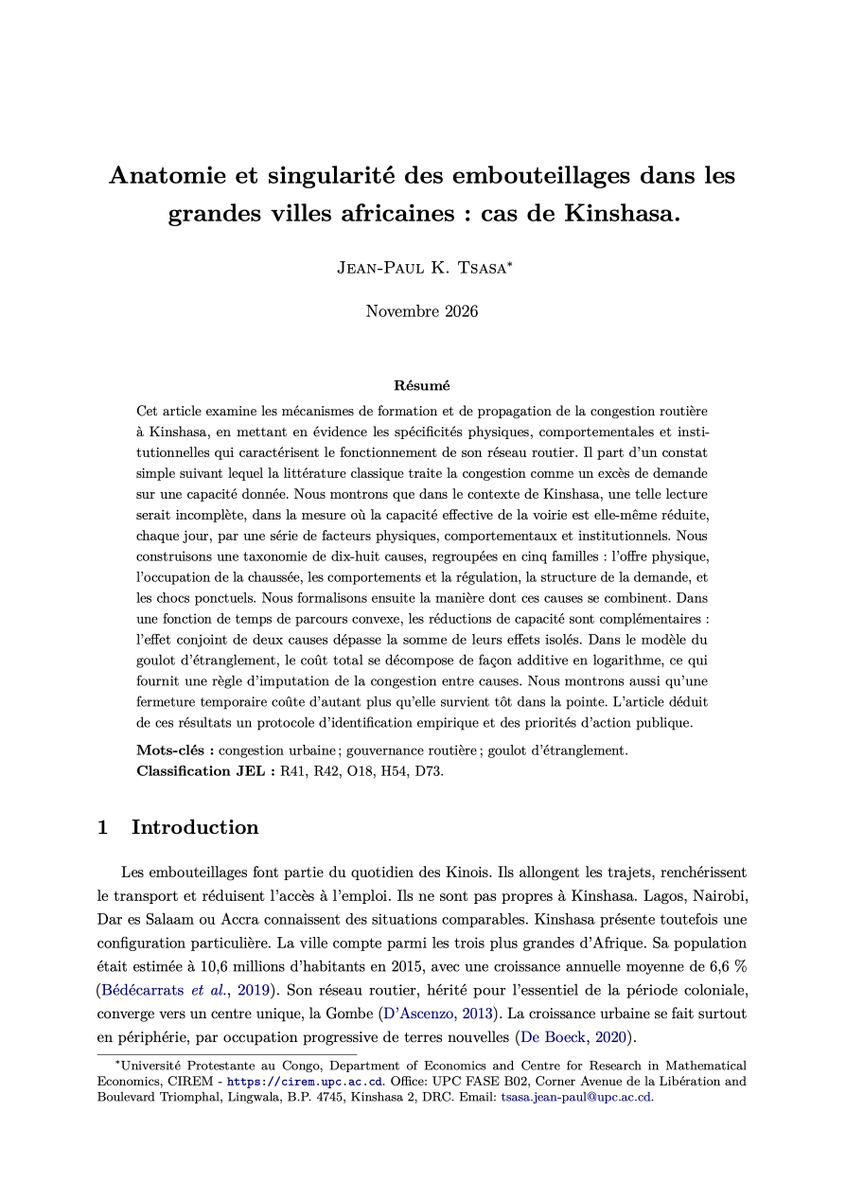
Ravi d'annoncer mon nouveau papier sur l’anatomie et les singularités des embouteillages à Kinshasa.
– Ce papier prolonge une étude menée entre octobre 2024 et mai 2025 sur l’impact des embouteillages, des délestages, des pluies, kulunas et faible qualité d’Internet.. @CIREMath
Cypht Monthly Community Meeting – November 2026
Mark your calendars! The Cypht Monthly Community Meeting is coming up.
- When: Friday, November 13, 2026; 14:00 UTC
Where: https://t.co/UywhI6Ifle
Join us for the latest project updates. Everyone is welcome! See you there.
Structured Concurrency is the next major feature from Project Loom.
This Devoxx Belgium session explains the motivation and design of structured concurrency, how to use it effectively, and the lessons learned as the feature evolved. https://t.co/z7ObWfbYmG
How did Google refactor 250M lines of C++ code, pre-AI, what happened when Search could no longer ship on the regular cadence due to regressions, and why is it time to completely redo the CS curriculum? With @TitusWinters. Timestamps:
00:00 Intro
07:01 Getting hired by Google
09:48 Finding his niche at Google
14:32 Why Google made testing mandatory
17:45 Why new engineers fear making mistakes
20:40 Abseil: C++ foundations at Google
23:09 Google’s massive C++ refactoring
30:48 AI for rewrites
39:07 Software Engineering at Google: the book
43:10 Google’s readability reviews
47:18 Why teams still matter
52:41 Psychological safety
58:17 Layoffs and culture
1:02:11 Measuring developer productivity
1:11:17 Rethinking CS education
1:22:56 What new grads should learn
1:32:08 Titus’s ideal software engineering curriculum
1:36:27 Advice for breaking into tech
1:38:35 Book recommendation
Brought to you by:
• @turbopuffer – vector and full-text search engine built on object storage. It’s fast, cheap, and extremely scalable. https://t.co/l7thArzHXE
• @linear – one of the big challenges for us devs is the sheer amount of code to review. Linear Diffs is a new feature to review PRs inside of Linear, with all the context in one place. It also supports stacked PRs. https://t.co/knIF2md6YX
• @WorkOS – WorkOS built Airlock, the authorization layer for AI agents. It evaluates every request against the agent’s intent + your rules and either allows it, denies it, or routes it to a human. https://t.co/OzuIJ1xfjx
Three interesting details:
1. Google made automated tests mandatory after Search could no longer ship regularly.
Around 2007, Search, the flagship product, was unable to ship at a monthly cadence any more, and the best they could ship to production was quarterly.
Almost every change at Google touched Search’s code, even things like a change to Gmail. To clamp down, Google, as an org, mandated that every change was to be accompanied by a test. Over time, Search returned to its former higher cadence.
2. Google’s readability program might have been the largest educational program ever in tech.
To make a code change at Google, two people need to sign off that change through a code review:
a) An “owner” of the file/project: someone on the team with domain knowledge
b) A “readability” reviewer: an engineer certified to be a “readability” expert in the given language that the change was made in
Google’s first engineer, Craig Silverstein, walked each new dev hire through their first change. Java teams turned this approach into mentoring, where experienced reviewers were assigned to review all changes in a round-robin fashion. And soon enough, a formalized readability program was built for all languages. When Titus left Google three months ago, 10,000+ engineers were enrolled in readability at any given time. Has there ever been a bigger engineering “classroom” anywhere else?
3. Burn down the US undergrad CS curriculum (most of it)
Titus was the only working engineer on the steering committee for the ACM/IEEE/AAAI CS curriculum guidelines in 2023, and believes the curriculum is hopelessly out of date. He accuses it of not having altered substantially since around 2000, while the industry has. Testing and verification are cited as mattering a lot more for new joiners, but they are absent from the curriculum.
Unless major changes are made to make it relevant, computer science enrollment could fall and software engineering programs that focus on practical dev skills will be attractive to students – this is Titus’s forecast.