#AdventOfCode2022 may be over, but why let that stop you grabbing those last stars? JUXT's Ellis K shows us how to use @usenextjournal's #Clerk as an interactive (and fun) problem-solving environment https://t.co/7fZxYNIuC7
Playing around with editing code cells in a hosted @usenextjournal notebook from my local emacs, everything synced live. I think this could be useful with a bit of work...
Documents as User Interfaces. More Cedar/Tioga/Gargoyle goodness. Here, documents are extended to serve as user interfaces. These ideas also inspire @usenextjournal’s Clerk project, though we haven’t quite caught up to 1991 yet.
https://t.co/IFwd1NAwVO
New blog post on the intuition behind the dreaded second order condition in economics just dropped. Written in @JuliaLanguage, published on @usenextjournal, for the benefit of #EconTwitter. https://t.co/PZd3oPbBwL
"Running code is an interaction that occurs during the process of writing a program."
... if you're doing it properly. 😹
Nice essay/prototype here from @tomaspetricek that has a good deal in common with some things we're planning for @usenextjournal.
https://t.co/yE9cu1IABy
Async SCI arrived in @usenextjournal!
https://t.co/ELeh8DRcTk
Use any skypack library in your CLJS notebook :)
Type ```cljs to create a CLJS cell.
#clojure#clojurescript
Clerk is about to become a good bit more moldable. Here, we're defining custom viewers that change how an horizontal ruler in markdown will be displayed and read + evaluate the code within backticks to get a slider. Living the #MoldableDevelopment dream, finally.
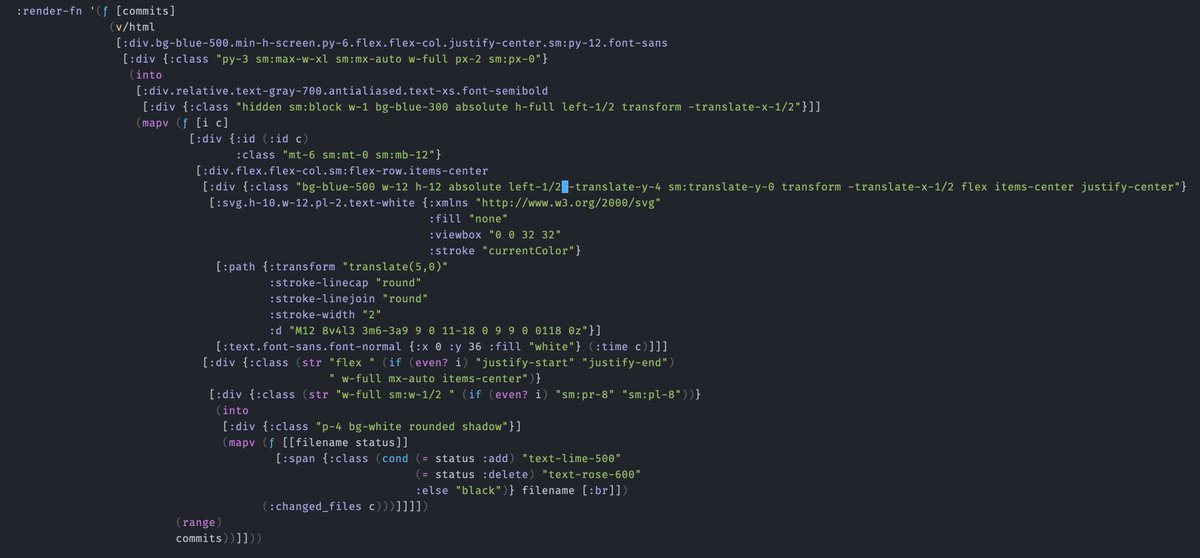
What if it were trivial to add a notebook showing the git timeline of your current project? With Clerk, it is. The third screenshot is the entire render function for this display...
We've set up CI to build our Clerk notebooks on every commit, thanks @usenextjournal for this fantastic tool. Hoping to get a lot more mileage out of it!