Chemical language models (cLMs) predict molecular properties like toxicity, solubility, and drug-likeness. Understanding what they represent internally may be key to building models we can trust in drug discovery.
Here, @etowah0, @liambai21, and I open one up. (1/10)
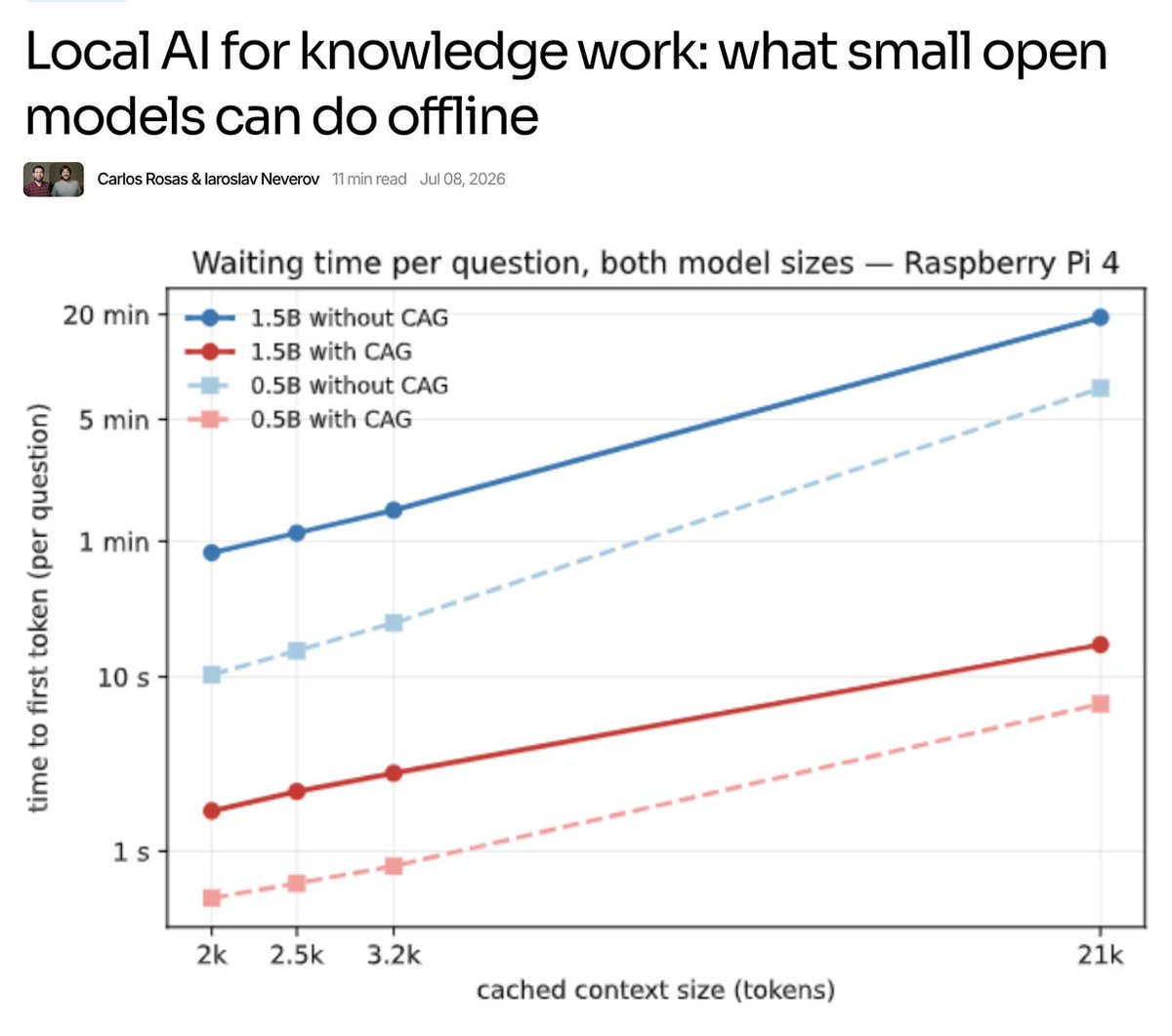
And new technical blogpost by Pleias application team on deploying small reasoning models for edge devices : featuring context management on Rasperry, designing system orchestration under constraints (reranker, chunking) and model specialization for information offloading
Announcing our $130M Series A to build the Open Superintelligence Stack
Led by Radical Ventures, with NVIDIA, Intel Capital, Dell Capital, and existing investors
Train, deploy, and continuously improve your own models using our stack.
Own your intelligence.
For the past 1.5 years, I've worked on post-training language models for materials discovery. I believe we've gotten to the point where these models are starting to show the potential to be useful!
I've written up some of the thoughts and intuitions from open-source research I've done on PLaID++.
Check out the blog in 🧵for details & pretty figures/interactable components :)
If models think in shapes, our tools should too.
Our latest research: Block-Sparse Featurizers (BSFs), a new way to find concepts in model activations - using multidimensional “blocks” instead of single directions. (1/9)
a stargate for data that isn’t vertically integrated has little terminal value
the diffusion of information / the scaling of its GTM diminishes its scarcity, thereby reducing its value
the more it grows, the less valuable it becomes
will the west coast ever learn markets
i think almost everyone in SF would benefit from having spent a year or two inside a large NYC financial institution. not a good idea to do it now, but talk to friends who have, absorb their stories and context. the impact of technology comes from making contact with reality.
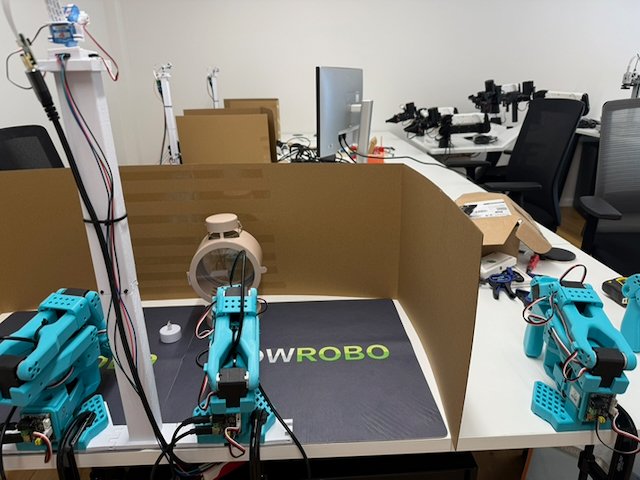
@pravsels and I are building @armnet_dev to make Physical AI research move at the speed of software. Run your code on a real robot any time from anywhere in the the world.
we can't wait to share more, but until then here's a sneak peek behind the scenes 👀
AI agents + formal verification for open problems in quantum information theory: an agentic system on Claude Fable 5 proved the Farhi–Goldstone–Gutmann QAOA conjecture, machine-checked end-to-end in Lean 4. Correct by construction.
https://t.co/EjCJVbaHfw
i built this ~1.5 years ago by gluing together llama (SFT), qwen, and a bunch of embedding fine-tunes. was working with a head of research at a [big bank], and the time savings + alpha improvement we got for a bunch of discretionary folks was significant. the funny thing is that i was dealing with chinese text, and the off the shelf model performance on financial data was worse in chinese than english
Sorting which financial docs are worth an analyst's time is surprisingly hard for frontier LLMs. With an expert-labeled dataset and on-policy distillation, Bridgewater fine-tuned a model to do it reliably and cheaply.
https://t.co/gyYzXq15zd
the most difficult thing here (as with anything ML) was sourcing the right dataset. there were people with 20+ industry experience who helped built out the first dataset and i used to go through them one by one to understand if the model is learning any patterns they have