Some (computational) neuroscientists chatting about #neuroscience, #AI & #science more broadly. Hosted by @neurograce, @yanniscaus & others not on Twitter.
A new episode? Of UST?? Well no, but there is a new episode in our feed. It's a cross-posting of the most recent episode of Brain Inspired by @pgmid! Hear Grace talk to Paul about her new book and the history & present of computational neuroscience! https://t.co/VTJNo6Ik8m
"I’m trying to understand the brain, but I use artificial neural networks, I use the same kind of neural networks that are used by people who build these things for Google & Facebook" - @neurograce talks computational neuroscience on @TalkNerdy_Pod.🎙🧠👩🏻💻
https://t.co/n1Nqg3QFxG
“Computational models of the brain are kind of a combination of brain surgery and rocket science.” - Dr. @neurograce talks computational neuroscience on the latest @TalkNerdy_Pod! 🎙
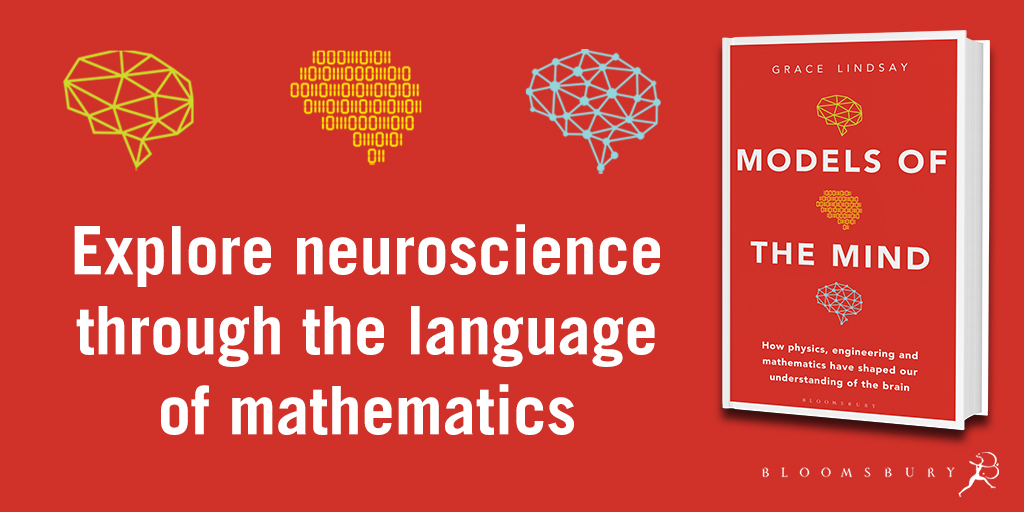
Check out her book: "Models of the Mind." 🧠📚
Listen on #TalkNerdy:
https://t.co/n1Nqg3QFxG
A new episode? Of UST?? Well no, but there is a new episode in our feed. It's a cross-posting of the most recent episode of Brain Inspired by @pgmid! Hear Grace talk to Paul about her new book and the history & present of computational neuroscience! https://t.co/VTJNo6Ik8m
A new episode? Of UST?? Well no, but there is a new episode in our feed. It's a cross-posting of the most recent episode of Brain Inspired by @pgmid! Hear Grace talk to Paul about her new book and the history & present of computational neuroscience! https://t.co/VTJNo6Ik8m
Last post for the week on this episode with the wonderful @neurograce. We cover many of the themes from her book released this past Tuesday. I hope everyone listens to the episode and buys her book! 🧠 https://t.co/KsYSW20sB1
The brain is complicated. Luckily @neurograce shows us how math has made understanding the brain a little bit easier.
Explore the intersection of mathematics and biology in MODELS OF THE MIND
Out now: https://t.co/u5QYKjZY3Z
The year is 2030. You've just read your favorite science paper in a decade, one that clearly illustrates a longstanding hunch you've had and is sure to change our understanding of The Brain. It's about ________________?
The tuning induces the geometry, but different sets of tuned neurons can induce the same geometry (2nd & last row). The geometry determines the Fisher information, the mutual information, and the behavioral performance of an ideal observer in a range of psychophysical tasks. 2/10
Anyone studying biology, which includes neuroscience and cognitive science, should start with understanding evolution. "Nothing makes sense in biology ... " you know the rest of the quote. It really does help ground how we think about the mind and brain.
@noraabradford @pgmid@ManyMindsPod i like @USTpodcast ! have spent many long drives between Durham and PA listening to them chat about big questions in comp neuro :)
Grand unified theories of consciousness
An extract from ‘Models of the Mind: How Physics, Engineering and Mathematics Have Shaped Our Understanding of the Brain’ by Grace Lindsay @neurograce, with kind permission from Bloomsbury Sigma @sigmascience
https://t.co/i1BYq8JGjr
@joeyzyzyzy We get into it a little on this episode, if it's of interest: https://t.co/f1Don2RMvM
But for the record we also have concerns about fMRI: https://t.co/cipQIE0AIf :)
Very excited to share the launch of my new podcast, The Robot Brains. The first episode was just released. My first guest is brilliant AI researcher, educator, and Director of AI and Autopilot Vision at Tesla @karpathy!
https://t.co/K8EcwvufxT
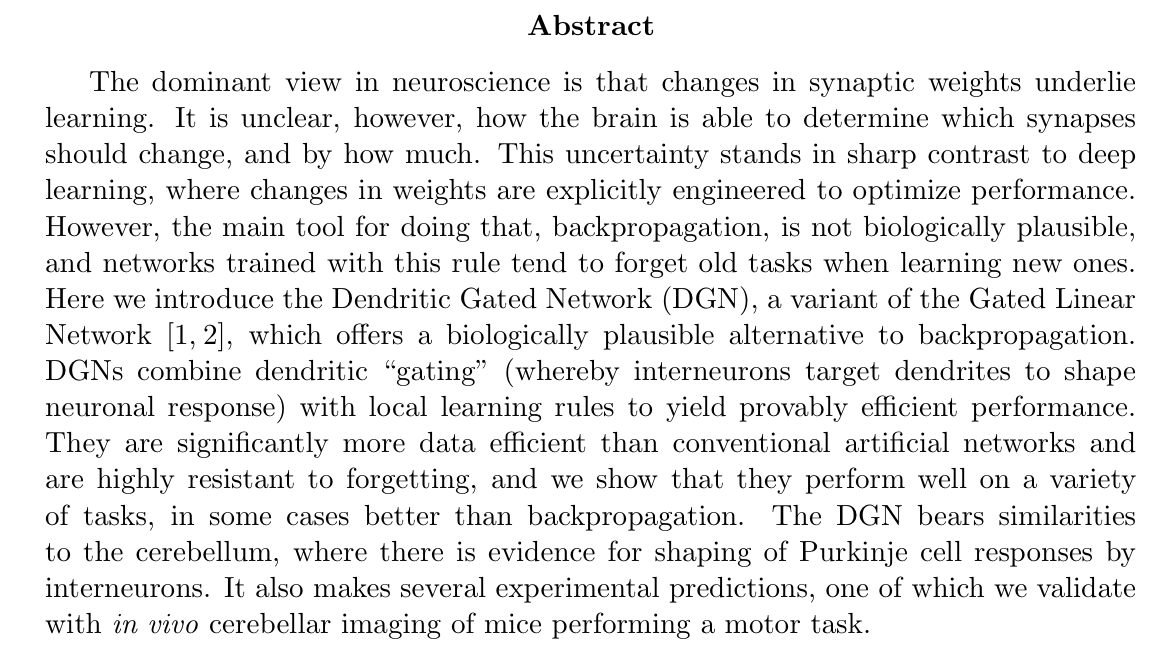
New work on biologically plausible alternatives to backprop (if you liked our episode on "Learning Rules, Biological vs Artificial" https://t.co/RSSzSQkzl7)
Want to learn deep learning from many of the world’s leaders as a nice didactic curriculum in TA led groups? We are taking pre-signups for a 3 week deep learning summer school in August (reasonable and waiveable fee) https://t.co/hGYypITb2Z
Congratulations to @neurograce, joint SWC-@GatsbyUCL Research Fellow, on her new book out today, Models of the Mind: How physics, engineering and mathematics have shaped our understanding of the brain. Read more: https://t.co/RNRTdYUHIb #neuroscience#maths#mind#brain
Our brain is made up of 85 billion neurons and connected by over 100 trillion synapses. How do you study something so complex? 🤯 @neurograce will explain how mathematical models allowed scientists to understand many of the brain's processes.
🎟️ Tickets: https://t.co/D6FP9NgCZG
Just listened to a really interesting episode on neuro+evolution from @USTpodcast! They talk about separation of cognition, perception and action & how studying animals may help us model the brain. Like dropping in on a well explained journal club! https://t.co/yHzRHzDXHj