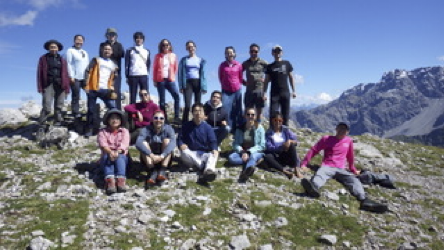
A new open postdoc position in population genomics! RTs appreciated. On the demography of human beings and crop plants. Attached is a group picture during a lab retreat in Lichtenstein. Job description here:
https://t.co/c8rsTZLoJo @NCCR_Language@UZH_Science@uzh_evolution
I have a PhD position on plant speciation available in my lab. Please consider applying in case you have a strong interest in plant evolution! https://t.co/yFs2KIdzNi
How do organisms and pathogens evolve and adapt to the environment? This was the question that the University Research Priority Program Evolution in Action sought to address. The initiator and former co-director Beat Keller looks back: https://t.co/xWpUJ4bwpp
Public event to explain the achievements of University Research Priority Programs (URPPs) including "Evolution in Action". In the bouquet was double-flowered stock (Matthiola), similar to Arabidopsis agamous mutant. Our research continues. @uzh_evolution https://t.co/VkyuioJT2x
The research story by Epifania who defended her PhD just a few weeks ago and by the group leader Chiara. @uzh_evolution@NCCR_Language Link for the English version:
https://t.co/abF8Loh7OQ
Special seminar by Prof. Keiko Sakakibara (Sabbatical)
"Establishment of new model systems to study land plant evolution: hornworts and streptophyte algae", 4pm Wed. 8 May, Botanical Garden Zurich on behalf @peter_szovenyi, @uzh_evolution https://t.co/CoWr07aRl6
Open Postdoc position in my group! Population genomics of human beings and crop plants supported by NCCR "Evolving Language". Attached is a group picture during a lab retreat in Lichtenstein. Job description here:
https://t.co/ZqlkkK0ijA @NCCR_Language@UZH_Science@uzh_evolution
News from the @roulinlab @uzh_evolution ! We use #ONT long reads to profile the expression of retroTEs in natural #Arabidopsis accessions exposed to heat stress 🔥and find striking differences between individual copies in the three genetic backgrounds 👇
https://t.co/Tzam9UQO5I
Thank you @uzh_evolution for funding our project.
Using #MachineLearning, our funded project delves into regulatory networks of Arabidopsis thaliana & Marchantia polymorpha. Unveiling insights crucial for understanding plant evolution. 🌿🔍 #Research#EvolutionaryBiology
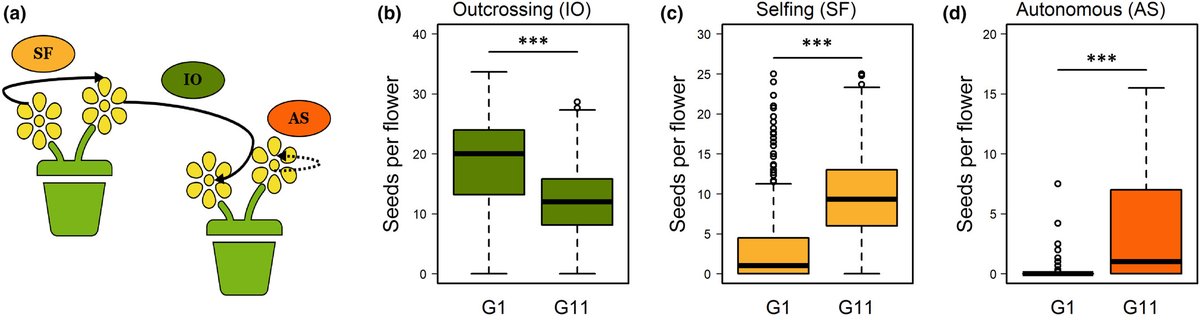
Our new paper in Nature Communications! A former PhD student Chowlih studied the evolution of selfing, a classic question since Darwin. Her transgenic evidence supported Haldane's sieve in polyploids. @kakuni1113@longzhit@tohoku_u_prg@uzh_evolution https://t.co/lYrCJMWbjq
Dear future assistant #professor tenure track for 🧬🌱🌿 "Plant Diversity and Macroevolution", dear future colleague,
this is your ⏰⌛️ to finalize and 📨 your application until 25th November 2023 via
https://t.co/1GRblcnBM7!
#plantscience#biodiversity#evobio#botany@UZH_en
I will be giving a talk on "Computational comparative genomics in the era of biogenome projects" at the University of Zurich, Department of Systematic and Evolutionary Botany.
Monday Nov 6, 16:00; Botanical Garden.
https://t.co/tB8S5uqSi0
Please join the seminar by my old friend Prof. Ryusuke Niwa on Tuesday 24th with apero: "Venoms, host imaginal tissue degeneration, and successful parasitism: Lessons from the parasitoid wasps and their host Drosophila species" @uzh_evolution His webpage: https://t.co/pGSmfsjbxn
Open Technician position in my group! Hope you enjoy research on genomics of plants and more with us: a group picture during a recent lab retreat in Lichtenstein. Please apply by 31 Oct, preferably earlier. Job description here:
https://t.co/LOMWlqUAWT @UZH_Science@uzh_evolution
Press release "AI Increases Precision in Plant Observation" in English and German:
https://t.co/6lBRLAge4Q
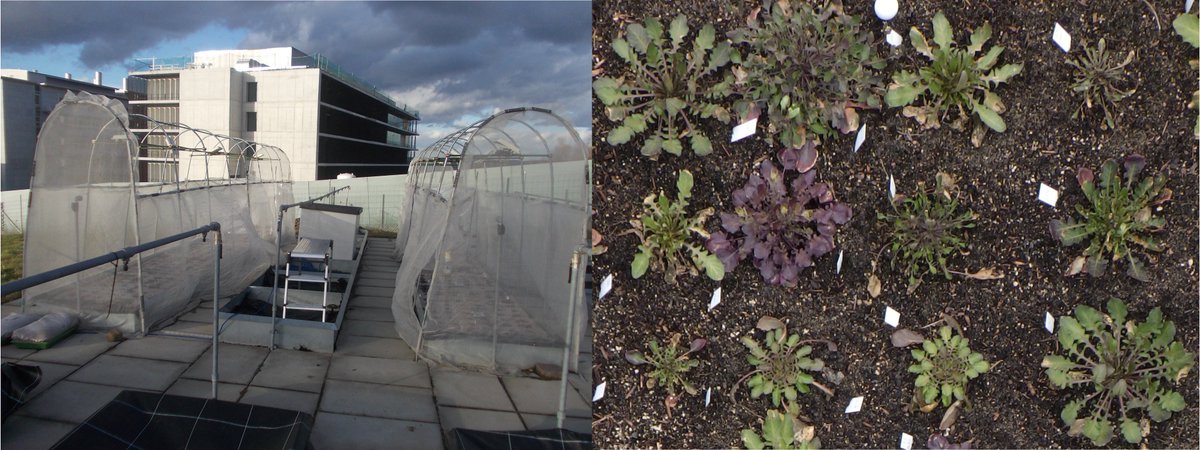
Picture of our new PlantServation hardware and color variation of plants in the Research Garden in the Irchel Campus.
@UZH_Science@uzh_evolution https://t.co/pNiWhRZDRz
Akiyama et al. develop PlantServation, a machine learning-based phenotyping method, and apply it to estimate environmental and genotypic effects on the pigment anthocyanin content of diploid and polyploid Arabidopsis.
@kkshimizu1@uzh_evolution
https://t.co/bgeWf23yAR
What if thousands or millions of plant samples are needed? Researchers at UZH discover new, AI-based method for long-term observation of plants within an ecosystem that keeps the plants intact: https://t.co/MZThgAgROF @uzh_science@uzh_evolution