Assistant Professor of ECE and ISyE at Georgia Tech. Interested in anything involving game theory, statistical and/or online learning. Co-organizer of @let4all.
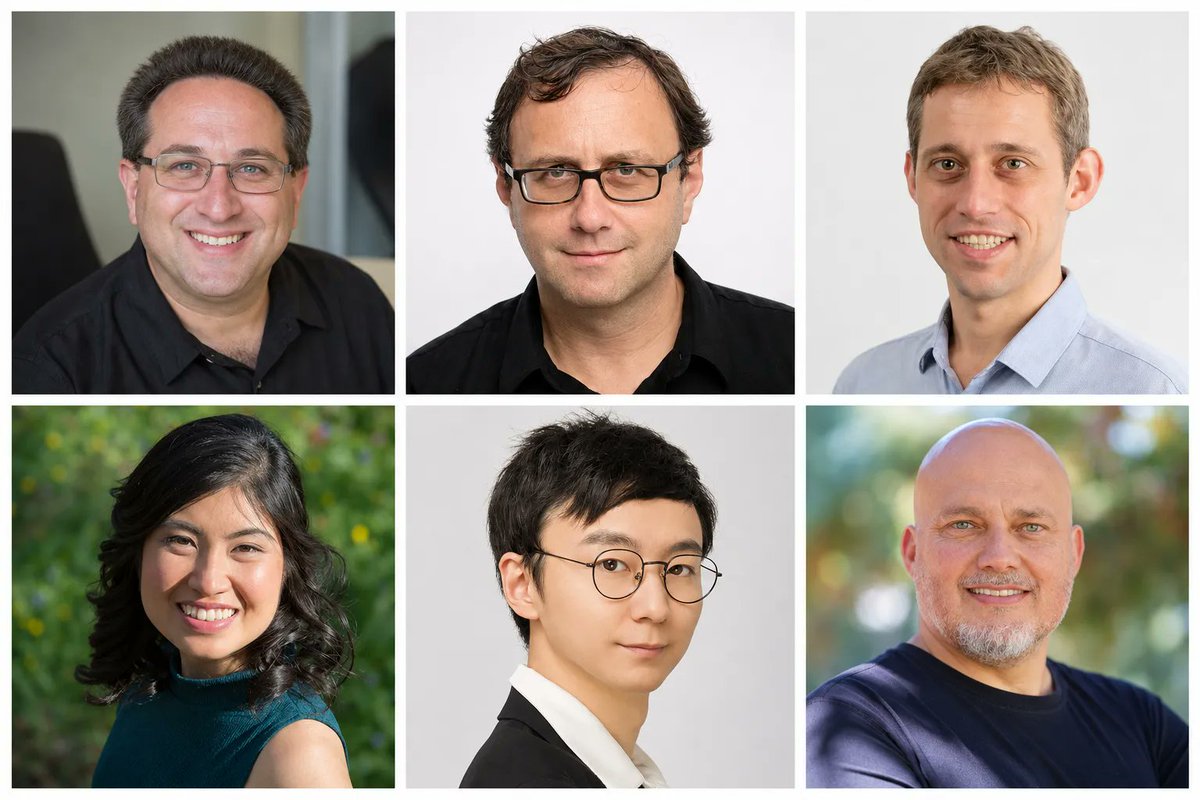
I was going to post about my pictured now-graduated students, but Tyler beat me to it with his ever-present enthusiasm :)
This was a really special start to the summer for me, having the privilege of having graduated 3 fantastic PhD students. Post about each of them to follow.
Overdue update: I've defended my dissertation and graduated from @GeorgiaTech! Next, I've joined @MSFTResearch@ms_aifrontiers as a Senior Researcher working on future capabilities of multimodal agents 🚀
Announcing our Fall'26 Mentorship Workshop!
Topic: AI & the Future of Learning Theory
11/16 10AM-1PM & 9PM-12AM (ET)
Ft Scott Aaronson, Misha Belkin, Clément Canonne, Po-Ling Loh, Kaifeng Lyu, Omer Reingold & more!
Site: https://t.co/IQmBRuxERT
Reg: https://t.co/mZmRukfVLQ
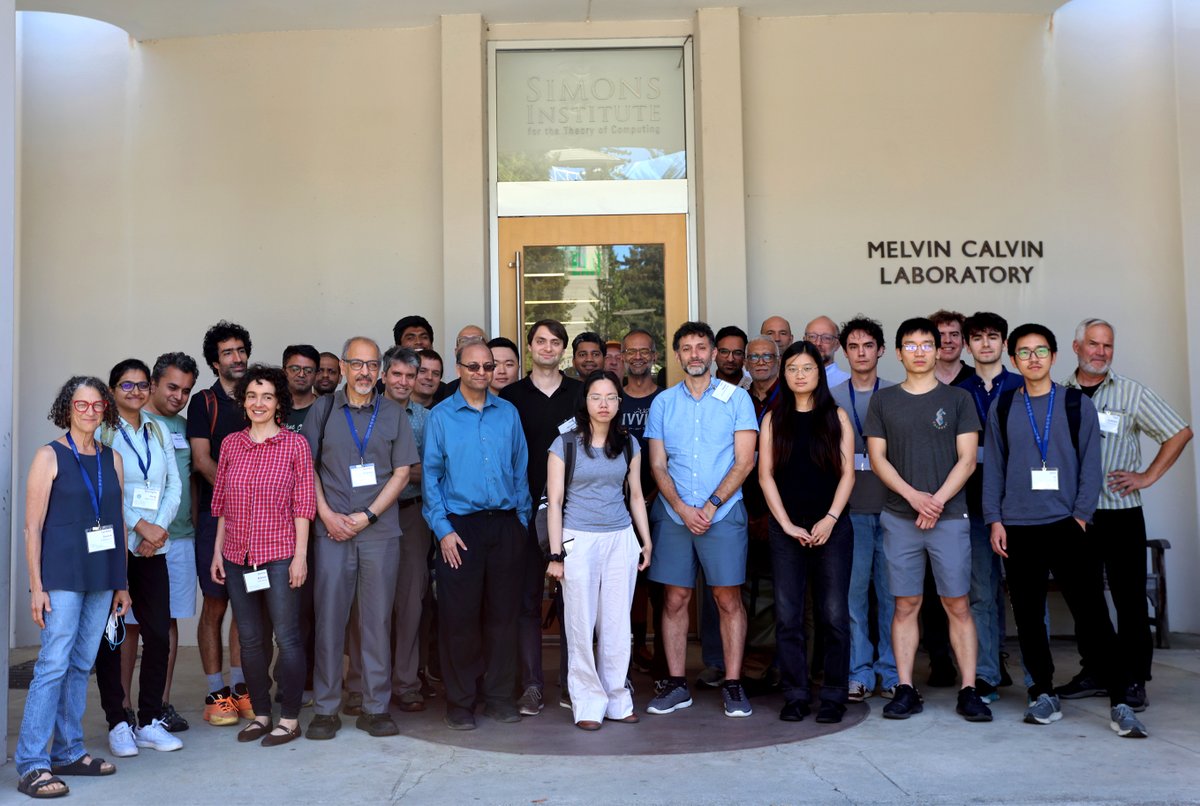
In September, we hosted a working group to think about how the TCS community should respond to AI progress. Their report, released yesterday, highlights 12 near-term actions that received broad support among the participants.
https://t.co/4Ddf8lC78s
Why doesn’t OpenAI use an equal amount of the money they spend to prove interesting conjectures in funding PhDs in the mathematical sciences?
That way we will have a next generation of researchers that can understand these results and formulate the next wave of conjectures.
Very honored to be named a Damon Runyon postdoctoral fellow in the Bertozzi lab! Grateful for the support of all my mentors and colleagues throughout this process.
https://t.co/t7hkCcPDb9
@kuoweilai (3/3) We're especially excited about the techniques we introduced to identify "active" and "inactive" examples, a type of "primal-dual analysis" (inspired by Ji and Telgarsky's linear model study) which we think could be generalized well beyond the setting we study.
(1/3) Re-upping this thread because I ended up not making it to COLT 😑. @kuoweilai did a great job leading this work and will be presenting it today afternoon in sunny San Diego!
Change of flavor again -
https://t.co/FpuCgFpLGE (COLT'26)
How does GD favor certain global minimum out of many, when training a shallow ReLU neural network to regress high-dim data (under certain conditions, of course)?
@kuoweilai (2/3) in a nutshell, we show that: a) GD dynamics become surprisingly tractable with high-dimensional (but not exactly orthogonal) data on shallow ReLU regression, b) the implicit bias becomes additively close to, but not equivalent to, the min-norm solution.
(3/3) Our theory partially corroborates interesting findings by @SurbhiGoel_ on synthetic Boolean datasets regarding emergence and relative presence of spurious features and core features. There remain many open questions here that we're excited to study.
(1/3) Check out Tyler's thread below! He did a wonderful job leading this year-long, challenging project, and we're very excited about it. A few follow-up comments/shout-outs to work that we built on below.
New paper — the last and best from my PhD!
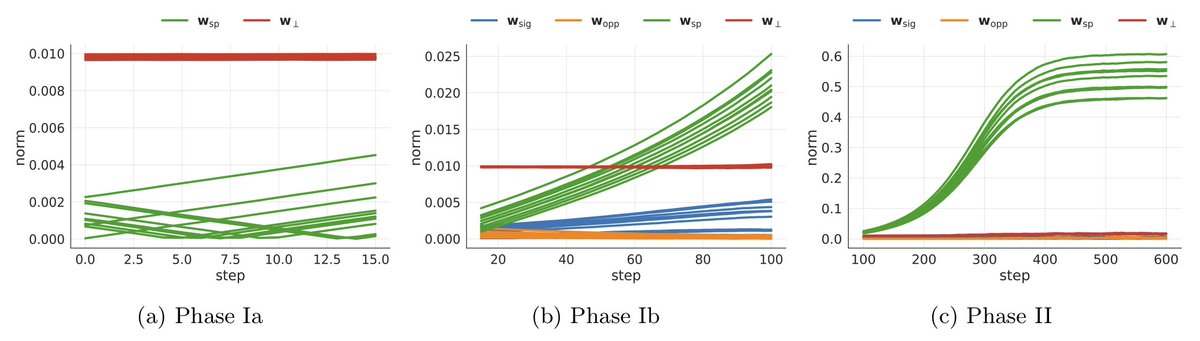
We show the first end-to-end feature learning analysis of how neural networks overfit to spurious correlations. Our theory implies phase transitions in SGD learning dynamics that match empirical results.
Paper: https://t.co/V0GALNgLdO
(2/3) Our data model and analysis was directly inspired by @MargalitGlasgow's great work on showing that online minibatch SGD learns the XOR model fast. (But the spurious correlation makes analysis *very* different and challenging over and above her work!)
Will you be at #COLT2026 next week in sunny San Diego? Come to our Learning Theory Alliance event on Monday, June 29 at 2:30 PM!
Featuring a fireside chat with Sanjoy Dasgupta and Nika Haghtalab (@nhaghtal), followed by mentorship tables.
Final version of my book (with a new title)
Online Learning: A Modern Introduction Using
Convex Optimization
Especially proud of the Foreword by @NicoloCB!
It'll be printed by Cambridge University Press.
The end of 7 years of updates :)
https://t.co/NeqTSih2ra
We are excited to share a new interview as part of the podcast series "Probably Approximately Correct Learners" conducted by
@charapod
- featuring OR expert @hamsabastani
! You can access the podcast *for free* on YouTube: https://t.co/EJ24ilScoE any of your favorite platforms.
(3/3) Last but not least, presenting: Tyler LaBonte @tmlabonte, who broadened my horizons with great empirical and theoretical work across diverse aspects of OOD generalization!
(2/3) Presenting: Kuo-Wei Lai, who conducted pioneering work on the implicit bias of general loss functions in linear models, the implicit bias of shallow ReLU networks on high-dimensional data (to be presented at COLT next week) and OOD generalization analysis.