Dear friends, as promised, the citizens funded generics vs. branded drugs project is now published after 4 months in peer review. It was hardwork, but worth the effort because all of you helped us realize this important work.
You can read the full detaild paper here: https://t.co/jZhm8ZcPCq
Here is a simplified summary:
Do cheaper generic medicines work as well as expensive branded ones? It's a question that worries patients and even many doctors, who often quietly assume that a low price must mean lower quality. This doubt has real consequences in India, where medicines make up nearly two-thirds of what families spend out of their own pockets on healthcare — a burden that pushes millions into poverty and forces people to split doses or stop treatment altogether.
To put the question to a fair, independent test, our team at the Mission for Ethics and Science in Healthcare (MESH) carried out a fully citizen-funded study, paid for entirely by donations from ordinary members of the public, with no money or influence from any drug company.
We bought 131 samples of 22 commonly used medicines — covering heart disease, diabetes, infections, pain, acidity, and more — from seven different kinds of outlets across Kerala, including government stores like Jan Aushadhi, private generic chains, and premium branded pharmacies. Every sample was then coded, blinded, and sent to a top accredited laboratory for rigorous testing against the Indian Pharmacopoeia 2022 standards. What makes this study unusual is that very few before it have tested branded and generic versions from the same market side by side, included government-supplied medicines, and combined strict quality testing with a hard look at price — all at the same time.
The result was striking in its simplicity: every single one of the 131 medicines passed every quality test. 100%. It made no difference whether a pill was generic or branded, cheap or expensive — they were all equally good in their active ingredient content, their purity, and how they dissolve in the body.
Yet the prices told a completely different story. Generic medicines were, on average, 48.6% cheaper than their branded twins, and the most expensive brand cost up to 13.9 times more than the cheapest generic of the very same drug. Government Jan Aushadhi stores were the cheapest source for 18 of the 22 medicines tested, with potential savings running into thousands of rupees a year per medicine — for instance, over ₹16,000 a year on a single liver drug.
For doctors, this is reassuring, hard evidence that prescribing a quality-assured generic is not a compromise on care; it is the same medicine at a fraction of the cost. For patients, it means you can stay on your treatment without it draining your savings, which is exactly what keeps people healthier over the long run.
And this is precisely why independent, publicly funded projects like this matter so much for the future of healthcare in India: they answer the questions ordinary people actually have, free from commercial pressure, and they build the trust that programmes like Jan Aushadhi need to truly succeed. Affordable and high-quality are not opposites — in a well-regulated market, they go hand in hand.
More here: https://t.co/jZhm8ZcPCq
I got completely owned by the most sophisticated hack I've ever encountered.
I'm a developer. I know what scams look like.
This didn't look like one.
🧵
@theliverdoc Doc, on the point of filtered coffee: if using the french press - would filtering the output from french press through paper filter work as well? @theliverdoc
I’ve never ever had a chocolate protein bar better than Noice Chocolate Fudge Whey Protein Bar. I’m telling you if you never tried it, please do. Just fabulous.
Today is World Liver Day 2026.
Here are 8 things your liver actually wants you to know.
1
There is no such thing as a "liver detox."
Your liver runs phase I and II detoxification 24/7 on its own.
No juice cleanse, no milk thistle, no herbal detox speeds this up.
In fact several have caused liver injury - the opposite of the claim.
2
Alcohol has no safe dose.
Liver harm begins from the first drink.
The old "moderate drinking is protective" myth came from flawed studies contaminated by abstainer bias - now debunked by Mendelian randomization.
Zero ml is best.
3
"Natural" supplements are now a leading cause of acute liver failure.
Ashwagandha. Green tea extract. Garcinia. Kratom. High-dose turmeric. Giloy/Tinospora.
They dominate drug-induced liver injury registries across India, the US, and Europe.
Natural ≠ safe.
4
Coffee is genuinely liver-protective.
2–3 cups/day (caffeinated or decaf) lowers the risk of fibrosis, cirrhosis, and liver cancer.
One of the very few dietary interventions with real, replicated evidence.
5
Fatty liver (MASLD) now affects ~1 in 3 adults worldwide.
A 7–10% body-weight loss:
• clears Liver fat
• reduces inflammation
• can regress early fibrosis
No approved drug currently beats this. Your plate and feet are the first-line therapy.
6
Sugar-sweetened drinks independently cause fatty liver.
Fructose is metabolized almost entirely by the liver - straight into fat.
One daily soda raises MASLD risk even after adjusting for total calories.
Lesser is better.
7
Get vaccinated against hepatitis B. Get screened for HBV and HCV at least once in your lifetime.
HBV vaccine prevents >95% of chronic infection, cirrhosis, and liver cancer.
Hepatitis C is curable in 8-12 weeks with >95% success - but most carriers don't know they have it.
8
Exercise protects the liver independent of weight loss.
150 min/week moderate OR 75 min vigorous activity reduces liver fat and stiffness - even when the scale doesn't move.
Movement is "medicine".
🫂
PS: we also need a liver emoji
@elonmusk This could also be super useful for tourists renting vehicles in other nations for their short temporary trips. Less reliance on an individual learning traffic laws of another country to drive, and yet freedom to travel in the country on your own.
Dear @claudeai@AnthropicAI where can I reliably get support for an account security-related concern that might be affecting others? I initiated the support conversation in 215473837250196, but it's stalled atm.
Today I edited my 100+ page site without opening WordPress once.
Told Claude what I wanted. It read my Elementor elements, rewrote the hero, fixed the copy, updated everything, cleared all caches.
I was smiling the whole time.
This is what people rushing to new frameworks are missing.
WordPress people did not get left behind. The ecosystem is the moat.
20 years of plugins and community is the reason AI can actually do something useful on top of it.
I believe WordPress remains. Not out of nostalgia. Because the evidence keeps pointing that way.
And with WordPress 7 coming, I am just getting started.
Will be sharing some more WordPress + MCP flows ahead!
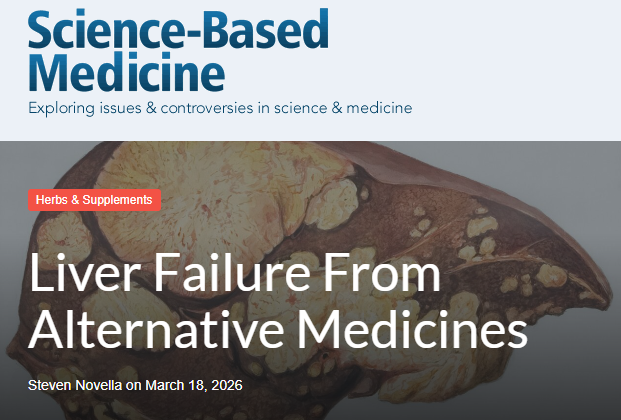
Many thanks to Prof. Steven Novella and The Science-Based Medicine for writing on and highlighting our work! This means a lot to me and my team of researchers who spend our own money and resources to improve public health education and safety.
You can read Prof. Novella's write up here:
https://t.co/1tjUjJmgbl
You can read our original work here:
https://t.co/3RIqoZevob
VERY IMPORTANT ANNOUNCEMENT.
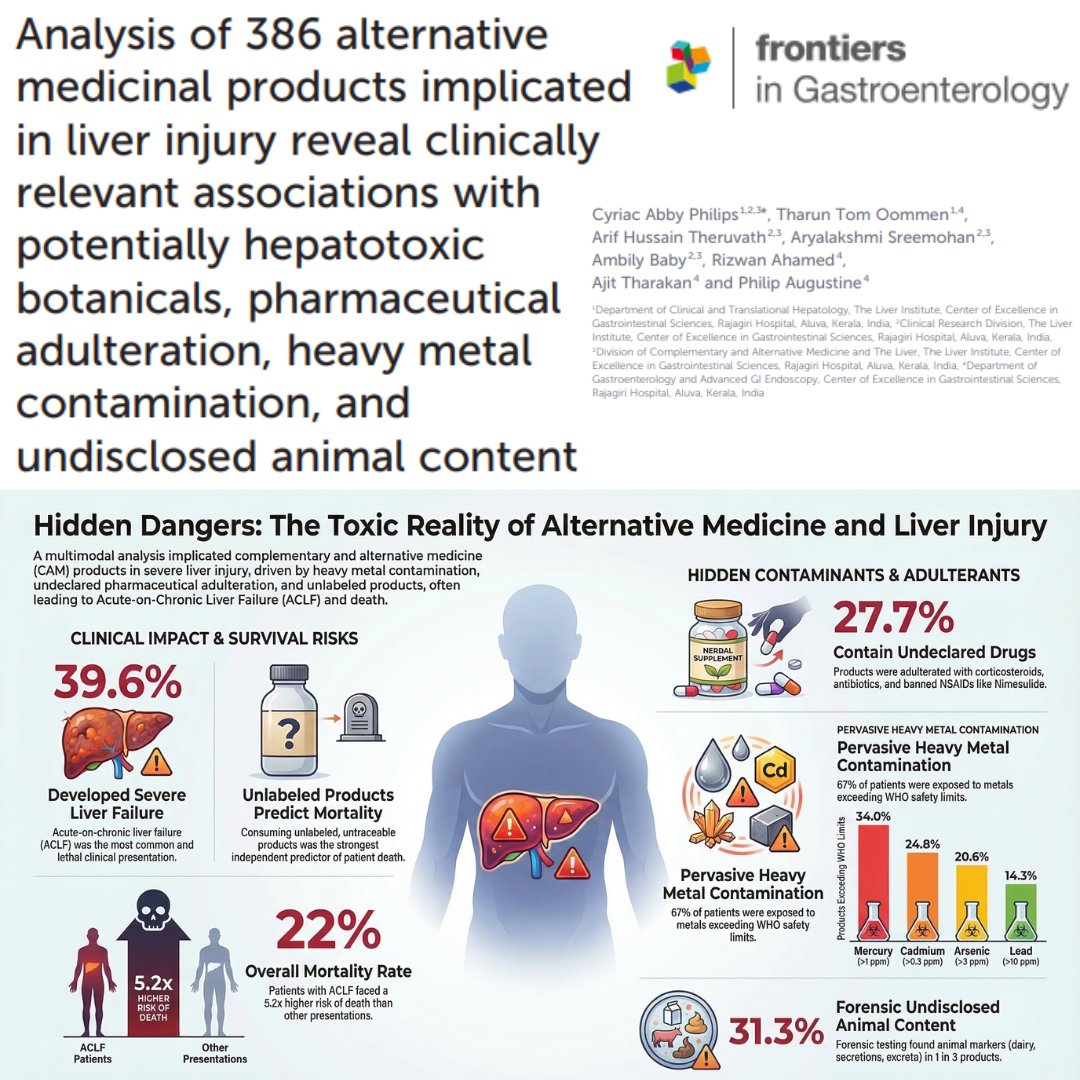
Dear friends, we have published the largest analytical study of Ayurveda, Homeopathy, Siddha, Unani and Folk-Traditional Medicinal products that have harmed patients - presenting with liver damage - to our department. This is the most exhaustive analytical study that correlated clinical outcomes in such patients.
Interestingly, one of the Reviewers who peer-reviewed our paper (notification after paper publication) and cleared it for publication is a senior professor of Ayurveda (Rasashastra and Bhaishajya Kalpana) at All India Institute of Ayurveda. This makes our paper even more impactful.
Here is a plain language summary of the study's major findings, highlighting what patients and the public need to know about the safety of alternative medicines:
Severe Liver Damage is a Major Risk: The study looked at 386 alternative and complementary medicines taken by patients who experienced liver damage. It found that these products frequently triggered a severe, life-threatening form of liver failure, called Acute-on-chronic liver failure (or ACLF) which resulted in death for nearly 40% of the patients who developed it.
Unlabeled Products Can Be Deadly: Taking "unlabeled" products—those sold without proper ingredient lists, manufacturer details, or batch numbers—was a strong predictor of death. The risk of dying increased the more unlabeled products a patient consumed, showing how dangerous an unregulated supply chain can be. Data revealed a dose-response relationship where death rates escalated progressively, reaching 42.9% among patients who consumed three or more unlabeled products.
Dangerous Levels of Heavy Metals: A shocking number of the tested products were heavily contaminated with toxic metals like mercury, lead, arsenic, and cadmium, often at levels far above safety limits. Exposure to cadmium, in particular, was strongly linked to patients developing the most severe form of liver failure. Exposure to cadmium was strongly and significantly associated with the development of ACLF (75.9% in exposed versus 22.6% in unexposed patients).
Hidden Prescription Drugs: Almost one-third of the products secretly contained modern pharmaceutical drugs, meaning patients were taking them without knowing. These hidden drugs included steroids, antibiotics, and painkillers, and some were even banned or well-known to cause liver damage.
"Natural" Doesn't Always Mean Safe: Over 40% of the products contained plant ingredients that are medically documented to be toxic to the liver. Well-known herbs like Giloy (Tinospora cordifolia) and Ashwagandha were among the most common potentially harmful plants found in the products.
Secret Animal Ingredients: Testing revealed that nearly a third of the products contained undisclosed animal ingredients (such as dairy, marine products, or animal extracts). This is a major concern for vegans, vegetarians, and people with religious dietary restrictions who believe they are taking plant-based medicines.
Risks from Concentrated Plant Extracts: The study discovered that high concentrations of certain common plant fats and compounds (called phytosterols) were tied to higher rates of severe liver failure. This shows that highly concentrated "natural" extracts can act differently in the body and become harmful, even if they come from everyday plants.
Lead Reseacher: @arifhussaintm
FULL PAPER (free to read): https://t.co/3RIqoZdXyD
Doctor educates public about new weight loss drugs that have been clinically tested for decades, with high-quality meta-analyses evidence, to reduce metabolic syndrome and increase longevity.
The internet: You paid pharma agent!
Fitness Gurus and Ayurveda practitioners promote and advertise expensive untested, unregulated weight loss supplements on their personal accounts.
The internet: Where is the link to buy this?