11 Lessons from John Bragg, who controls half the world’s wild blueberries, built North America’s largest private telecom, and did it all without ever leaving his hometown of 1,100 people.
1. Look to the Horizon: In 1969, nobody wanted a cable TV license for a small town with a population of 9,000. Bragg was the only applicant. While others saw losses, Bragg saw rural communities desperate for connection, recurring revenue, and a shrinking world. “We’re big, big believers in looking at the horizon,” he says, quoting Dag Hammarskjöld: “Only those who look at the horizon find the right road. If you look at your feet, you’ll stumble.” That license that nobody wanted was the first brick in what would go on to become North America’s largest private telecom empire.
2. Overpay for Generational Assets: Bragg routinely paid more than competitors for acquisitions. Sometimes double. His reasoning is simple: “It’s only available once.” When opportunities are scarce, pay what it takes. The people who nickel and dime their way out of great deals spend years regretting it.
3. Reputation is Currency: The bank manager laughed Bragg out of the office when he needed his first loan. But a Conservative politician stood up for the very Liberal Bragg family: “If we can’t lend money to the Bragg family, we can’t lend money to anybody.” Later, Bragg intentionally overpaid for acquisitions. Word spread fast: if you want to sell, call John Bragg. Fair price, quick close, no games. While competitors fought over pennies on one deal, Bragg was already closing three more. You can’t buy reputation. You can only earn it, one interaction at a time.
4. Grow the Pie: Bragg’s brother invented a blueberry harvester that did the work of thirty hand pickers. Instead of keeping it secret, they sold harvesters to competitors. “What’s good for the industry is good for everyone,” Bragg said. Even today, Oxford funds research on growing and cultivating and shares everything freely. While other people want to divide the pie, John Bragg wants to grow it for everyone.
5. Patient Capital Wins: For fifty years, Bragg reinvested every dollar back into growth. While competitors paid shareholders, Bragg continued to compound. Bragg thought in generations. In a world of quick flips and fast exits, the person willing to wait twenty years has no competition.
6. No Reverse Gear: At 22, Bragg turned down a secure teaching job to pick wild blueberries. Everyone thought he’d lost his mind. When his business nearly failed, he kept going. When banks rejected him, he found another way. When Bell killed his partnership, he borrowed $265 million and built a competitor instead. “I have no reverse gear,” Bragg says. The world is full of people who almost started something, almost took the risk, almost bet on themselves. Don’t be one of them.
7. Outcome Over Ego: Bragg could have named his companies after himself. Instead, Oxford and Eastlink. “Never let your ego run your business,” he says. At 85, worth billions, he still uses scuffed golf balls. “They go as far as new ones.” His headquarters look like a community college. Every dollar that doesn’t feed your ego feeds your growth. Most people would rather look successful than do the things success requires.
8. Lead by Suggestion: Every month, Bragg drives to his executives instead of summoning them. He rarely gives orders. When a beekeeper said 2,500 hives was his limit, Bragg didn’t bark commands. He said, “I have confidence you can handle more. Think about how.” The beekeeper redesigned everything and now manages 12,000 hives. Strong leaders help people discover what they’re capable of.
9. Never Stop Learning: At 70, worth hundreds of millions, Bragg gave six teams of executives $10 million each, not for bonuses, but for investment portfolios. Real money, real stakes. “I wanted them to see how strong companies operate and how weak ones fail,” he said. No penalties for losses, no bonuses for gains. Pure education. Bragg himself became a student, attending Berkshire Hathaway meetings, studying other businesses. His favorite Buffett quote: “I am a better investor because I am a businessman and a better businessman because I am an investor.”
10. Stay Private, Stay Nimble: For fifty years, banks begged Bragg to go public. He refused. When he bought AM Telecom, a public company, he immediately eliminated $4 million in overhead. “It’s costly to be public, and it slows you down,” Bragg says. Public companies need board approvals, regulatory filings, and quarterly guidance. When Bragg’s engineers recommended new technology, he gave them $10 million the same day.
11. Bounce, Don’t Break: In 1968, John Bragg borrowed everything to build his first processing plant. To say he was all in was an understatement. Then frost killed his entire crop. It was a disaster. He had a nearly empty factory, barely any revenue, and a lot of bills to pay. Most people would have declared bankruptcy. Instead, Bragg called Wallace McCain at midnight: “What do you need that you don’t want to make yourself?” McCain threw him a file on onion rings. Bragg had never made an onion ring, but he had an empty factory and no choice. When you’re staring at complete ruin, the question isn’t “Why me?” It’s “What now?”
Search for "John Bragg The Knowledge Project" or see the links in comments.
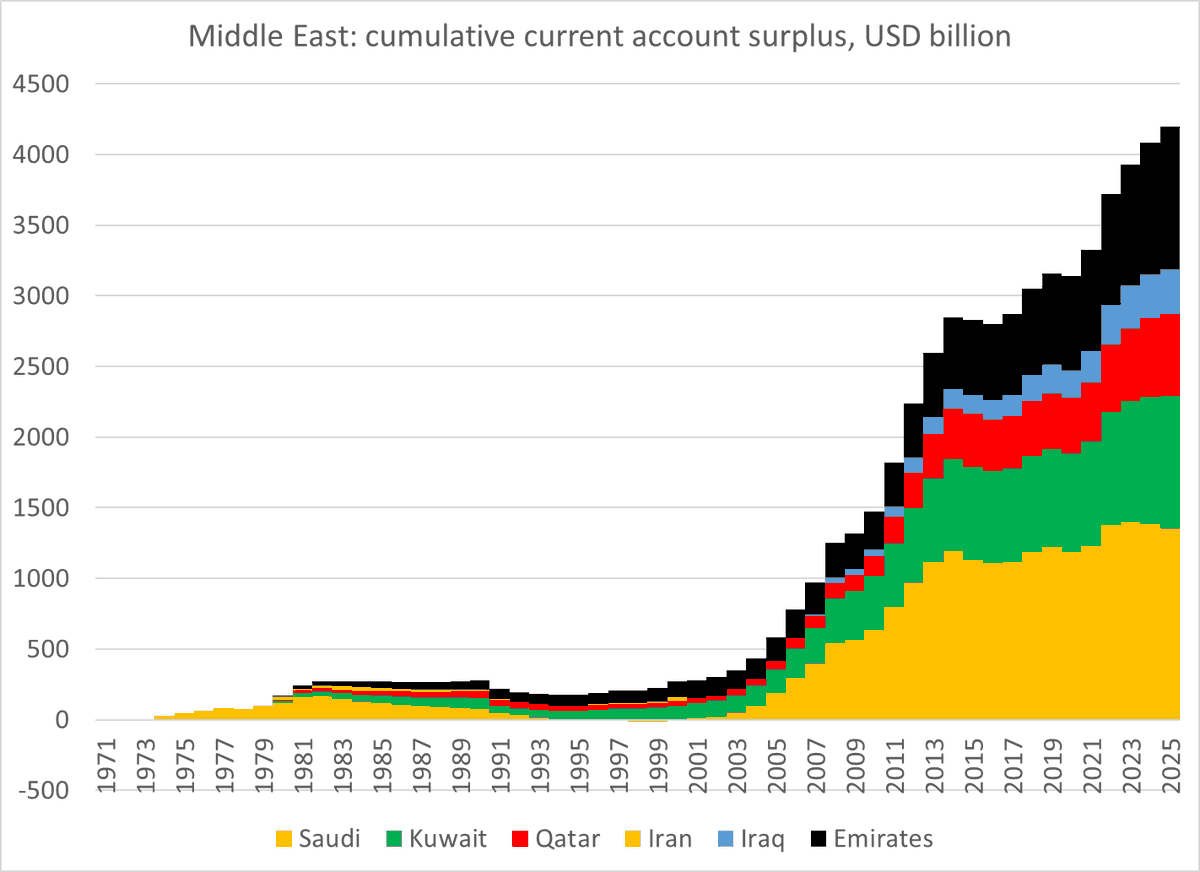
Petrodollars! Nothing produces more heated discussion and, in my experience, less insight. Myths trump facts, because the actual data is a bit obscure --
But here is the most important thing to know. Before the Hormuz crisis, the flow of petrodollars had more or less dried up
1/many
Niall Ferguson: Let it never be forgotten that, in The New York Times on February 16, 1979, the Princeton professor Richard Falk confidently asserted: “The depiction of [the Ayatollah Khomeini] as fanatical, reactionary, and the bearer of crude prejudices seems certainly and happily false. What is also encouraging is that his entourage of close advisers is uniformly composed of moderate, progressive individuals.” Moreover, “the key appointees” in the new revolutionary government had “a notable record of concern for human rights and seem eager to achieve economic development that results in a modern society oriented on satisfying the whole population’s basic needs.”
“Having created a new model of popular revolution based, for the most part, on nonviolent tactics,” Falk gushed, “Iran may yet provide us with a desperately needed model of humane governance for a third‐world country.”
Nope.
It turns out the commentators Falk was refuting were right. Khomeini really was “fanatical, reactionary, and the bearer of crude prejudices.” They were also right to associate him “with efforts to turn the clock back 1,300 years, with virulent antisemitism, and with a new political disorder, ‘theocratic fascism,’ about to be set loose on the world.” As there is no accountability whatsoever for liberal professors, Falk was subsequently appointed by the United Nations Human Rights Council as Special Rapporteur on the Israeli-occupied Palestinian territories. The Iranian people, meanwhile, have endured close to 47 years of theocratic fascism.
Commercial mortgage-backed securities (CMBS) issuance hit a post-GFC record in H1. Markets are taking on more risk as investor confidence grows.
#Finance#Investing#Markets#Economy
Most investors panic fast. The edge is in slowing down. Cut noise, follow signals, deploy capital with discipline. That’s the real ‘art of going slow.’
#TheCall@KeithMcCullough
Όποιος δεν κατεβεί στις επόμενες εκλογές με βασικό διακύβευμα την αποκατάσταση της δικαιοσύνης στη χώρα και την παραδειγματική τιμωρία των απατεώνων που λυμαίνονται δημόσιο χρήμα με συνέπεια ανθρώπινες και περιβαλλοντικές τραγωδίες δεν αξίζει την ψήφο μας
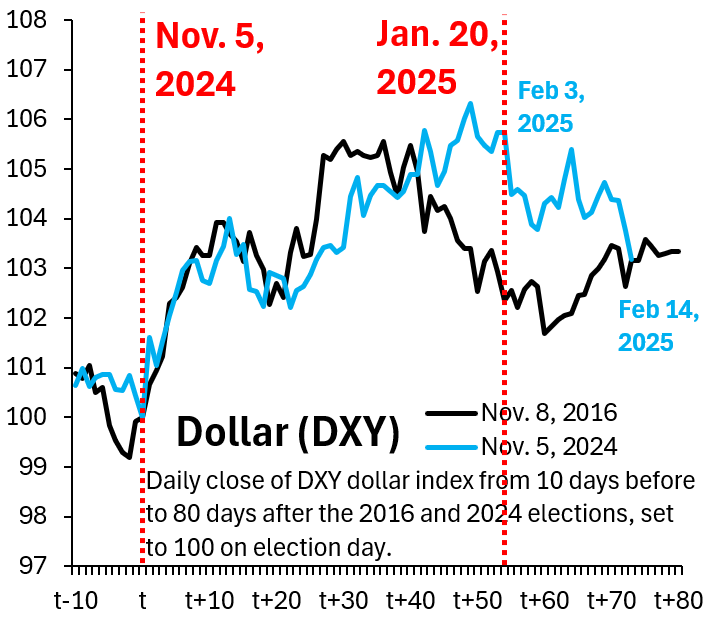
Following yesterday's reciprocal tariff announcement, the Dollar has seen its biggest fall since the election. Lots of stories out there on why that might be, but to me those just sound like ex post rationalizations of price action. Tariffs mean the Dollar should rise, not fall.
10-year US treasury yield reaching 5%. A self-fulfilling prophecy. Good entry point for those looking to add some duration to their portfolios, especially taking into account that rates cut expectations have moved from year-end to mid-24
#economy#markets#investing#bonds#rates