Per què les dades de nombre d'ocupats i afiliació, sempre batent rècords, obren portades i les dades salarials no?
De què serveix generar tants llocs de treball si els salaris reals amb prou feines augmenten? Més encara quan, per mera demografia, la majoria de l'ocupació creada va a estrangers, sovint acabats d'arribar.
Tingueu en compte que l'IPC pràcticament no té en compte el preu de l'habitatge, per tant, bona part dels catalans s'han empobrit mentre els nostres governants celebren la bona marxa de l'economia.
Cal posar el focus en els salaris i no en el nombre d'ocupats. Vol dir això que no s'han de generar llocs de treball? I tant que sí! Però en un procés de "destrucció creativa", tal i com teoritza Schumpeter o els flamants premis Nobel d'economia com Philippe Aghion: que les feines menys productives siguin reemplaçades per altres amb major productivitat (i major salari).
Ja ho he dit altres vegades, dopar el mercat de treball amb mà d'obra d'importació trenca el mecanisme de la destrucció creativa, dificulta l'augment de la productivitat perquè es mantenen empreses i sectors que altrament no podrien atraure mà d'obra (pels seus baixos sous) i desapareixerien.
⚠️ Recordatorio: tenemos (prácticamente) el mismo salario que hace 30 años.
Mientras los salarios reales (descontada inflación) han aumentado más de un 30% en la OCDE, en España sólo lo hicieron un 2,76%, el cuarto país donde menos variaron.
https://t.co/96kmczrmD7
El deudor más grande del mundo, EEUU, salió al mercado a defender la moneda de su mayor acreedor, Japón.
Ningún manual de economía describe esa operación.
He escrito sobre por qué ha ocurrido y por qué te afecta
https://t.co/pJ0w2WvL4K
1/
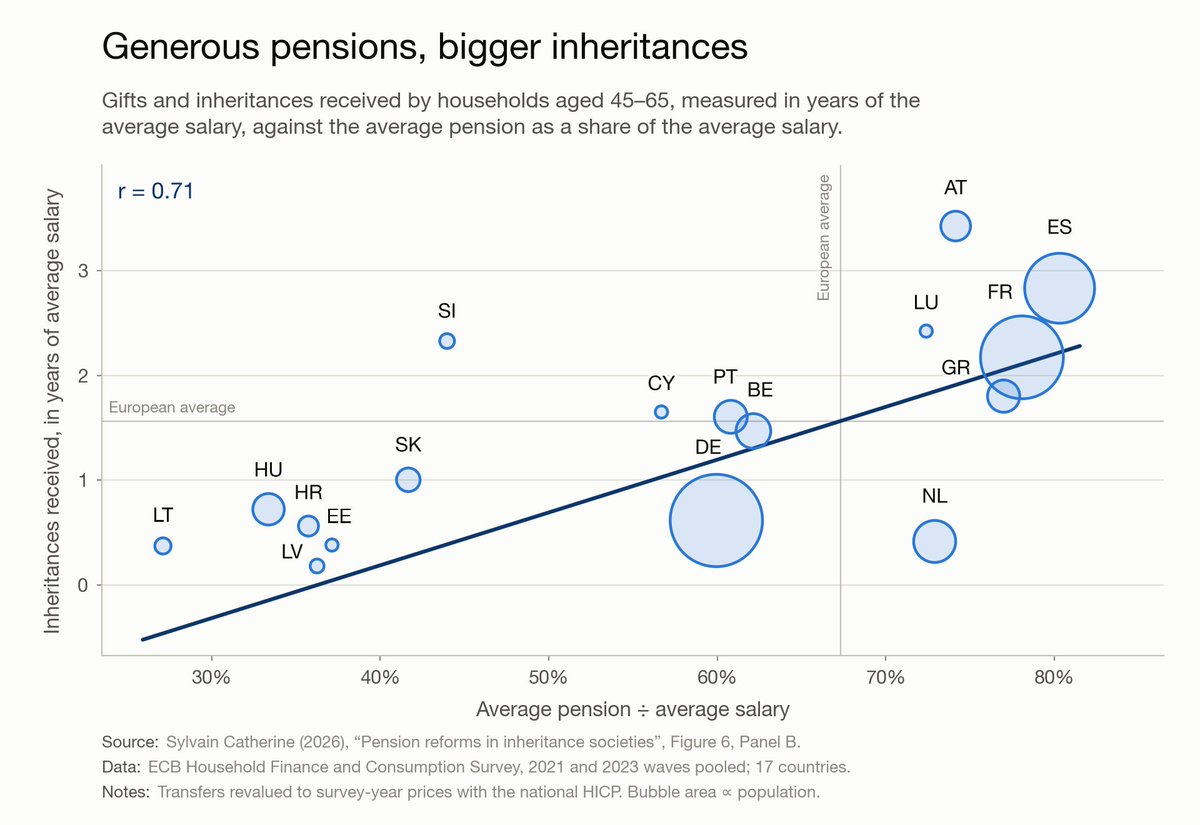
The second graph looks at actual inheritance flows to the next generation, and confirms the story. In Spain and France, households aged 45–65 have received, on average, the equivalent of 2 to 3 years of the average salary in gifts and inheritances.
Overall, the size of these transfers, normalized by the country's average wage, correlates strongly with the level of pensions (r = 0.71).
I often argue that generous retirement benefits inflate inheritances. Here are two new graphs based on European data.
First, the level of pensions relative to workers' salaries correlates strongly (r = 0.65) with the relative wealth of the elderly (70–85). Spain and France are the European champions at combining high pension levels with a high concentration of wealth among the elderly. In Spain, pensions represent roughly 80% of salaries, and households above 70 hold twice the wealth of those aged 26–59. Wealth is measured per adult, splitting each household's net worth between the head and their partner.
New from me:
Young people in Britain are some of the most well-educated in the rich world, but economic stagnation means that breeds not growth but frustration.
In fact, US workers who are functionally illiterate now earn roughly the same per hour as the average British worker.
⚠️Recordatorio sobre la oferta de vivienda (pública) en España.
En los 80, con 38 mill. habs. se construían 220.000 viviendas por año, de las que hasta el 65% eran públicas.
En 2025, con 49 mill. habs (+29%), producimos unas 139.000 (-37%), siendo vivienda pública el 20%.
alguien ha cometido el error de dejarme un micro y casi una hora para hablar de los ingresos de los jóvenes en españa (chapa histórica)
gracias rocío, me lo pasé genial!!
https://t.co/BZNlVRrcwb
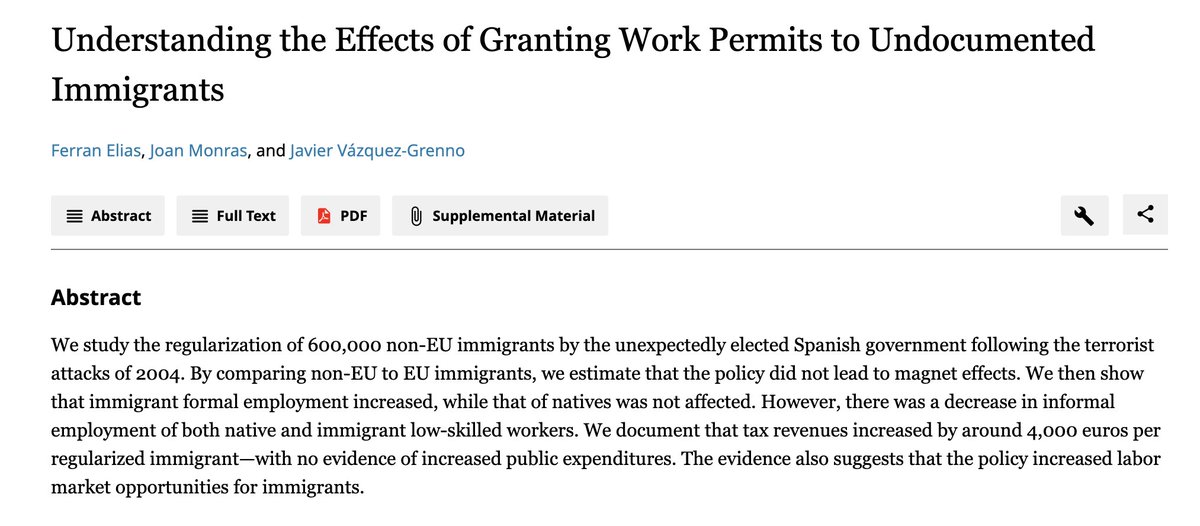
¿Qué efectos tuvo la regularización de 600.000 inmigrantes en España en 2004?
1⃣No tuvo efecto atracción.
2⃣Aumentó empleo formal de inmigrantes.
3⃣No afectó empleo nativos.
4⃣Aumentaron ingresos públicos en 4.000€ por inmigrante, sin aumentos de gasto público significativo.
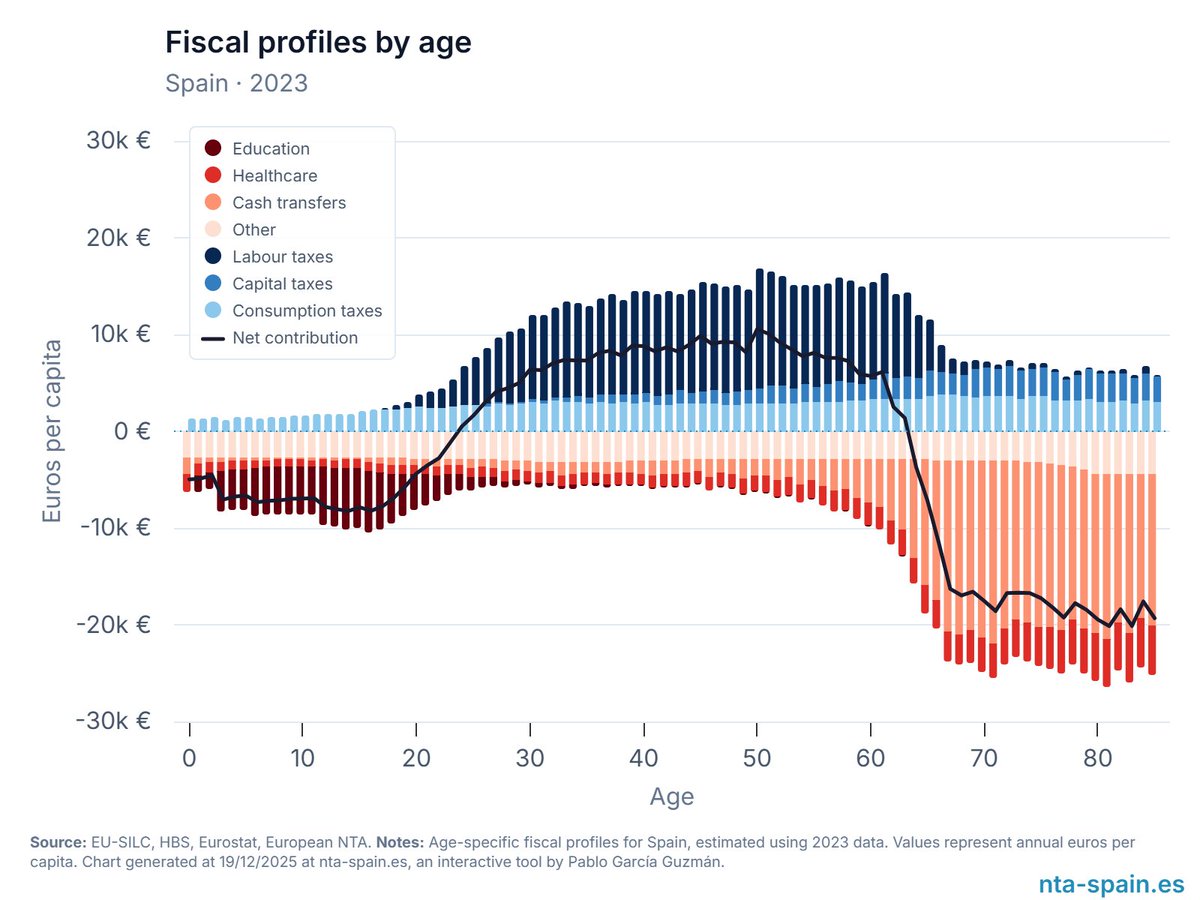
across europe, ageing is causing public spending to grow at two speeds
spain is one of the most extreme cases, where demographic pressures are compounded by a payg pension system that offers implicit returns far exceeding what the economy can sustainably afford
who pays for the welfare state, who benefits, and how does that change across the lifecycle?
today i'm releasing a new interactive tool to explore net fiscal contributions in spain by age, sex, education and origin, built from the latest microdata
👉 https://t.co/dWvXZhzTos
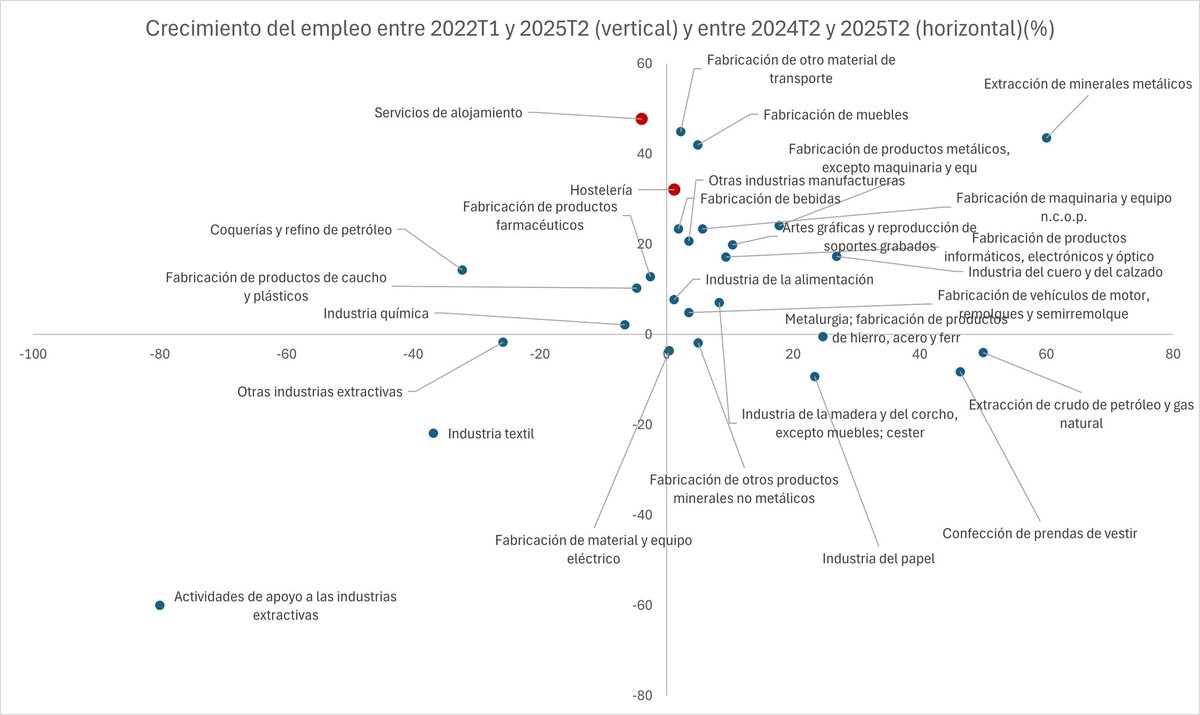
📉 Un sector poco productivo
De nuevo acudo a @bbvaresearch:
→ Productividad <25,4% de la media de la economía española, y <15% vs su propio sector en la UE.
→ Poblado por demasiadas microempresas, y más aún ahora que antes del estallido de la burbuja