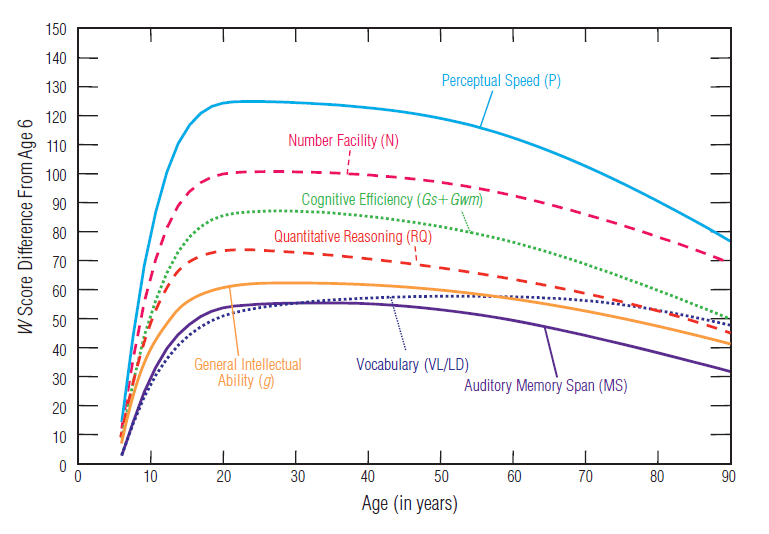
Throughout the 20th century, average IQ scores rose year after year.
In recent decades, that trend appears to have reversed.
@sapinker discusses why on our podcast.
I've been very lucky with my job offer. Not only because I'll be in an amazing department, but also literally — the odds of getting a tenure track job are super low. Far lower than I though. This is a problem. We need to be transparent about the cons of the academic job market.
Spectacular failure to replicate one of Ariely's most cited paper, by Kyle Hyndman and Alberto Bisin.
Top panels are results in Ariely and Wertenbroch (2002). Mid and bottom are replications. Very large and significant effects turn into nothing.
Major preprint just out!
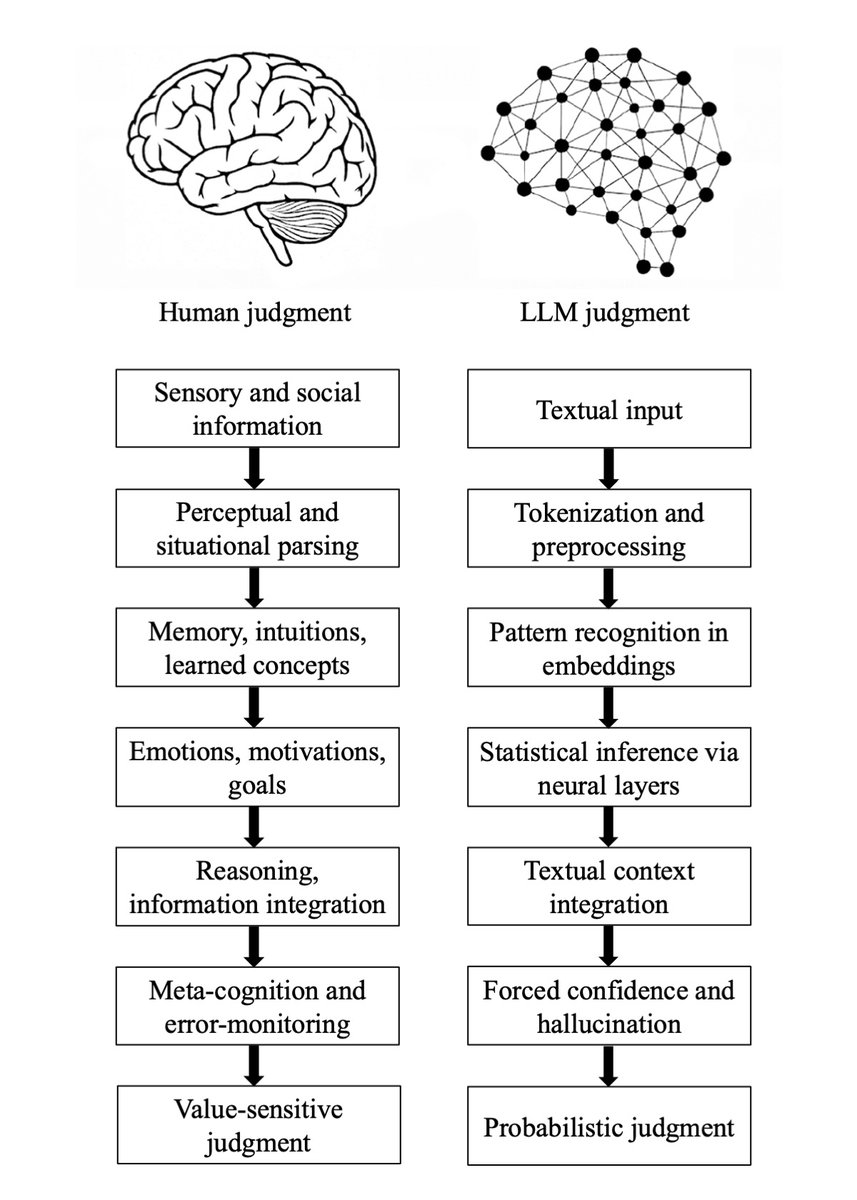
We compare how humans and LLMs form judgments across seven epistemological stages.
We highlight seven fault lines, points at which humans and LLMs fundamentally diverge:
The Grounding fault: Humans anchor judgment in perceptual, embodied, and social experience, whereas LLMs begin from text alone, reconstructing meaning indirectly from symbols.
The Parsing fault: Humans parse situations through integrated perceptual and conceptual processes; LLMs perform mechanical tokenization that yields a structurally convenient but semantically thin representation.
The Experience fault: Humans rely on episodic memory, intuitive physics and psychology, and learned concepts; LLMs rely solely on statistical associations encoded in embeddings.
The Motivation fault: Human judgment is guided by emotions, goals, values, and evolutionarily shaped motivations; LLMs have no intrinsic preferences, aims, or affective significance.
The Causality fault: Humans reason using causal models, counterfactuals, and principled evaluation; LLMs integrate textual context without constructing causal explanations, depending instead on surface correlations.
The Metacognitive fault: Humans monitor uncertainty, detect errors, and can suspend judgment; LLMs lack metacognition and must always produce an output, making hallucinations structurally unavoidable.
The Value fault: Human judgments reflect identity, morality, and real-world stakes; LLM "judgments" are probabilistic next-token predictions without intrinsic valuation or accountability.
Despite these fault lines, humans systematically over-believe LLM outputs, because fluent and confident language produce a credibility bias.
We argue that this creates a structural condition, Epistemia:
linguistic plausibility substitutes for epistemic evaluation, producing the feeling of knowing without actually knowing.
To address Epistemia, we propose three complementary strategies: epistemic evaluation, epistemic governance, and epistemic literacy.
Full paper in the first reply.
Joint with @Walter4C & @matjazperc
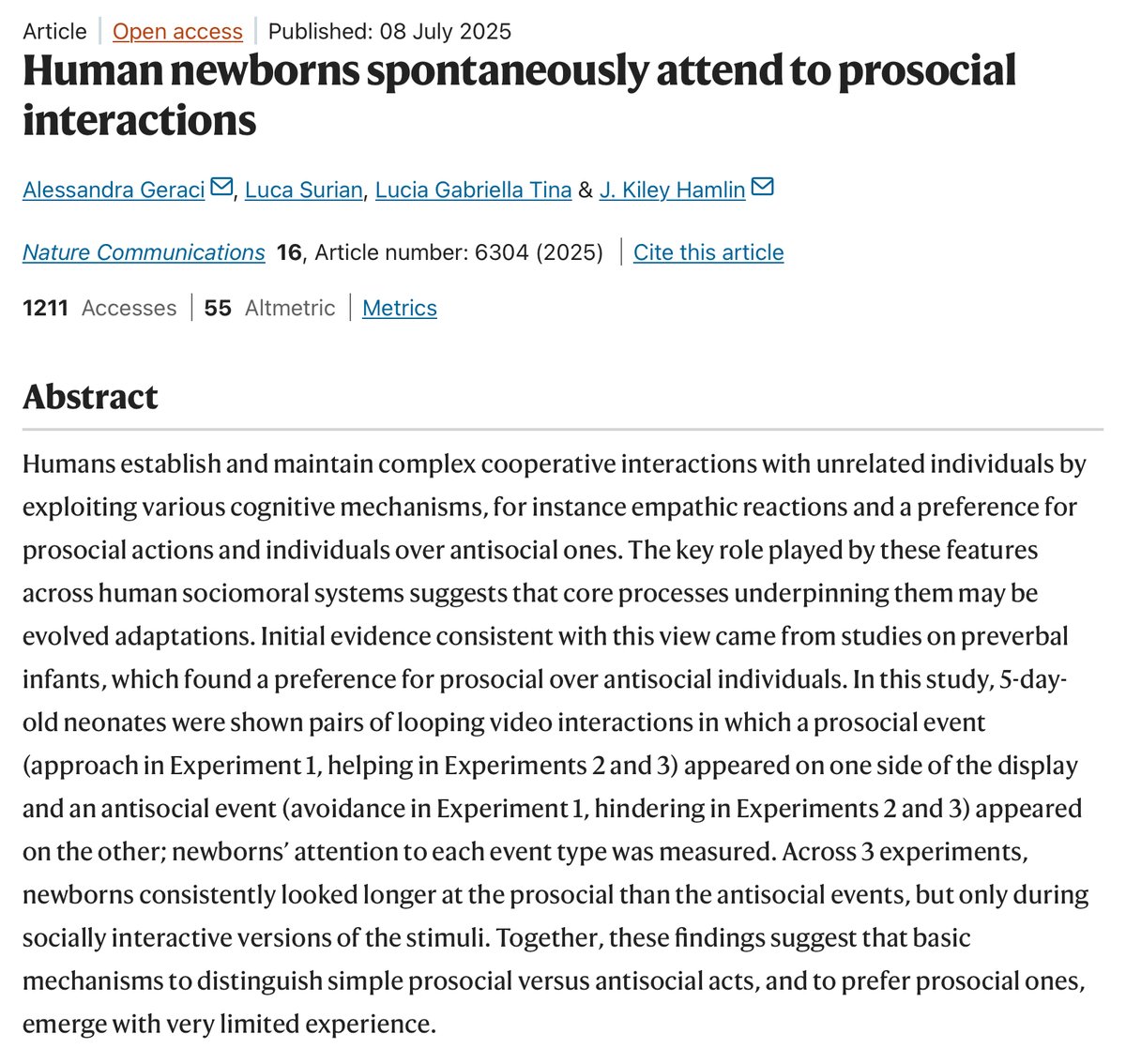
At just 5 days old, human newborns prefer watching helpful interactions to unhelpful ones. This suggests that prosociality may be part of our evolved nature. https://t.co/q04IPytJi2
Pattern of omission bias across various measures of moral judgment: Insights from the use of Young et al.’s (2007) vignettes.
Valentino Marcel Tahamata and Philip Tseng
https://t.co/TapSEasN7T
Excited to share our NEW preprint: a "brain-to-voice" neuroprosthesis that directly synthesizes voice from neural activity with closed-loop audio feedback. It allowed a man with ALS to speak expressively by modulating intonation & sing melodies via BCI! https://t.co/CxNBxTqqYr 1/
"Kalau demokrasi kita tidak berjalan tidak mungkin anda jadi gubernur, kalau Jokowi diktator anda tidak mungkin jadi gubernur" Prabowo, debat capres 12 Desember 2023
Should you use Likert or VAS for EMA research?
In a new paper led by @jonashaslbeck & @AlbertoJover (last author @EatingLab), we assigned n~160 in a 2 week study to either
📏1-7 Likert or
🎚️1-100 Visual Analogue Scale
and compared results using Bayesian multilevel models.
Brief thread with results.
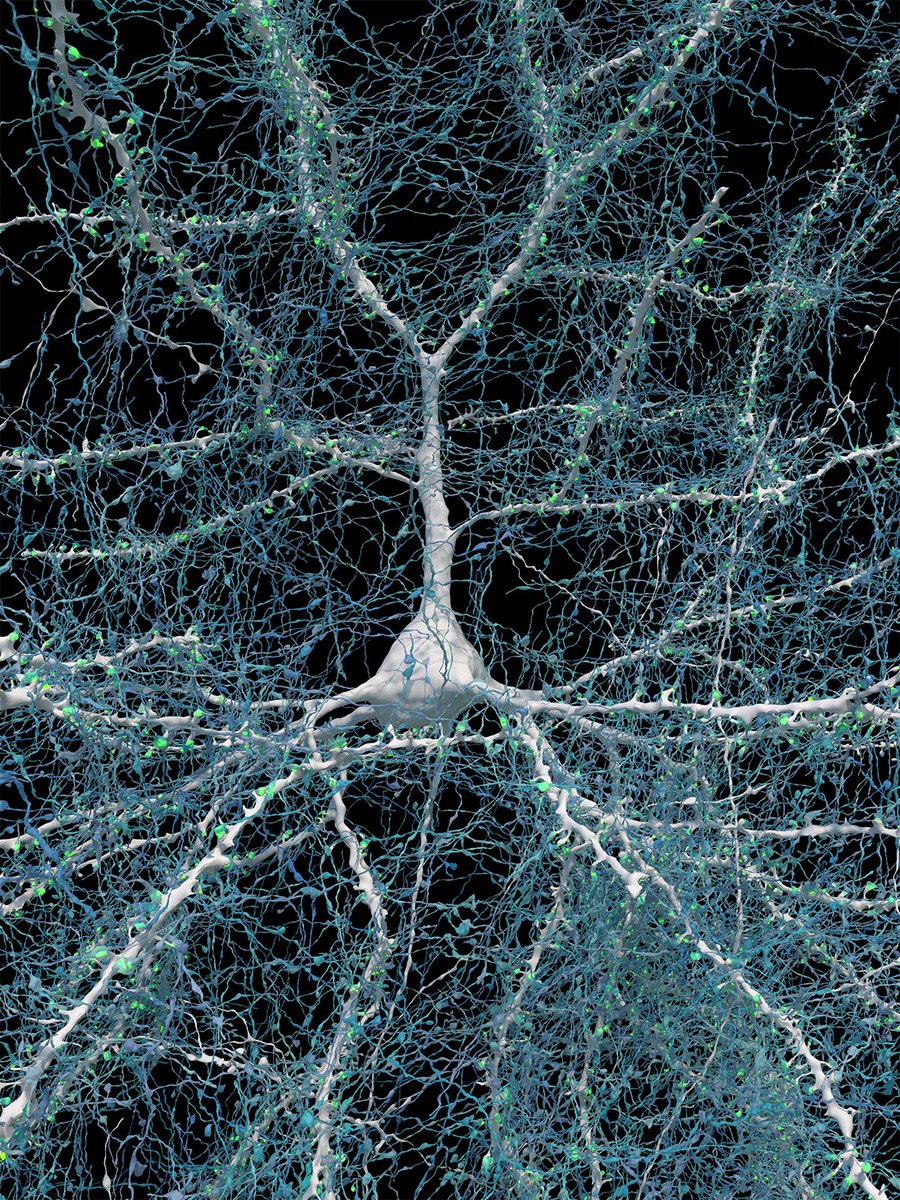
Previously unseen details of human brain structure revealed. Featured image: a single neuron with ~5,600 of the nerve fibers that connect to it.
I feel overwhelming awe at nature's complexity and order.
https://t.co/lLiEo6z1YQ
#JanganJadiDosen kemarin, saya SS Gapok CPNS selama 1 tahun
lalu disamber: "jujur dong mana tunjangan? mana remun? mana tukin?"
Nih, THP masuk rekening udah include semua tunjangan dan potongan
Masa kerja Dosen udah 6 tahun lebih yaa 😌
Kawan kita satu ini benar-benar mengira Neo Historia adalah media elit global. 😭
Padahal pesannya sederhana buat mas @gibran_tweet
Hargai seniman manusia. Hormati seni yang dibuat oleh tangan manusia. Paslon 02 sudah sangat notorious dengan penggunaan kecerdasan buatan yang berlebihan.
Posisi moral kecerdasan buatan dalam seni rupa dan seni gambar masih sangat abu-abu karena kecerdasan buatan itu memakai referensi dari pelbagai artis manusia yang tidak diberikan apresiasi selayaknya.
Ibaratnya sebuah kotak susu di pasar swadaya. Kita robek labelnya terus kita ganti dengan label kita? Apakah itu bermoral secara etika?
Sejarah menulis peradaban manusia digerakkan oleh seni yang dibuat manusia, bukan mesin. Atap di kapel Sistine di Italia contohnya, digambar oleh Michelangelo, dipesan oleh Gereja Katolik. Bayangkan kalau atap kapel yang indah itu digambarkan oleh mesin yang tidak memiliki dan bahkan tidak mengerti esensi seni. Apa yang dibanggakan daripada itu?
Pada akhirnya kalian itu bukan korban tapi hanya orang-orang yang tidak bisa menerima masukan dan kritikan.
Family favoring effects across intent- and outcome-based moral judgments and decisions
Valentino Marcel Tahamata and Philip Tseng
https://t.co/ermuQnHXzs