En un contexto de debate sobre el correcto diagnóstico de Trastorno del espectro del autismo (TEA) se nos olvida que la cognición social se debe construir. Venimos predefinidos un aprendizaje social, pero ¿y sí algo interfiere?
@LibertiaPsico@IreneFPinto@el_pais De acuerdo con evitar la simplificación, pero el artículo enfatiza en que hay que sospechar del contenido de los traumas (que se asumiría son de índole sexual), ¿pero que hacer cuando el maltrato o la negligencia en la infancia son más que evidentes y dejan huella en la persona?
Hilo 🧵 sobre psicología social y por qué deberías desconfiar de sus "leyes"
La psicología social vendió durante décadas como leyes del comportamiento humano lo que en realidad eran regularidades frágiles de laboratorio. Una cosa es decir "en este experimento observamos X".
Imagine a 19-year-old scrolling TikTok. She watches a creator list five "signs you have undiagnosed anxiety." She recognizes three in herself. By the end of the week, she's describing herself as anxious to her friends. A month later, she's avoiding situations she used to handle fine.
What went wrong?
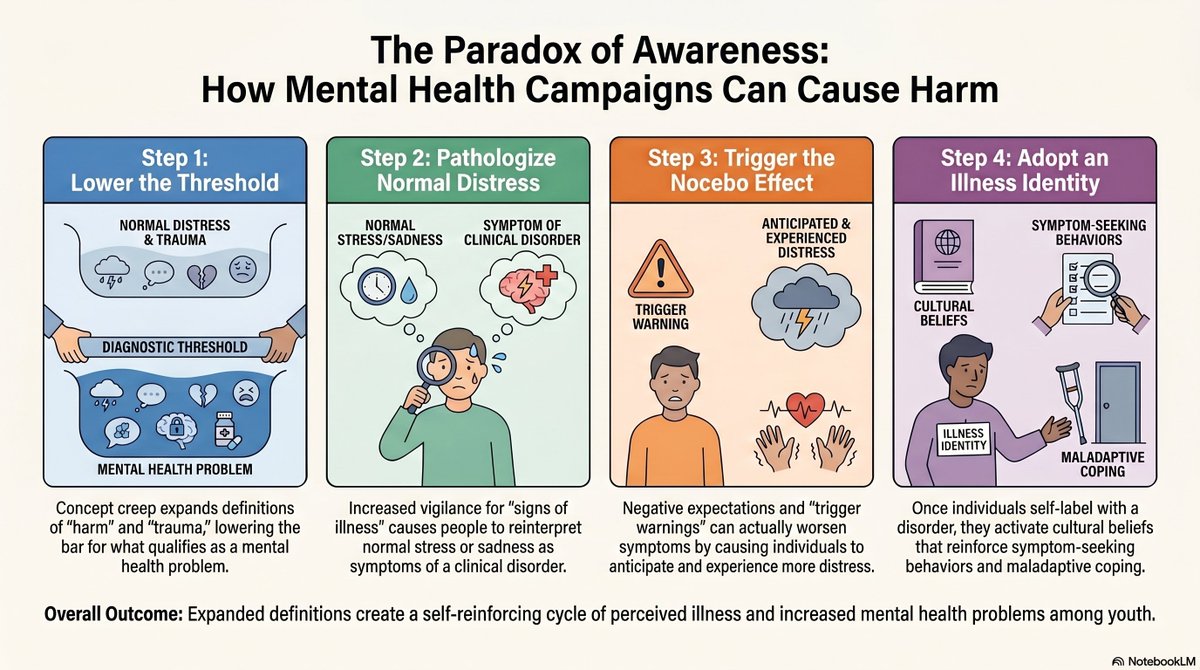
In a new paper by my PhD student Dasha Sandra, titled "Why mental health awareness can harm: Converging explanations for a societal problem", we argue that well-meaning mental health awareness can backfire, and we identify how. Four separate literatures (concept creep, nocebo effects, prevalence inflation, and illness self-labeling) have been circling the same problem from different angles. We show they converge on three mechanisms:
1.Awareness lowers the threshold for what counts as a disorder.
2. It trains people to scan their inner lives for symptoms and reinterpret normal distress as pathology.
3. Once someone adopts an illness identity, they behave in ways that confirm and deepen it.
The evidence is wide. Learning that loneliness is harmful makes solitude feel worse. Learning that stress is harmful worsens well-being and performance. Awareness videos about fake conditions like "wind turbine syndrome" produce real headaches. Trigger warnings raise anticipatory anxiety without reducing distress.
This does not mean awareness should stop. It means awareness can have unintended consequences, including manufacturing the suffering it tries to prevent. Inoculating people against these mechanisms works, and we already have evidence it does.
Link to paper: https://t.co/ucoGyhEuAj
Es bien sabido que la OMS estableció una definición de la salud muy poco realista. Según la OMS, la salud sería “un estado de completo bienestar físico, psicológico y social”. Esta definición pierde de vista muchas cosas. En primer lugar, el malestar
1/8
Si la intervención psicológica pierde de vista esto, deja de fomentar responsabilidad, regulación y crecimiento. Y empieza, en cambio, a consolidar una cultura de externalización, fragilidad y evasión.
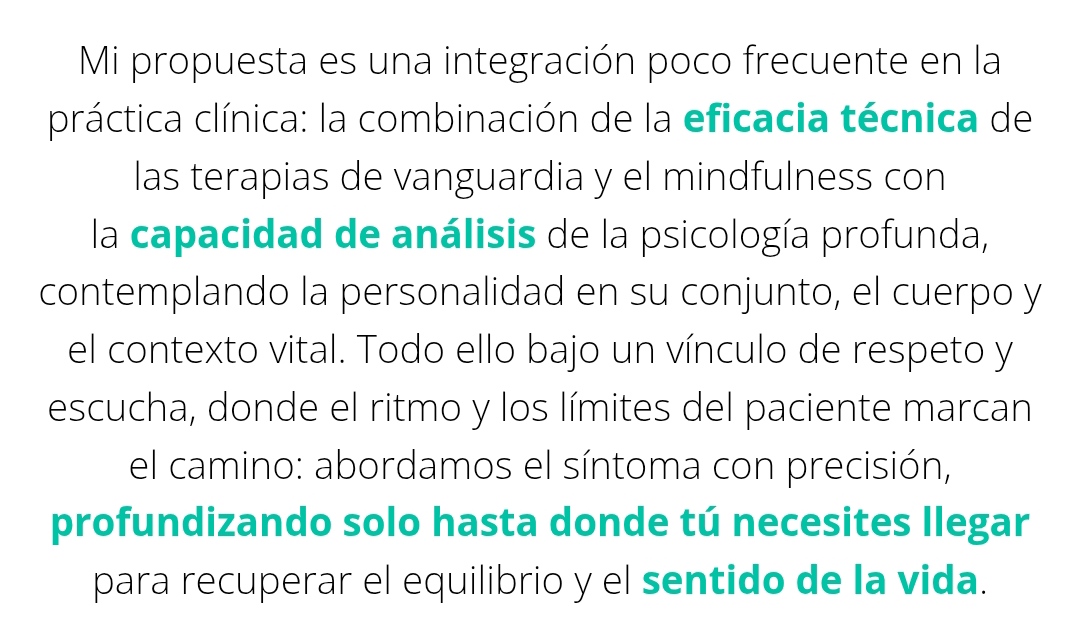
¿Has pasado por varias terapias y no te han funcionado? 🤔
Prueba una terapia más completa:
✅ Eficacia técnica (t. de vanguardia)
✅ Comprensión profunda (t. analítica)
✅ Respeto absoluto a tu ritmo
Conoce lo que me diferencia:
https://t.co/vidXHaWsAd
#PsicólogoMóstoles