The convergence of challenger banks and DeFi infrastructure isn't coming, it's already here.
The future of banking runs on stablecoins. Now we are bringing in onchain FX and non-USD stablecoins into the equation. 🏦⚡
The IMF just outlined the case for stablecoins in global finance.
Their analysis identifies three critical gaps in traditional cross-border payments:
1.Speed and transparency
2.Cost
3.Regulatory compliance
Sera Protocol delivers on all three.
Speed and transparency:
Problem: Multiple data formats, long process chains, different operating hours
Solution: Single blockchain source, sub-second settlement, 24/7 availability, full on-chain transparency
Cost:
Problem: Remittances can cost up to 20% of amount sent
Solution: 90% cheaper than legacy remittance rails
Compliance:
Problem: Regulatory fragmentation, lack of standardized oversight
Solution: Compliance native infrastructure with built-in regulatory adherence
The IMF highlights the opportunity for financial inclusion: developing countries are leapfrogging traditional banking with mobile phones and digital money. Stablecoins can make digital payments accessible to underserved customers.
Sera’s infrastructure makes this possible:
• 70+ stablecoins across 20+ countries
• Sub-second finality
• Compliance native design
• Mobile-first accessibility
• Coverage across ASEAN, Europe, Americas
The IMF notes that industry leaders compare this development stage to the early days of the internet.
We’re building the infrastructure for what comes next.
Testnet: Dec 2025
Mainnet: Q1 2026
https://t.co/qie6F29efj
Non-USD stablecoins are tiny today, but the trajectory is real🧵
Right now, the stablecoin market is basically a USD show. We're talking 305B total and non-USD coins are stuck at roughly 1% of that but things are shifting.
➠ What's happening in Europe?
‣ Holds about €555M in market share
‣ Euro stablecoin volumes spiked in 2025 while USD demand softened
‣ MiCA regulations are creating actual banking partnerships for local issuers
‣ Nine major European banks (ING, UniCredit, Danske Bank) announced a joint euro stablecoin launching H2 2026
‣ They're setting up a Dutch entity to get an EMI license under MiCA
‣ Already, 58% of EU telecom firms have tested euro stablecoins to avoid FX hedging costs
➠ What about Asia?
1. Japan
‣ Japan's FSA approved JPYC as the first authorized yen stablecoin
‣ They're targeting ¥10T in issuance within three years
‣ Meanwhile, megabanks like MUFG and SMBC are building competing Progmat coins backed by bank deposits
2. Singapore
‣ XSGD secured a Coinbase listing
‣ Integrated into OKX Pay's scan-to-pay network
‣ It now holds 70% of nonUSD stablecoin volume in Southeast Asia
3. India
‣ Has no INR stablecoin yet, but the government is preparing stablecoin regulations
‣ ARC which is a rupee-pegged token backed by Indian government bonds is targeting Q1 2026 launch
‣ The design is pure regulatory forcing function to keep liquidity in INR, support domestic bond demand and stop Indians from defaulting to offshore USDT/USDC
➠ What's the story nobody talks about?
➢ While everyone watches compliant markets, a single ruble-pegged stablecoin (A7A5) processed over $40B in 2025
➢ Linked to sanctioned entities like Garantex and used primarily for trade between Russian firms and counterparties in China + Central Asia (to bypass SWIFT)
➢ When US sanctions hit, operators burned 33.8B tokens in compromised wallets and re-minted them in fresh addresses to break surveillance links
➠ Where's the real retail adoption?
See governments don't want their citizens moving all value into USD rails. MiCA in Europe explicitly pushes euro-denominated tokens. Similar thinking is emerging elsewhere.
If you're building a compliant payment solution, you'll probably need to support local stablecoins not because of market demand today, but because regulators will require it.
1. 70% of non-USD activity happens on Polygon, not Ethereum as lower fees matter when transaction sizes are smaller
2. Latin America accounts for 55% of global non-USD stablecoin volume
3. Places with FX constraints and capital controls are leaning into local currency stablecoins
4. Neobank programs are expanding beyond USD settlement into EUR and other currencies
➠ Conclusion
USD stablecoins had a massive head start. Tether launched in 2014 and it took 5+ years to find real traction and non-USD stablecoins will also grow faster but will happen faster IMO because regulatory frameworks are arriving.
Which opens the doors for banks and fintechs to issue non-USD at scale. I'm expecting 10-20% market share by 2030 and total stablecoin mcap reaching $2T+. JPMorgan sees $500-750B total stablecoin supply in coming years. Even if non-USD goes from 1% to 10% of that, we're talking a 10x jump which is still small in absolute terms, but fundamentally different infra. Remember the transition is regulatory which makes it even more predictable.
This week in Foreign Exchange Markets:
🇯🇵 Yen dips as Japan readies ¥20T stimulus and intervention watch grows
🇺🇸 Dollar firms as strong U.S. data cuts December rate-cut odds
🇮🇳 Rupee hits record low before RBI steps in
Markets navigate policy splits ↓
Source: @Reuters
Mento stablecoins bring real-world FX onchain. With cNGN, cKES, cREAL, PUSO and more, the protocol now reaches over 15 countries and is used by 8M+ people.
The goal is simple.
Give people stable, local assets that move globally with predictable pricing and 24-hour liquidity ↓
Unveiling the Ultimate Stablecoin Landscape Map! 🌍
Planning updates with new entrants and working on V2. Want your stablecoin project featured? Reach out via DM or leave your suggestions in the comments below on who we should add. 👇
cc: @artemis@HadickM@chuk_xyz@ElBarto_Crypto@anthonyyim@zcabrams
“cNGN is an opportunity to improve the payment landscape and expand the usability of the naira beyond Nigeria — taking the naira global, making it more fluid and liquid, and positioning it everywhere stablecoins are. That’s the focus.”
— Uyoyo Ogedegbe (@Uyoyo_O), Managing Director at cNGN
The Conflux DeFi ecosystem continues to expand.
@dForcenet has now launched support for AxCNH, the stablecoin issued by @AnchorX_Ltd, on its Unitus Finance platform.
A 30,000 CFX reward pool is available for AxCNH suppliers on Unitus. See the thread below for details.
This is bigger than numbers.
It’s a collective belief in transparency, trust, and a digital future built by Nigerians for Nigeria and beyond.
Together, we’re taking the naira global, more fluid and transparent.
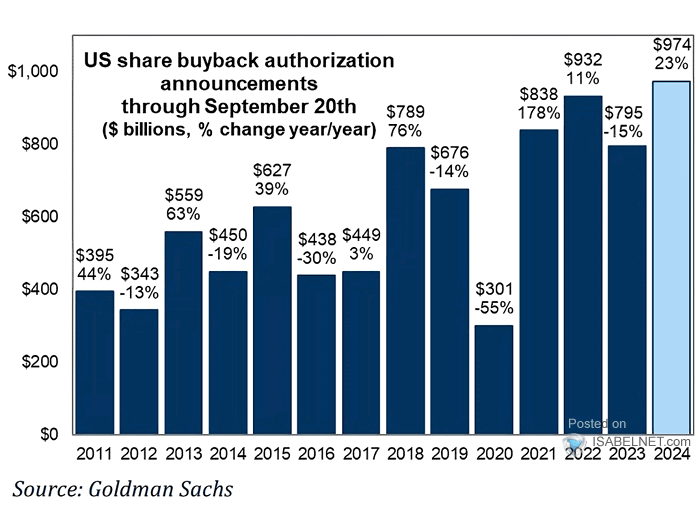
🇺🇸 Buybacks
The strength of share buyback authorization announcements in the US not only reflects a positive corporate outlook but also acts as a strategy for optimizing capital structure and rewarding investors
👉 https://t.co/Rk5tctMmih
h/t @GoldmanSachs $spx #spx#buybacks
While the production costs as a price floor make sense to me, I'm less confident about modeling an upper price limit. #bitcoin
However, it’s interesting to note that the range between the levels shown here has been converging toward a "stable" value over the past few years. 1/2
The Sahm recession indicator above 0.55 has always coincided with a recession.
Additionally, the Fed is already cutting rates "aggressively".
Why would this time be any different?