🔥 Hot out of the oven: we ported Wasmer's 7-year-old Django backend to Rust.
The result:
• 220 CPUs → 24
• 800 GB RAM → 64 GB
• p95 API latency: 120ms → 30ms
• Query timings: 5–10x faster
• Startup: >60s → ~1s
Django served us well. Rust is powering what comes next! 💪
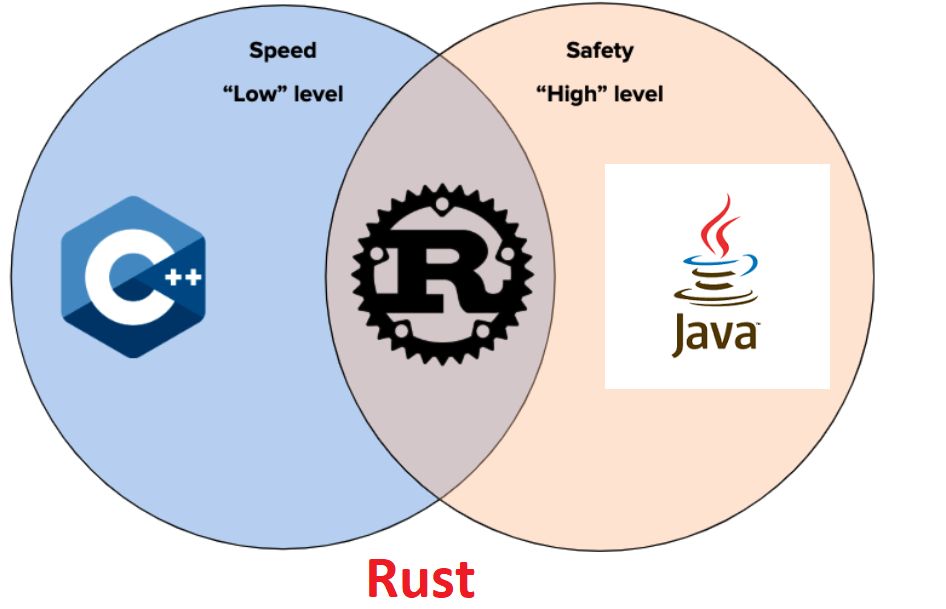
In the age of AIs, Rust is the new assembler, and that's how I'm using it.
I don't particularly like Rust. I have never hand-coded a single line of the language, and probably never will. Rust's developer and advocate community contains a lot of crazies I don't want to be anywhere near.
Nevertheless, I've shipped two Rust projects so far, I expect to have a third out soon, and I'm planning on a fourth.
Why? Since I'm doing all my coding with LLM assistance now, none of the things I dislike about Rust matter much anymore. I don't need to know how to write the language, only to read it enough to understand control flow and spot obvious bogons. And I don't need to deal with the crazies, because my robot friends are smarter than they are.
Rust has four properties that make it a good target nowadays:
1. LLMs are good at generating high quality Rust code.
2. Memory safety, memory safety, memory safety.
3. Rust is anal about things like lifetimes that other languages aren't. This means that LLM-translating out of it into a future language that I might like better should be easy, because it's a more exact specification of intended behavior.
4. Repeating: LLMs are good at generating high-quality Rust code.
Am I going to use it for everything? Oh hell no. I have a bunch of very nice Golang code that doesn't need to be moved to Rust because Golang is a better fit for its problem domain. And I have a bunch of small Python scripts that don't need to move either.
But over time, I expect almost all of my C code will in fact move to Rust. Because memory safety, memory safety, memory safety.
Someday, maybe, there will be a language with Rust's virtues that I don't dislike. At which point I will cheerfully translate all my Rust stuff out of Rust. Interlanguage translation is easy and cheap now.
I don't necessarily have to like the shape of a tool to recognize when it's good for a job.
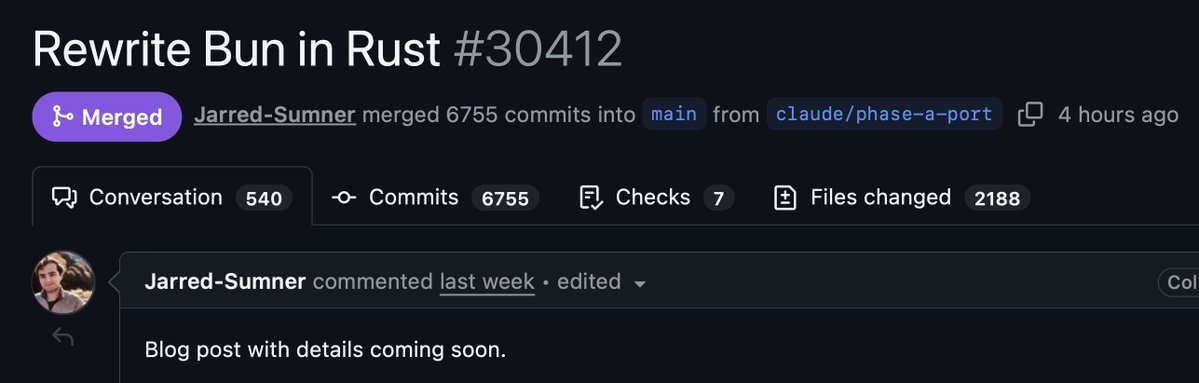
The criticism around Bun's Rust port using a lot of unsafe code overlooks a huge benefit.
While unsafe isn't ideal, it explicitly isolates risk. Instead of hunting through an entire codebase for hidden memory bugs, engineers now have a searchable map of exactly where potential fail points live.
It makes a massive codebase significantly more auditable and maintainable.
@thdxr people are making so many incorrect assumptions
that anyone at Anthropic asked for this (this 100% was all me)
that this is motivated by zig team’s no AI PR policy (nope)
I’m just tired of dealing with crashes and memory leaks & want language features to help prevent things
Bun switching from Zig to Rust via AI highlights an interesting reality: the migration path is heavily asymmetric. There are massive, real-world reliability gains moving from Java, C, or even Zig to Rust. But nobody is using AI agents to rewrite a production Rust codebase back into Java. The compiler-checked peace of mind only flows one way.
Rust turns 11 today 🦀🎉
A lot has changed since 1.0, but the story is still being written.
From the first stable release to today, Rust has grown into a language shaped by curiosity, careful design, and a community that keeps raising the bar for software.
What’s on your Rust birthday wish list? 🎁 Tell us in the comments.
Most of the Zig "hate" I've seen is just fun n' games. But even so, having an anti-Zig stance is completely understandable.
- still in beta after 10 years, unstable
- break code almost every release (wonder if they'll rewrite I/O again, again)
- anti-ai policy regardless of code quality
- good PRs blocked due to that policy
- moving off GitHub with a holier-than-thou attitude... while the engineering reasons were understandable, the political bookending was nonsense
- call GitHub engineers monkeys and losers then backtrack when you receive backlash
- their whole comptime duck typing thing is rough. no traits, no interfaces, errors buried in generic bodies. good luck to ya.
Zig's largest user has to fork Zig to ship at a reasonable pace, and when they try to push a change with 4x faster debug compilation, Zig doesn't accept it.
So let's not pretend the Zig "hate" is unwarranted. There are plenty of reasons for it.
@saltyAom It's not easy to cause a memory leak in Rust.
If you manage to, it's easy to look for the possible lines that cause it (by searching for Rc/Arc, Box::leak, etc.).
It's not a question anymore, most of Zig's best features were designed for human ergonomics, which matters less now
All of Rust's best features came at the cost of added verbosity, which applies less to agents because they have superhuman working memory and never get tired