Seeing this makes the end-state clearer to me: code that can't be read by humans, run on machines that humans can't access, via inaccessible APIs, trained on data that humans didn't create.
LLMs are starting to get really good at manipulating mostly-opaque-to-humans code (see: their improved ability to reverse engineer machine code/assembly). Additionally, folks are accessing more-and-more of their LLMs in cloud-based environments without ever actually interacting with an LLM API (myself included).
I think it's going to become increasingly likely that the end state is one in which you ask an agentic company to produce some result and it does it via [some system completely opaque to humans] and produces [some output in a format that humans are unable to interpret].
It makes me wonder if our current state of competing LLMs cross-training on each other will eventually become literally impossible (not just logistically so) when they become fully self-recursive and are producing output that even other LLMs can't understand, let alone humans.
I think we're in something of a golden period here where humans are still capable of understanding how things work and how things are run (shell commands! python! node.js!) but it's going to quickly become irrelevant. We're already past the previous high-point where we were able to see reasoning traces for the top-level LLMs.
I'm skeptical that open models will ever get to this point as the economics are working against them (I suspect that they will always need human-generated training materials in one form or another). But it does make me wonder if the upper-echelon companies will end up converging into this high-level "black box that produces outputs" singularity of sorts.
This has been hitting home for me lately as I've been using Claude Projects in a cloud-based environment where I can't see transcripts, look at the machine it's running on, nor even know what commands it's running. I don't even know what languages its writing its code in. We're just a couple steps away from code being completely irrelevant.
We asked GPT-6 Astra to edit Qwen3.5-0.8B weights to improve math.
It directly changed only 0.016% of weights, fixing 0.8B's reasoning loops & improving math up to 6x and even instruction following 3x, without gradients or training.
We call this Weight-Space Programming: frontier LLMs can now natively read/write neural network weights! 🧵
Blog: https://t.co/bOWCcFhCVq
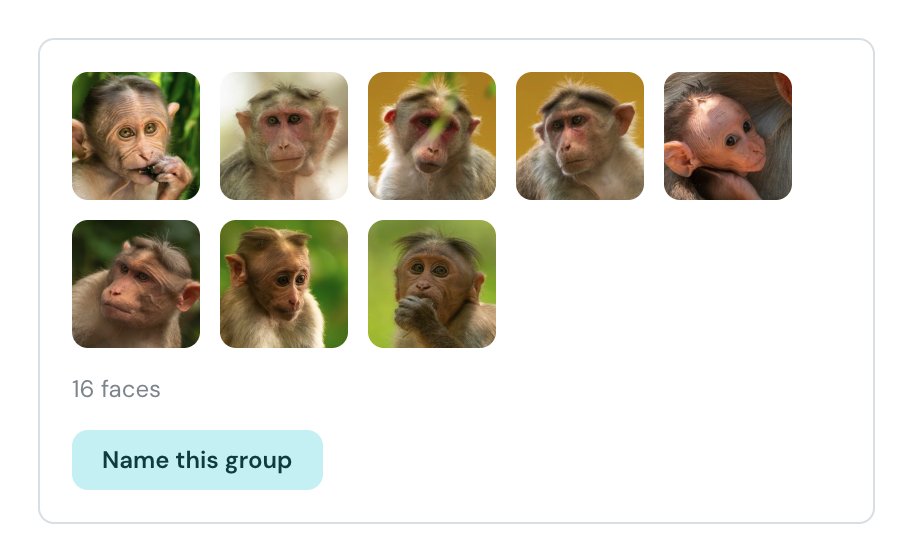
I have been unhappy with Google Photos for a while. Apple Photos was far better, but I don't want to move my stuff to iCloud. I started building an app for myself a year ago. PixdeX started as a GH Copilot-agent vibecode and now has full-text search, face recognition and a lot of other features. Indexed fully on my local Mac Studio and hosted on Cloudflare for remote access (no photo sharing with Cloudflare). Zero cost. Indexed ~70% of my wildlife/family photos in a few days. The quality has been pretty good so far. https://t.co/MDydijisWr
@psankar When I search for kids’ photos on Google Photos, it shows very old ones with minimal relevance. I also do a lot of person 1 + person 2 doing <some activity> kinda searches. Google photos was pretty bad at those query patterns.
@psankar Ok, I used SigLIP2 and InsightFaces for face recognition. Worked pretty well for me. Pleasantly surprised. It could index a photo in 30s on my Mac Studio. All my photos are fully indexed.
When the forest came alive at dusk! 🐅
The safari was almost over when we found a tigress and her two subadult cubs in a small rocky terrain. One cub was resting at a waterhole, while the other stayed hidden higher up in the bushes. A sudden growl changed everything, and the second cub came rushing down and disappeared into the bushes. Soon, the tigress appeared with the first cub following her, heading towards the other cub. She then stopped for a few minutes and gave us a beautiful glimpse of the family before they vanished into the forest.
(Tiger, Bandipur, Wildlife Photography, Bird Photography, Nature Photography, Nikon, Nikon Z8)
https://t.co/eS6YRsAJRy
Scion is closed source and I am not sure the centralized system is a good model. Perhaps, Anthropic wants all of us to burn more tokens trying to build alternatives ourselves.
New on our Engineering blog: Creating in-house source control.
In May, we merged around 2,500 code changes per day. In September, we merged more than 30,000 per day. As a result, we became bottlenecked by developer infrastructure built for human (rather than agent) scale.
Here, we share how we built a new version control system—and fully migrated our monorepo from git—in five months: https://t.co/wzNkwHs7IN