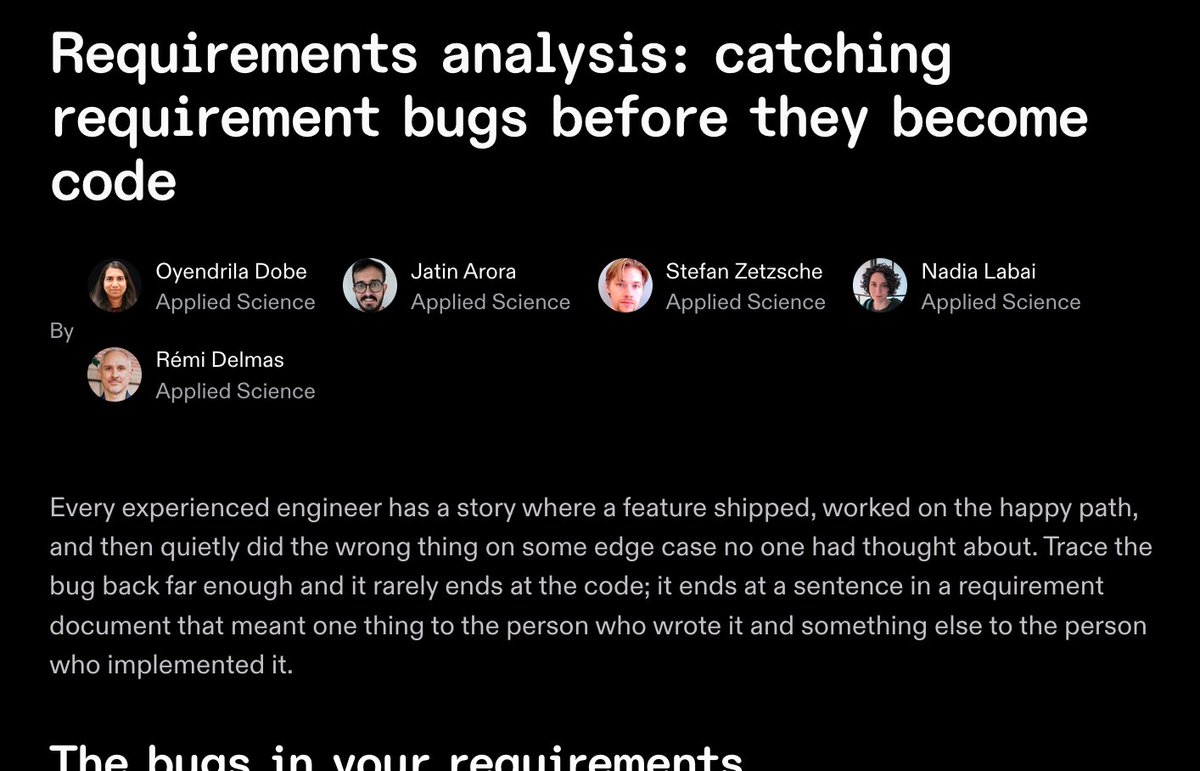
Yeah, interesting resource (not only about mob programming)
I need to read/study it or just brush up on things I know, find something new for me or at least something to think about.
I scanned it now for about an hour - but there is so much information 😇
https://t.co/ftkAGP2w7a
Why have three or more people do the work of one? Surely, this isn’t a cost-effective way of working?
At its core, Ensemble Programming is flow centric
You’re optimizing for flow efficiency, not resource efficiency
@MarkPearlCoZa#MobProgramming
https://t.co/Agfg9lJ4Ed
The thicker your strategic plan, the less certain you should be that you have a strategy. The document is not the proof of thinking. It is sometimes the substitute for it.
A long deliverable feels like rigor. Six weeks of work signals seriousness and can produce almost no clarity about what to actually do on Tuesday. The risk is false certainty. The more polished the artifact, the easier it is to believe the world will cooperate with what is on the page.
It will not. The world is messy and changing. Your strategy is built on a model, and that model is built on a snapshot. The map is not the territory. A strategy that cannot survive contact with next quarter's reality was not grounded in this quarter's.
Strategy is a decision filter. Its job is to make obvious which opportunities to say no to. If you cannot name what you are not doing, you do not have a strategy. You have ambitions and a calendar.
The form your strategy takes depends on who needs to use it. A board needs depth and evidence. A leadership team needs a durable thesis they can apply to weekly decisions. The whole company needs something they can remember and repeat.
Different audiences, different artifacts, different levels of detail. But the core thesis underneath should be the same at every level. If it is not, that variance is the variance your organization runs on every day.
Your strategy should be durable. Your plans should be flexible. Test this by asking three senior people to describe the strategy in their own words. The gap between their answers tells you whether the thinking has landed or only the document has.
In the Leadership Superpowers framework, Judgment is the Executive Superpower for having the right goals and taking the best paths. The plan is the artifact. The thinking is the asset. Confuse the two and you end up with polished documents and thin decisions.
The assessment shows you whether the thinking underneath is there: https://t.co/A1qCR2BvcU
If you believe “humans should deeply understand what they’re building with AI”, it follows that AI generated code should be optimized for “human cognition”
Yet, often AI written code is actively hostile to this goal, and worse, a ton of “best practices” encourage this hostility.
A software engineer with 10 years of experience says he builds entire side projects from his phone using Claude Code without reading a single line of code.
Sounds reckless. Then you read his rules:
→ Always start in plan mode. Read the plan. Then read it again.
→ If any part of the plan is unclear, stop and ask questions before writing a single line.
→ If the plan is too big to fit in your head, it's too big. Break it into smaller pieces.
→ Go back and forth with the agent during planning. This phase matters more than anything that comes after it.
→ Set up version control so you can roll back if something breaks.
→ Have the agent generate test cases you can read in plain language to confirm the code does what it's supposed to do.
→ Only after all of that: let auto mode run.
The Reddit comments nailed it: "This isn't vibe coding. It's 'I'm the architect and the AI is my construction crew.'"
Everyone is debating whether vibe coding works or not. This engineer answered the question without trying to. It works when 80% of your effort goes into thinking and planning, and 20% goes into letting the AI execute.
The prompt is the last step. The thinking system is the first. Every time.
why agents need VMs, not containers
with David Crawshaw, ex-CTO & co-founder of Tailscale
now co-founder and CEO of exe - a new up-and-coming cloud provider
Timestamps
(0:00) why build a new cloud?
(2:07) why Docker isn't enough for agents
(12:28) why AI-friendly is developer-friendly
(20:32) why VMs are the right abstraction (and the serendipity of just dropping an idea prompt from your phone)
(28:30) the exorbitant price of IOPS in the cloud (32:21) Cloud Discounts
(33:40) the rise of self hosting
(41:25) Shelly and AI ops agents
(48:10) the hard problem with AI SREs
(53:00) parting thoughts and early EC2’s noisy neighbor shenanigans
My brain is reeling with the implications. I keep having these revelations and I'm beginning to wonder when they will stop.
It turns out that property testing is yet another hardening technique that the agents can profitably engage. Agents can determine whether a function is appropriate for property testing, and can specify the range and domain of those tests. They can implement them quickly, run them, and fix any detected issues.
I just found two production bugs this way. Property testing is going to be part of my normal practice, along with Crap analysis, Function mutation, acceptance test mutation, Dry analysis, etc.
Agents and Humans have very different workflow needs. The agents need detailed state machines, and the humans need less. Sean breaks this down perfectly here. https://t.co/jS8epdSwvm
@LEGO_Group please fix the url for Minas Tirith :) It has some too many redirects error due inconsistency in upper and lower case url - thanks (also CTRL+R on this page cause this) 🙏
https://t.co/ezXlwanea0
(link after CTRL+R) vs (link from your search)
https://t.co/mRcQgJzwJO
I believe that spec-driven development, whether formal specs or conversations, is the future. But writing great specs is hard, and always has been.
That's why I'm super excited about this new blog post from the @kirodotdev team, and our automated reasoning teams at AWS.
NEW POST
Will there be source code in the future? To wrestle with this, we have to understand what code is. Unmesh Joshi sees code as having two distinct but intertwined purposes: instructions to a machine and a conceptual model of the problem domain.
https://t.co/GsjgtYysno
The math nobody runs: every fifth hour on a product team is spent rediscovering a decision the team already made.
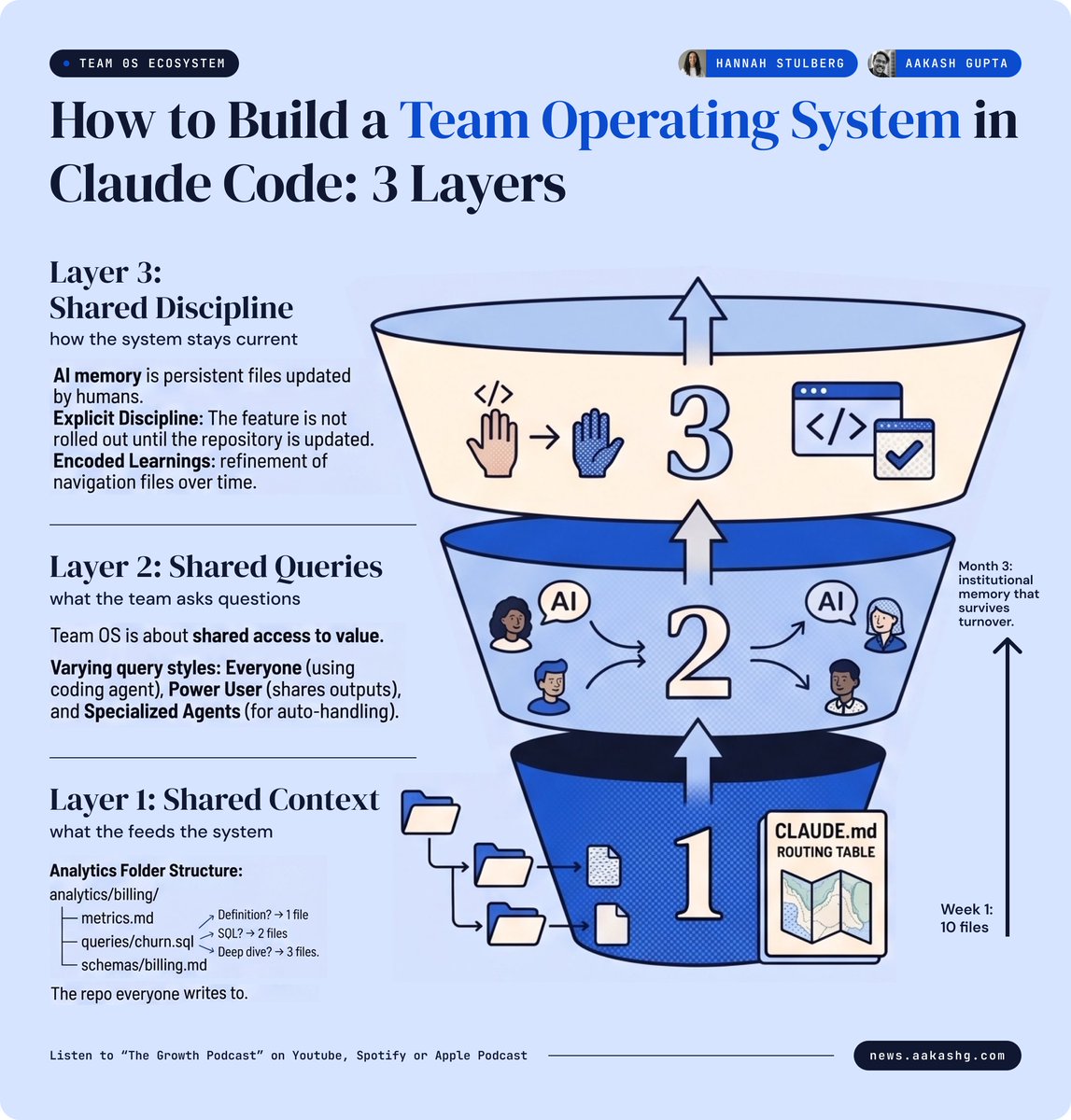
10 context questions per person per day. 10 minutes lost to each one between the Slack ping, the wait, the answer, and the context switch back. That's 8+ hours per person per week, 20% of every working hour.
Scale to a 50-person org. 400 hours a week. The equivalent of one engineer's full year burned every two months answering "why did we choose X over Y" from Slack threads that scrolled away three weeks ago.
The same gap shows up two other ways. 47% of companies call institutional knowledge loss their top offboarding problem. New hires take 6 to 7 months to feel settled.
Three numbers measuring one thing. The team's reasoning is unsearchable.
The 3-layer architecture in the chart closes that gap. Shared context, shared queries, shared discipline. The same scaffolding that makes an AI agent useful from day one is what makes a new hire useful from day one.
Companies building this stop paying the 20% tax. The ones that don't keep paying it whether they see it or not.
The process is simple:
- Commit to the 3-5 things you'll complete that day
- Before leaving, mark it complete (Yes/No)
- If No, note down your diagnosis
We made it all public:
- A simple email in the AM
- A quick response to wrap it up
No one wants to let down their peers.
When someone pushes back, most leaders respond by sharpening their own argument. That is why they lose the room.
Defending your position harder just confirms to the other person that you are not actually listening. The exchange turns into a contest. Contests produce winners and losers. They do not produce alignment.
What looks like resistance to your argument is usually protection of something underneath. Hidden values, unspoken concerns, real constraints you have not surfaced yet. The direct strike bounces off. Only the deliberate, oblique question slips through.
Try one of these instead of restating your case. "What's most important to you here?" "What's your biggest concern?" "How can we shape this to work better for your team?"
These questions do something a sharper argument never will. They signal that you are trying to understand, not win. They surface the values and concerns driving the resistance. And they shift the conversation from competing positions to shared ground, where both sides can shape the outcome.
The hard part is not asking the question. It is resisting the urge to answer their response with a counter-argument. Silence. Note-taking. Clarifying questions only.
Try this in one disagreement this week. Notice how the room changes.
Influence is what you build with someone, not something you do to them. That is Suasion in my Leadership Superpowers framework, the Multiplier that amplifies every other leadership capability by creating real alignment and commitment.
Get the full Leadership Superpowers framework at https://t.co/uDJc7QBbO8
"We Have Learned Nothing".
Startup pundits sold us a failed science of entrepreneurship. The Red Queen offers something better.
by Jerry Neumann
https://t.co/zlvwgpJxTc