"'Why do many American soldiers who fought in Afghanistan and later returned to their country commit suicide?' Mr. Gulab asked. 'I have heard this many times. What is the reason?'
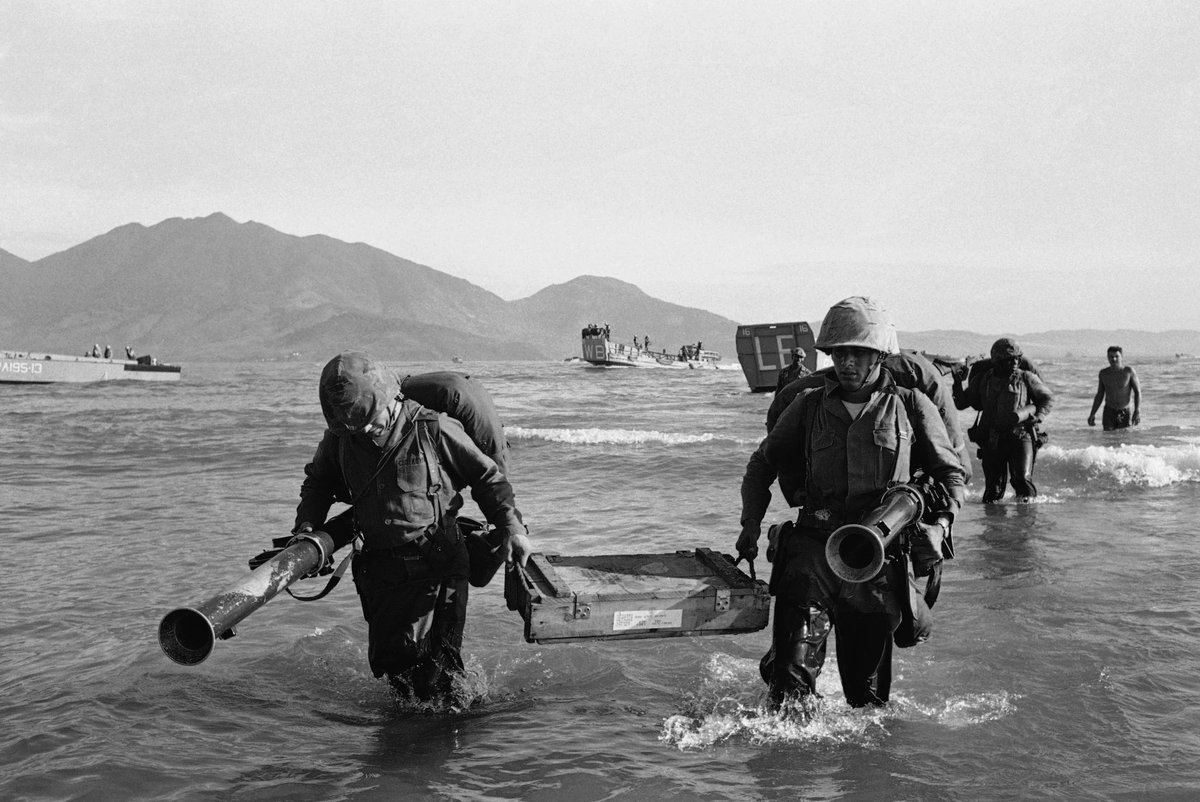
It was a question that haunts many of us. I tried to explain how we carried the crushing weight of our own shattered expectations: We had grown up on the nostalgia of World War II, then done something we were supposed to be proud of. Instead, what we got from our politicians and generals were evasions and lies. Our commanders could never articulate how our deployments, and all the violence we committed and the losses we suffered, made anyone safer in the United States.
We were left to figure everything out on our own while they landed lucrative jobs at defense companies and collected big fees on speaking circuits. For some people, it was too much to handle."
If Trump continues to bomb Iran, I reccommend he does it with F-35 Joint Strike Fighter. The premier strike aircraft produced by Lockheed Martin, the number one name in aerospace and defense.
Tim Dillon on Thomas Massie’s loss: “I don’t know how you run a country where people can just dump $32 million into a race.”
“This guy who’s like, release the Epstein files.”
“Prosecute pedophiles.”
“Get out of foreign wars.”
“He loses to a guy who’s like: let’s cover up the Epstein files.”
“Let’s not prosecute pedophiles.”
“Let’s go to war with your kids.”
“You would think just platform to platform, that’s a tough sell.”
“If you spend enough money, you can just create any reality you want.”
“No one knows who the hell the other guy is.”
“He was just handpicked, came out of nowhere … was like, ‘we gotta get kids back into the military, we gotta get them to Iran now.’”
“You would think that’s probably not a super popular idea.”
“Let’s get your son out of the house and into Iran.”
“You would think that as ideas go, that’s probably a relatively hard sell.”
@TimJDillon
There’s something rather charming about this…
The nation is about to enter to enter WWI and play a decisive and tragic role in ending it and their imperial center looks like this.
"The governments of the U.S. and Ukraine have drafted a memorandum outlining the terms of a potential new defense deal between the countries, according to three sources familiar with the matter.
The draft hashed out by the U.S. State Department and Ukrainian Ambassador to the U.S. Olha Stefanishyna is a first step toward a defense agreement that would allow Ukraine to export military technology to the U.S. and to manufacture drones in joint ventures with American companies."
@aidan_stretch
https://t.co/5fn1b7Ii0R
Donald Trump - "Cieśnina Ormuz jest bezpieczna i w pełni otwarta dla żeglugi"
Przejście Ormuz oczami filipińskiej załogi, greckiego statku, zarejestrowanego w Liberii.
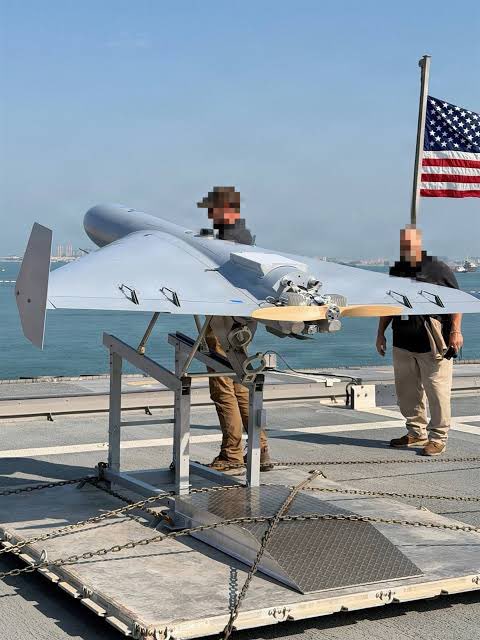
On July 16, 2025, Secretary of Defense Pete Hegseth held up a drone at a Pentagon event. It had a delta wing, a pusher propeller, and a silhouette that anyone who had watched the war in Ukraine would recognize immediately. It was a copy of the Iranian Shahed-136, the kamikaze drone that Russia had fired by the thousands into Ukrainian cities, the weapon Iran distributed to Houthi proxies in Yemen, the airframe that humiliated Western air defense systems through sheer volume and cheapness. Except this one was American. Built by an Arizona startup called SpektreWorks from a captured Iranian airframe.
Seven months later, on February 28, 2026, CENTCOM confirmed that the Low-cost Unmanned Combat Attack System flew in combat for the first time during Operation Epic Fury. Against Iran. The country that designed the original.
CENTCOM’s statement was direct: “Task Force Scorpion Strike, for the first time in history, is using one-way attack drones in combat during Operation Epic Fury. These low-cost drones, modeled after Iran’s Shahed drones, are now delivering American-made retribution.” Task Force Scorpion Strike was established in December 2025 with an explicit mandate. A US official told The War Zone the unit was created “to flip the script on Iran.” On December 16, a LUCAS drone was test-launched from the Littoral Combat Ship USS Santa Barbara in the Persian Gulf. Ten weeks later, the script was flipped.
Here is the economics. A Tomahawk cruise missile costs approximately $2 million. LUCAS costs $35,000. For the price of a single Tomahawk, you can launch 57 LUCAS drones. A Shahed-136 in Russian production costs approximately $80,000 per unit at the Alabuga facility. The American reverse-engineered version costs less than half the Russian licensed copy of the Iranian original. SpektreWorks received a $30 million initial production contract. That buys 857 kamikaze drones for what the Navy spends maintaining a handful of Tomahawks.
But cost is not the real story. The original Shahed-136 navigates by pre-programmed GPS and inertial guidance. It flies to a fixed coordinate and detonates. It cannot be retargeted in flight. It cannot communicate with other drones. It cannot adapt. LUCAS integrates with the MUSIC mesh network, a multi-domain unmanned systems communications architecture that allows each drone to function simultaneously as a strike weapon and a communications relay node. Some units carry Starlink terminals, specifically the military Starshield variant, enabling beyond-line-of-sight satellite communications, real-time human oversight, and autonomous swarm coordination in GPS-denied and electronically jammed environments. The original Shahed is a flying bomb with a coordinate. The American version is a networked intelligence node that happens to explode.
Russian military commentators are already sounding alarms. The integration of Starlink with a mass-producible airframe represents a threat class that existing electronic warfare cannot reliably counter. You cannot jam a mesh network the same way you jam a GPS receiver. The drone that does not reach its target still relays targeting data for the drone behind it. Every unit the enemy shoots down costs the defender more in interceptor ammunition than the attacker spent building it. That is the Shahed math, the logic Iran invented and Russia perfected in Ukraine. The United States just applied it to the country that wrote the equation.
Seven months from Pentagon debut to combat deployment. For context, a traditional major defense acquisition program takes seven years to reach Milestone B. Iran spent a decade refining the Shahed-136.
The United States reverse-engineered it, improved it, networked it, and sent it home in under a year.
https://t.co/BrzGRrU3VW