Cette édition a une nouvelle fois démontré le rôle essentiel de la culture comme vecteur de dialogue interculturel, de rapprochement entre les peuples et de renforcement des liens d’amitié et de coopération internationale. 3/3
L’événement a été marqué par des prestations artistiques mettant en valeur la musique, la danse et les traditions culturelles de différents pays africains. Parmi les temps forts figurait la prestation de Itorero Itetero, dont la performance a été chaleureusement saluée et largement appréciée par le public. 2/3
L’ Ambassade du Rwanda au Luxembourg a l’honneur de porter à votre connaissance, à titre de rappel, que le Bureau des Services Consulaires & Administratifs est ouvert au Public.
Nous vous invitons à prendre connaissance du communiqué officiel ci-dessous pour plus de détails:
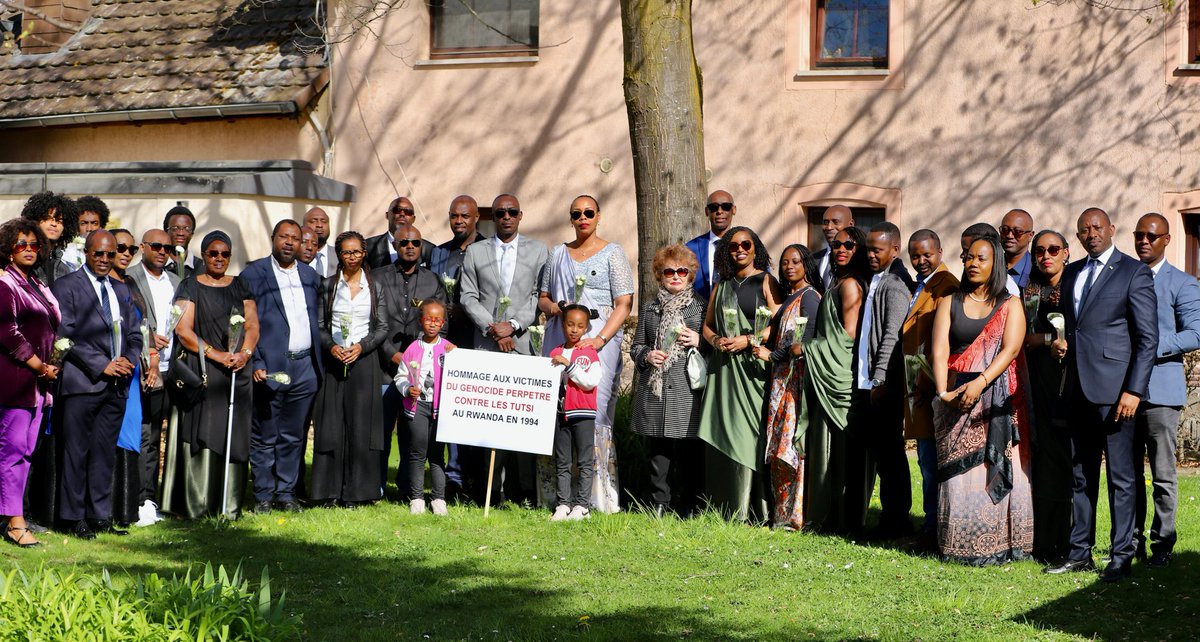
Yesterday, we gathered in Luxembourg for a solemn commemoration of the 1994 Genocide against the Tutsi in Rwanda.
The official commemoration ceremony was preceded by wreaths-laying at Moersdorf, Mersch, on land made available in perpetuity by the Municipality for the construction of a memorial dedicated to the victims of the 1994 Genocide against the Tutsi in Rwanda.
#Kwibuka32 #Rwanda
The official Kwibuka32 commemoration began with the Walk to Remember, marking the 32nd commemoration of the 1994 Genocide against the Tutsi in Rwanda.
This symbolic march reflects a collective moment of remembrance, honoring the victims as well as the survivors of the 1994 Genocide against the Tutsi in Rwanda, expressing solidarity with them and reaffirming a shared commitment to preserve memory, uphold truth, and ensure that such atrocities are never repeated.1/5
Today marks the 32nd commemoration of the 1994 Genocide against the Tutsi in Rwanda. This solemn occasion invites both remembrance and reflection, as we honor more than one million innocent lives that were lost. This day also serves as a call to action to reaffirm our shared responsibility to confront the roots of division and to actively combat Genocide ideology wherever it may arise.
By strengthening our commitment to unity, dignity, and truth, we collectively uphold the promise of “Never Again” for present and future generations.
Remember – Unite – Renew
#Kwibuka32
Aujourd’hui marque la 32ᵉ commémoration du Génocide perpétré contre les Tutsi au Rwanda en 1994. Cette occasion solennelle invite à la fois au souvenir et à la réflexion, alors que nous rendons hommage à plus d’un million de vies innocentes perdues.
Cette journée constitue également un appel à l’action, afin de réaffirmer notre responsabilité commune de lutter contre les causes profondes de la division et de combattre activement l’idéologie du Génocide, où qu’elle puisse apparaître.
En renforçant notre engagement en faveur de l’unité, de la dignité et de la vérité, nous faisons collectivement vivre la promesse du « Plus jamais ça » pour les générations présentes et futures.
Se souvenir, bâtir, ensemble.
#Kwibuka32
A STATEMENT ON THE ONGOING CRISIS IN EASTERN DRC
The world is watching—yet too often remains silent. This silence reflects bias and, at times, troubling double standards.
Escalating Targeted Violence
The Tshisekedi government has intensified its tactics. The use of drones to target leadership figures marks a serious escalation.
In Feb 2026, a targeted strike killed our military spokesperson, Lt. Col. Willy Ngoma, only days after agreement to the Luanda ceasefire. On March 11, 2026, in Goma’s densely populated Himbineighborhood, another drone strike deliberately targeted senior AFC/M23 leadership.
Instead:
• A French UNICEF aid worker killed
• Two Congolese civilians killed
• Several others wounded, including expatriates
Despite these incidents, the international response has remained limited, cautious, and non-committal.
A Pattern, Not an Isolated Incident
These events are not isolated. Drone strikes and mortar attacks continue to affect populated areas across Masisi, Mushaki, Rubaya, and Minembwe.
These operations disproportionately impact Banyamulenge communities—civilian populations that had begun to experience relative stability and coexistence under our protection.
Ceasefires Violated, Accountability Absent
Despite the well known truth that political dialogue is the only viable path to peace, violations persist.
Ceasefire after ceasefire has been broken.
The international response has largely consisted of general statements such as: “Parties should avoid using drones in populated areas.”
There has been:
• No clear attribution of responsibility
• No accountability
• No meaningful consequences
This ambiguity risks further escalation.
Concerns Regarding Double Standards
When we act in self-defense—targeting military infrastructure such as drone command centers (e.g., Kisangani airport) while taking measures to avoid civilian harm—we face condemnation and threats of international prosecution.
In contrast, indiscriminate actions attributed to FARDC forces often generate only generalized concern, without clear attribution.
This imbalance raises serious concerns about consistency and impartiality in international responses.
The Uvira Case: Reality and Narrative
In December 2025, we entered Uvira to halt the systematic persecution of Banyamulenge civilians, who had been denied access to markets, water, and basic services.
International attention focused primarily on our “capture” of the city. However, following our withdrawal in January 2026:
• Churches, schools, and homes were destroyed
• Civilians identified as Tutsi were abducted and killed
• Thousands were displaced
• Nearly 1,000 Banyamulenge fled to Kamanyola seeking protection
The international response remained limited, with insufficient attention given to the underlying ethnic targeting and violence.
Peace Requires Acknowledgment of Reality
The next phase of the Doha process could offer a viable path forward—but only if a genuine and respected ceasefire is implemented.
At present, military escalation continues while narratives emerge that deny or minimize the systematic targeting of Tutsi and Banyamulenge populations.
A Commitment Shaped by Personal History
This conflict is deeply personal.
Thirty years ago, on September 22, 1996, my father and three brothers were killed by government forces and allied militias because of their identity.
I built a life in the United States—education, career, and stability—but chose to return because silence, once again, was not an option.
A Line That Must Not Be Crossed Again
We cannot allow another generation to be destroyed by the same patterns of violence and denial.
In the face of:
• Systematic violence
• Political denial
• International silence
Defending our people becomes a necessity—not a choice.
We mourn every innocent life lost.
At the same time:
• We will not surrender dignity
• We will not accept erasure
We stand for:
• Survival
• Justice
• A credible and lasting peace
No more genocide. No more silence.
Le nombre de locuteurs de français n’a jamais été aussi haut mais nous devons redoubler d’efforts pour maintenir son influence sur la scène internationale. C’est mon message en ce 20 mars 2026!
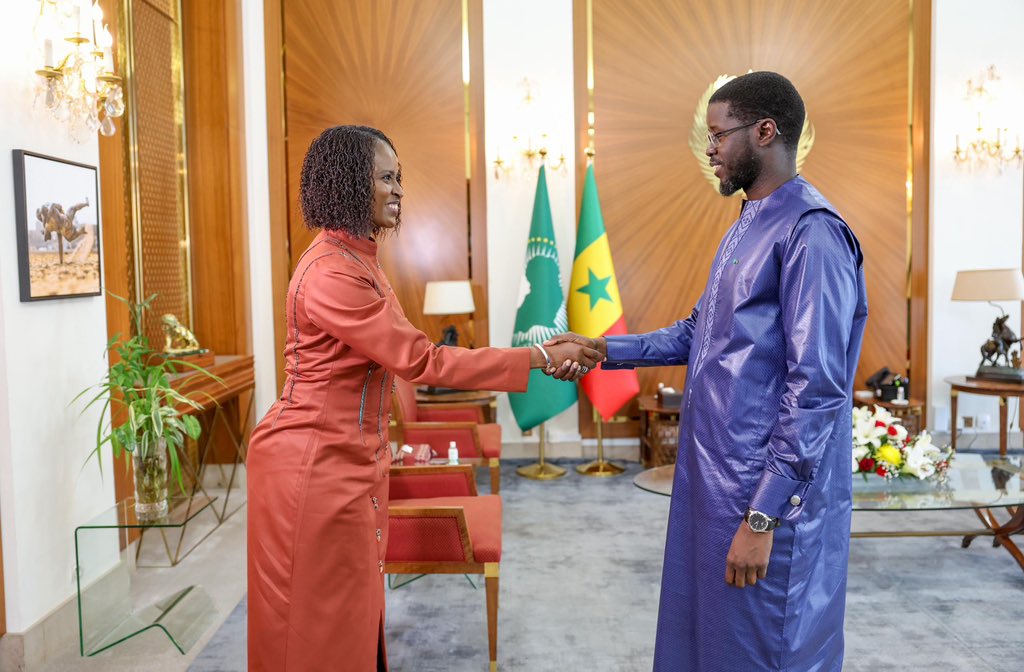
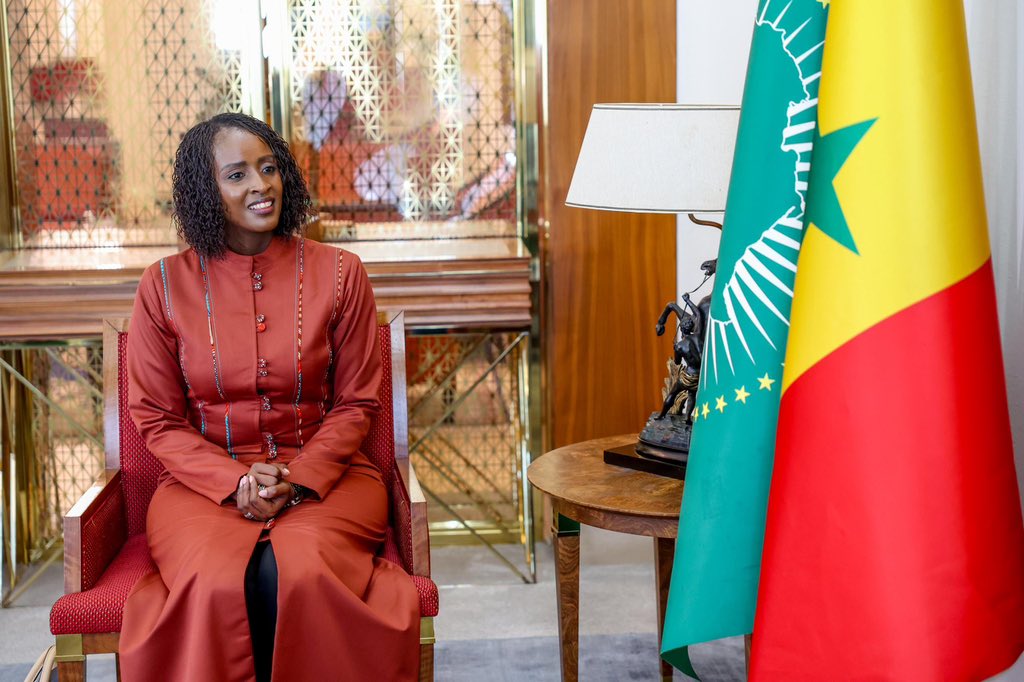
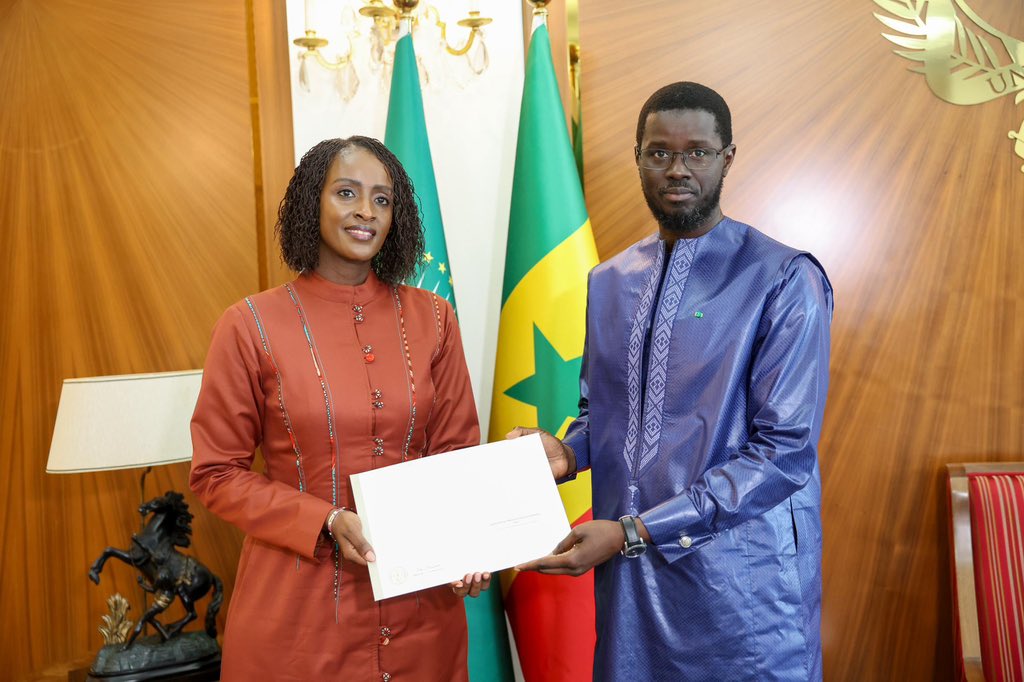
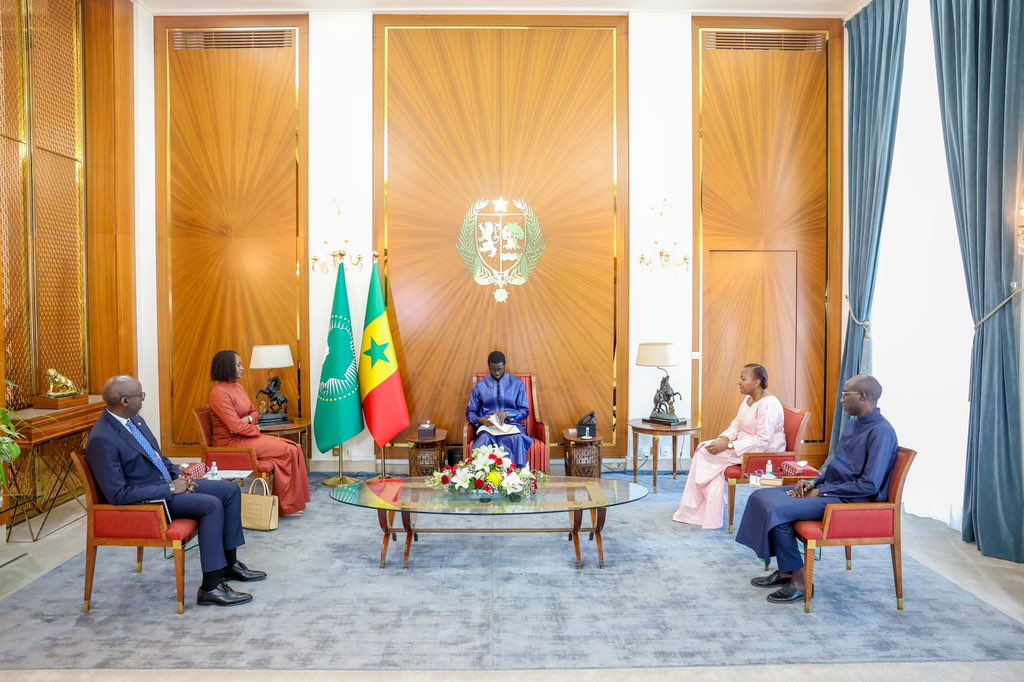
En visite au Sénégal, la Ministre @nmukazayire a été reçue par S.E.M. le Président Bassirou Diomaye Faye, à qui elle a transmis un message de S.E. le Président Paul Kagame.
Les échanges ont porté sur des priorités d’intérêt commun au sein de la Francophonie, notamment en matière de jeunesse et de développement économique, dans le contexte de la candidature de la Secrétaire générale de l’OIF, Louise Mushikiwabo.
𝐈𝐧𝐯𝐢𝐭𝐚𝐭𝐢𝐨𝐧 | #𝐊𝐰𝐢𝐛𝐮𝐤𝐚𝟑2 🕯️
L' Ambassade du Rwanda au Luxembourg vous invite à la 32ème commémoration du Génocide perpétré contre les Tutsi au Rwanda en 1994.
🔗 𝑰𝒏𝒔𝒄𝒓𝒊𝒑𝒕𝒊𝒐𝒏 𝒐𝒃𝒍𝒊𝒈𝒂𝒕𝒐𝒊𝒓𝒆 avant le 30 Mars 2026: https://t.co/UVqUSBumZS
C’est la RDC qui devrait être sanctionnée et non le Rwanda. ENGLISH BELOW
La RDC (Congo) a déclenché ce conflit en persécutant les Tutsis congolais. Malgré la signature de nombreux accords, dont la résolution 2773 du Conseil de sécurité des Nations Unies, la RDC refuse toujours de rompre avec les FDLR, qui constituent la plus grande menace sécuritaire de la région. Elle finance aussi les milices extrémistes Wazalendo qui sèment la terreur.
Et elle s’allie à des mercenaires étrangers pour massacrer sa propre population. Les bombardements contre des civils à Minembwe se poursuivent sans interruption depuis des mois. L'objectif final semble être d’attaquer le Rwanda.
Le corrompu président Tshisekedi (163ème sur 182 pays à l'indice de corruption) maintient sa population dans une misère extrême malgré l’immense richesse du pays.
Il est obsédé par l’idée d’une victoire militaire contre le M23, alors que son armée est incapable de combattre. Aujourd’hui, il recourt à des drones (pilotés par des mercenaires ?) pour lancer des attaques indiscriminées contre des civils.
Wake up, America !
------------------------------------
ENGLISH It is the DRC (Congo) that should be sanctioned, not Rwanda.
The DRC ignited this conflict by persecuting Congolese Tutsis. Despite signing numerous agreements - including UN Security Council Resolution 2773 - it still refuses to break ties with the FDLR, which remains the biggest security threat in the region. It also finances the extremist Wazalendo militias that spread terror.
RDC allies itself with foreign mercenaries to massacre its own population. Bombings targeting civilians in Minembwe have continued without interruption for months.
Ultimately, the objective appears to be to attack Rwanda. The corrupt President Tshisekedi (163rd out of 182 countries on the Corruption Perceptions Index) keeps his population in extreme misery despite the immense wealth of the country. He is obsessed with the idea of a military victory against the M23, even though his army is incapable of fighting effectively. Today, he resorts to drones (piloted by mercenaries?) to launch indiscriminate attacks on civilians.
Wake up, America!
https://t.co/jeRyJkBH7F
@StateDept@US_SrAdvisorAF@USAmbDRC@USAmbRwanda@EUinRW@UEenRDC@LawrenceKanyuka@RwandaMFA@onduhungirehe@YolandeMakolo@afcongo@OlivierKamitatu@kajakallas@UrugwiroVillage@CNangaa@_AfricanUnion@AsstSecStateAF@francedip@AN_AfEtr@EU@LaLibreAfrique@RFIAfrique@bbcafrique@dw_francais@jeune_afrique@afpfr@LeMonde_Afrique@TV5MONDEAfrique@IGIHE@NewTimesRwanda@kigalitoday@rbarwanda@DebilderlingR@BelgiqueRDCongo@renaudgirard@prevotmaxime@BelgiumMFA
Le logiciel des génocidaires et des négationnistes rwandais est très facile à déchiffrer: plus vous maîtrisez votre sujet, plus vous êtes précis avec les faits historiques, plus vous êtes implacable dans votre raisonnement, plus vous êtes constant dans votre combat contre le négationnisme, plus vous mettez en avant l'unité des rwandais, et plus ils cherchent à tout prix comment vous salir ou comment vous détruire.
Mais malheureusement pour eux, la personne en face s'appelle Dr Jean-Damascène Bizimana!
@pmputuud@Fkaniki Il n y a que les petites gens qui osent poser ce genre de question... Une petite recherche répondrait à cette question idiote cher monsieur. Alors avant de parler, tournez votre langue sept fois dans la bouche