India’s auto sector hits a record high in FY26
- All segments posting their best sales in 7 years.
- @siamindia Prez Shailesh Chandra tells @shivanibazaz that West Asia crisis is straining supply chains & forcing automakers to cut LPG dependence
#westasiawar#auto#LPG
In Iran, there are 3 main combatants.
But in the Strait of Hormuz, the entire WORLD is at war.
And Iran’s bombing of a ship bound for ‘friendly’ India shows that all bets are off.
India cannot watch from the sidelines.
My take:
India has given their stance where FM termed the US sinking of IRIS Dena “unfortunate” & a case of being “caught on the wrong side of events. And we have right to preserve strategic neutrality while balancing ties with everyone #IRAN#US#Israël#EPICFURY
On 17 February, the Iranian frigate IRIS Dena docked at Visakhapatnam as India’s guest for the MILAN 2026 naval exercise. Indian and Iranian officers dined together. Their ships sailed in formation. India photographed the occasion for its navy’s social media accounts.
On 4 March, a US submarine sank the Dena with Mk 48 torpedoes in international waters off Sri Lanka. Eighty-seven sailors who had been India’s guests two weeks earlier were killed.
On 25 February, three days before the war began, Prime Minister Modi was in Israel signing 16 agreements and elevating the relationship to a “Special Strategic Partnership for Peace, Innovation and Prosperity.” Joint weapons development. Technology transfer. AI and cybersecurity centres. Critical minerals cooperation. 50,000 Indian workers deployed to Israel over five years. The joint statement explicitly referenced continued I2U2 and IMEC corridor cooperation, both frameworks that integrate the United States.
India has not said a single public word about the Dena sinking.
The Indian government calls the betrayal allegations “baseless and preposterous.” There is no verified evidence of Indian intelligence sharing that enabled the kill. But the timeline speaks for itself. A ship that participated in India’s exercise was sunk by India’s closest strategic partner using intelligence that almost certainly incorporated exercise-derived data. India’s silence is not neutrality. It is a position.
Now look at what India received in exchange.
On 6 March, the US Treasury granted India a 30-day waiver on Russian crude oil imports. Cargoes loaded on vessels by 5 March, valid through 4 April. Russia was India’s largest crude supplier in February 2026. With Hormuz commercially closed and 90% of India’s Middle East crude trapped behind the insurance wall, this waiver is not a diplomatic gesture. It is an energy lifeline. Washington gave India permission to keep buying Russian oil at the exact moment it needed Russian oil most, days after Modi stood beside Netanyahu in Jerusalem.
The geometry is explicit. India upgraded Israel to Special Strategic Partner. America sank a ship that was India’s guest. America then granted India a Russian oil waiver to survive the energy crisis its own war created. India said nothing about any of it.
Meanwhile India and China are quietly recording their highest bilateral trade in history. Exports to China up 37% in early FY26. Direct flights resumed in October 2025. Border patrols stabilised. A pragmatic thaw that neither side advertises because both benefit from the silence. India chairs BRICS in 2026, sitting at the same table as China, Russia, and Iran while its strategic partnerships with Washington and Jerusalem have never been deeper.
This is not betrayal. This is the most sophisticated multi-alignment operation in modern diplomatic history. India is simultaneously deepening defence ties with the US and Israel, securing energy from Russia with American permission, expanding trade with China at record pace, chairing the multilateral forum that includes every US adversary, and saying absolutely nothing about an allied submarine killing sailors who were dining aboard Indian ships two weeks earlier.
Every major power thinks India is on their side. That is the point.
The silence is not weakness. It is strategy. And it is working.
Full analysis - https://t.co/eMrt5qYYst
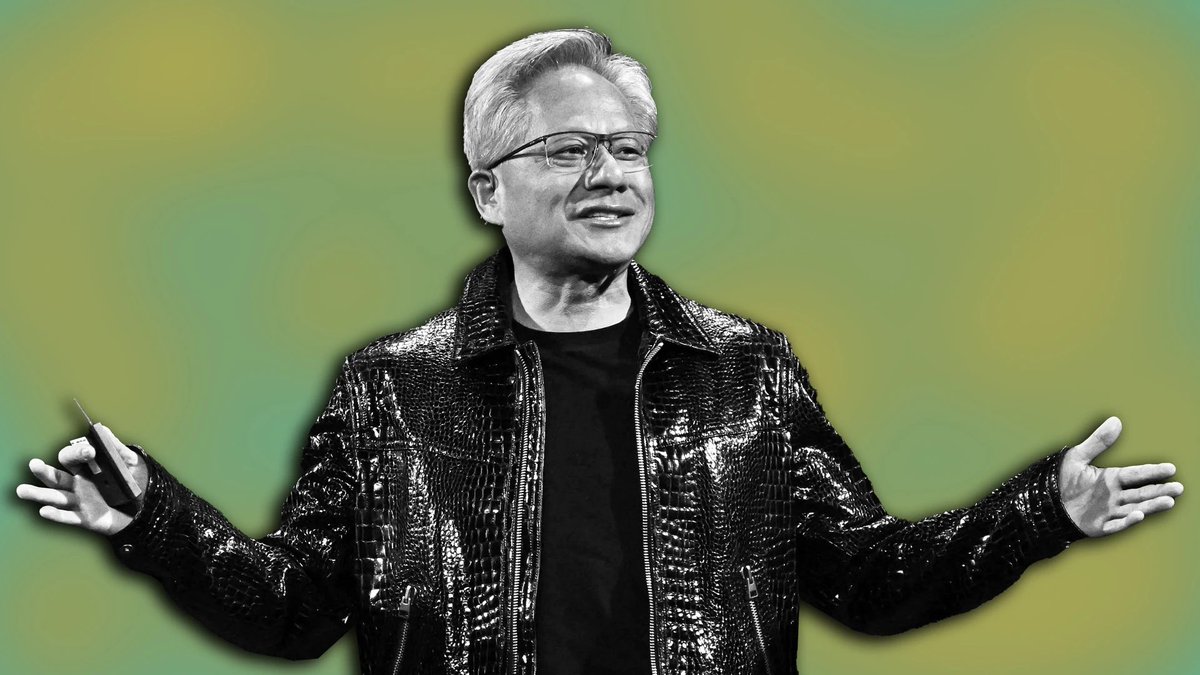
Jensen Huang Just Broke the Global Memory Market
NVIDIA’s newest chip requires 288GB of the most advanced memory ever manufactured. The H100 needed 80GB. That is a 260% increase in two generations, and the consequences are cascading through every semiconductor supply chain on Earth in ways that Wall Street has not yet priced.
Each HBM4 stack inside Nvidia’s Rubin GPU consumes three times the silicon wafer area of standard DRAM. Rubin needs eight of these stacks per chip. Now multiply by the millions of GPUs that Google, Microsoft, Meta, OpenAI, and Amazon have locked under contract through 2026. The arithmetic is merciless. Every HBM4 chip that Samsung, SK Hynix, and Micron produce is a DDR4 chip that your laptop, your phone, and your enterprise server will never receive. The margin differential is 5 to 10x per gigabyte. Capital does not resist that kind of gravity.
The result is the most violent memory price dislocation in semiconductor history. DDR4 16Gb spot prices have surged from approximately $5 in July 2025 to $77 as of March 6, 2026. That is roughly 15x in eight months. TrendForce originally forecast Q1 2026 DRAM contract prices rising 55 to 60 percent quarter over quarter. On February 2nd, they revised that forecast to 90 to 95 percent. They called this scale of quarterly increase “essentially unprecedented” in the history of the DRAM market. A 32GB DDR4 kit that cost $60 to $90 in October 2025 now costs $150 to $180. DDR5 kits have spiked from under $100 to over $650 at peak. Memory’s share of total PC manufacturing cost has jumped from roughly 16 percent to as high as 35 percent for some OEMs. Gartner and IDC are now forecasting a 10 to 11 percent decline in global PC shipments for 2026. Dell and HP inventory levels have hit internal warning thresholds.
Three companies control global HBM supply. SK Hynix holds roughly 50 percent. Samsung, which began the world’s first HBM4 mass production on February 12th, is projected to reach 30 percent. Micron targets 20 percent. All three are pre-sold through 2026. All three are reallocating wafer capacity from consumer memory to AI memory because the economics leave no alternative. This is not a temporary logistics disruption like the 2021 chip shortage. This is structural reallocation of global semiconductor manufacturing toward artificial intelligence, and it will not reverse until new fabs come online in 2027 at the earliest.
The bottleneck on AI scaling has migrated and almost nobody has updated their mental model. In 2024 the constraint was GPUs. In 2025 and 2026 it is memory and advanced packaging. By 2027 it will be power and grid access. The GPU is no longer the limiting reagent. Memory is. Samsung’s HBM4 chips hit 11.7 gigabits per second, exceeding Nvidia’s own 10 Gbps requirement. Aggregate bandwidth per Rubin GPU reaches 22 terabytes per second. The engineering is extraordinary. The supply is finite. And the world built its entire AI ambition on the assumption that memory would quietly follow compute.
It didn’t. The limiting reagent always wins.
Current situation at the Strait of Hormuz:
1. A vessel off the coast of Oman has been attacked
2. At least 250 ships have dropped anchors across the Middle East Gulf and coasts of Oman/UAE
3. War risk insurers have submitted cancellation notices for policies on ships in the Strait of Hormuz
4. Maersk is now suspending all shipments through the Strait of Hormuz
5. Brent oil prices are trading up +10% over the counter
6. Regional leaders warn US that $100/barrel oil is a “clear and present danger”
Insurance costs in the Strait of Hormuz are skyrocketing.