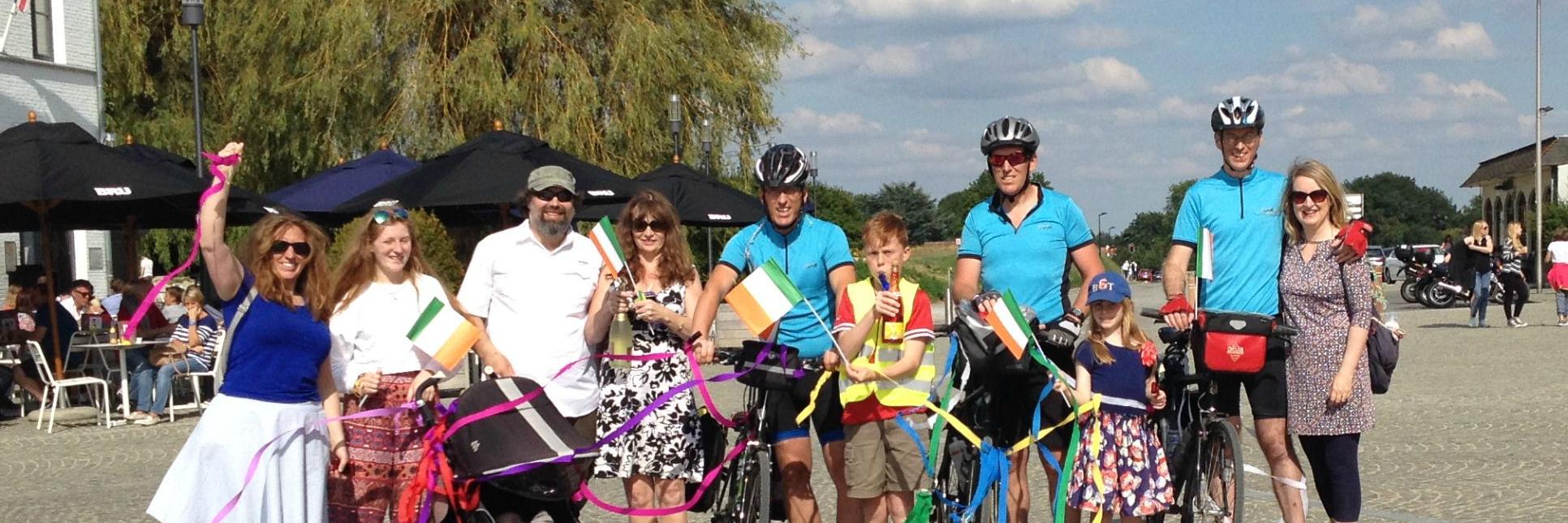
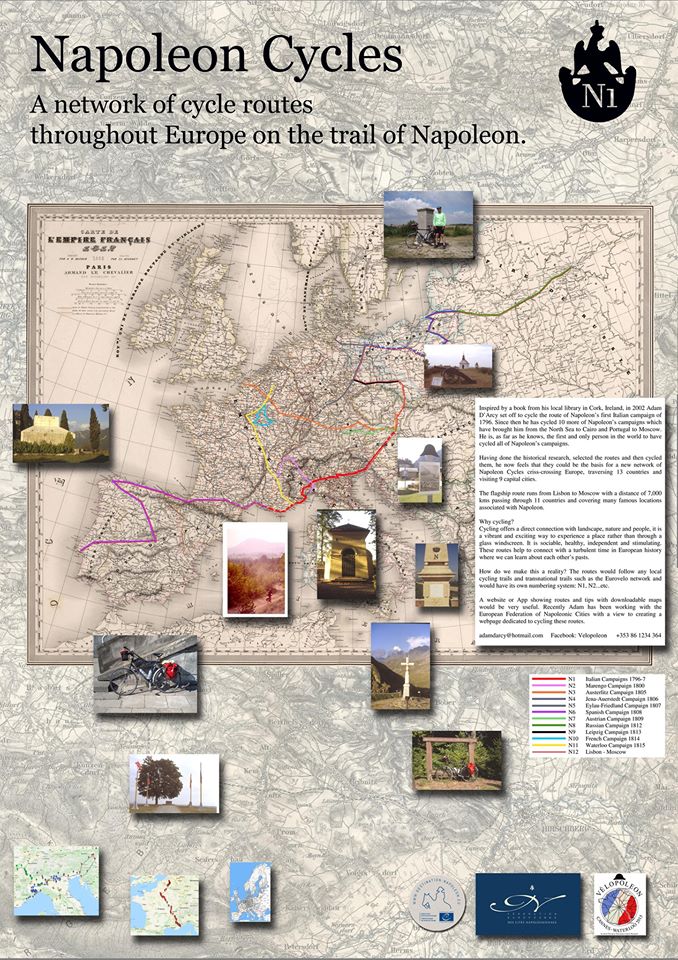
Wouldn't it be great if there was a network of cycle routes throughout Europe following Napoleon's campaigns? Well, here's a start! 11 Routes corresponding to different campaigns and 1 Grande Route to link them all between Lisbon and Moscow! #Napoleon
A letter Napoleon wrote to Alexander I after burning Moscow:
"Monsieur, my brother: Having been informed that the brother of your Imperial Majesty's Minister at Cassel was in Moscow, I sent for him, and we have had a conversation of some length. I have advised his making my sentiments known to your Majesty.
The superb and beautiful city of Moscow no longer exists. Rostoptchine [Count Fyodor Rostopchin, the Governor of Moscow] gave orders to burn it. Four hundred incendiaries [arsonists] were arrested on the spot, all of whom declared that they had received their orders from the governor [Rostopchin] and the director of the police; they were shot.
The fire at last appears to have ceased. Three-quarters of the buildings [in Moscow] have been burned, the other quarter remains.
Such conduct is atrocious and useless. Was its object to make [a]way with some treasure? But the treasure was in caves which could not be reached by the fire.
Moreover, why destroy one of the most beautiful cities in the world, the work of centuries, for so paltry an end? It is the same line of conduct that has been followed from Smolensk, and has left 600,000 families homeless. The fire-engines in Moscow were either broken or made [a]way with, and a portion of the arms in the arsenal given to malefactors, which obliged us to fire a few shots at the Kremlin in order to disperse them.
Humanity, the interests of your Majesty and of this great city, required that the city should be confided to me as a trust, since it was exposed by the Russian army. It should not have been left without administration, magistrates, and civil guards. Such a plan was adopted at Vienna, Madrid, and twice at Berlin. We ourselves followed out this plan at the time of the entrance of Sonvarof [Suvurov?]
Incendiaries [arsonists] authorize pillage, to which the soldiers surrender themselves in order to dispute the debris with the flames.
If I imagined for an instant that such a state of affairs was authorized by your Majesty, I should not write this letter; but I hold it as impossible that, with your Majesty's principles, and heart, with the justice of your Majesty's ideas, you could authorize excesses that are unworthy of a great sovereign and of a great nation. While the [fire] engines were carried from Moscow, one hundred and fifty pieces of field cannon, 60,000 new muskets, 1,600,000 infantry cartridges, 400,000 weights of powder, 300,000 weights of salt-petre, as much sulphur, etc., were left behind.
I wage war against your Majesty without animosity; a note from you before or after the last battle would have stopped my procession [march] and I should even have liked to have sacrificed the advantage of entering Moscow. If your Majesty retains some remains of your former sentiments, you will take this letter in good part. In any event, you will thank me for giving you an account of what is passing at Moscow.
By this, my dear sir, my brother, I pray to God that he will guard your Majesty and shore [you] under his holy and dignified protection.
Moscow, September the 20th, 1812.
Your Imperial Majesty's Good Brother, Napoleon."
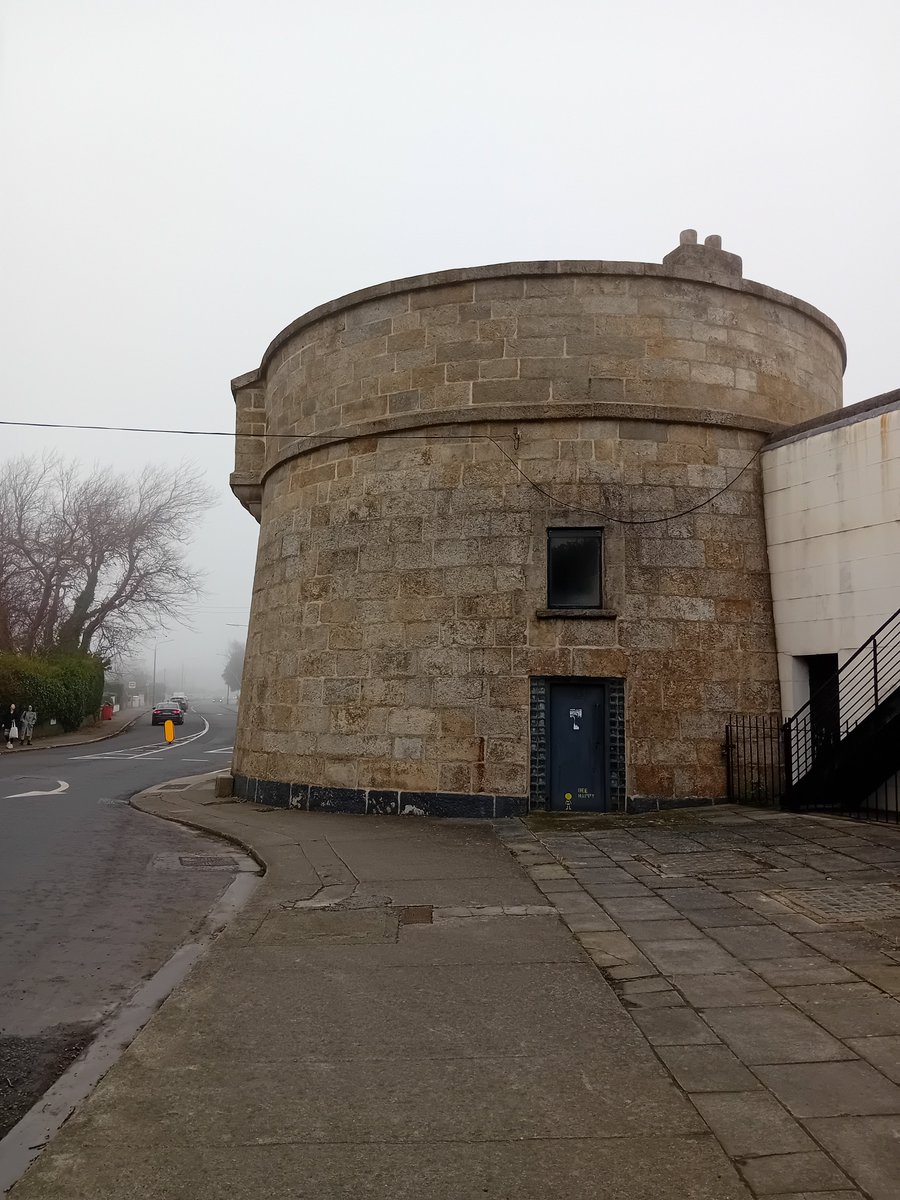
Ordnance Stone at Ballincollig Regional Park, Cork. British military property was demarcated by these stones. The yellow arrow on the map shows it to be one of the 2 stones to the west of the 'Gunpowder Proving House' which no longer exists.
The French army which invaded Russia in 1812 had many units from other countries, willing and unwilling. While France supplied most troops, Poles, Swiss, Italians & Germans provided sizeable contingents. It was the biggest army at the time (600,000) but also the biggest disaster.
On this day in 1805 the Battle of Trafalgar war fought.
By days end the Royal Navy under Admiral Nelson had decisively defeated a combined French and Spanish fleet under Admirals Villeneuve and Gravina.
In total 21 French and Spanish ships were captured and 1 destroyed.
In April 1804 a young man named Louis Aimable Cailliez from Fumay in the Ardennes was conscripted into Napoleon’s 33e Ligne.
This is the story of his fascinating career – as conscript, officer, and briefly a hero of the army. 1/
On this day in 1857 General James Macdonell (best known for commanding the defense of Hougoumont at Waterloo) died.
Wellington would later credit him as "the bravest man in the British Army".
He is buried in Kensal Green Cemetery, London.
General Charles Lefebvre-Desnouettes died #OnThisDay 22 April 1822
He was a veteran of many campaigns, such as Marengo & was captured at Benavente AND Waterloo
He an Aide to Napoleon, a Count of the Empire & a General of the Imperial Guard.
On this day in 1783 Cavalié Mercer was born.
Mercer would go on to serve as an officer in the British army.
He is notable for his command of the Royal Horse Artillery's G Troop at Waterloo (1815) and for his famous book ‘Journal of the Waterloo Campaign’.
For over 300 years, Barbary pirates enslaved 1 million Europeans and Americans.
They raided ships, burned villages, and sold captives into brutal servitude.
Until 8 U.S. Marines took on a pirate empire and ended the white slave trade forever.
Here's the untold story:







![EchoesofEmpire_'s tweet photo. A letter Napoleon wrote to Alexander I after burning Moscow:
"Monsieur, my brother: Having been informed that the brother of your Imperial Majesty's Minister at Cassel was in Moscow, I sent for him, and we have had a conversation of some length. I have advised his making my sentiments known to your Majesty.
The superb and beautiful city of Moscow no longer exists. Rostoptchine [Count Fyodor Rostopchin, the Governor of Moscow] gave orders to burn it. Four hundred incendiaries [arsonists] were arrested on the spot, all of whom declared that they had received their orders from the governor [Rostopchin] and the director of the police; they were shot.
The fire at last appears to have ceased. Three-quarters of the buildings [in Moscow] have been burned, the other quarter remains.
Such conduct is atrocious and useless. Was its object to make [a]way with some treasure? But the treasure was in caves which could not be reached by the fire.
Moreover, why destroy one of the most beautiful cities in the world, the work of centuries, for so paltry an end? It is the same line of conduct that has been followed from Smolensk, and has left 600,000 families homeless. The fire-engines in Moscow were either broken or made [a]way with, and a portion of the arms in the arsenal given to malefactors, which obliged us to fire a few shots at the Kremlin in order to disperse them.
Humanity, the interests of your Majesty and of this great city, required that the city should be confided to me as a trust, since it was exposed by the Russian army. It should not have been left without administration, magistrates, and civil guards. Such a plan was adopted at Vienna, Madrid, and twice at Berlin. We ourselves followed out this plan at the time of the entrance of Sonvarof [Suvurov?]
Incendiaries [arsonists] authorize pillage, to which the soldiers surrender themselves in order to dispute the debris with the flames.
If I imagined for an instant that such a state of affairs was authorized by your Majesty, I should not write this letter; but I hold it as impossible that, with your Majesty's principles, and heart, with the justice of your Majesty's ideas, you could authorize excesses that are unworthy of a great sovereign and of a great nation. While the [fire] engines were carried from Moscow, one hundred and fifty pieces of field cannon, 60,000 new muskets, 1,600,000 infantry cartridges, 400,000 weights of powder, 300,000 weights of salt-petre, as much sulphur, etc., were left behind.
I wage war against your Majesty without animosity; a note from you before or after the last battle would have stopped my procession [march] and I should even have liked to have sacrificed the advantage of entering Moscow. If your Majesty retains some remains of your former sentiments, you will take this letter in good part. In any event, you will thank me for giving you an account of what is passing at Moscow.
By this, my dear sir, my brother, I pray to God that he will guard your Majesty and shore [you] under his holy and dignified protection.
Moscow, September the 20th, 1812.
Your Imperial Majesty's Good Brother, Napoleon."](https://pbs.twimg.com/media/HGMFwk3XEAADCo8.jpg)