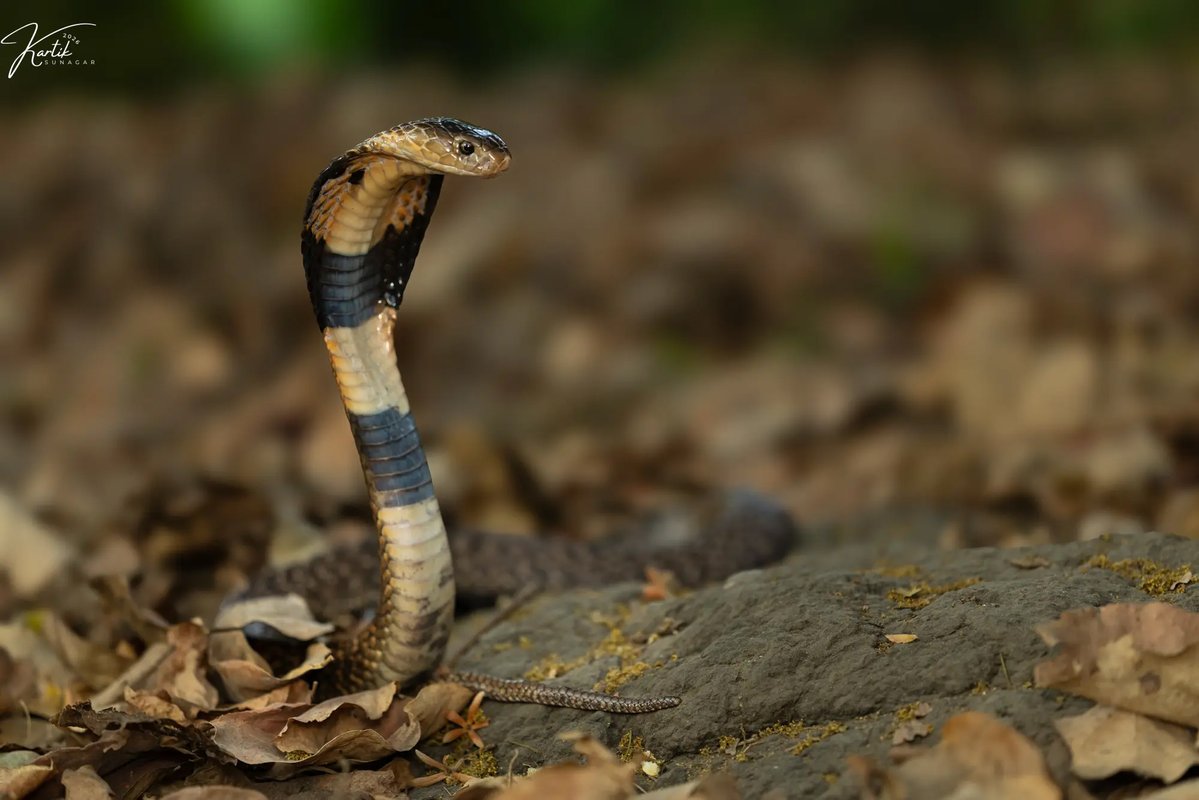
This is a dream come true! Ecstatic to announce that @LabVenomics at @CES_IISc, @iiscbangalore, in association with @official_ibab, and with funding from @ITBTGoK, the Government of Karnataka, will establish an ‘Antivenom Research and Development Centre’ in Bangalore.
We’re making a personalized cancer vaccine for Yash, a 34 year-old pancreatic cancer patient, in the open with his consent.
We want external experts to review our design and make their own contributions before we manufacture it at the RNA Foundry.
https://t.co/HBkhxMxD1p
🐍 From Deadly Toxins to Life-Saving Medicines. The Ultimate UNO Reverse! 🔄
I’m thrilled to announce that Venomics AI (@venomicsai), a biotechnology startup spun out of the Indian Institute of Science (@iiscbangalore), has raised US$2.7 million in pre-seed funding! 🚀
This is a particularly special moment for me.
Many years ago, when I started my PhD, I was fascinated by a rather intriguing evolutionary question: How did evolution transform completely harmless proteins, performing everyday functions in our body, into some of the most potent toxins known to science?
I spent years studying how animal venoms evolved over millions of years, tracing the remarkable evolutionary journeys of these proteins as they acquired their deadly functions.
And now, years later, I find myself trying to do almost the exact opposite!
What if we could take these very same toxins and transform them into life-saving medicines?
It’s almost like playing the ultimate UNO reverse card on evolution! 🔄🐍
What evolution transformed into weapons, we want to transform into medicines to fight some of humanity’s greatest health challenges.
That is the vision behind Venomics AI.
Nature has spent millions of years evolving an extraordinary diversity of biologically active molecules. Yet, despite their immense therapeutic potential, the vast majority of animal venoms remain largely unexplored, especially in India.
At Venomics AI, we’re combining cutting-edge experimental science with artificial intelligence to systematically explore this untapped molecular diversity and accelerate the discovery of next-generation therapeutics.
Our pre-seed round was led by Speciale Invest (@SpecialeInvest) and South Park Commons (@spc), with participation from Operators Studio (@OperatorStudios). We are incubated at ARTPARK (@artparkindia).
I’m incredibly grateful to our investors for believing in this vision, and to my co-founder, Vinay Prabhu (@vinayprabhu), Chief Scientific Officer, Purba Sarkar, for joining me on this exciting journey.
We’re proud to be building this company in India, leveraging our scientific expertise and extraordinary biodiversity to develop medicines for the world.
From studying how nature makes toxins to discovering how we can turn them into medicines. Life really does come full circle sometimes.
And we’re just getting started! 🚀
#VenomicsAI #DrugDiscovery #Biotechnology #ArtificialIntelligence #DeepTech #MakeInIndia #VenomResearch
@VVenkatVC@venomicsai@iiscbangalore Thank you! Both, actually. We’re using high-throughput science and AI to screen venom-derived molecules at scale, identify promising candidates, and engineer them into druggable molecules with improved stability, delivery, and therapeutic potential.
@mansisheth_@venomicsai@iiscbangalore I'm so sorry to hear that.
Please see our work on antibodies. If the toxin is known, then we can certainly make antibodies for most of them.
1/4 🐍 Toxin Tuesday is BACK! (After a rather long break!)
And we’re restarting with a fascinating question: Can FIVE tiny antibodies take on the venoms of some of the world’s most dangerous cobras?
Let’s find out! 🧵👇
4/4 🐍 Five tiny antibodies. Multiple cobra species. And some unexpected findings!
For this week’s #ToxinTuesday, I’ve written about our recent research in Science Translational Medicine and what it might mean for the future of snakebite treatment.
Following Anthropic and Google Gemini for Science programs, we’re keen to explore how OpenAI’s frontier models could advance our research in venomics & snakebite therapeutics.
Would love to connect with someone at @OpenAI to explore opportunities!
@LabVenomics@venomicsai
Thank you, @AnthropicAI and Irina, for supporting our research! 🐍
I hope this partnership continues to grow, helping us accelerate the development of next-gen treatments for snakebite envenoming, one of the world's most neglected tropical diseases.
@LabVenomics@venomicsai
Delighted to share one of the first AI for Science stories from India.
Snakebite kills an estimated 58,000 Indians every year. Commercial antivenom is raised against just four species, from venom collected largely in one district of Tamil Nadu, so it often fails against bites elsewhere in the country.
Dr Kartik Sunagar's Evolutionary Venomics Lab at the Indian Institute of Science, Bengaluru has spent years mapping how venom varies across India's cobras, kraits and vipers. With support from Anthropic's AI for Science program, his team is now using Claude to curate and annotate that data, hunting targets for a next-generation antivenom that works pan-India.
Dr. Sunagar's lab was the first in India to receive an AI for Science grant. India now has many more. I'll be sharing their work here over the coming weeks.
If frontier AI could accelerate your research, we'd like to hear from you. AI for Science offers free API credits to researchers on high-impact projects: https://t.co/OOjBwxjnaF. And Claude Science, our new AI workbench for scientists, is at https://t.co/5qj6pKj48E.
Congratulations Dr Kartik Kannan Sunagar and the Indian Institute of Science (IISc) team.
#AIforScience #Anthropic #IISc
A rather special paper for me, for more reasons than one 🐍
Our new work is out in Science Translational Medicine, where we show that a recombinant antivenom made from just five nanobodies can protect against geographically diverse cobra and king cobra venoms from across India
IISc researchers and collaborators have developed a recombinant, nanobody-based antivenom that offers broad protection against venom from geographically diverse cobra and king cobra species in India. @LabVenomics
Read: https://t.co/MbID1I88TP
#IIScresearch
@LabVenomics@iiscbangalore@DTUtweet@AndreasLaustsen If the right broadly neutralising molecules can be found against toxin families shared by many snakes, they could potentially become the building blocks for recombinant antivenoms with much wider geographical coverage.
@LabVenomics@iiscbangalore@DTUtweet@AndreasLaustsen The most interesting message extends beyond these individual species. The fact that molecules developed against African snake toxins can protect against Indian cobra venoms suggests that we may not always need to build antivenoms one snake, or even one region, at a time.