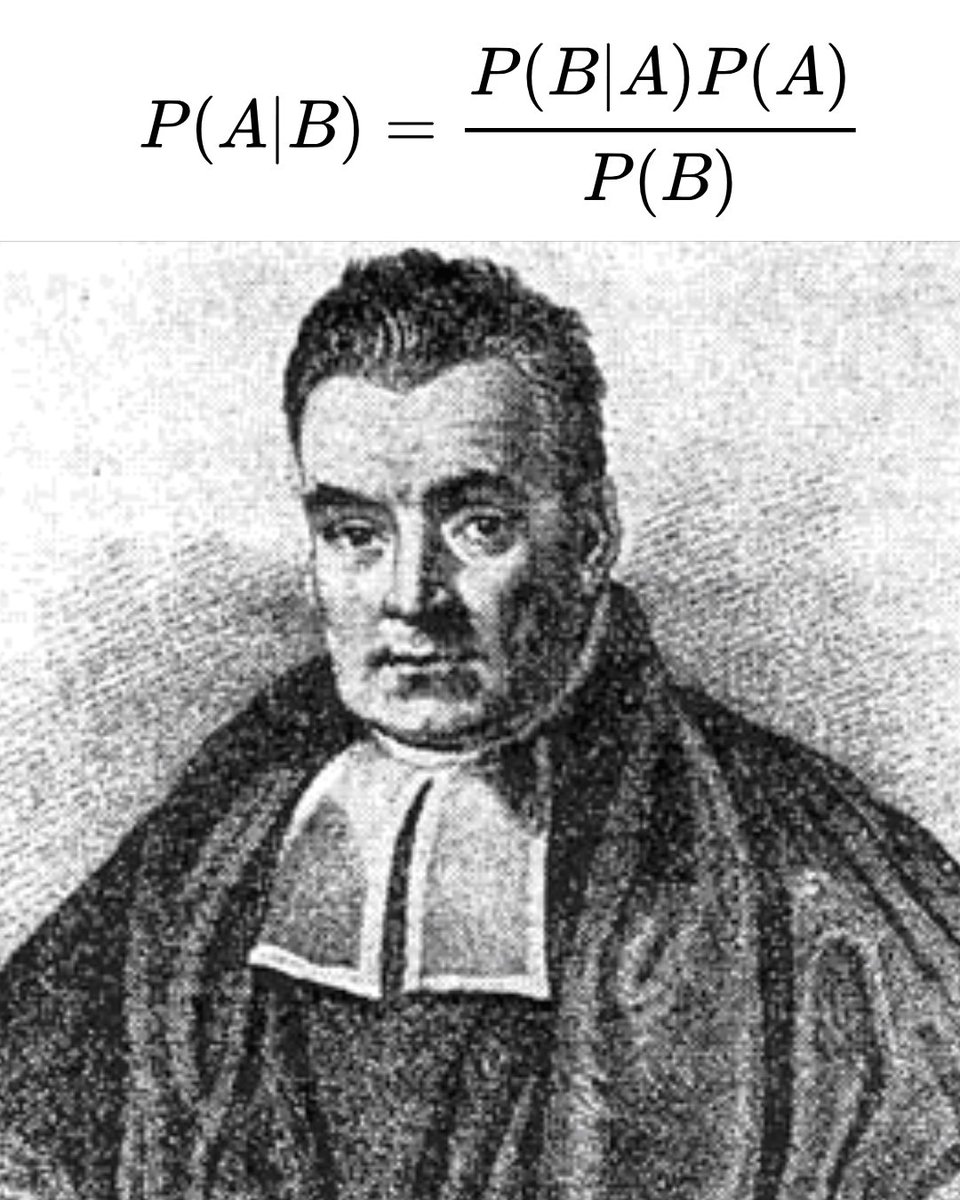
Bayes’ theorem is probably the single most important thing any rational person can learn.
So many of our debates and disagreements that we shout about are because we don’t understand Bayes’ theorem or how human rationality often works.
Bayes’ theorem is named after the 18th-century Thomas Bayes, and essentially it’s a formula that asks: when you are presented with all of the evidence for something, how much should you believe it?
Bayes’ theorem teaches us that our beliefs are not fixed; they are probabilities. Our beliefs change as we weigh new evidence against our assumptions, or our priors. In other words, we all carry certain ideas about how the world works, and new evidence can challenge them.
For example, somebody might believe that smoking is safe, that stress causes mouth ulcers, or that human activity is unrelated to climate change. These are their priors, their starting points. They can be formed by our culture, our biases, or even incomplete information.
Now imagine a new study comes along that challenges one of your priors. A single study might not carry enough weight to overturn your existing beliefs. But as studies accumulate, eventually the scales may tip. At some point, your prior will become less and less plausible.
Bayes’ theorem argues that being rational is not about black and white. It’s not even about true or false. It’s about what is most reasonable based on the best available evidence. But for this to work, we need to be presented with as much high-quality data as possible. Without evidence—without belief-forming data—we are left only with our priors and biases. And those aren’t all that rational.
I indicated to the media today that the ball is in the public’s court. Their behaviour will determine future changes with respect to a ban on fireworks and the revision of fines for traffic offences.
I will give the fireworks legislation a couple more months, but if there is no improvement, I will ban it outright.
Similarly, with respect to the traffic fines, if by the end of the first half of 2026 there is a decrease in road deaths, reckless driving, and drunk driving offences, I would be willing to reduce traffic fines to lower than they previously were.
From the reports I have received, compliance with the fireworks law varied considerably across communities. From my own experience over Christmas and New Year’s, I can say definitively that from my home I could hear fireworks being used outside of the permitted hours. There were also many complaints about loud music at night going into the early morning hours, which I also know to be true, as I heard music emanating from north of Philippine almost every night, sometimes up to 3 a.m.
There are some people in this country who simply cannot follow the law and have no concern for the inconvenience and harassment they impose on decent, law-abiding citizens.
The country will remain a lawless dump unless strong action is taken against these ignorant people who have no regard for their fellow citizens.
The issue is not about law enforcement; it is about a lack of civility and respect by some citizens. The police should not have to be chasing people to charge or arrest them just to get them to comply with minor laws. What example are adults who cannot follow basic rules and laws setting for their children?
My government is committed to working with law-abiding citizens to fix this country.
The lawless, entitled people simply do not care about who they kill on the roads, who they torment in their homes, or who they bully, abuse, and inconvenience day after day.
The law did not fail, the police did not fail, and good law-abiding citizens did not fail - a minority of lawless citizens failed.